
Skip to content
Andwin Circuits
  • Home
  • ProductsExpand
    • HDI multilayer PCB
    • Rigid Flex PCB
    • Flex pcb
    • Special PCBExpand
      • High Frequency PCBExpand
        • Rogers RO4350B PCB
        • Rogers RO4003 pcb
        • Rogers RO3003 PCB
        • Rogers 5880 PCB
        • DICLAD 527 PCB
        • Taconic TLX series
        • Taconic TLX-8 RF PCB
        • Taconic TLX-9 RF PCB
      • High speed pcbExpand
        • Megtron 6 High Speed PCB
        • TU-872 SLK Sp High Speed
      • High TG PCBExpand
        • SHENGYI SH260 PCB
        • ISOLA 370HR PCB
        • ISOLA IS410 PCB
        • ISOLA IS420 PCB
      • Heavy copper PCB
      • Copper coin pcb
      • Copper inlay PCB
    • Metal Core PCBExpand
      • Copper core pcb
      • Aluminum PCB
      • 2 Layers Aluminum PCB
      • Direct thermal MCPCB
      • 2 Layers Direct Thermal
    • Ceramic PCBExpand
      • DPC ceramic PCB
      • DBC ceramic PCB
      • Thick film Ceramic PCB
      • Al2O3 Alumina PCB
      • AIN ALN ceramic PCB
      • IGBT Ceramic PCB
  • ServiceExpand
    • PCB Assembly
    • Quick turn PCB assembly
    • PCBA conformal coating
  • IndustryExpand
    • Telecommunication
    • IoT and Wireless
    • Industrial Control
    • Thermal management
    • Power and Energy
    • IC test board
    • Automative
    • Medical
  • CapabilityExpand
    • Rigid PCB
    • Rigid flex PCB
    • Metal core PCB
    • PCB Assembly
  • TechnologyExpand
    • Blogs
    • Via in pad
    • PCB E-test
    • PCB stack up
    • MCPCB panelization
    • Controlled impedance PCB
  • AboutExpand
    • About us
    • Certification
    • Factory Tour
  • Contact
Andwin Circuits
Home / Removal technology of halogen components from waste PCB

Removal technology of halogen components from waste PCB

ByGrace December 30, 2024December 31, 2024

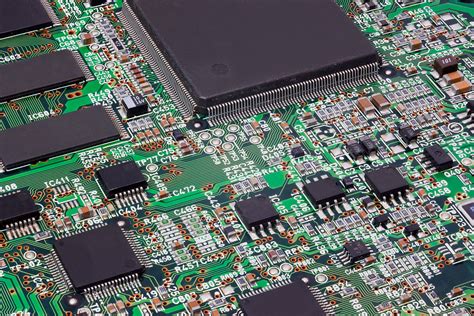
For safety reasons, general electrical products and household appliances add flame retardants such as halogens and antimony compounds to the resin of PCBs.

It is currently believed that it is harmful to the environment and human body. Therefore, in the research on recycling waste PCBs, removing the halogen components in waste PCBs has become an important research and development work. The test results of relevant foreign research departments show that in the PCBs for desktop computers produced in the 1990s, the bromine content accounted for about 9% (weight ratio based on the weight of PCB as 100). The PCBs of televisions, office electronic products (0E), etc. (generally using phenolic-paper-based copper-clad laminates as the substrate) contain 4.4%-5.3% bromine and 0.4%-0.9% antimony.

Removing the halogen components from waste PCBs mainly removes the bromine substances that exist in PCBs as flame retardants. Since the 1960s, the world has begun to study the technology of removing halogens. Today’s halogen removal work is mainly to achieve the “harmless” recycling and reuse of waste PCBs. The removal of halogens contained in PCB is to separate the halogen atoms bound to the benzene ring from the benzene ring. Theoretically, the separation of chlorine atoms from the benzene ring requires 916KJ/mol of energy, while 879KJ/mol of energy is required to separate bromine atoms from the benzene ring.

In terms of the removal method, there are decomposition method, dry solid phase reaction method, etc.
Contact us for PCB quote now |


(1) Hydrogenation method

Among the various dehalogenation invention patents that have appeared recently, the largest number is the hydrogenation process route. This method of removing halogens from PCB through hydrogenation reaction is mainly in the presence of a metal catalyst, the treated PCB is exposed to hydrogen, and a reaction between halogen atoms and hydrogen atoms occurs. The metal catalyst used is generally a precious metal such as palladium with activated carbon as the carrier. Some research results have also used hydrogenation catalysts such as lithium aluminum hydride. The hydrogen donor is mostly formic acid or formate.


(2) Thermal decomposition method

The resin containing halogen flame retardant in waste PCB is thermally decomposed to decompose the halogen-containing resin in liquid phase or cause oil (resource conversion of crude oil), and then the freed halogen reacts with the added alkaline compound to extract the halogen-containing substance. In some patents for removing halogen (such as: Patent No. 10-24274, Patent No. 2001-172426, Patent No. 9-262565, Patent No. 9-249581, etc.), the types of alkaline catalysts and reaction temperatures used are different. Halogen-containing resins in waste PCB are mostly bromine-containing epoxy resins. After bromine is separated by thermal decomposition, the added alkaline catalyst (potassium salt) also reacts with the separated bromine to form potassium bromide that can be easily recycled. This thermal decomposition method is more rigorous than the hydrogenation method in terms of recovering halogen substances. Its free halogen is more completely recycled.
Contact us for PCB quote now |


(3) Solid phase reaction method

Metal compounds are dry mixed with the resin in the waste PCB to produce a solid phase reaction, so that the halogens in the resin of the waste PCB are separated and extracted in the form of halogenated salts. The metal compounds used in this solid phase reaction method for removing halogen components from waste PCBs are mainly calcium oxide, iron oxide, silicon dioxide, aluminum oxide, etc.

(4) Biochemical method

The method of using microorganisms to remove halogens from waste PCBs has also been proposed in recent years. However, it takes a long time (several days or even months) to remove and treat the halogens to a concentration of ppm using this method, so it is not suitable for the removal of halogens from large quantities of waste PCBs.

(5) Electrolysis method

Related research results have proposed a method for removing halogens from PCBs by electrolysis. It is believed that this is a type of process that has the potential to be widely adopted in the future. It is to dissolve the halogen compounds in the resin of the waste PCB in an organic solvent and separate them through an electrolytic reaction.

Contact us for PCB quote now |
Post Tags: #pcb design

Post navigation

Previous Previous
Share the experience of making PCB board from PCB copy board design schematic diagram
NextContinue
Methods to improve wiring efficiency during PCB design

Search

Search

Products

  • HDI Multilayer PCB
  • Rigid Flex PCB
  • Flex pcb
  • High Frequency PCB
  • High speed pcb
  • Heavy copper PCB
  • Metal Core PCB
  • Ceramic PCB

Address

Andwin Circuits Co.,Limited
Email: sales@andwinpcb.com
Tel: +86 755 2832 9394
Fax:+86 755 2992  6717
ADD:1-2F-1217,HouDeQun Industrial park,
NanTing RD NO.56,ShaJing,BaoAn,Shenzhen 518104,GuangDong,China

Products

  • HDI Multilayer PCB
  • Rigid Flex PCB
  • Flex pcb
  • High Frequency PCB
  • High speed pcb
  • Heavy copper PCB
  • Metal Core PCB
  • Ceramic PCB

Technology

  • Blogs
  • Via in pad
  • PCB E-test
  • PCB stack up
  • Metal core PCB panelization
  • Controlled impedance PCB

CERTIFICATION

Certification >>


Copyright© 2003 - 2026 Andwin | All Rights Reserved | Powered by Andwin

Scroll to top
  • Home
  • Products
    • HDI multilayer PCB
    • Rigid Flex PCB
    • Flex pcb
    • Special PCB
      • High Frequency PCB
        • Rogers RO4350B PCB
        • Rogers RO4003 pcb
        • Rogers RO3003 PCB
        • Rogers 5880 PCB
        • DICLAD 527 PCB
        • Taconic TLX series
        • Taconic TLX-8 RF PCB
        • Taconic TLX-9 RF PCB
      • High speed pcb
        • Megtron 6 High Speed PCB
        • TU-872 SLK Sp High Speed
      • High TG PCB
        • SHENGYI SH260 PCB
        • ISOLA 370HR PCB
        • ISOLA IS410 PCB
        • ISOLA IS420 PCB
      • Heavy copper PCB
      • Copper coin pcb
      • Copper inlay PCB
    • Metal Core PCB
      • Copper core pcb
      • Aluminum PCB
      • 2 Layers Aluminum PCB
      • Direct thermal MCPCB
      • 2 Layers Direct Thermal
    • Ceramic PCB
      • DPC ceramic PCB
      • DBC ceramic PCB
      • Thick film Ceramic PCB
      • Al2O3 Alumina PCB
      • AIN ALN ceramic PCB
      • IGBT Ceramic PCB
  • Service
    • PCB Assembly
    • Quick turn PCB assembly
    • PCBA conformal coating
  • Industry
    • Telecommunication
    • IoT and Wireless
    • Industrial Control
    • Thermal management
    • Power and Energy
    • IC test board
    • Automative
    • Medical
  • Capability
    • Rigid PCB
    • Rigid flex PCB
    • Metal core PCB
    • PCB Assembly
  • Technology
    • Blogs
    • Via in pad
    • PCB E-test
    • PCB stack up
    • MCPCB panelization
    • Controlled impedance PCB
  • About
    • About us
    • Certification
    • Factory Tour
  • Contact
Search