
Skip to content
Andwin Circuits
  • Home
  • ProductsExpand
    • HDI multilayer PCB
    • Rigid Flex PCB
    • Flex pcb
    • Special PCBExpand
      • High Frequency PCBExpand
        • Rogers RO4350B PCB
        • Rogers RO4003 pcb
        • Rogers RO3003 PCB
        • Rogers 5880 PCB
        • DICLAD 527 PCB
        • Taconic TLX series
        • Taconic TLX-8 RF PCB
        • Taconic TLX-9 RF PCB
      • High speed pcbExpand
        • Megtron 6 High Speed PCB
        • TU-872 SLK Sp High Speed
      • High TG PCBExpand
        • SHENGYI SH260 PCB
        • ISOLA 370HR PCB
        • ISOLA IS410 PCB
        • ISOLA IS420 PCB
      • Heavy copper PCB
      • Copper coin pcb
      • Copper inlay PCB
    • Metal Core PCBExpand
      • Copper core pcb
      • Aluminum PCB
      • 2 Layers Aluminum PCB
      • Direct thermal MCPCB
      • 2 Layers Direct Thermal
    • Ceramic PCBExpand
      • DPC ceramic PCB
      • DBC ceramic PCB
      • Thick film Ceramic PCB
      • Al2O3 Alumina PCB
      • AIN ALN ceramic PCB
      • IGBT Ceramic PCB
  • ServiceExpand
    • PCB Assembly
    • Quick turn PCB assembly
    • PCBA conformal coating
  • IndustryExpand
    • Telecommunication
    • IoT and Wireless
    • Industrial Control
    • Thermal management
    • Power and Energy
    • IC test board
    • Automative
    • Medical
  • CapabilityExpand
    • Rigid PCB
    • Rigid flex PCB
    • Metal core PCB
    • PCB Assembly
  • TechnologyExpand
    • Blogs
    • Via in pad
    • PCB E-test
    • PCB stack up
    • MCPCB panelization
    • Controlled impedance PCB
  • AboutExpand
    • About us
    • Certification
    • Factory Tour
  • Contact
Andwin Circuits
Home / Blogs / Rogers pcb material dielectric constant

Rogers pcb material dielectric constant

ByGrace April 21, 2023June 20, 2024

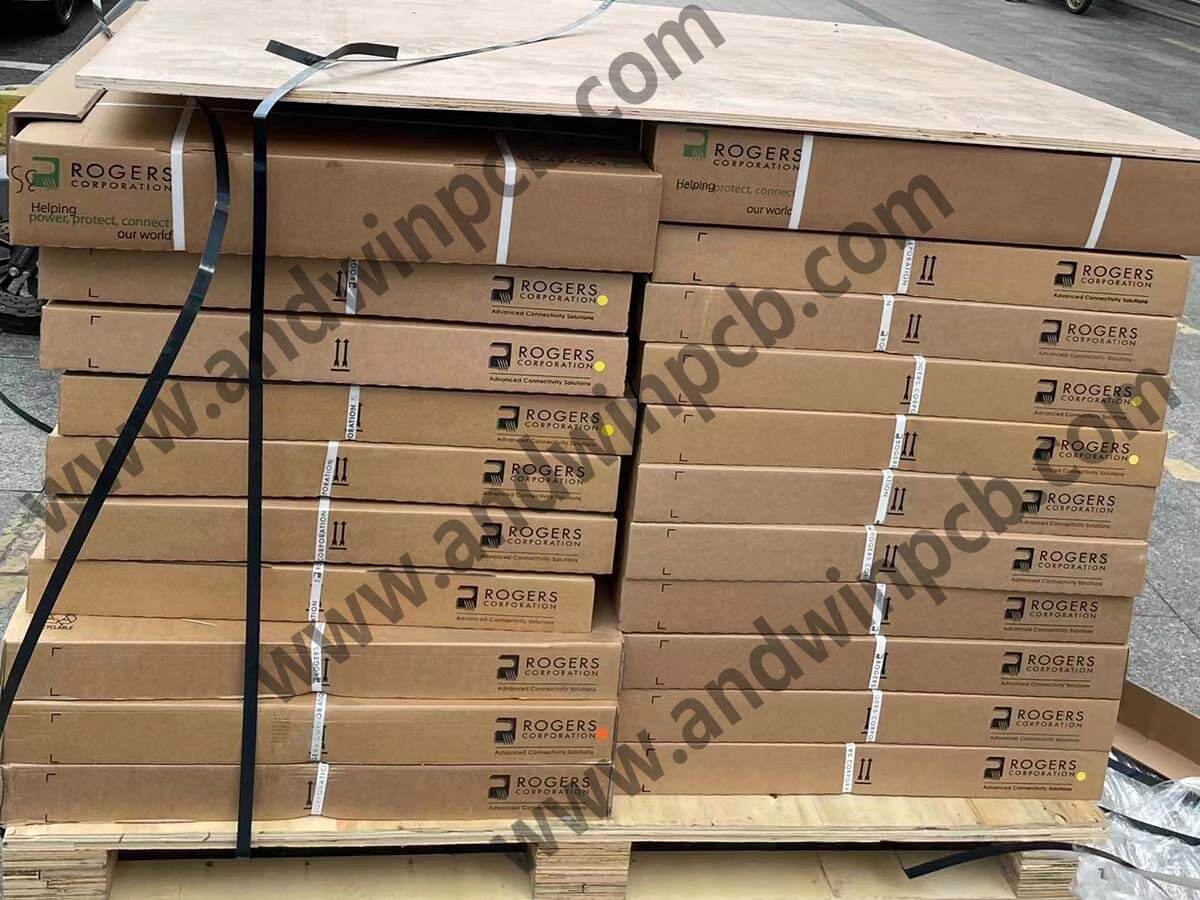
The dielectric constant of Rogers PCB material varies depending on the specific type of material used.

However, Rogers PCB material is known for having a low dielectric constant, which is typically in the range of 2.5 to 3.7.

This low dielectric constant is one of the key advantages of Rogers PCB material, as it allows for minimal signal loss and distortion in high-frequency applications.

The low dielectric constant also enables faster signal propagation, which is important in high-speed digital circuits and wireless communication systems.

In addition to the low dielectric constant, Rogers PCB material also has a low loss tangent, which further enhances its performance in high-frequency applications.

The low loss tangent helps to minimize signal attenuation and distortion, which is critical for maintaining signal integrity in high-frequency circuits.

Overall, the low dielectric constant and low loss tangent of Rogers PCB material make it an excellent choice for high-frequency applications that require high performance and reliability.
How to calculate the dielectric constant of Rogers PCB material

The dielectric constant of Rogers PCB material can be calculated using the following formula:

εr = C / Co

where εr is the relative permittivity or dielectric constant, C is the capacitance of the material, and Co is the capacitance of a vacuum or air.

To measure the capacitance of the material, a test coupon can be fabricated with known dimensions and a capacitor can be formed between the two conductive layers of the coupon.
The capacitance can then be measured using a capacitance meter or network analyzer.

Once the capacitance is measured,
the dielectric constant can be calculated using the above formula.

It is important to note that the dielectric constant of Rogers PCB material can vary depending on the frequency and temperature of operation, so it is important to specify the conditions under which the dielectric constant is measured.

Who proposed the dielectric constant of Rogers PCB material

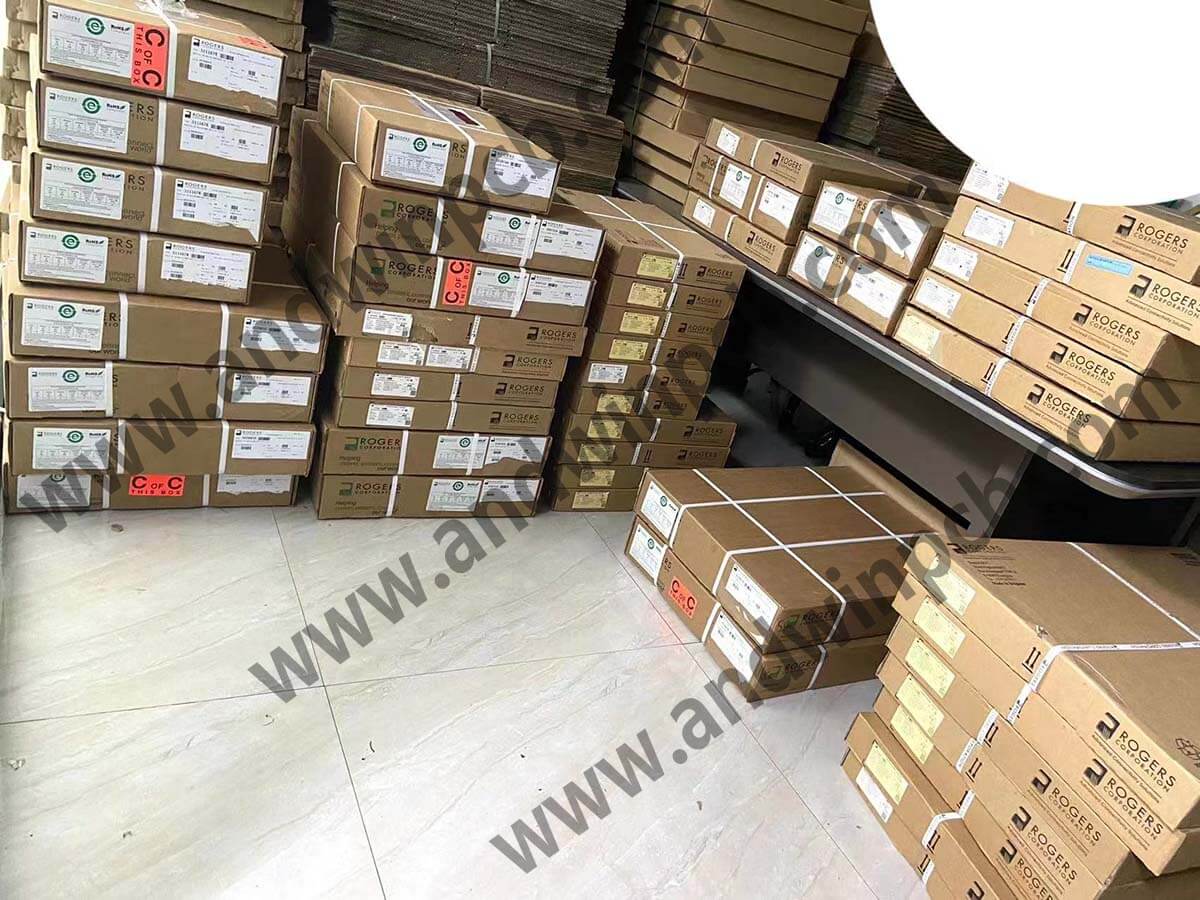
Rogers Corporation is the company that developed and produces the Rogers PCB material.
The dielectric constant of Rogers PCB material is a property of the material that has been determined through testing and characterization by the company.

While it is not possible to attribute the concept of the dielectric constant of Rogers PCB material to a single individual, it is the result of the research and development efforts of the company’s engineers and scientists.
Significance of dielectric constant of Rogers PCB material

The dielectric constant of Rogers PCB material is significant because it determines the speed at which electromagnetic signals travel through the material.

This property is important for high-frequency applications,
such as in radio frequency (RF) and microwave circuits, where signal integrity and transmission efficiency are critical.

A high dielectric constant means that the material can store more electric charge per unit volume,

which slows down the propagation of electromagnetic waves. On the other hand, a low dielectric constant allows for faster signal transmission.

Therefore, choosing the right dielectric constant for a specific application is crucial to ensure optimal performance.

Rogers PCB materials are known for their low loss and high-frequency performance, which is attributed to their low dielectric constant and low loss tangent.

These properties make them ideal for use in high-speed digital and RF/microwave circuits, where signal integrity and low loss are essential.
GET IN TOUCH!

Post navigation

Previous Previous
PCB Manufacturing and Assembly Services in China
NextContinue
Rogers pcb dielectric constant detail

Search

Search

Products

  • HDI Multilayer PCB
  • Rigid Flex PCB
  • Flex pcb
  • High Frequency PCB
  • High speed pcb
  • Heavy copper PCB
  • Metal Core PCB
  • Ceramic PCB

Address

Andwin Circuits Co.,Limited
Email: sales@andwinpcb.com
Tel: +86 755 2832 9394
Fax:+86 755 2992  6717
ADD:1-2F-1217,HouDeQun Industrial park,
NanTing RD NO.56,ShaJing,BaoAn,Shenzhen 518104,GuangDong,China

Products

  • HDI Multilayer PCB
  • Rigid Flex PCB
  • Flex pcb
  • High Frequency PCB
  • High speed pcb
  • Heavy copper PCB
  • Metal Core PCB
  • Ceramic PCB

Technology

  • Blogs
  • Via in pad
  • PCB E-test
  • PCB stack up
  • Metal core PCB panelization
  • Controlled impedance PCB

CERTIFICATION

Certification >>


Copyright© 2003 - 2026 Andwin | All Rights Reserved | Powered by Andwin

Scroll to top
  • Home
  • Products
    • HDI multilayer PCB
    • Rigid Flex PCB
    • Flex pcb
    • Special PCB
      • High Frequency PCB
        • Rogers RO4350B PCB
        • Rogers RO4003 pcb
        • Rogers RO3003 PCB
        • Rogers 5880 PCB
        • DICLAD 527 PCB
        • Taconic TLX series
        • Taconic TLX-8 RF PCB
        • Taconic TLX-9 RF PCB
      • High speed pcb
        • Megtron 6 High Speed PCB
        • TU-872 SLK Sp High Speed
      • High TG PCB
        • SHENGYI SH260 PCB
        • ISOLA 370HR PCB
        • ISOLA IS410 PCB
        • ISOLA IS420 PCB
      • Heavy copper PCB
      • Copper coin pcb
      • Copper inlay PCB
    • Metal Core PCB
      • Copper core pcb
      • Aluminum PCB
      • 2 Layers Aluminum PCB
      • Direct thermal MCPCB
      • 2 Layers Direct Thermal
    • Ceramic PCB
      • DPC ceramic PCB
      • DBC ceramic PCB
      • Thick film Ceramic PCB
      • Al2O3 Alumina PCB
      • AIN ALN ceramic PCB
      • IGBT Ceramic PCB
  • Service
    • PCB Assembly
    • Quick turn PCB assembly
    • PCBA conformal coating
  • Industry
    • Telecommunication
    • IoT and Wireless
    • Industrial Control
    • Thermal management
    • Power and Energy
    • IC test board
    • Automative
    • Medical
  • Capability
    • Rigid PCB
    • Rigid flex PCB
    • Metal core PCB
    • PCB Assembly
  • Technology
    • Blogs
    • Via in pad
    • PCB E-test
    • PCB stack up
    • MCPCB panelization
    • Controlled impedance PCB
  • About
    • About us
    • Certification
    • Factory Tour
  • Contact
Search