
Slim Battery BMS Board: Design, Functionality, and Applications
Introduction
Battery Management Systems (BMS) are critical components in modern battery-powered devices, ensuring safety, efficiency, and longevity. Among the various BMS designs available, the slim battery BMS board has gained popularity due to its compact form factor, lightweight construction, and high efficiency. This article explores the design principles, key functionalities, advantages, and applications of slim BMS boards in today’s energy storage and portable electronics industries.
1. What is a Slim Battery BMS Board?
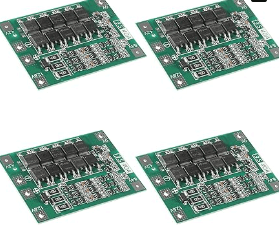
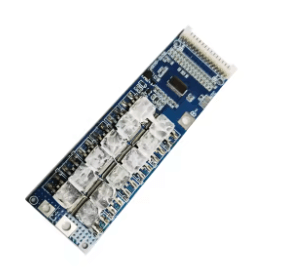
A slim battery BMS board is a specialized type of battery management system designed with a minimal thickness to fit into space-constrained applications. Unlike traditional BMS designs, which may be bulky, slim BMS boards prioritize compactness while maintaining essential features such as:
- Cell voltage monitoring
- Current measurement and regulation
- Temperature sensing and protection
- State of Charge (SOC) and State of Health (SOH) estimation
- Overcharge/over-discharge protection
- Balancing functions
These boards are commonly used in thin consumer electronics, wearable devices, drones, and medical implants, where space optimization is crucial.

2. Key Design Features of Slim BMS Boards
2.1 Ultra-Thin PCB Layout
The primary challenge in designing a slim BMS is maintaining functionality while reducing thickness. This is achieved through:
- Multi-layer PCB design – High-density interconnects (HDI) and flexible PCBs help minimize thickness.
- Low-profile components – Surface-mount devices (SMDs) with minimal height are preferred.
- Optimized thermal management – Heat dissipation is managed using thin thermal pads or conductive materials.
2.2 Advanced Power Management ICs
Modern BMS boards use highly integrated power management ICs (PMICs) that combine multiple functions (e.g., voltage regulation, balancing, and protection) into a single chip, reducing board footprint.
2.3 Lightweight Materials
To ensure portability, slim BMS boards often use lightweight substrates such as flexible PCBs (FPC) or rigid-flex PCBs, which also improve durability in bending applications.
2.4 Wireless Communication Capabilities
Some advanced slim BMS boards integrate Bluetooth Low Energy (BLE) or Near Field Communication (NFC) for remote monitoring and diagnostics without adding significant bulk.
3. Core Functionalities of a Slim BMS
3.1 Cell Balancing
Uneven cell voltages can reduce battery lifespan. Slim BMS boards employ passive or active balancing techniques to ensure uniform charge distribution.
3.2 Overvoltage/Undervoltage Protection
Lithium-ion batteries are sensitive to voltage extremes. The BMS disconnects the battery if voltages exceed safe thresholds.
3.3 Temperature Monitoring
Embedded NTC/PTC thermistors detect overheating and trigger safety mechanisms.
3.4 State Estimation (SOC & SOH)
Accurate Coulomb counting and voltage-based algorithms estimate remaining battery capacity and overall health.
4. Advantages of Slim BMS Boards
- Space Efficiency – Ideal for slim devices like smartphones, smartwatches, and foldable electronics.
- Weight Reduction – Critical for drones and aerospace applications.
- Enhanced Safety – Prevents thermal runaway and battery failures.
- Improved Energy Efficiency – Optimizes power usage, extending battery life.
- Modularity – Can be customized for different battery chemistries (Li-ion, LiPo, LiFePO4).
5. Applications of Slim BMS Boards
5.1 Wearable Electronics
Smartwatches, fitness trackers, and AR/VR glasses rely on slim BMS boards for efficient power management.
5.2 Medical Devices
Implantable and portable medical devices (e.g., insulin pumps, hearing aids) require ultra-thin, reliable BMS solutions.
5.3 Drones and UAVs
Lightweight BMS boards help maximize flight time while ensuring battery safety.
5.4 Electric Vehicles (EVs) and E-Bikes
Some slim BMS designs are used in modular battery packs for lightweight EVs.
5.5 Consumer Electronics
Laptops, tablets, and foldable phones benefit from slim BMS integration.
6. Challenges and Future Trends
6.1 Thermal Management in Compact Designs
As BMS boards become thinner, heat dissipation becomes a challenge. Future designs may incorporate graphene-based cooling or advanced thermal interface materials.
6.2 Integration with AI for Predictive Maintenance
Machine learning algorithms could enhance SOC/SOH estimation, improving battery lifespan.
6.3 Solid-State Battery Compatibility
Next-gen solid-state batteries will require new BMS architectures, potentially leading to even slimmer designs.
Conclusion
The slim battery BMS board represents a significant advancement in battery management technology, enabling thinner, lighter, and more efficient energy storage solutions. With applications spanning wearables, medical devices, drones, and EVs, these compact BMS designs are paving the way for the next generation of portable electronics. As battery technology evolves, we can expect even more innovative slim BMS solutions with enhanced intelligence and thermal performance.
Key Takeaways:
- Slim BMS boards are essential for space-constrained applications.
- They integrate advanced power management, balancing, and protection features.
- Future trends include AI-driven optimization and compatibility with solid-state batteries.
By adopting slim BMS technology, manufacturers can develop more compact, efficient, and safer battery-powered devices, meeting the growing demand for portable energy solutions.