
Sources, hazards and protection measures of surges
What is a surge?
Surges are called transient overcurrents, which are short-term current and voltage fluctuations in circuits, usually lasting about one millionth of a second in the circuit. A voltage fluctuation of 5,000 or 10,000 volts that lasts for a moment (one millionth of a second) in a 220-volt circuit system is a surge or transient overcurrent.
Where does a surge come from?
Surges can come from outside the electrical device or from inside the electrical device, that is, from the electrical equipment inside the electrical device.
Surges from the outside This surge is caused by lightning or the switching of public power grid switches. Both types of harmful power disturbances can disrupt the operation of computers and microcomputer information processing systems, causing shutdowns or permanent equipment damage.
1.Surges from the outside:
The main source of external surges is lightning. When there is charge accumulation in the clouds and the ground below the clouds accumulates equal charges of opposite polarity, lightning discharge occurs. The charge potential between the clouds and the ground is as high as several million volts. When lightning strikes, several kiloamperes of current are discharged through lightning strikes, passing through all equipment and the earth and returning to the clouds, thus completing the path of electricity. Unfortunately, the path often takes important or valuable equipment. If lightning strikes a nearby power line, part of the current will enter the building along the line. This huge current will directly disrupt or destroy computers and other sensitive electrical equipment, and its speed is so fast that the whole process only takes one millionth of a second.
Another source of external surges is the overvoltage generated by the power company’s public grid switch on the power line.

2.Surges from inside:
Surges from inside are common, and 88% of surges are generated by equipment inside the building, such as air conditioners, elevators, electric welders, air compressors, water pumps, switching power supplies, copiers and other inductive loads.
Surges are harmful to computers and other sensitive electrical equipment.
As computer technology has developed to date, multi-layer, super-scaled integrated chips have dense circuits, tending to be more integrated, with smaller component gaps and thinner wires. A few years ago, a square centimeter of computer chips had 2,000 transistors, while today’s Pentium has more than 10,000,000. This increases the probability of computers being damaged by surges.
Due to the design and structure of computers, they should operate within a specific voltage range. When the surge exceeds the level that the computer can withstand, the computer will have garbled data, damaged chips, and premature aging of components. These symptoms include: unexpected data errors, failure to receive/transmit data, loss of documents, malfunctions, frequent maintenance, unexplained failures and hardware problems, etc.
Lightning surges far exceed the level that computers and other electrical equipment can withstand. In most cases, they cause immediate destruction of computers and other electrical equipment, or permanent loss of data. Even the start or shutdown of a small 20-horsepower induction engine will generate a 3,000-5,000 volt surge, causing the computer sharing the same distribution box with it to be damaged or disturbed in each surge, and this surge occurs very frequently.
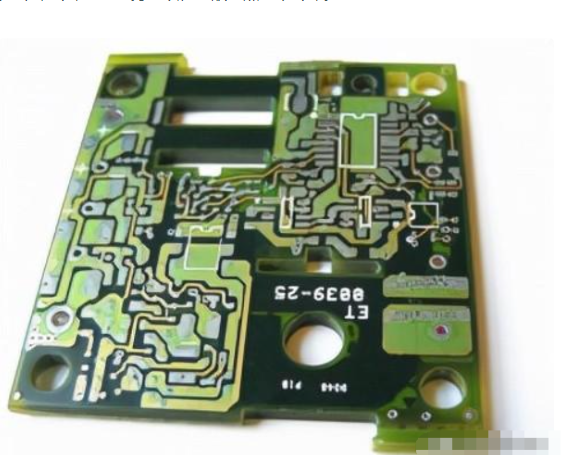
What are the surge phenomena?
There are five types of surge phenomena:
- Arcing: leaving obvious arc marks on the damaged parts;
- Corona: There are obvious electrical corrosion marks on the surface of the insulator, and the insulation of the corroded part decreases;
- Damage to components such as IC of the control circuit;
- Damage to the rectifier components and voltage stabilizing components of general electronic equipment and household appliances;
- Grounding fault causes equipment to be energized (single-phase grounding): causing short circuit between phases of equipment (short circuit between phases of motor).
What are the hazards of surge?
There are mainly two types: catastrophic hazards and cumulative hazards.
Catastrophic hazards: If a surge voltage exceeds the tolerance of the equipment, the equipment will be completely destroyed or its life will be greatly reduced.
The insulation voltage of the motor is usually about 2 times the normal working voltage plus 1000V, so the insulation voltage of a 220V motor is generally 1500V. Surges continuously impact the insulation layer of the motor, causing the insulation layer to be broken down.
Accumulative hazards: The cumulative effect of multiple small surges causes the performance degradation of semiconductor devices, equipment failures and shortened lifespans, and finally leads to shutdowns or reduced productivity.
Surges can damage electrical equipment containing microprocessors, which are extremely vulnerable to surge damage, including computers and computer auxiliary equipment, program controllers, PLCs, fax machines, telephones, answering machines, etc.; program-controlled switches, radio and television transmitters, microwave relay equipment; products in the home appliance industry include televisions, stereos, microwave ovens, video recorders, washing machines, dryers and refrigerators, etc.
How to achieve surge protection?
Surge protection should be implemented in a hierarchical manner, ultimately achieving the goal of perfecting the protection of the power distribution system and electronic equipment. The first step in implementing surge protection in a hierarchical manner is to classify the surge environment.
The classification of surge environments is based on the intensity and frequency of surges. Internationally, surge environments are generally divided into three categories.
(1) Class C: refers to outdoor and incoming line main switches. These locations are prone to strong lightning surges. Specific locations include: the connection between the meter and the distribution board, the overhead lines between buildings, and the underground cables connected to the well;
(2) Class B: refers to locations with shorter connections to the Class C environment, as well as lighting systems in large buildings. Surges in these locations can be generated by lightning or internal electrical switches. Surges generated by lightning are attenuated by distribution lines and are already attenuated more than surges in Class C environments;
(3) Class A: refers to power sockets in the room and terminals of longer distribution lines; longer means power sockets more than 10 meters away from the Class B location, or more than 20 meters away from the Class C location. Surges in these locations are mainly surge voltages generated by internal electrical switches.