
Skip to content
Andwin Circuits
  • Home
  • ProductsExpand
    • HDI multilayer PCB
    • Rigid Flex PCB
    • Flex pcb
    • Special PCBExpand
      • High Frequency PCBExpand
        • Rogers RO4350B PCB
        • Rogers RO4003 pcb
        • Rogers RO3003 PCB
        • Rogers 5880 PCB
        • DICLAD 527 PCB
        • Taconic TLX series
        • Taconic TLX-8 RF PCB
        • Taconic TLX-9 RF PCB
      • High speed pcbExpand
        • Megtron 6 High Speed PCB
        • TU-872 SLK Sp High Speed
      • High TG PCBExpand
        • SHENGYI SH260 PCB
        • ISOLA 370HR PCB
        • ISOLA IS410 PCB
        • ISOLA IS420 PCB
      • Heavy copper PCB
      • Copper coin pcb
      • Copper inlay PCB
    • Metal Core PCBExpand
      • Copper core pcb
      • Aluminum PCB
      • 2 Layers Aluminum PCB
      • Direct thermal MCPCB
      • 2 Layers Direct Thermal
    • Ceramic PCBExpand
      • DPC ceramic PCB
      • DBC ceramic PCB
      • Thick film Ceramic PCB
      • Al2O3 Alumina PCB
      • AIN ALN ceramic PCB
      • IGBT Ceramic PCB
  • ServiceExpand
    • PCB Assembly
    • Quick turn PCB assembly
    • PCBA conformal coating
  • IndustryExpand
    • Telecommunication
    • IoT and Wireless
    • Industrial Control
    • Thermal management
    • Power and Energy
    • IC test board
    • Automative
    • Medical
  • CapabilityExpand
    • Rigid PCB
    • Rigid flex PCB
    • Metal core PCB
    • PCB Assembly
  • TechnologyExpand
    • Blogs
    • Via in pad
    • PCB E-test
    • PCB stack up
    • MCPCB panelization
    • Controlled impedance PCB
  • AboutExpand
    • About us
    • Certification
    • Factory Tour
  • Contact
Andwin Circuits
Home / Techniques for Developing Aviation Electronics PCBs

Techniques for Developing Aviation Electronics PCBs

ByGrace June 19, 2025June 19, 2025

Introduction

The aviation industry demands high reliability, precision, and durability in electronic systems. Printed Circuit Boards (PCBs) used in aviation electronics must withstand extreme environmental conditions, including temperature fluctuations, vibrations, and electromagnetic interference (EMI). Designing PCBs for aviation applications requires specialized techniques to ensure compliance with stringent industry standards such as DO-254, DO-160, and IPC-A-610. This article explores key techniques for developing aviation electronics PCBs, covering design considerations, material selection, signal integrity, thermal management, and testing methodologies.

Contact us for PCB quote now |

1. Design Considerations for Aviation PCBs

1.1 Compliance with Industry Standards

Aviation PCBs must adhere to strict regulatory standards, including:

  • DO-254 (Design Assurance Guidance for Airborne Electronic Hardware)
  • DO-160 (Environmental Conditions and Test Procedures for Airborne Equipment)
  • IPC-A-610 (Acceptability of Electronic Assemblies)

Designers must ensure that their PCBs meet these requirements for reliability, safety, and performance.

1.2 High-Density Interconnect (HDI) Design

Modern aviation electronics require compact, high-performance PCBs. HDI techniques such as microvias, blind vias, and buried vias help reduce board size while maintaining signal integrity.

1.3 EMI/EMC Shielding

Electromagnetic interference (EMI) can disrupt avionics systems. Techniques to mitigate EMI include:

  • Proper grounding and shielding
  • Use of EMI filters
  • Strategic placement of high-speed signals away from sensitive analog circuits

2. Material Selection for Aviation PCBs

2.1 High-Temperature Substrates

Aviation PCBs must endure extreme temperatures. Common materials include:

  • FR-4 with High Tg (Glass Transition Temperature)
  • Polyimide (for flexible PCBs)
  • Ceramic-based substrates (for high-power applications)

2.2 Conformal Coating

To protect against moisture, dust, and chemical exposure, aviation PCBs often use conformal coatings such as:

  • Acrylic (easy to repair)
  • Silicone (flexible and heat-resistant)
  • Parylene (ultra-thin and highly protective)

3. Signal Integrity and Power Integrity

3.1 Controlled Impedance Routing

High-speed signals in aviation systems (e.g., radar, communication modules) require controlled impedance to prevent signal degradation. Techniques include:

  • Proper trace width and spacing calculations
  • Use of differential pairs for high-speed signals

3.2 Power Distribution Network (PDN) Optimization

Stable power delivery is critical. Best practices include:

  • Low-inductance decoupling capacitors
  • Proper power plane design
  • Minimizing voltage drops with thick copper layers

4. Thermal Management Techniques

4.1 Heat Dissipation Strategies

Aviation electronics generate significant heat. Effective cooling methods include:

  • Thermal vias to transfer heat to inner layers
  • Metal-core PCBs for high-power components
  • Heat sinks and thermal pads

4.2 Simulation and Analysis

Thermal simulation tools (e.g., ANSYS, COMSOL) help predict hotspots and optimize PCB layouts for better heat dissipation.
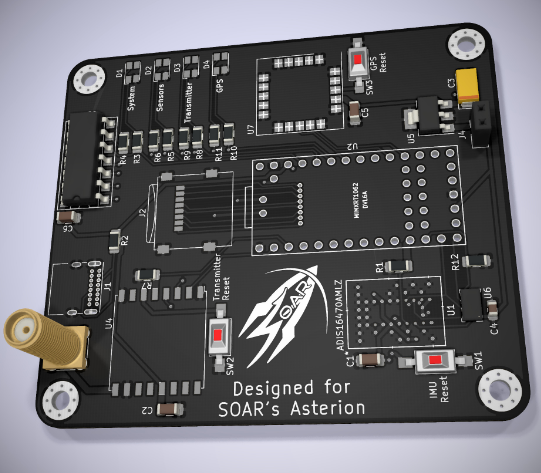
Contact us for PCB quote now |

5. Manufacturing and Testing

5.1 Rigorous Testing Procedures

Aviation PCBs undergo extensive testing, including:

  • Environmental Stress Testing (DO-160)
  • Automated Optical Inspection (AOI)
  • X-ray Inspection for BGA and Microvias

5.2 Design for Manufacturability (DFM)

To avoid production defects, designers should:

  • Follow IPC standards for trace width and spacing
  • Avoid acute angles in traces
  • Ensure proper solder mask application

Conclusion

Developing PCBs for aviation electronics requires meticulous attention to design, material selection, signal integrity, thermal management, and testing. By adhering to industry standards and employing advanced techniques such as HDI design, EMI shielding, and thermal optimization, engineers can create reliable and high-performance PCBs for aviation applications. Continuous advancements in PCB technology will further enhance the safety and efficiency of aviation electronics in the future.

This article provides a comprehensive overview of key techniques, but engineers must stay updated with evolving industry trends and regulatory requirements to ensure compliance and innovation in aviation PCB design.

Contact us for PCB quote now |

Post Tags: #aluminum clad pcb#aluminum core pcb#aluminum pcb#Aviation#Aviation electronic pcb

Post navigation

Previous Previous
Solving Signal Integrity (SI) Issues in PCB Transmission Lines
NextContinue
The Evolution and Future Prospects of the Server PCB Industry

Search

Search

Products

  • HDI Multilayer PCB
  • Rigid Flex PCB
  • Flex pcb
  • High Frequency PCB
  • High speed pcb
  • Heavy copper PCB
  • Metal Core PCB
  • Ceramic PCB

Address

Andwin Circuits Co.,Limited
Email: sales@andwinpcb.com
Tel: +86 755 2832 9394
Fax:+86 755 2992  6717
ADD:1-2F-1217,HouDeQun Industrial park,
NanTing RD NO.56,ShaJing,BaoAn,Shenzhen 518104,GuangDong,China

Products

  • HDI Multilayer PCB
  • Rigid Flex PCB
  • Flex pcb
  • High Frequency PCB
  • High speed pcb
  • Heavy copper PCB
  • Metal Core PCB
  • Ceramic PCB

Technology

  • Blogs
  • Via in pad
  • PCB E-test
  • PCB stack up
  • Metal core PCB panelization
  • Controlled impedance PCB

CERTIFICATION

Certification >>


Copyright© 2003 - 2026 Andwin | All Rights Reserved | Powered by Andwin

Scroll to top
  • Home
  • Products
    • HDI multilayer PCB
    • Rigid Flex PCB
    • Flex pcb
    • Special PCB
      • High Frequency PCB
        • Rogers RO4350B PCB
        • Rogers RO4003 pcb
        • Rogers RO3003 PCB
        • Rogers 5880 PCB
        • DICLAD 527 PCB
        • Taconic TLX series
        • Taconic TLX-8 RF PCB
        • Taconic TLX-9 RF PCB
      • High speed pcb
        • Megtron 6 High Speed PCB
        • TU-872 SLK Sp High Speed
      • High TG PCB
        • SHENGYI SH260 PCB
        • ISOLA 370HR PCB
        • ISOLA IS410 PCB
        • ISOLA IS420 PCB
      • Heavy copper PCB
      • Copper coin pcb
      • Copper inlay PCB
    • Metal Core PCB
      • Copper core pcb
      • Aluminum PCB
      • 2 Layers Aluminum PCB
      • Direct thermal MCPCB
      • 2 Layers Direct Thermal
    • Ceramic PCB
      • DPC ceramic PCB
      • DBC ceramic PCB
      • Thick film Ceramic PCB
      • Al2O3 Alumina PCB
      • AIN ALN ceramic PCB
      • IGBT Ceramic PCB
  • Service
    • PCB Assembly
    • Quick turn PCB assembly
    • PCBA conformal coating
  • Industry
    • Telecommunication
    • IoT and Wireless
    • Industrial Control
    • Thermal management
    • Power and Energy
    • IC test board
    • Automative
    • Medical
  • Capability
    • Rigid PCB
    • Rigid flex PCB
    • Metal core PCB
    • PCB Assembly
  • Technology
    • Blogs
    • Via in pad
    • PCB E-test
    • PCB stack up
    • MCPCB panelization
    • Controlled impedance PCB
  • About
    • About us
    • Certification
    • Factory Tour
  • Contact
Search