
Skip to content
Andwin Circuits
  • Home
  • ProductsExpand
    • HDI multilayer PCB
    • Rigid Flex PCB
    • Flex pcb
    • Special PCBExpand
      • High Frequency PCBExpand
        • Rogers RO4350B PCB
        • Rogers RO4003 pcb
        • Rogers RO3003 PCB
        • Rogers 5880 PCB
        • DICLAD 527 PCB
        • Taconic TLX series
        • Taconic TLX-8 RF PCB
        • Taconic TLX-9 RF PCB
      • High speed pcbExpand
        • Megtron 6 High Speed PCB
        • TU-872 SLK Sp High Speed
      • High TG PCBExpand
        • SHENGYI SH260 PCB
        • ISOLA 370HR PCB
        • ISOLA IS410 PCB
        • ISOLA IS420 PCB
      • Heavy copper PCB
      • Copper coin pcb
      • Copper inlay PCB
    • Metal Core PCBExpand
      • Copper core pcb
      • Aluminum PCB
      • 2 Layers Aluminum PCB
      • Direct thermal MCPCB
      • 2 Layers Direct Thermal
    • Ceramic PCBExpand
      • DPC ceramic PCB
      • DBC ceramic PCB
      • Thick film Ceramic PCB
      • Al2O3 Alumina PCB
      • AIN ALN ceramic PCB
      • IGBT Ceramic PCB
  • ServiceExpand
    • PCB Assembly
    • Quick turn PCB assembly
    • PCBA conformal coating
  • IndustryExpand
    • Telecommunication
    • IoT and Wireless
    • Industrial Control
    • Thermal management
    • Power and Energy
    • IC test board
    • Automative
    • Medical
  • CapabilityExpand
    • Rigid PCB
    • Rigid flex PCB
    • Metal core PCB
    • PCB Assembly
  • TechnologyExpand
    • Blogs
    • Via in pad
    • PCB E-test
    • PCB stack up
    • MCPCB panelization
    • Controlled impedance PCB
  • AboutExpand
    • About us
    • Certification
    • Factory Tour
  • Contact
Andwin Circuits
Home / Blogs / The difference between two-layer boards and four-layer boards in PCB printed circuit boards

The difference between two-layer boards and four-layer boards in PCB printed circuit boards

ByGrace February 18, 2025February 17, 2025

The difference between two-layer boards and four-layer boards in PCB printed circuit boards

PCB printed circuit boards are one of the most important components of electronic products and are the carriers for connecting electronic components. The design and manufacture of PCB printed circuit boards determine the performance and reliability of electronic products.

In the manufacture of PCB printed circuit boards, the two common types are four-layer boards and two-layer boards. What is the difference between them? This article will introduce them in detail from the aspects of number of layers, area, signal interconnection, anti-interference, etc.

1.Number of layers

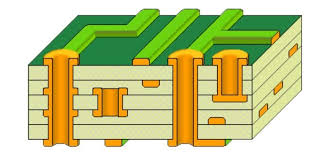
    The biggest difference between four-layer boards and two-layer boards is that they have different numbers of layers. Two-layer boards refer to PCB printed circuit boards with only two layers, that is, double-sided boards. And four-layer boards refer to PCB printed circuit boards with four layers, two of which are inner layers and the other two are surface layers.

    2.Area

      Since the four-layer board has more layers, its area is also larger than that of the two-layer board. The surface layer of the four-layer board can be used to arrange signal lines and power lines, while the inner layer can be used to arrange ground lines and power lines.

      This wiring method can make the PCB printed circuit board more compact and reduce the area of ​​the PCB printed circuit board.

      3.Signal interconnection

        Since the four-layer board has an inner layer, the signal line can be directly connected through the inner layer without routing through the surface layer.

        This wiring method can reduce the length of the routing and reduce the crosstalk of the signal line, thereby improving the anti-interference and reliability of the PCB printed circuit board.

        4.Anti-interference

          The four-layer board has better anti-interference than the two-layer board. Since the inner layer of the four-layer board can be used to arrange the ground line and the power line, a better electromagnetic shielding can be formed, thereby reducing the electromagnetic interference of the PCB printed circuit board. In addition, the signal line of the four-layer board can be directly connected, reducing the crosstalk of the signal line and further improving the anti-interference.
          Contact us for PCB quote now |

          5.Manufacturing cost

            The manufacturing cost of the four-layer board is higher than that of the two-layer board. Since the four-layer board requires a multi-layer process, more materials and equipment are required, resulting in higher manufacturing costs.

            In addition, since the wiring method of the four-layer board is more complicated, more design and debugging work is required, which will also increase the manufacturing cost.

            6.Signal integrity

              Signal integrity refers to the signal maintaining the original waveform and amplitude during transmission. Since the four-layer board has better anti-interference and signal interconnectivity, the signal integrity is also better. In high-speed digital circuits, signal integrity has a very important impact on circuit performance.

              In summary, there are differences between four-layer boards and two-layer boards in terms of number of layers, area, signal interconnection, anti-interference, manufacturing cost, and signal integrity. In practical applications, the appropriate PCB type should be selected according to the specific situation to achieve optimal performance and reliability.

              Contact us for PCB quote now |
              Post Tags: #aluminum clad pcb#aluminum core pcb#aluminum core pcb led#aluminum pcb#assemble pcb

              Post navigation

              Previous Previous
              How to solve signal interference in the design of radio frequency printed circuit board (PCB)
              NextContinue
              Title:** Streamlined Turnkey Prototype Assembly Solutions

              Search

              Search

              Products

              • HDI Multilayer PCB
              • Rigid Flex PCB
              • Flex pcb
              • High Frequency PCB
              • High speed pcb
              • Heavy copper PCB
              • Metal Core PCB
              • Ceramic PCB

              Address

              Andwin Circuits Co.,Limited
              Email: sales@andwinpcb.com
              Tel: +86 755 2832 9394
              Fax:+86 755 2992  6717
              ADD:1-2F-1217,HouDeQun Industrial park,
              NanTing RD NO.56,ShaJing,BaoAn,Shenzhen 518104,GuangDong,China

              Products

              • HDI Multilayer PCB
              • Rigid Flex PCB
              • Flex pcb
              • High Frequency PCB
              • High speed pcb
              • Heavy copper PCB
              • Metal Core PCB
              • Ceramic PCB

              Technology

              • Blogs
              • Via in pad
              • PCB E-test
              • PCB stack up
              • Metal core PCB panelization
              • Controlled impedance PCB

              CERTIFICATION

              Certification >>


              Copyright© 2003 - 2026 Andwin | All Rights Reserved | Powered by Andwin

              Scroll to top
              • Home
              • Products
                • HDI multilayer PCB
                • Rigid Flex PCB
                • Flex pcb
                • Special PCB
                  • High Frequency PCB
                    • Rogers RO4350B PCB
                    • Rogers RO4003 pcb
                    • Rogers RO3003 PCB
                    • Rogers 5880 PCB
                    • DICLAD 527 PCB
                    • Taconic TLX series
                    • Taconic TLX-8 RF PCB
                    • Taconic TLX-9 RF PCB
                  • High speed pcb
                    • Megtron 6 High Speed PCB
                    • TU-872 SLK Sp High Speed
                  • High TG PCB
                    • SHENGYI SH260 PCB
                    • ISOLA 370HR PCB
                    • ISOLA IS410 PCB
                    • ISOLA IS420 PCB
                  • Heavy copper PCB
                  • Copper coin pcb
                  • Copper inlay PCB
                • Metal Core PCB
                  • Copper core pcb
                  • Aluminum PCB
                  • 2 Layers Aluminum PCB
                  • Direct thermal MCPCB
                  • 2 Layers Direct Thermal
                • Ceramic PCB
                  • DPC ceramic PCB
                  • DBC ceramic PCB
                  • Thick film Ceramic PCB
                  • Al2O3 Alumina PCB
                  • AIN ALN ceramic PCB
                  • IGBT Ceramic PCB
              • Service
                • PCB Assembly
                • Quick turn PCB assembly
                • PCBA conformal coating
              • Industry
                • Telecommunication
                • IoT and Wireless
                • Industrial Control
                • Thermal management
                • Power and Energy
                • IC test board
                • Automative
                • Medical
              • Capability
                • Rigid PCB
                • Rigid flex PCB
                • Metal core PCB
                • PCB Assembly
              • Technology
                • Blogs
                • Via in pad
                • PCB E-test
                • PCB stack up
                • MCPCB panelization
                • Controlled impedance PCB
              • About
                • About us
                • Certification
                • Factory Tour
              • Contact
              Search