
The Evolution and Impact of CNC Models in Modern Manufacturing
Introduction
Computer Numerical Control (CNC) models have revolutionized manufacturing by enabling precise, automated control of machine tools. From aerospace to automotive industries, CNC technology has become the backbone of modern production processes. This article explores the fundamentals of CNC models, their evolution, applications, advantages, challenges, and future trends.
1. Understanding CNC Models
CNC refers to the automated control of machining tools using pre-programmed computer software. Unlike manual machining, where operators control tools directly, CNC machines follow coded instructions (G-code) to execute complex cuts with high precision.
1.1 Components of a CNC System
A typical CNC system consists of:
- Controller Unit: The computer that interprets G-code and sends commands to the machine.
- Machine Tool: The physical equipment (e.g., lathes, mills, routers) that performs machining operations.
- Drive System: Motors and actuators that move the tool along specified axes (X, Y, Z).
- Feedback System: Sensors that ensure accuracy by monitoring tool position and adjusting movements in real time.
1.2 Types of CNC Machines
- CNC Mills: Used for cutting and drilling metals and plastics.
- CNC Lathes: Rotate workpieces while cutting tools shape them.
- CNC Routers: Ideal for woodworking, engraving, and prototyping.
- CNC Plasma Cutters: Used for cutting conductive materials like steel.
- 3D Printers: Some advanced 3D printers use CNC principles for additive manufacturing.
2. The Evolution of CNC Models
2.1 Early Developments
- 1950s: The first numerical control (NC) machines emerged, using punched tapes for instructions.
- 1970s: Introduction of microprocessors led to Computer Numerical Control (CNC), replacing mechanical controls with digital systems.
- 1980s-1990s: CAD/CAM integration allowed designers to create digital models that could be directly converted into CNC instructions.
2.2 Modern CNC Technology
Today’s CNC systems incorporate:
- AI and Machine Learning: Optimizing tool paths and predicting maintenance needs.
- IoT Connectivity: Real-time monitoring and remote control of CNC machines.
- High-Speed Machining (HSM): Faster production with improved precision.
3. Applications of CNC Models
3.1 Aerospace Industry
CNC machining is critical for producing aircraft components like turbine blades and structural parts, where precision is non-negotiable.
3.2 Automotive Manufacturing
From engine blocks to custom car parts, CNC ensures consistency and high-quality finishes.
3.3 Medical Device Production
Surgical instruments, prosthetics, and implants require micron-level accuracy, achievable only with CNC.
3.4 Consumer Electronics
Smartphone casings, circuit boards, and other electronics rely on CNC for miniaturized, intricate designs.
3.5 Custom Prototyping & Art
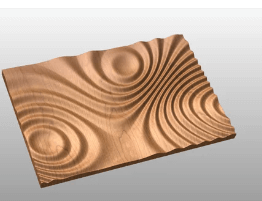
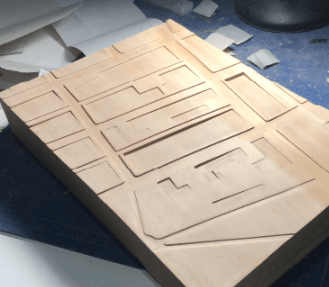
CNC enables rapid prototyping for product development and even sculptural art pieces.
4. Advantages of CNC Models
4.1 Precision & Repeatability
CNC machines can achieve tolerances as tight as ±0.001 inches, ensuring identical parts in mass production.
4.2 Automation & Efficiency
Once programmed, CNC machines operate with minimal human intervention, reducing labor costs.
4.3 Flexibility
A single CNC machine can produce multiple parts by simply changing the program.
4.4 Reduced Waste
Optimized cutting paths minimize material waste compared to manual machining.
5. Challenges in CNC Machining
5.1 High Initial Costs
CNC machines require significant investment in equipment and training.
5.2 Programming Complexity
Skilled operators are needed to write and troubleshoot G-code.
5.3 Maintenance Requirements
Regular calibration and lubrication are essential to prevent breakdowns.
5.4 Material Limitations
Some materials (e.g., superalloys) require specialized CNC setups, increasing costs.
6. Future Trends in CNC Technology
6.1 AI-Driven Optimization
Machine learning algorithms will enhance tool path efficiency and predictive maintenance.
6.2 Hybrid Manufacturing
Combining CNC machining with 3D printing for complex, multi-material parts.
6.3 Cloud-Based CNC Systems
Remote programming and real-time analytics for smarter factories.
6.4 Sustainable Machining
Energy-efficient CNC machines and recycling of machining waste.
Conclusion
CNC models have transformed manufacturing by delivering unmatched precision, efficiency, and versatility. As technology advances, CNC systems will integrate AI, IoT, and sustainable practices, further shaping the future of industrial production. Companies that adopt these innovations will gain a competitive edge in an increasingly automated world.
By understanding the capabilities and challenges of CNC machining, manufacturers can harness its full potential to drive innovation across industries. The journey from manual machining to smart CNC systems highlights the incredible progress of industrial automation—and the best is yet to come.