
Skip to content
Andwin Circuits
  • Home
  • ProductsExpand
    • HDI multilayer PCB
    • Rigid Flex PCB
    • Flex pcb
    • Special PCBExpand
      • High Frequency PCBExpand
        • Rogers RO4350B PCB
        • Rogers RO4003 pcb
        • Rogers RO3003 PCB
        • Rogers 5880 PCB
        • DICLAD 527 PCB
        • Taconic TLX series
        • Taconic TLX-8 RF PCB
        • Taconic TLX-9 RF PCB
      • High speed pcbExpand
        • Megtron 6 High Speed PCB
        • TU-872 SLK Sp High Speed
      • High TG PCBExpand
        • SHENGYI SH260 PCB
        • ISOLA 370HR PCB
        • ISOLA IS410 PCB
        • ISOLA IS420 PCB
      • Heavy copper PCB
      • Copper coin pcb
      • Copper inlay PCB
    • Metal Core PCBExpand
      • Copper core pcb
      • Aluminum PCB
      • 2 Layers Aluminum PCB
      • Direct thermal MCPCB
      • 2 Layers Direct Thermal
    • Ceramic PCBExpand
      • DPC ceramic PCB
      • DBC ceramic PCB
      • Thick film Ceramic PCB
      • Al2O3 Alumina PCB
      • AIN ALN ceramic PCB
      • IGBT Ceramic PCB
  • ServiceExpand
    • PCB Assembly
    • Quick turn PCB assembly
    • PCBA conformal coating
  • IndustryExpand
    • Telecommunication
    • IoT and Wireless
    • Industrial Control
    • Thermal management
    • Power and Energy
    • IC test board
    • Automative
    • Medical
  • CapabilityExpand
    • Rigid PCB
    • Rigid flex PCB
    • Metal core PCB
    • PCB Assembly
  • TechnologyExpand
    • Blogs
    • Via in pad
    • PCB E-test
    • PCB stack up
    • MCPCB panelization
    • Controlled impedance PCB
  • AboutExpand
    • About us
    • Certification
    • Factory Tour
  • Contact
Andwin Circuits
Home / Blogs / Types of pads in PCB design

Types of pads in PCB design

ByGrace December 20, 2024December 19, 2024

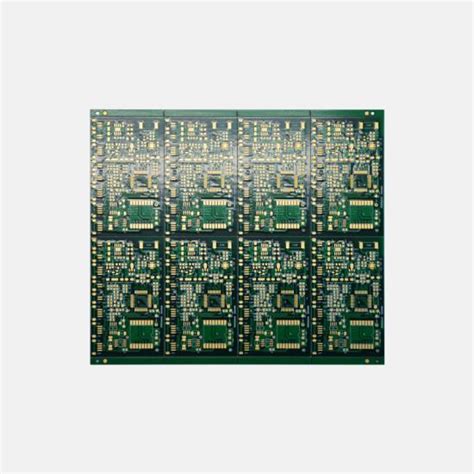
In PCB design, pads are a very important concept, and PCB engineers must be familiar with them. However, although they are familiar with them, many engineers have only a limited understanding of pads. Today, Circuit Bacteria will take you to understand the types of pads and the design standards of pads in PCB design.
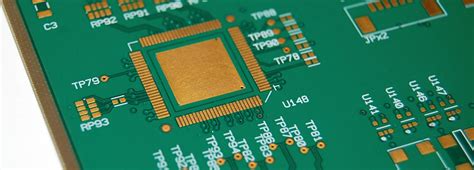
Pads, the basic building blocks of surface mount assembly, are used to form the land pattern of a circuit board, that is, various pad combinations designed for special component types.
Pads are used for electrical connections, device fixation, or partial conductive patterns for both.
Contact us for PCB quote now |

Embedded Column

1.Types of PCB pads

    I. Common pads

    1. Square pads–Mostly used when the components on the printed board are large and few, and the printed conductors are simple. When making a PCB by hand, this pad is easy to implement.
    2. Circular pads–Widely used in single-sided and double-sided printed boards with regular arrangement of components. If the density of the board allows, the pads can be larger so that they will not fall off during welding.
    3. Island pads – the connection between pads is integrated. Often used in vertical irregular arrangement installation.
    4. Polygonal pads – used to distinguish pads with similar outer diameters but different hole diameters, which is convenient for processing and assembly.
    5. Oval pads – this type of pad has enough area to enhance the anti-peeling ability, and is often used for dual-in-line devices.
    6. Open pads – often used to ensure that the pad holes of manual soldering are not sealed by solder after wave soldering.
    7. Special pads

    (1) Plum blossom pads

    Plum blossom pads are usually used in large via grounding locations. There are several reasons for this design:
    1) The fixing hole needs to be metallized and connected to GND. If the fixing hole is fully metallized, it is easy to block the hole during reflow soldering.

    2) The use of internal metal screw holes may cause the grounding to be in a poor state due to installation or multiple disassembly and assembly. The use of plum blossom hole pads can ensure good grounding regardless of stress changes.
    Contact us for PCB quote now |

    (2) Cross solder pad

    The cross solder pad is also called hot solder pad, hot air solder pad, etc. Its function is to reduce the heat dissipation of the solder pad during welding to prevent cold solder joints or PCB peeling caused by excessive heat dissipation. 1) When your solder pad is a ground wire. The cross can reduce the area of ​​the ground wire connection, slow down the heat dissipation speed, and facilitate welding. 2) When your PCB needs machine patch and a reflow soldering machine, the cross solder pad can prevent the PCB from peeling (because more heat is needed to melt the solder paste).
    (3) Teardrop solder pad
    It is often used when the trace connected to the solder pad is thin to prevent the solder pad from peeling and the trace from the solder pad from being disconnected. This type of solder pad is often used in high-frequency circuits.
    Embedded column
    Contact us for PCB quote now |

    2.Design standards for solder pads in PCB design

      I. Design standards for the shape and size of PCB solder pads:

      1. Call the PCB standard package library.
      2. The minimum single side of the solder pad is not less than 0.25mm, and the maximum diameter of the entire solder pad is not more than 3 times the component aperture.
      3. Try to ensure that the spacing between the edges of the two pads is greater than 0.4mm.
      4. Pads with a hole diameter exceeding 1.2mm or a pad diameter exceeding 3.0mm should be designed as diamond or plum-shaped pads.
      5. In the case of dense wiring, it is recommended to use elliptical and oblong connection pads. The diameter or minimum width of the pad of a single-sided board is 1.6mm; the weak current circuit pad of a double-sided board only needs the hole diameter plus 0.5mm. A pad that is too large can easily cause unnecessary soldering.
      6. PCB pad via size standard:

      The inner hole of the pad is generally not less than 0.6mm, because holes less than 0.6mm are not easy to process when punching the die. Usually, the metal pin diameter plus 0.2mm is used as the inner hole diameter of the pad. For example, when the metal pin diameter of the resistor is 0.5mm, the inner hole diameter of the pad corresponds to 0.7mm. The pad diameter depends on the inner hole diameter.
      Contact us for PCB quote now |

      Key points for reliability design of PCB pads:

      Symmetry.

      1. To ensure the balance of surface tension of molten solder, the pads at both ends must be symmetrical.

      2. Pad spacing: Too large or too small pad spacing will cause welding defects, so make sure the spacing between the component end or pin and the pad is appropriate.

      3. Pad residual size: The residual size after the component end or pin overlaps the pad must ensure that the solder joint can form a meniscus.

      4. Pad width: It should be basically consistent with the width of the component end or pin.

        Contact us for PCB quote now |
        Post Tags: #aluminum clad pcb#aluminum core pcb#assemble pcb

        Post navigation

        Previous Previous
        Advancements in Printed Circuit Board Assembly Techniques
        NextContinue
        Seven steps to teach you how to determine PCB layout and wiring

        Search

        Search

        Products

        • HDI Multilayer PCB
        • Rigid Flex PCB
        • Flex pcb
        • High Frequency PCB
        • High speed pcb
        • Heavy copper PCB
        • Metal Core PCB
        • Ceramic PCB

        Address

        Andwin Circuits Co.,Limited
        Email: sales@andwinpcb.com
        Tel: +86 755 2832 9394
        Fax:+86 755 2992  6717
        ADD:1-2F-1217,HouDeQun Industrial park,
        NanTing RD NO.56,ShaJing,BaoAn,Shenzhen 518104,GuangDong,China

        Products

        • HDI Multilayer PCB
        • Rigid Flex PCB
        • Flex pcb
        • High Frequency PCB
        • High speed pcb
        • Heavy copper PCB
        • Metal Core PCB
        • Ceramic PCB

        Technology

        • Blogs
        • Via in pad
        • PCB E-test
        • PCB stack up
        • Metal core PCB panelization
        • Controlled impedance PCB

        CERTIFICATION

        Certification >>


        Copyright© 2003 - 2026 Andwin | All Rights Reserved | Powered by Andwin

        Scroll to top
        • Home
        • Products
          • HDI multilayer PCB
          • Rigid Flex PCB
          • Flex pcb
          • Special PCB
            • High Frequency PCB
              • Rogers RO4350B PCB
              • Rogers RO4003 pcb
              • Rogers RO3003 PCB
              • Rogers 5880 PCB
              • DICLAD 527 PCB
              • Taconic TLX series
              • Taconic TLX-8 RF PCB
              • Taconic TLX-9 RF PCB
            • High speed pcb
              • Megtron 6 High Speed PCB
              • TU-872 SLK Sp High Speed
            • High TG PCB
              • SHENGYI SH260 PCB
              • ISOLA 370HR PCB
              • ISOLA IS410 PCB
              • ISOLA IS420 PCB
            • Heavy copper PCB
            • Copper coin pcb
            • Copper inlay PCB
          • Metal Core PCB
            • Copper core pcb
            • Aluminum PCB
            • 2 Layers Aluminum PCB
            • Direct thermal MCPCB
            • 2 Layers Direct Thermal
          • Ceramic PCB
            • DPC ceramic PCB
            • DBC ceramic PCB
            • Thick film Ceramic PCB
            • Al2O3 Alumina PCB
            • AIN ALN ceramic PCB
            • IGBT Ceramic PCB
        • Service
          • PCB Assembly
          • Quick turn PCB assembly
          • PCBA conformal coating
        • Industry
          • Telecommunication
          • IoT and Wireless
          • Industrial Control
          • Thermal management
          • Power and Energy
          • IC test board
          • Automative
          • Medical
        • Capability
          • Rigid PCB
          • Rigid flex PCB
          • Metal core PCB
          • PCB Assembly
        • Technology
          • Blogs
          • Via in pad
          • PCB E-test
          • PCB stack up
          • MCPCB panelization
          • Controlled impedance PCB
        • About
          • About us
          • Certification
          • Factory Tour
        • Contact
        Search