What are the basic characteristics of optical fiber communications? How it is applied with pcb technology
Optical fiber is the abbreviation of optical fiber. Fiber optic communication is a communication method that uses light waves as the information carrier and optical fiber as the transmission medium. In principle, the basic material elements that constitute optical fiber communication are optical fibers, light sources and light detectors. In applications, optical fibers are often classified according to their uses and can be divided into optical fibers for communication and optical fibers for sensing.
The transmission medium optical fiber is divided into two types: general purpose and special purpose.
Functional device optical fiber refers to the optical fiber used to complete the functions of amplification, shaping, frequency division, frequency doubling, modulation and optical oscillation of light waves, and is often used as a certain functional device. form appears.
GET PCB MANUFACTURING AND ASSEMBLY QUOTE NOW!
The rapid development of optical fiber communication is mainly due to its following characteristics:
1. Large communication capacity: The bandwidth of optical fiber is very high. The potential bandwidth of one optical fiber can reach 20THz, which is far more than traditional metal cables. This makes the communication capacity of optical fiber communication extremely large and enables large-capacity data transmission.
2. Long transmission distance: Since the loss of optical fiber is very low, the signal can be transmitted over a long distance in the optical fiber. This makes optical fiber communications suitable for long-distance communications, such as transoceanic communications.
3. Good confidentiality: Since the optical signals transmitted in the optical fiber are limited in the optical fiber and are difficult to be stolen or monitored, the confidentiality of optical fiber communication is relatively good.
4. Strong anti-electromagnetic interference ability: The main component of optical fiber is quartz, which is not easily affected by electromagnetic interference. Therefore, fiber optic communication systems can maintain good performance in environments with severe electromagnetic interference.
5. Brittle texture and poor mechanical strength: Since optical fiber is composed of glass fiber, it is brittle and easy to break. At the same time, the mechanical strength of optical fibers is also poor and is easily damaged by external forces.
6.Cutting and splicing optical fibers require certain tools, equipment and techniques: Cutting and splicing optical fibers requires the use of special tools and equipment, and requires technicians to operate. This increases the complexity and cost of optical fiber communication systems to a certain extent.
7.Difficulty in power supply: In some application scenarios, such as submarine optical cables, fiber optic communication systems may have difficulty in power supply. Because optical fiber itself is not conductive, an external power source is required to power equipment such as optical amplifiers.
The application fields of optical fiber communication are very wide, mainly involving the following aspects:
Communications industry: In the field of communications, optical fiber communications are mainly used for local trunk lines, long-distance trunk communications and global communications networks. Optical fiber communication has the advantages of large transmission capacity, long transmission distance, and strong anti-electromagnetic interference ability. It is an important method of modern communication.
Television broadcasting: Optical fiber communication is widely used in the field of television broadcasting, enabling high-quality image transmission and audio transmission. Optical fiber transmission systems can provide greater bandwidth and better signal quality, improving the playback quality and stability of television broadcasts.
Industrial production: In the field of industrial production, optical fiber communication can be used in various automated control systems, sensor monitoring systems, etc. Optical fiber transmission systems can quickly transmit large amounts of data, ensuring the stability and reliability of industrial production.
Data Center: In data centers, fiber optic communication technology is one of the key infrastructures. Fiber optic transmission systems can connect different data centers, servers and storage devices to achieve high-speed data transmission and sharing, improving the speed and efficiency of data processing.
Healthcare: Fiber optic communications are also widely used in the healthcare field, such as the transmission of medical images, remote diagnosis and treatment, etc. Fiber optic transmission systems can provide high-quality images and data, providing doctors with accurate diagnostic evidence.
Military field: In the military field, optical fiber communication is used for the transmission of various communication systems and sensor networks. The optical fiber transmission system has the advantages of strong anti-electromagnetic interference capability and good confidentiality. It is one of the important means of military communications.
Aerospace: In the aerospace field, fiber optic communications are used for data transmission of various sensors, navigation systems, and control systems. The optical fiber transmission system is lightweight, reliable, and resistant to high temperatures, and is suitable for the special environment of aerospace.
Internet of Things: In the field of Internet of Things, optical fiber communications are used for connection and data transmission of various smart devices. Optical fiber transmission systems can provide high-speed, reliable data transmission and support the widespread application and development of the Internet of Things.
GET PCB AND ASSEMBLY SERVICE QUOTE NOW!
Optical fiber communication has been widely used in various fields and has broad application prospects. With the continuous development of technology,
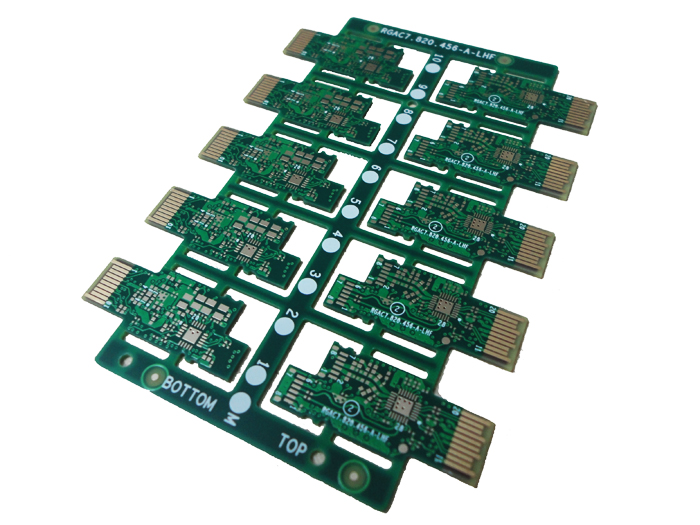
The rapid development of technology requires the advancement of communication systems, especially in the field of high-speed data transmission. Fiber optic communications and printed circuit boards (PCBs) have become key components in this field, each making a unique contribution to the efficiency and reliability of modern communications networks. The integration of these technologies brings significant improvements, enabling faster and more reliable data transfer across a variety of applications.
Fiber optic communications uses light to transmit data and offers several advantages over traditional copper-based systems. The main benefit is its ability to support higher bandwidths, allowing the transfer of large amounts of data at unprecedented speeds. This capability is critical in an era where data consumption is growing exponentially, driven by the proliferation of internet services, streaming platforms and cloud computing. Moreover, optical fibers are not susceptible to electromagnetic interference, ensuring a more stable and secure data transmission environment.
At the same time, the development of advanced PCBs played a key role in supporting high-speed data transmission. PCBs are the backbone of electronic devices, providing the necessary infrastructure for electrical connections and signal routing. Modern PCBs are designed to accommodate the high-frequency signals associated with fiber optic communications, ensuring minimal signal loss and distortion. This is achieved through careful design practices such as controlled impedance routing and the use of high-quality materials that reduce signal attenuation.
The integration of fiber optic communications with advanced PCB technology has resulted in hybrid systems that leverage the strengths of both components. These systems are particularly useful in applications that require high data transfer rates and low latency, such as data centers, telecommunications, and high-performance computing. By combining fiber optics with PCBs, engineers can design communications networks that are faster, more efficient, and scalable.
One of the key challenges in this integration process is ensuring a seamless connection between the optical fiber and the PCB. This requires the development of specialized connectors and interfaces that can efficiently transmit optical signals to electrical signals and vice versa. Recent advances in connector technology address this challenge, resulting in more reliable and efficient interfaces that facilitate high-speed data transmission. Additionally, the use of photonic integrated circuits (PICs) enables the integration of optical components directly onto the PCB, further enhancing the performance of these hybrid systems.
Another major advancement in this field is the use of advanced manufacturing technologies such as laser direct structuring (LDS) and additive manufacturing. These technologies increase the precision and flexibility of PCB designs, enabling the creation of complex geometries and the integration of optical paths directly onto the board. This not only improves the overall performance of the communication system but also reduces manufacturing costs and time.
In admdition, the use of advanced materials such as low-loss dielectric substrates and high-speed lainates can also help improve the performance of PCBs in fiber optic communication systems. These materials provide superior electrical performance, reduce signal loss and increase the overall efficiency of data transmission. As a result, modern PCBs are better able to meet the needs of high-speed communication networks.
In summary, advances in fiber optic communications and PCB integration have dramatically changed the landscape of high-speed data transmission. By leveraging the strengths of both technologies, engineers develop faster, more reliable, and more efficient communications systems. As data consumption continues to grow, continued innovation in this field is critical to meet the demands of modern communications networks, ensuring they can support the growing demands for high-speed data transmission.