
What is the classification of grounding in high-speed PCB design?
With the development of electronic technology, the functions of electronic products are becoming more and more powerful. The design of PCB plays a vital role in the design of electronic products, because the quality of PCB design will directly affect the realization of product functions.
In the design of electronic products, it is not difficult to design a PCB circuit to realize its functions. The difficulty is that it is not affected by various factors (such as temperature and humidity changes, air pressure changes, mechanical shock, corrosion, etc.). In order to maintain normal and stable operation, we will take various design methods or manufacturing process measures to eliminate or reduce these influences. Everyone knows that grounding design is the basis of system design, and good grounding is a prerequisite for the safe and stable operation of a system. So today, the editor will talk to you about the relevant knowledge of grounding methods in high-speed PCB design.
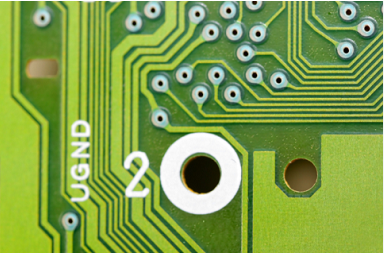
PCB grounding design:
The broad meaning of grounding includes two aspects, namely grounding to the ground and grounding to the virtual ground. Grounding to the ground refers to connecting to the earth; grounding to the virtual ground refers to connecting to the potential reference point. When this reference point is electrically insulated from the earth, it is called a floating ground connection. There are two purposes of grounding: one is to ensure the stable and reliable operation of the control system and prevent interference caused by ground loops, which is often called working grounding; the other is to prevent operators from being exposed to the risk of electric shock due to insulation damage or degradation of the equipment and to ensure the safety of the equipment, which is called protective grounding.
Grounding selection principle:
For a given device or system, at the highest frequency of interest (corresponding to the wavelength) I, when the length of the transmission line L> I, it is considered a high-frequency circuit, otherwise it is considered a low-frequency circuit.
(1) For low-frequency circuits (<1MHZ), it is recommended to use single-point grounding;
(2) For high-frequency circuits (>10MHZ), it is recommended to use multi-point grounding;
(3) For high- and low-frequency mixed circuits, mixed grounding is generally applicable to the operating frequency range of 500kHz-30MHz;
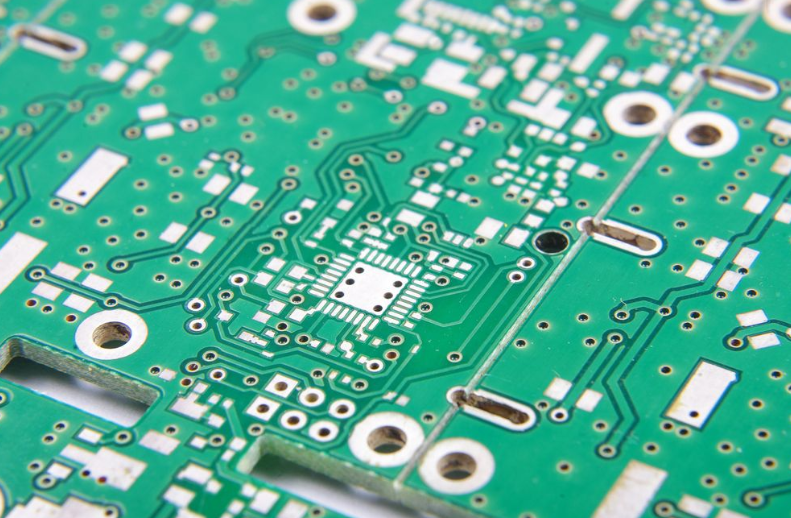
PCB grounding method:
- Single-point grounding: The ground wires of all circuits are connected to the same point on the ground plane, which is divided into series single-point grounding and parallel single-point grounding.
Single-point grounding means that only one physical point in the entire system is defined as the ground reference point, and all other points that need to be grounded are connected to this point.
Single-point grounding is suitable for circuits with lower frequencies (below 1MHZ). If the operating frequency of the system is very high, so that the operating wavelength is comparable to the length of the system ground lead, the single-point grounding method will have problems. When the length of the ground line is close to 1/4 wavelength, it is like a transmission line with a short terminal. The current and voltage of the ground line are distributed in a standing wave, and the ground line becomes a radiating antenna, and cannot play the role of “ground”.
In order to reduce the ground impedance and avoid radiation, the length of the ground line should be less than 1/20 wavelength. In the processing of power supply circuits, single-point grounding can generally be considered. For PCBs with a large number of digital circuits, single-point grounding is generally not recommended because they contain rich high-order harmonics.
Multi-point grounding
- Multi-point grounding: The ground wires of all circuits are grounded nearby, and the ground wires are very short and suitable for high-frequency grounding.
Multi-point grounding means that each grounding point in the equipment is directly connected to the ground plane closest to it to minimize the length of the ground lead.
The multi-point grounding circuit has a simple structure, and the high-frequency standing wave phenomenon that may appear on the grounding line is significantly reduced. It is suitable for occasions with higher operating frequencies (>10MHZ). However, multi-point grounding may cause many grounding loops to form inside the device, thereby reducing the device’s ability to resist external electromagnetic fields. In the case of multi-point grounding, attention should be paid to the ground loop problem, especially when different modules and devices are networked.
Electromagnetic interference caused by ground loop: The ideal ground wire should be a physical entity with zero potential and zero impedance. However, the actual ground wire itself has both resistance and reactance components. When current passes through the ground wire, a voltage drop will occur. The ground wire will form a loop with other connections (signal, power line, etc.). When the time-varying electromagnetic field is coupled to the loop, an induced electromotive force is generated in the ground loop, and the ground loop is coupled to the load, posing a potential EMI threat. 3. Mixed grounding: Mix single-point grounding and multi-point grounding. Generally, all modules will use a combination of two grounding methods, and use mixed grounding to complete the connection between the circuit ground wire and the ground plane. If you do not choose to use the entire plane as a common ground line, for example, when the module itself has two ground lines, you need to split the ground plane, which often interacts with the power plane. Pay attention to the following principles:
(1) Align the planes to avoid overlap between irrelevant power planes and ground planes, otherwise all ground plane segmentation will fail and interfere with each other;
(2) In the case of high frequency, the layers will be coupled through the parasitic capacitance of the circuit board;
(3) The signal lines between the ground planes (such as the digital ground plane and the analog ground plane) are connected using ground bridges, and the nearest return path is configured through the nearest through-hole.
(4) Avoid running high-frequency lines such as clock lines near the isolated ground plane to cause unnecessary radiation.
(5) The loop area formed by the signal line and its loop should be as small as possible, also known as the minimum loop rule; the smaller the loop area, the less external radiation and the less external interference. When splitting the ground plane and routing the signal, the distribution of the ground plane and important signal lines should be considered to prevent problems caused by ground plane slots, etc.
4.Floating ground:
Floating ground refers to a grounding method in which the equipment grounding system is electrically insulated from the earth.
Due to some weaknesses of floating ground itself, it is not suitable for general large systems and its grounding method is rarely used.