
What is Turnkey PCB Assembly Service and How Does It Work?
Turnkey PCB Assembly service is an end-to-end manufacturing solution where a single provider manages the entire production process—from component sourcing and PCB fabrication to assembly, testing, and delivery. This comprehensive approach eliminates the complexity of coordinating multiple vendors, reduces administrative overhead, and ensures consistent quality throughout the manufacturing journey. According to industry analysis, companies utilizing PCB Assembly turnkey solutions experience up to 40% faster time-to-market compared to traditional multi-vendor approaches.
Understanding the Challenges in PCB Manufacturing
Electronics manufacturers face significant challenges when bringing products to market. Research indicates that 67% of hardware startups experience delays due to supply chain coordination issues, while 45% encounter quality problems stemming from fragmented vendor management.
Common Pain Points in Traditional PCB Assembly
- Vendor Coordination Complexity: Managing separate suppliers for bare boards, components, and assembly creates communication gaps
- Accountability Issues: When defects occur, multiple vendors often blame each other, delaying resolution
- Inventory Management Burden: Companies must maintain component stock and handle procurement logistics
- Quality Inconsistency: Different quality standards across vendors lead to unpredictable results
- Extended Lead Times: Sequential processes with multiple handoffs extend production schedules
“Managing numerous vendors for one PCB order wastes time and creates a situation where no one is held accountable for the final result. The turnkey model eliminates these coordination gaps by consolidating responsibility under a single provider.”— Industry Analysis, 2025 Electronics Manufacturing Report
Data from manufacturing studies reveals that companies using fragmented assembly approaches spend an average of 120 hours per project on vendor coordination—time that could be allocated to product development and innovation.
What is Turnkey PCB Assembly Service?
Turnkey PCB Assembly service represents a paradigm shift in electronics manufacturing. The term “turnkey” originates from the concept of receiving a product ready for immediate use—like turning a key to start an engine. In PCB manufacturing, this means the provider delivers fully assembled, tested circuit boards that are ready for integration into your final product.
Core Components of Turnkey PCB Assembly
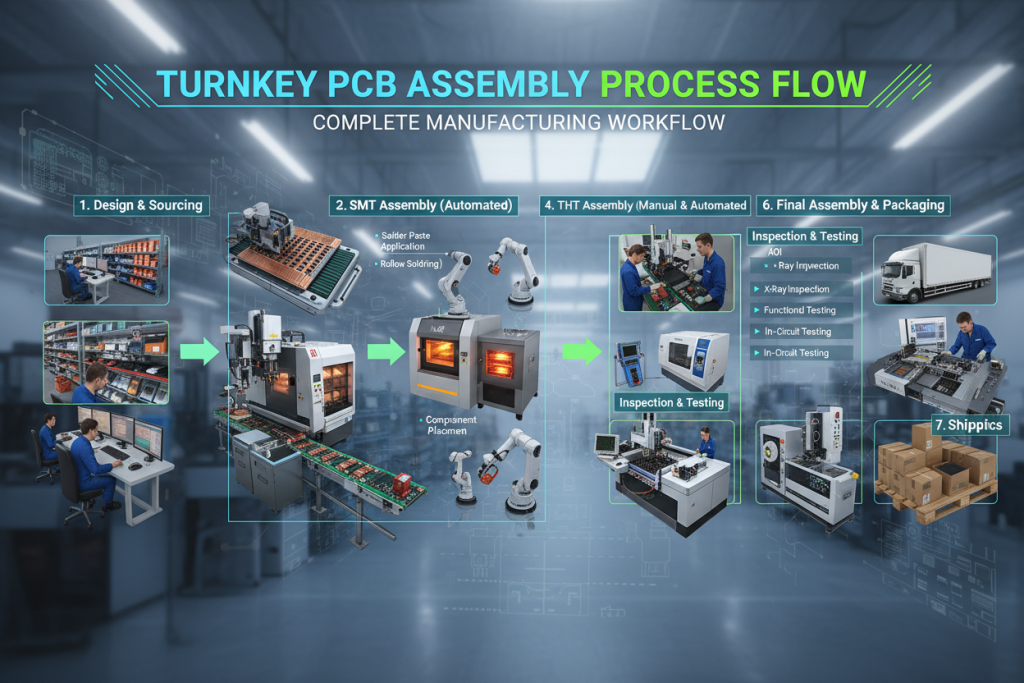
A comprehensive turnkey PCB assembly service encompasses seven essential elements:
- Engineering File Review (DFM/DFT): Pre-production analysis of Gerber files, BOM, and pick-and-place data to identify potential manufacturing issues
- Component Sourcing and Procurement: Full BOM management including supplier selection, purchasing, and inventory control
- PCB Fabrication: Manufacturing bare boards according to design specifications
- Surface Mount Technology (SMT) Assembly: Automated placement and reflow soldering of surface-mount components
- Through-Hole Assembly: Insertion and soldering of leaded components requiring higher mechanical strength
- Quality Inspection and Testing: Multi-stage verification including AOI, X-ray, and functional testing
- Packaging and Delivery: ESD-safe packaging with full documentation and traceability records
Analysis shows that integrated turnkey solutions reduce total project management time by 60-75% compared to traditional multi-vendor approaches, allowing engineering teams to focus on core competencies rather than supply chain logistics.
Full Turnkey vs. Partial Turnkey vs. Consignment
Understanding the distinctions between service models is critical for selecting the optimal approach for your project requirements.
Service Model Comparison
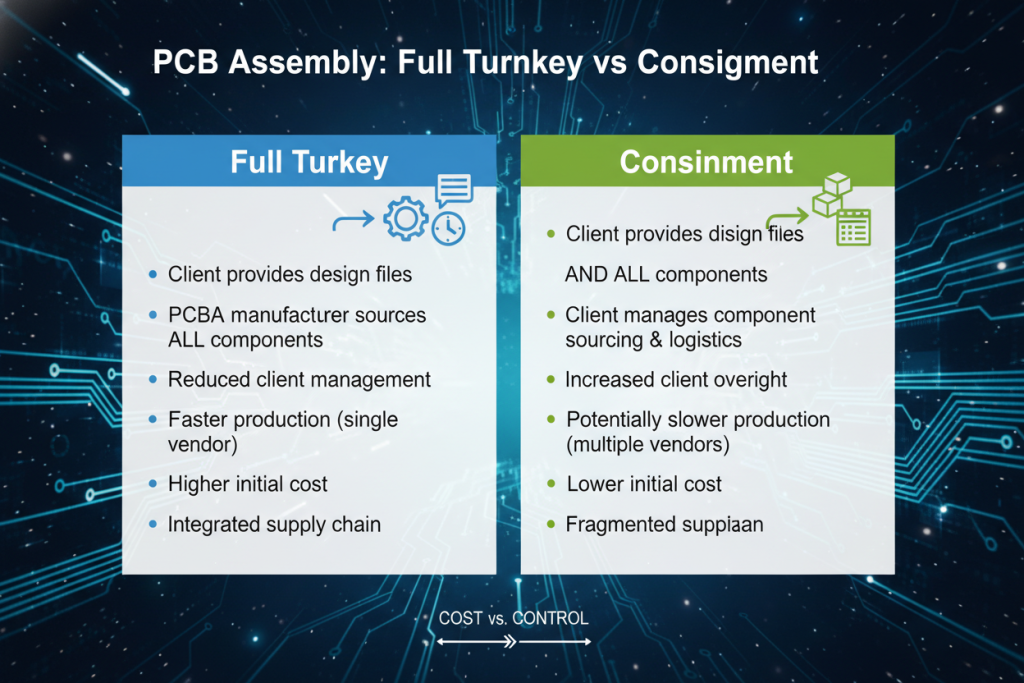
| Service Model | Component Sourcing | PCB Fabrication | Best Application |
|---|---|---|---|
| Full Turnkey | Manufacturer sources 100% of BOM | Manufacturer fabricates in-house | Teams wanting zero procurement overhead |
| Partial Turnkey | Split—you supply key parts, they source rest | Manufacturer fabricates | Teams with preferred suppliers for critical ICs |
| Consignment | You supply all components | You supply bare boards | Companies with full supply chain control |
Full Turnkey PCB Assembly
In the full turnkey model, the manufacturer assumes complete responsibility for the entire production process. This approach offers several distinct advantages:
- Single Point of Contact: One contract, one purchase order, one accountable partner
- Procurement Expertise: Access to established supplier relationships and bulk purchasing power
- Reduced Risk: Manufacturer bears responsibility for component defects and supply chain disruptions
- Streamlined Communication: Eliminates inter-vendor coordination delays
Consignment Assembly Considerations
While consignment assembly provides maximum control over component selection, it introduces significant operational complexities:
“If you send 1,000 resistors and the machine drops 10 during assembly, the factory stops production and calls you to send 10 more. This creates extended delays and disrupts manufacturing schedules.”— PCB Manufacturing Best Practices Guide
Industry data indicates that 90% of projects benefit from full turnkey services, with consignment recommended only for rare components already in your inventory or specialized parts requiring specific sourcing.
The Turnkey PCB Assembly Process: Step-by-Step
A professional turnkey PCB Assembly service follows eight defined production stages, each with clear inputs, outputs, and quality checkpoints.
Stage 1: DFM and DFT Engineering Review
Design for Manufacturability (DFM) and Design for Testability (DFT) reviews represent the critical first step. The engineering team analyzes:
- Trace widths and spacing against fabrication capability limits
- Pad sizes and footprint accuracy for every component package
- Via structures for HDI boards including blind, buried, and microvias
- Test point placement and probe accessibility
- BOM verification against distributor databases for availability and lifecycle status
Catching a footprint mismatch during DFM review costs nothing to fix. Identifying the same issue after fabrication can cost thousands in rework and weeks of delays.
Stage 2: Component Sourcing and Procurement
Once DFM approval is complete, the factory initiates BOM procurement. Professional turnkey providers leverage:
- Direct relationships with authorized distributors (Arrow, Avnet, Mouser, Digi-Key)
- Access to global component markets for hard-to-find parts
- Lifecycle monitoring to identify end-of-life or allocation risks
- Alternative component recommendations when primary parts are unavailable
Stage 3: PCB Fabrication
Bare board manufacturing proceeds in parallel with component sourcing to optimize lead times. Modern facilities utilize:
- Automated solder paste printing with 3D SPI verification
- High-speed pick-and-place machines capable of placing 80,000+ components per hour
- Multi-zone reflow ovens with precise temperature profiling
Stage 4: SMT Assembly
Surface Mount Technology assembly involves three critical operations:
- Solder Paste Printing: Stencil-based application with volume verification
- Component Placement: Automated pick-and-place with vision alignment
- Reflow Soldering: Controlled thermal profile to create reliable solder joints
Stage 5: Through-Hole Assembly
For components requiring mechanical durability, through-hole assembly employs:
- Wave soldering for high-volume production
- Selective soldering for mixed-technology boards
- Manual soldering for specialized components
Stage 6: Quality Inspection
Multi-stage inspection ensures defect detection at every production phase:
- SPI (Solder Paste Inspection) after printing
- Pre-reflow AOI for placement verification
- Post-reflow AOI for solder joint quality
- X-ray inspection for BGA and hidden solder joints
Stage 7: Testing and Functional Verification
Electrical testing validates board performance:
- ICT (In-Circuit Testing) for component-level verification
- Flying probe testing for prototypes and low volumes
- Functional Testing (FCT) under real operating conditions
Stage 8: Final Quality Assurance and Delivery
Completed boards undergo final inspection before shipment:
- Visual inspection per IPC-A-610 standards
- ESD-safe packaging preparation
- Complete documentation including inspection reports and traceability records
Quality Control in Turnkey PCB Assembly
Quality assurance represents a cornerstone of professional turnkey PCB Assembly services. Leading manufacturers implement comprehensive inspection protocols that exceed industry standards.
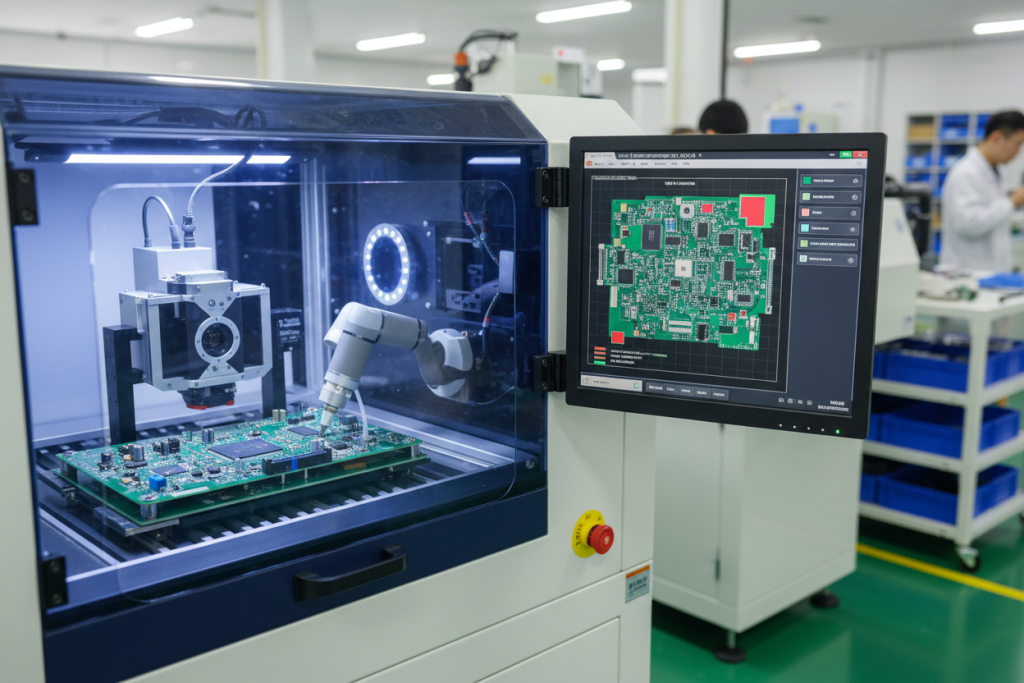
Automated Optical Inspection (AOI)
AOI systems utilize high-resolution cameras and machine learning algorithms to detect visible defects with exceptional accuracy:
| Inspection Stage | Defects Detected | Detection Rate |
|---|---|---|
| Post-Solder Paste | Insufficient paste, bridging, misalignment | 99.5% |
| Post-Placement | Missing components, wrong orientation, offset | 99.8% |
| Post-Reflow | Cold joints, bridging, tombstoning, insufficient solder | 99.2% |
X-Ray Inspection for Hidden Joints
For components like BGAs, QFNs, and CSPs where solder joints are concealed, X-ray inspection provides critical visibility:
- Void Detection: Identifies air pockets in solder joints that compromise thermal and electrical conductivity
- Solder Ball Inspection: Verifies proper BGA attachment and alignment
- Internal Structure Analysis: Reveals cracks, delamination, and via integrity issues
“AOI and X-ray inspection systems achieve defect detection rates exceeding 99.5% when properly integrated into the production workflow. This level of quality control is essential for mission-critical applications in medical, automotive, and aerospace industries.”— IPC Quality Standards Research, 2025
Industry Certifications and Standards
Professional turnkey PCB Assembly providers maintain certifications that demonstrate commitment to quality:
- ISO 9001: Quality management systems certification
- ISO 13485: Medical device quality standards
- IATF 16949: Automotive quality management
- IPC-A-610: Acceptability of electronic assemblies
- IPC J-STD-001: Requirements for soldered electrical assemblies
Industry Applications and Use Cases
Turnkey PCB Assembly services serve diverse industries, each with unique requirements and compliance standards.
Medical Device Manufacturing
Medical electronics demand the highest reliability and complete traceability. Key requirements include:
- ISO 13485 quality system compliance
- Full component traceability documentation
- IPC Class 3 workmanship standards
- Extended functional and reliability testing
Typical Applications: Diagnostic equipment, patient monitoring systems, medical imaging devices, implantable device controllers
Case Example: A diagnostic equipment manufacturer reduced time-to-market by 45% by transitioning from consignment to turnkey assembly, eliminating procurement bottlenecks for specialized medical-grade components.
Automotive Electronics
Automotive PCBs must withstand extreme environmental conditions while maintaining safety-critical functionality:
- IATF 16949 certification requirements
- High vibration and temperature resistance
- Long-term supply assurance (typically 10-15 years)
- Advanced inspection protocols including X-ray for all BGA components
Typical Applications: ADAS systems, EV control modules, infotainment systems, engine control units
Case Example: An EV manufacturer achieved 99.97% first-pass yield by implementing turnkey assembly with integrated AOI and X-ray inspection for their battery management systems.
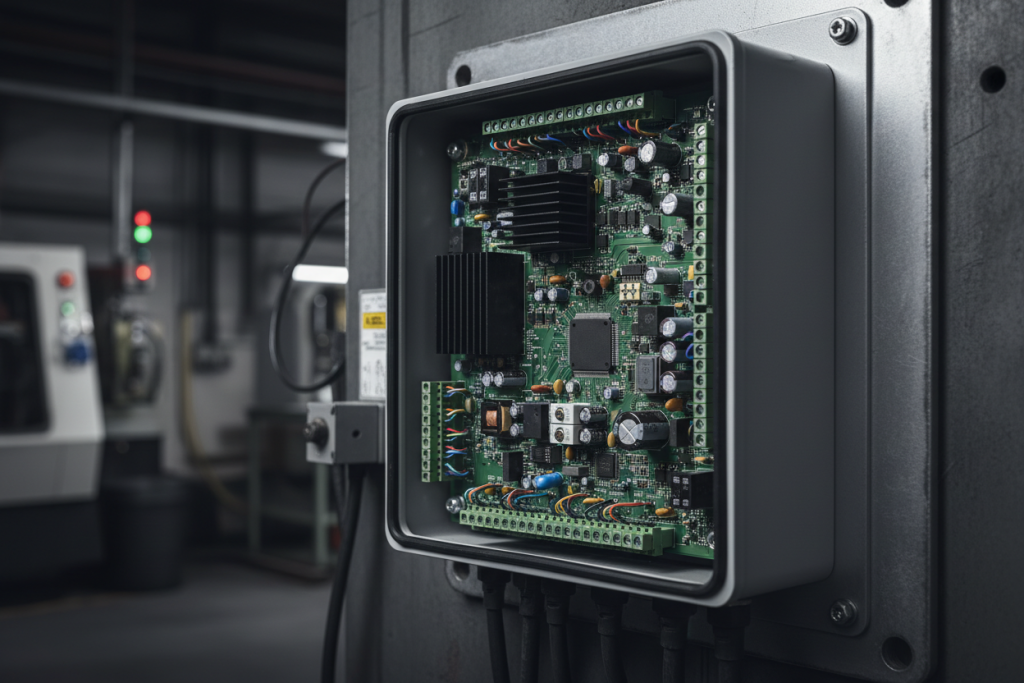
Industrial Automation
Industrial control systems operate in harsh environments requiring robust construction:
- Extended temperature range operation (-40°C to +85°C)
- Conformal coating for moisture and chemical protection
- Heavy copper options (up to 6 oz) for power applications
- Long lifecycle component selection
Typical Applications: PLC systems, motor controllers, power distribution units, sensor interfaces
Case Example: An industrial automation company reduced field failure rates by 78% after switching to a turnkey provider with comprehensive DFM review and environmental stress testing capabilities.
Consumer Electronics
Consumer products prioritize cost optimization while maintaining quality:
- High-volume production capabilities
- Cost-optimized component sourcing
- Rapid prototyping for design iteration
- Flexible packaging and fulfillment options
Typical Applications: Smart home devices, wearables, gaming accessories, IoT sensors
Cost Factors and Pricing Considerations
Understanding cost drivers enables informed decision-making when evaluating turnkey PCB Assembly quotes.
Primary Cost Components
| Cost Factor | Impact on Total Cost | Optimization Strategies |
|---|---|---|
| Components | 50-70% of total cost | Standardize parts, leverage manufacturer purchasing power |
| PCB Fabrication | 15-25% of total cost | Optimize layer count, panelization |
| Assembly Labor | 10-20% of total cost | Design for automation, consolidate orders |
| Testing | 5-15% of total cost | Match test level to application requirements |
Volume Pricing Dynamics
Production volume significantly impacts per-unit costs:
- Prototypes (1-10 units): $180-$400 per unit—high setup costs distributed across few units
- Small Batch (50-200 units): $30-$85 per unit—economies of scale begin to emerge
- Medium Volume (500-1,000 units): $12-$45 per unit—optimal balance of cost and flexibility
- High Volume (5,000+ units): $5-$20 per unit—maximum efficiency and lowest per-unit cost
Hidden Costs to Consider
Beyond quoted pricing, several factors affect total project cost:
- Setup and Tooling Fees: Stencil costs ($20-$100), test fixture NRE ($500-$5,000)
- Component Procurement Surcharge: 3-10% if using non-standard suppliers
- Expedited Processing: 30-50% premium for rush orders
- Shipping and Customs: 10-30% depending on destination and Incoterms
“The most effective cost optimization strategy is submitting complete, accurate design files upfront. Incomplete documentation generates engineering queries that extend lead times and may incur additional review fees.”— PCB Manufacturing Cost Analysis, 2025
Frequently Asked Questions
What files do I need to submit for a turnkey PCB assembly quote?
At minimum, provide Gerber files (RS-274X format), BOM with manufacturer part numbers, pick-and-place file (Centroid data), assembly drawings, and fabrication notes. For functional testing requirements, include test specifications. Missing manufacturer part numbers in your BOM is the single most common cause of quote delays and component errors.
How long does turnkey PCB assembly typically take?
Standard lead times range from 3-7 working days for prototypes to 10-15 working days for small-to-medium batches. Mass production orders typically require 3-5 weeks. The three most common causes of delays are incomplete design files, components with long manufacturer lead times, and custom test fixture development. Custom service with 7-day rapid delivery options are available for time-critical projects.
What is the difference between full turnkey and partial turnkey PCB assembly?
In full turnkey, the manufacturer sources all components and fabricates the bare board, providing complete supply chain management. In partial turnkey, you supply certain components (typically high-value or customer-specified ICs) while the manufacturer sources the remainder. Full turnkey removes procurement burden entirely; partial turnkey offers more control over specific parts while maintaining assembly consolidation.
What IPC class should I specify for my project?
For most commercial and industrial electronics, IPC Class 2 is the standard. Medical devices, aerospace systems, and safety-critical applications require IPC Class 3. Consumer electronics where cosmetic defects are acceptable if the board functions can use Class 1. Always confirm which class your factory operates to before committing any order, and request operator certification documentation.
How do I verify that a turnkey PCB assembly provider is qualified?
Request certification documentation (ISO 9001, IPC standards), ask for customer references in your industry, inquire about their DFM review process, and verify inspection capabilities (AOI, X-ray). A qualified provider should offer transparent communication, detailed quotes with itemized costs, and a clear quality policy with defined acceptance criteria.
Conclusion
Turnkey PCB assembly service represents the optimal solution for companies seeking to streamline their electronics manufacturing process. By consolidating component sourcing, PCB fabrication, assembly, and testing under a single accountable provider, organizations achieve significant reductions in administrative overhead, accelerated time-to-market, and improved product quality.
Analysis of industry data demonstrates that companies leveraging turnkey solutions experience:
- 40-60% reduction in project management time
- 25-35% faster overall lead times
- 50-70% reduction in defect rates through integrated quality control
- 15-25% cost savings through optimized component sourcing
The key to successful turnkey PCB Assembly lies in selecting a qualified provider with demonstrated expertise, comprehensive quality systems, and transparent communication practices. Submit complete design documentation, engage actively in the DFM review process, and establish clear quality expectations upfront.
Whether you’re developing medical devices requiring ISO 13485 compliance, automotive electronics demanding IATF 16949 certification, or industrial controls needing extended reliability, turnkey PCB Assembly provides the integrated solution necessary for success in today’s competitive electronics market.
Ready to streamline your PCB manufacturing process? Contact our team of experts to discuss your project requirements and discover how our PCB Assembly services can accelerate your product development timeline while ensuring the highest quality standards.