
Why is “serial” so popular?
In the past two years, the word that everyone has heard the most is probably serial transmission. From the perspective of technological development, serial transmission has the momentum to completely replace parallel transmission. USB replaces IEEE 1284, SATA replaces PATA, and PCI Express replaces PCI.
In principle, parallel transmission is actually better than serial transmission. In layman’s terms, the parallel transmission path is like a multi-lane wide road, while serial transmission is a country road that only allows one car to pass. Taking the old and typical Standard Parallel Port (Standard Parallel Port) as an example, serial transmission is a very popular word. In the past two years, the word that everyone has heard the most is probably serial transmission. From the perspective of technological development, serial transmission has the momentum to completely replace parallel transmission.
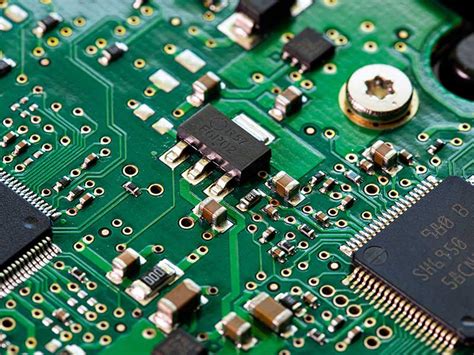
USB replaces IEEE 1284, SATA replaces PATA, and PCI Express replaces PCI.
In principle, parallel transmission is actually better than serial transmission. In layman’s terms, the parallel transmission path is like a multi-lane wide road, while serial transmission is a country road that only allows one car to pass. Port) and serial port (commonly known as COM port) as examples, the bit width of the parallel interface is 8, and the data transmission rate is high; while the serial interface is only 1 bit, and the data transmission speed is low. In the time that the serial port transmits 1 bit, the parallel port can transmit one byte. When the parallel port completes the transmission task of the word “advanced”, only the first letter “a” of this word is transmitted in the serial port.
The speed of the parallel interface is 8 times that of the serial interface
So, why is the current serial transmission method better?
1.Parallel transmission technology encounters development difficulties
The bus and interface in the computer are the “arteries” for transmitting data between the host and external devices. With the continuous increase in processor speed, the data transmission speed of the bus and interface also needs to be gradually improved, otherwise it will become a bottleneck in the development of computers.

The development of PC bus
Let’s take a look at the situation of the bus first. In 1981, the first PC with an open architecture marked by the ISA bus used the ISA bus, with an 8-bit data bus and an operating frequency of 8.33MHz, which was considered “Advanced Technology” at the time. Technology), so the ISA bus has another name “AT bus”. By the time of 286, the bit width of ISA was increased to 16 bits. In order to maintain compatibility with 8-bit ISA, the operating frequency was still 8.33MHz. Although the ISA bus has a data transfer rate of only 16MBps, it has been the fastest data channel between the motherboard and external devices until the 386 era.
In the 486 era, two faster bus standards, PCI and VESA, appeared at the same time.
They have the same bit width (32 bits), but the PCI bus can run asynchronously with the processor. When the processor frequency increases, the PCI bus frequency can still remain unchanged, and three frequencies of 25MHz, 30MHz and 33MHz can be selected. The VESA bus works synchronously with the processor, so as the processor frequency increases, the operating frequency of VESA bus-type peripherals must also increase, and the adaptability is poor, so it quickly lost its competitiveness. The PCI bus standard became the king of PC buses in the Pentium era. Hard disk controllers, sound cards, and network cards all use PCI slots. Graphics cards have higher requirements for data transmission speed, and dedicated AGP has emerged.
Parallel data transmission technology has always been an important means to improve data transmission rate, but further development has encountered obstacles.
First of all, since the premise of parallel transmission is to transmit signals with the same timing and receive signals with the same timing, excessively increasing the clock frequency will make it difficult to synchronize the timing of data transmission with the clock. If the wiring length is slightly different, the data will be delivered at a timing different from the clock. In addition, increasing the clock frequency is also prone to mutual interference between signal lines, resulting in transmission errors. Therefore, it is difficult to achieve high speed in parallel. From the perspective of manufacturing cost, increasing the bit width will undoubtedly lead to an increase in the number of wiring on the motherboard and expansion board, and the cost will rise accordingly.
In terms of external interface, we know that the rate of IEEE 1284 parallel port can reach 300kBps, which can be increased to 2MBps by using compression technology when transmitting graphic data, while the data transmission rate of RS-232C standard serial port is usually only 20kbps, and the data transmission rate of parallel port is undoubtedly better.
Therefore, for more than ten years, parallel port has been the preferred connection method for printers. For dot matrix printers that only transmit text, the transmission speed of the IEEE 1284 parallel port is more than enough. However, for laser printers, which have been speeding up again and again in recent years, the situation has changed. When I used Epson 6200L to print 2MB pictures, the speed difference was not very obvious, but when printing a 7.5MB picture file, it took 18 seconds from clicking “Print” to the final paper output using the USB interface, while it took 33 seconds using the parallel port. This test result shows that the current parallel port is no longer capable of handling the popular laser printers.