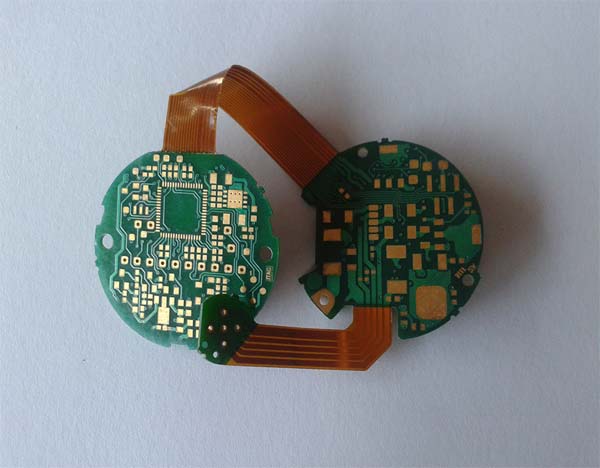
Mixed-Signal PCB Design: What Makes It Difficult?
Mixed-signal PCB design requires a basic understanding of analog and digital circuits to minimize, if not prevent, signal interference. Modern systems are made up of components that operate in both the digital and analog domains and must be carefully designed to ensure signal integrity throughout the system.
As an important part of the mixed-signal development process, PCB layout can be intimidating, and component placement is just the beginning. There are other factors that must be considered, including the various layers of the circuit board and how to properly manage these layers to minimize interference caused by parasitic capacitance (which can be accidentally created between the planes of a PCB).
Grounding is also an important step in PCB layout design for mixed-signal systems. Although grounding is a frequently debated topic in the industry, developing a standardized approach is not necessarily the easiest task for engineers. For example, a single problem with high-quality grounding can affect the entire layout of a high-performance mixed-signal PCB design. Therefore, this aspect should not be ignored.
PCB can play a big role. Since RF PCB can improve the performance, stability and reliability of products, the use of high frequency PCB can help generate more different voltages and larger currents more efficiently.
Don’t get us wrong…
Let’s make one thing clear right off the bat – all PCB designs are challenging, mixed signal or not. Developing a design from start to finish means a series of steps and decisions, all mixed with trade-offs and compromises, ultimately resulting in a finished product that (hopefully) meets your inherited requirements. Let’s take a quick look at some of these design steps from a PCB design perspective.
1. Define your requirements
In our opinion, this is undoubtedly the most undervalued and underutilized step in design work today. Without clear requirements, achieving success becomes more difficult. (Perhaps we’ll explore this topic in more depth in a future column.)
2.Planning and design
Select key and core components early. If you are using an analog PCB with 16 identical analog input channels, then do your homework and research to find the perfect op amp to use. If you are developing a Wi-Fi module, read about available PA/LNA devices and RF transceivers. Maybe it makes more sense to use a complete module. The key is to do this before launching the schematic capture tool. Plan, plan, plan – and then you can worry about execution.
3. Draw a block diagram.
Power trees, signal flows, floorplans, and system interconnections are just a few examples of things that can benefit from early diagrams.
Consider PCB stackup, materials, and constraints. Capture schematic
4. Once you have completed planning and selected key components, you should feel confident starting to capture circuit design intent.
Don’t forget to document all your design decisions. Historical references are important; capturing key decisions will be invaluable to you two years later when you need to revisit the PCB for a variety of reasons.
5. Layout the PCB
Place the copper on FR-4 (or whatever PCB material you may decide to use) and prepare to order your PCB.
The above provides a good overview that any PCB design should keep in mind, but each type of circuit design has its own nuances and challenges.
Imagine doing the steps we just outlined for a typical PCB that E3 might consider applicable to most industries:
· ARM processor and/or FPGA
· High-speed serial communication
· Analog signal conditioning and processing
· Power conversion
This is a fairly common circuit combination for embedded controllers in various industries. There are a lot of things here that interact in expected ways, and you also need to prevent them from interacting in unintended ways. Consider a few examples:
· You don’t want your high-speed communications to couple into analog signals.
· You don’t want high current loops from power conversion to couple into anything.
Now start adding more types of circuits to the mix—RF designs, for example—and the problems begin to complicate and further limit your design. Soon, you’ll face a daunting challenge.
Based on the requirement, heavy copper PCBs can be expensive to produce.Thus, it is more complex in design but more effective in producing heavy copper PCB.
Summary (tentative)
Don’t worry! Of course, doing a job like this is challenging and can sometimes seem like an absolutely impossible task, even for the most experienced designers, but we promise it can be done. We are living proof.
When we graduated we knew very little about it, but 10 years into our careers we were considered very good design engineers (pardon our lack of humility).
The things that make mixed-signal design difficult also make it fun. It forces you to learn new things and think critically about basic engineering principles. We haven’t even covered constraints that come from outside of your own design needs—such as harmonized standards for safety, EMC/EMI, and environmental regulations. Then there are product-driven constraints, but we digress…