
1 layer pcb vs 2 layer pcb
The most obvious difference between a double-layer board and a single-layer board is the number of layers. A single-layer board has only one layer of wire and is covered with insulating material (usually fiberglass), while a double-layer board has two layers of wire. This means that a double-layer board can accommodate more circuit connections in a smaller physical space, making electronic devices more compact.
Common heavy copper PCBs, copper core PCBs, Metal core PCBs, Ceramic PCBs, High speed PCBs, and Radio frequency PCBs have both double-layer and single-layer designs.

A brief introduction to single-layer and multi-layer PCBs
1.Definition
A single-layer board refers to a PCB with only one layer of wire and one substrate. A multi-layer board refers to a PCB with multiple layers, usually more than 3 layers, on the same PCB. Internally, each level has multiple copper layers, which are isolated by insulating materials and are penetrated by radial boards throughout the board.
2.Internal structure
The internal structure of a single-layer board is simple, and it looks like there is only one layer of copper foil and one substrate. A multi-layer board has multiple copper layers and multiple substrates, connected up and down through holes.
3.Line width and line spacing
The line width and line spacing of a single-layer board are usually more than 0.5mm, while a multi-layer board can achieve a line width and line spacing of 0.075mm. In other words, a multi-layer board has better current carrying capacity and higher conduction speed.
4.Scope of application
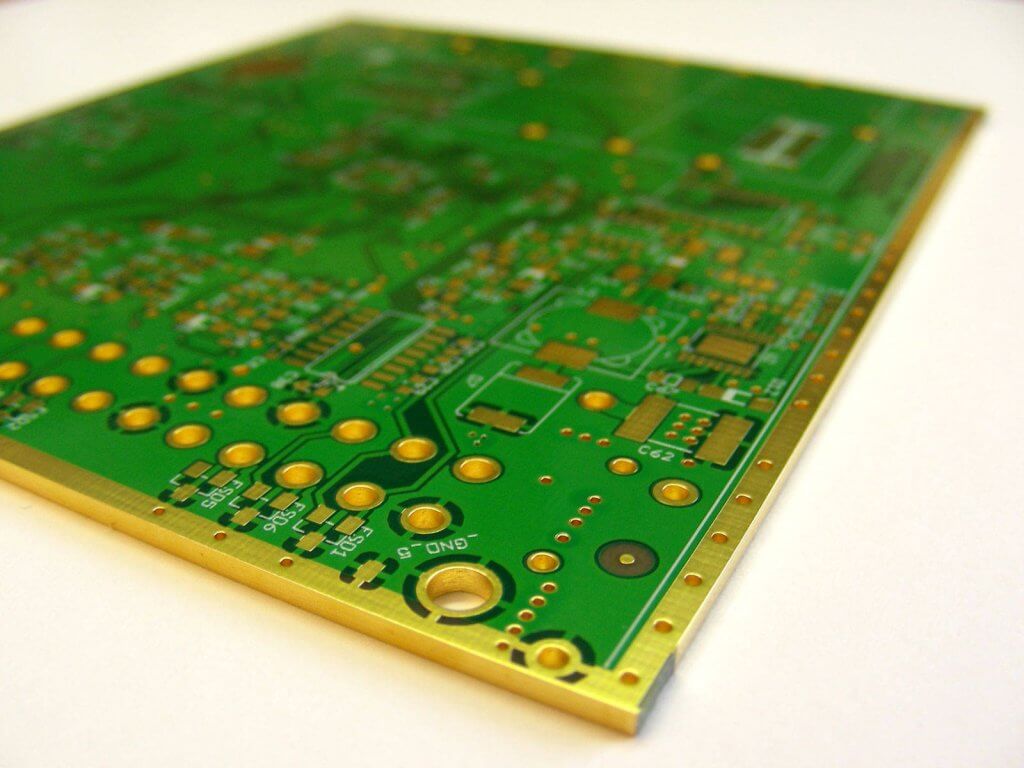
Single-layer boards are suitable for some simple electronic devices, such as small computers, audio and radio. Multi-layer boards are suitable for large electronic devices, such as computer motherboards and communication equipment, because the connection method of multi-layer boards is simpler.
5.Production cost
The production cost of a single-layer board is relatively low because it only requires one substrate and one copper layer. The production cost of a multi-layer board is higher due to its more complex structure.
6.Efficiency
The efficiency of a multi-layer board is relatively higher because it can connect more circuits in a smaller space, thereby enhancing the efficiency of the entire circuit board. In addition, a multi-layer board can also suppress electromagnetic interference to a greater extent. The efficiency of a single-layer board is relatively low, and it can generally only connect some simple circuits, so it is not applicable to more complex circuits.
In summary, there are great differences between single-layer boards and multi-layer boards in terms of internal structure, line width and line spacing, scope of application, production cost and efficiency. When choosing an appropriate circuit board, it should be judged and selected according to actual needs to meet the various requirements of electronic products.
What are the process advantages of double-layer boards compared to single-layer boards?
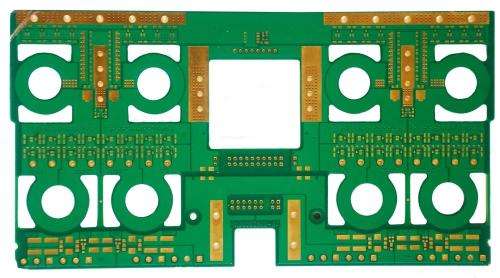
- Higher circuit density: Double-layer boards can be wired on two layers of wires, so higher circuit density can be achieved in the same area. This is very useful for complex electronic devices because it can reduce the size of the circuit board and improve the integration of the product.
- Better electrical performance: On a double-layer board, the wires and their corresponding components can be wired between the two layers, thereby better controlling the transmission of signals. This can reduce signal crosstalk and interference and improve the performance and reliability of electronic products.
- More flexible design options: Compared with single-layer boards, double-layer boards are more flexible in wiring. Designers can arrange different wires and components on different layers to better meet the needs of complex circuits.
- Better heat dissipation performance: Double-layer boards are easier to dissipate heat than single-layer boards. By placing a heat dissipation layer between two layers of wires, heat can be dissipated more effectively to maintain the normal operating temperature of electronic components.
In summary, double-layer boards have higher circuit density, better electrical performance, more flexible design options, and better heat dissipation performance than single-layer boards. When choosing a PCB board, we should decide which type of board to use based on actual needs. If higher integration and better performance are required, a double-layer board is a good choice. If the circuit is simple and the budget is limited, a single-layer board can also meet daily needs.
How to judge the number of layers of a PCB board
- Judge by appearance. A common single-layer PCB board has only one copper foil layer, with only packaged components on one side and only printed circuits on the other side. A double-layer PCB board has two copper foil layers, with packaged components on both sides, and a non-conductive layer with conductive pads or sandwich boards in the middle. Four-layer and six-layer PCB boards have more copper foil layers, and more internal sandwich boards will also be added. Therefore, judging the number of layers of a PCB board by appearance is a relatively simple and feasible method.
- Judge by the number of wires. A single-layer board has only one side of the wire, while the wires between multiple components in a double-layer board need to pass through two copper foil layers. Therefore, the number of wires on a double-layer board is more than that on a single-layer board. In four-layer and six-layer boards, more layers will also increase the number of wires.
So what are the characteristics of heavy copper PCB compared with single-layer and double-layer circuit boards?
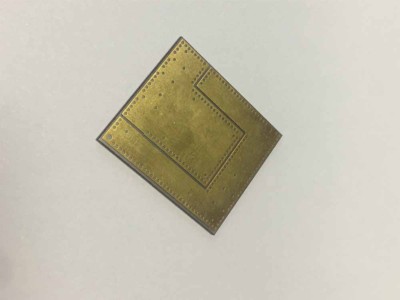
- Thick copper circuit boards have high assembly density and small size.
- Thick copper circuit boards are easy to wire, shorten the wiring length and wiring between components, and are conducive to improving signal transmission speed.
- For high-frequency circuits, after adding the ground layer, the signal line and the ground layer form a constant low impedance, the circuit impedance is greatly reduced, and the shielding effect is good.
- For electronic products with high requirements for heat dissipation function, thick copper circuit boards can be equipped with metal core heat dissipation layers to meet the needs of special functions such as shielding and heat dissipation.
- In terms of performance, thick copper circuit boards are better than single-sided and double-sided circuit boards, but the higher the number of layers, the higher the manufacturing cost, the longer the processing time, and the more complicated the quality inspection.
- Four-layer or six-layer boards are common in thick copper circuit boards. The difference between four-layer boards and six-layer boards is that there are two internal signal layers between the middle layer, the ground layer, and the power layer. Six-layer boards are thicker than four-layer boards.
Generally speaking, thick copper circuit boards have been widely used in the production of electronic products for their flexible design, superior economy, stable and reliable electrical performance and other advantages.
Circuit board manufacturers complete many parts in the process of producing PCB circuit boards. Production details are very important. Any problem in any link will lead to open circuit and power disconnection. This makes us have to consider how to prevent and reduce the open circuit and short circuit of the circuit board during the production process of the circuit board.
In the copper plating process, pad printing exposure process and circuit board development, these are important control links. In the front, the scratches and scratches of the circuit board are eliminated. Pay attention to inspection during production, handle it with care, and there are no quality problems.
After this process, coupled with electrical testing, the delivery rate is basically 100%. Of course, there will be individual defects in the process of transportation and welding to the customer’s hands, but this situation can be linked together. We also prepare a certain number of spare parts for customers.
In this way, a good production process can be completed at one time without rework, defects and scrapping. Greatly improve the power and reduce the production cost.
The aluminum substrate mostly adopts the structure of three-layer board