
Types of Resistors in PCB Design
Introduction
Printed Circuit Boards (PCBs) are essential components in modern electronics, providing a platform for mounting and interconnecting electronic components. Among these components, resistors play a crucial role in controlling current flow, dividing voltages, and protecting sensitive circuits. PCB resistors come in various types, each with unique characteristics suited for different applications. This article explores the different types of resistors used in PCBs, their properties, and their applications.
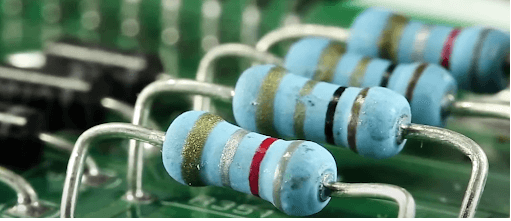
1. Fixed Resistors
Fixed resistors have a predetermined resistance value that cannot be adjusted. They are the most commonly used resistors in PCB design and come in several forms:
(a) Carbon Composition Resistors
- Construction: Made from a mixture of carbon powder and insulating material.
- Advantages: Good surge handling capability, low inductance.
- Disadvantages: Poor temperature stability, high noise, and tolerance (typically ±5% to ±20%).
- Applications: Older electronics, high-energy pulse circuits.
(b) Carbon Film Resistors
- Construction: A carbon film is deposited on a ceramic substrate, and the resistance is adjusted by cutting a helical groove.
- Advantages: Better stability and lower noise than carbon composition resistors.
- Disadvantages: Limited power handling, moderate tolerance (±1% to ±5%).
- Applications: General-purpose circuits, audio equipment.
(c) Metal Film Resistors
- Construction: A thin metal film (usually nickel-chromium) is deposited on a ceramic core.
- Advantages: High precision (±0.1% to ±1%), low noise, good temperature stability.
- Disadvantages: More expensive than carbon film resistors.
- Applications: Precision circuits, medical devices, instrumentation.
(d) Metal Oxide Film Resistors
- Construction: Made from metal oxide (e.g., tin oxide) deposited on a ceramic substrate.
- Advantages: High power handling, good surge resistance, stable at high temperatures.
- Disadvantages: Lower precision than metal film resistors.
- Applications: Power supplies, motor controls, high-temperature environments.
(e) Thick and Thin Film Resistors
- Thick Film: Made by screen-printing a resistive paste (ruthenium oxide) onto a ceramic substrate.
- Thin Film: Uses vacuum deposition for higher precision.
- Advantages: Cost-effective (thick film), high precision (thin film).
- Disadvantages: Thick film has higher noise; thin film is more expensive.
- Applications: Thick film in consumer electronics; thin film in precision devices.
(f) Wirewound Resistors
- Construction: A resistive wire (nichrome or similar) is wound around an insulating core.
- Advantages: High power handling, excellent stability.
- Disadvantages: Inductive (unsuitable for high-frequency circuits), bulky.
- Applications: Power electronics, industrial machinery.
2. Variable Resistors
Variable resistors allow resistance adjustment and are used for tuning circuits.
(a) Potentiometers
- Function: Three-terminal resistors with an adjustable wiper.
- Types: Rotary and linear potentiometers.
- Applications: Volume controls, voltage dividers.
(b) Rheostats
- Function: Two-terminal variable resistors for current control.
- Applications: Dimmer switches, motor speed control.
(c) Trimmer Resistors (Trimpots)
- Function: Small, adjustable resistors for calibration.
- Applications: PCB tuning, sensor calibration.
3. Surface Mount (SMD) Resistors
SMD resistors are widely used in modern PCBs due to their compact size.
(a) Thick Film SMD Resistors
- Construction: Similar to through-hole thick film resistors but miniaturized.
- Advantages: Small size, cost-effective.
- Applications: Consumer electronics, smartphones.
(b) Thin Film SMD Resistors
- Advantages: High precision, low noise.
- Applications: Medical devices, aerospace.
(c) Zero-Ohm Resistors (Jumpers)
- Function: Used as PCB traces for easy routing.
- Applications: Circuit board design flexibility.
4. Specialized Resistors
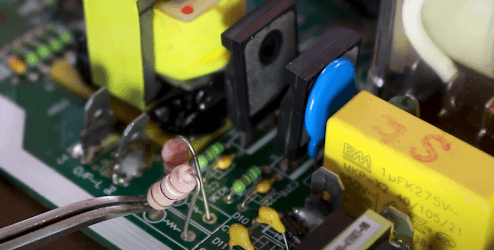
(a) Fusible Resistors
- Function: Act as both resistors and fuses.
- Applications: Overcurrent protection.
(b) Thermistors (Thermal Resistors)
- Types:
- NTC (Negative Temperature Coefficient): Resistance decreases with temperature.
- PTC (Positive Temperature Coefficient): Resistance increases with temperature.
- Applications: Temperature sensing, inrush current limiting.
(c) Varistors (Voltage-Dependent Resistors, VDRs)
- Function: Resistance changes with voltage (used for surge protection).
- Applications: Power surge protection in AC circuits.
(d) Light-Dependent Resistors (LDRs)
- Function: Resistance changes with light intensity.
- Applications: Light sensors, automatic lighting systems.
Conclusion
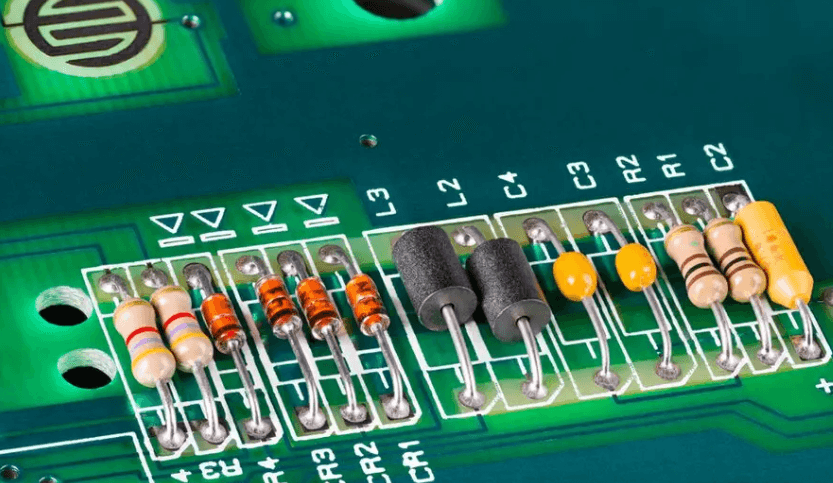
Resistors are fundamental components in PCB design, each type serving specific purposes. Fixed resistors provide stable resistance, variable resistors allow tuning, SMD resistors enable miniaturization, and specialized resistors offer unique functions like thermal and voltage sensitivity. Understanding these differences helps engineers select the right resistor for optimal circuit performance.
As PCB technology advances, new resistor materials and designs continue to emerge, enhancing efficiency and reliability in electronic systems.