
Why Apply Conformal Coating to PCBs: A Comprehensive Analysis
Introduction
Printed Circuit Boards (PCBs) form the backbone of modern electronic devices, from smartphones to industrial control systems. As these devices encounter increasingly demanding environments, protecting their delicate circuitry becomes paramount. One of the most effective protection methods is the application of conformal coating—a specialized polymeric film applied to PCBs. This 2000-word article explores the multifaceted reasons for applying conformal coating to PCBs, examining its protective benefits, performance enhancements, and application considerations.
1. Protection Against Environmental Factors
1.1 Moisture and Humidity Resistance
The primary reason for applying conformal coating is to shield PCBs from moisture and humidity. Bare PCB surfaces exposed to humid environments can experience:
- Electrochemical migration: Where metal ions migrate between conductors, creating dendritic growths that cause short circuits
- Corrosion: Oxidation of copper traces and component leads that degrades conductivity
- Insulation resistance degradation: Moisture absorption in the substrate that lowers surface resistance
Conformal coatings create a hydrophobic barrier that prevents moisture absorption, typically reducing moisture penetration by 95-99% compared to uncoated boards. This is particularly crucial for devices operating in tropical climates, outdoor environments, or applications where condensation occurs.
1.2 Chemical and Solvent Protection
In industrial, automotive, and aerospace applications, PCBs often encounter:
- Cleaning solvents
- Fuels and lubricants
- Industrial chemicals
- Corrosive gases
Conformal coatings resist penetration by these substances, preventing:
- Chemical corrosion of metal components
- Degradation of solder joints
- Dissolution of marking inks
- Swelling or delamination of PCB substrates
1.3 Dust and Particulate Contamination
The coating acts as a physical barrier against:
- Airborne dust and fibers that can create conductive paths
- Metallic particles that may cause short circuits
- Biological contaminants like mold or fungi that thrive on organic PCB materials
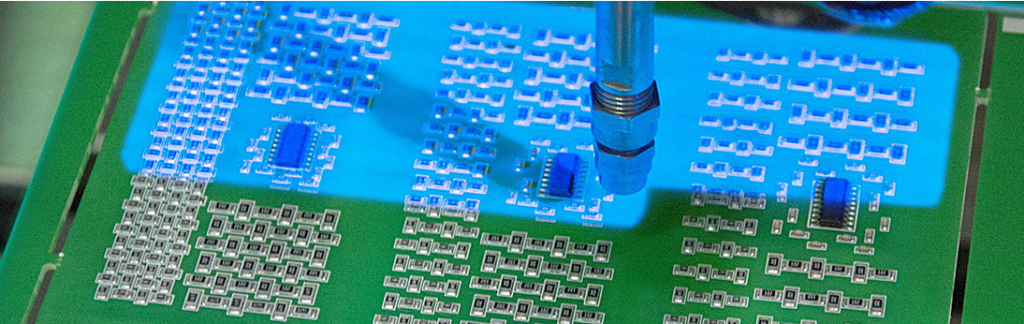
This protection is especially valuable in manufacturing environments, agricultural equipment, and medical devices where particulate contamination is prevalent.
2. Electrical Performance Enhancement
2.1 Prevention of Electrochemical Migration
By eliminating moisture from the PCB surface, conformal coatings dramatically reduce the risk of:
- Dendrite formation between adjacent conductors
- Conductive anodic filament (CAF) growth through the PCB laminate
- Metal whisker growth that can bridge connections
2.2 Improved Dielectric Strength
Quality conformal coatings can:
- Increase surface insulation resistance by 3-6 orders of magnitude
- Withstand potential differences up to several thousand volts per mil
- Prevent arcing between high-voltage components
This is critical for high-voltage applications and miniaturized designs with close conductor spacing.
2.3 Reduction of Parasitic Leakage Currents
In high-impedance circuits, conformal coatings:
- Minimize surface leakage currents that can distort measurements
- Maintain stable impedance characteristics over time
- Prevent contamination-induced current paths
2.4 Mitigation of Tin Whiskers
For boards using pure tin finishes, conformal coating:
- Physically contains whisker growth
- Prevents whiskers from bridging conductors
- Reduces the risk of whisker-induced shorts in long-life products
3. Mechanical Protection
3.1 Vibration and Shock Resistance
Conformal coatings provide:
- Added structural support for surface-mount components
- Damping of mechanical vibrations that could fatigue solder joints
- Protection against physical shock during operation or transportation
This is particularly valuable in automotive, aerospace, and military applications where vibration is unavoidable.
3.2 Abrasion Resistance
The coating layer:
- Protects against wear from repeated connector insertion
- Shields against scratching during handling or maintenance
- Preserves silkscreen markings and component identifiers
3.3 Stress Relief
Certain conformal coatings:
- Absorb thermal expansion stresses
- Reduce mechanical strain on BGA and CSP solder joints
- Help prevent cracking in ceramic components
4. Long-Term Reliability Improvement
4.1 Extended Product Lifespan
By mitigating multiple failure mechanisms, conformal coatings can:
- Increase MTBF (Mean Time Between Failures) by 2-10 times
- Enable 10+ year operational lifespans in harsh environments
- Reduce long-term maintenance and warranty costs
4.2 Prevention of Fretting Corrosion
In connectors and switches, conformal coatings:
- Minimize oxidation at contact points
- Reduce wear debris accumulation
- Maintain stable contact resistance
4.3 UV Protection
For outdoor applications, UV-stable conformal coatings:
- Prevent epoxy resin degradation
- Shield against solar radiation damage
- Maintain optical clarity for inspection purposes
5. Manufacturing and Operational Benefits
5.1 Reduced PCB Size Requirements
With conformal coating protection:
- Designers can use smaller conductor spacing
- Components can be placed closer together
- Overall PCB footprint can be minimized
5.2 Simplified Enclosure Design
Coated PCBs may:
- Eliminate need for fully sealed enclosures
- Allow use of vented designs for thermal management
- Reduce overall product weight and size
5.3 Improved Cleanability
Conformal coatings:
- Create smooth, non-porous surfaces that are easier to clean
- Resist damage from cleaning solvents
- Maintain protection after repeated cleaning cycles
5.4 Enhanced Thermal Management
Some specialty conformal coatings:
- Improve heat dissipation from components
- Allow operation at higher ambient temperatures
- Provide thermal pathway for heat transfer
6. Application-Specific Considerations
6.1 Automotive Electronics
For automotive applications, conformal coatings must withstand:
- Temperature cycling from -40°C to 125°C
- Exposure to gasoline, oil, and brake fluid
- Vibration from engine and road conditions
6.2 Aerospace and Defense
Military-grade coatings address:
- Extreme altitude pressure changes
- Fungus resistance per MIL-STD-810
- Hermetic sealing requirements
6.3 Medical Devices
Medical electronics require:
- Biocompatible coating materials
- Sterilization process compatibility
- Long-term reliability in bodily fluids
6.4 Consumer Electronics
Consumer product coatings emphasize:
- Thin, lightweight application
- Aesthetic considerations
- Repair and rework capability
7. Material Selection Factors
7.1 Acrylic Resins
- Advantages: Easy application and rework, good moisture resistance
- Limitations: Moderate chemical resistance, lower durability
7.2 Urethane Coatings
- Advantages: Excellent abrasion resistance, good chemical protection
- Limitations: Difficult rework, potential moisture sensitivity
7.3 Silicone Coatings
- Advantages: High temperature tolerance, excellent flexibility
- Limitations: Lower mechanical strength, potential contamination issues
7.4 Epoxy Coatings
- Advantages: Superior hardness and chemical resistance
- Limitations: Brittle nature, very difficult rework
7.5 Parylene Vapor Deposition
- Advantages: Ultra-thin pinhole-free coating, excellent protection
- Limitations: Specialized application process, high cost
8. Application Methods
8.1 Spray Coating
- Most common method for medium-volume production
- Requires masking of protected areas
- Provides relatively even coverage
8.2 Brush Application
- Used for low-volume or repair work
- Allows precise control
- Risk of uneven coating thickness
8.3 Dip Coating
- Provides complete coverage
- Suitable for high-volume production
- Potential for coating buildup
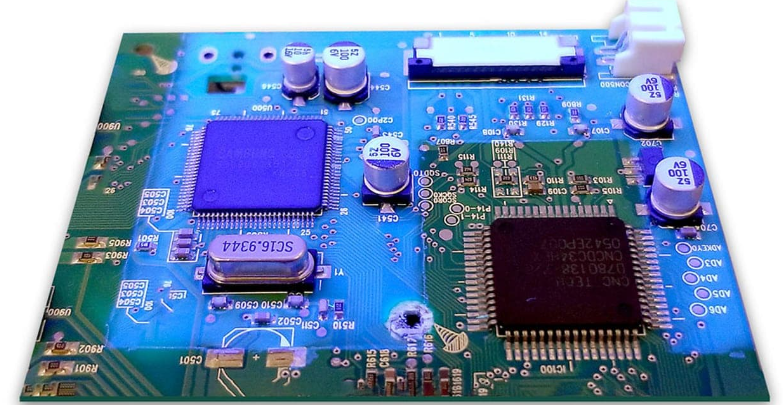
8.4 Selective Coating
- Automated systems target specific areas
- Minimizes masking requirements
- Ideal for mixed-technology boards
9. Testing and Verification
9.1 Visual Inspection
- Checks for complete coverage
- Identifies bubbles or voids
- Verifies proper thickness
9.2 Electrical Testing
- Measures insulation resistance
- Verifies dielectric withstand
- Checks for coating-induced leakage
9.3 Environmental Testing
- Thermal cycling evaluation
- Humidity exposure testing
- Chemical resistance verification
10. Future Trends
Emerging developments in conformal coating technology include:
- Nanocomposite coatings with enhanced properties
- UV-curable formulations for faster processing
- Self-healing coatings that repair minor damage
- Environmentally-friendly, bio-based materials
- Smart coatings with sensing capabilities
Conclusion
The application of conformal coating to PCBs serves as a critical protective measure that addresses multiple failure mechanisms simultaneously. From preventing environmental degradation to enhancing electrical performance and mechanical reliability, conformal coatings have become indispensable in modern electronics manufacturing. As electronic devices continue to proliferate in increasingly demanding environments, and as PCB geometries become ever more miniaturized, the importance of proper conformal coating selection and application will only grow. Understanding the comprehensive benefits outlined in this article enables engineers to make informed decisions about when and how to implement this vital protective technology in their electronic products.