
What are the selection criteria for conformal coating on PCBs?
Reasons for using conformal coating on PCBs
Conformal coating is also known as PCB protective oil, coating oil, moisture-proof paint, conformal coating, waterproof glue, insulating paint, anti-corrosion paint, salt spray paint, dust-proof paint, protective paint, coating paint, and conformal glue. PCBs treated with conformal coating are waterproof, moisture-proof, and dust-proof, and are resistant to thermal shock, aging, radiation, salt spray, ozone corrosion, vibration, flexibility, and strong adhesion.
Moisture is the most common and destructive factor affecting PCBs. Excessive moisture significantly reduces the insulation resistance between conductors, accelerates high-speed decomposition, lowers Q values, and corrodes conductors. The patina we often see on metal parts of PCBs is caused by the chemical reaction between copper, water vapor, and oxygen, without conformal coating.
Hundreds of contaminants found on printed circuit boards are equally destructive. These can lead to the same consequences as moisture damage—electronic degradation, conductor corrosion, and even irreversible short circuits. The most common contaminants found in electrical systems are residual chemicals from the manufacturing process. Examples include flux, solvent release agents, metal particles, and marking inks. Other major contaminants are caused by human handling, such as body oils, fingerprints, makeup, and food residue. The operating environment also contains numerous contaminants, such as salt spray, sand, fuel, acid, and other corrosive vapors, as well as mold.
Applying conformal coating to printed circuit boards and components can reduce or eliminate degradation in electronic performance when exposed to adverse operating conditions. If such a coating maintains its effectiveness for a satisfactory period, such as beyond the product’s service life, it is considered to have achieved its intended purpose.
Even a thin coating can withstand mechanical vibration and oscillation, thermal shock, and high-temperature operation to a certain extent. Of course, the idea that film can only provide mechanical strength or adequate insulation for individual components inserted into a printed circuit board is misleading. Components must be mechanically secured and have their own appropriate gap filler to provide a double layer of protection against accidents.
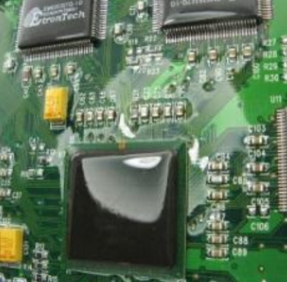
PCB Conformal Coating Selection Criteria
PCB conformal coating is primarily used to protect circuit boards from environmental corrosion, thereby extending the lifespan of the device and ensuring safety and reliability. Currently, there are numerous brands and varieties of conformal coatings on the market, with varying quality and price. Choosing the right one presents a challenge for many buyers. Below, Ruitu will explain the criteria for selecting conformal coatings:
1.Operating Environment
People have varying requirements for the physical and chemical resistance of electronic devices, such as pressure resistance, shock resistance, water resistance, and acid and alkali corrosion resistance. Therefore, conformal coatings with different properties must be selected for different operating environments.
2.Layout of the circuit board
The design of the circuit board should take into account the placement of components that do not require coating, including connectors, IC sockets, adjustable potentiometers and test points, which should all be placed on the edge of one side of the circuit board to achieve the simplest coating process and the lowest coating cost.
3. Electrical performance requirements
It should have high insulation strength and breakdown voltage. The minimum insulation strength requirement of the PCB spray three-proof paint can be determined by the spacing of the printed lines and the potential difference between adjacent printed lines.
4. Usage method
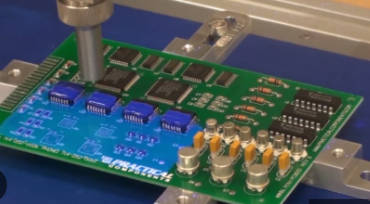
Before using the three-proof paint, the circuit board should be thoroughly cleaned so that it can fully exert its protective effect. Thorough cleaning can ensure that corrosive residues are completely removed and the PCB spray three-proof paint adheres well to the surface of the circuit board. Generally speaking, there are four main methods of use: (1) Brush coating – commonly used, it can produce excellent coating effects on smooth surfaces. (2) Spraying – spray cans are convenient for maintenance and small-scale production, while spray guns are suitable for large-scale production. However, these two spraying methods require high accuracy in operation and may produce shadows (the area below the component that is not covered with three-conformal coating).
(3) Automatic dipping – dipping ensures complete coating and does not cause material waste due to overspraying.
(4) Selective coating – coating is accurate and does not waste material. It is suitable for large-scale coating, but has high requirements for coating equipment.