
As a PCB engineer, you need to know these design guidelines
When starting a new design, most of the time is spent on circuit design and component selection, which often leads to inexperience and lack of consideration during the PCB layout stage.
Failure to provide sufficient time and effort for the design during the PCB layout stage can lead to problems during the manufacturing stage or defects in functionality when the design is translated from the digital realm to physical reality.
So what is the key to designing a circuit board that is both realistic and reliable on paper and in physical form? Let’s explore the top 6 PCB design guidelines you need to know when designing a manufacturable, functional and reliable PCB.
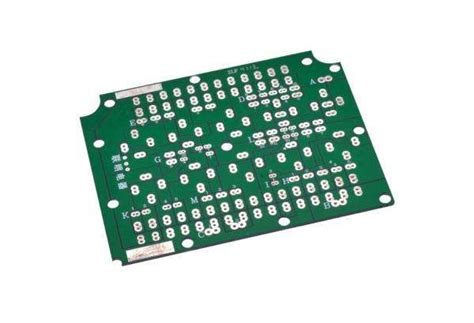
- Proper placement of power, ground, and signal traces
After placing the components, you can next place the power, ground, and signal traces to ensure that your signals have a clean and trouble-free path to travel. At this stage of the layout process, keep in mind some of the following guidelines:
▶ 1) Positioning the power and ground plane layers
It is always recommended to place the power and ground plane layers inside the board while keeping them symmetrical and centered. This helps prevent your board from flexing, which also relates to whether your components are properly positioned.
For powering ICs, it is recommended to use a common channel for each power supply, ensure a solid and stable trace width, and avoid daisy-chain power connections from component to component.
▶ 2) Signal line routing connection
Next, connect the signal lines as designed in the schematic. It is recommended to always take the shortest possible path and direct path between components.
If your components need to be fixed in a horizontal direction without deviation, it is recommended to basically run horizontal traces where the components come out of the board, and then run vertical traces after the traces come out.
This will fix the components in a horizontal direction as the solder migrates during soldering. As shown in the upper part of the figure below. The signal routing method in the lower part of the figure below may cause the component to deflect as the solder flows during soldering.
Recommended routing method (arrow indicates the direction of solder flow)
Unrecommended routing method (arrow indicates the direction of solder flow)
▶ 3) Define network width
Your design may require different networks that will carry various currents, which will determine the required network width. Considering this basic requirement, it is recommended to provide 0.010” (10mil) width for low current analog and digital signals. When your line current exceeds 0.3 amps, it should be widened. Here is a free line width calculator to make this conversion process simple.
2.Proper placement of power, ground, and signal traces
After placing the components, you can next place the power, ground, and signal traces to ensure that your signals have a clean and trouble-free path to travel. At this stage of the layout process, keep in mind some of the following guidelines:
▶ 1) Positioning the power and ground plane layers
It is always recommended to place the power and ground plane layers inside the board while keeping them symmetrical and centered. This helps prevent your board from flexing, which also relates to whether your components are properly positioned.
For powering ICs, it is recommended to use a common channel for each power supply, ensure a solid and stable trace width, and avoid daisy-chain power connections from component to component.
▶ 2) Signal line routing connection
Next, connect the signal lines as designed in the schematic. It is recommended to always take the shortest possible path and direct path between components.
If your components need to be fixed in a horizontal direction without deviation, it is recommended to basically run horizontal traces where the components come out of the board, and then run vertical traces after the traces come out.
This will fix the components in a horizontal direction as the solder migrates during soldering. As shown in the upper part of the figure below. The signal routing method in the lower part of the figure below may cause the component to deflect as the solder flows during soldering.
Recommended routing method (arrow indicates the direction of solder flow)
Unrecommended routing method (arrow indicates the direction of solder flow)
▶ 3) Define network width
Your design may require different networks that will carry various currents, which will determine the required network width. Considering this basic requirement, it is recommended to provide 0.010” (10mil) width for low current analog and digital signals. When your line current exceeds 0.3 amps, it should be widened. Here is a free line width calculator to make this conversion process simple.
3.Effective Isolation
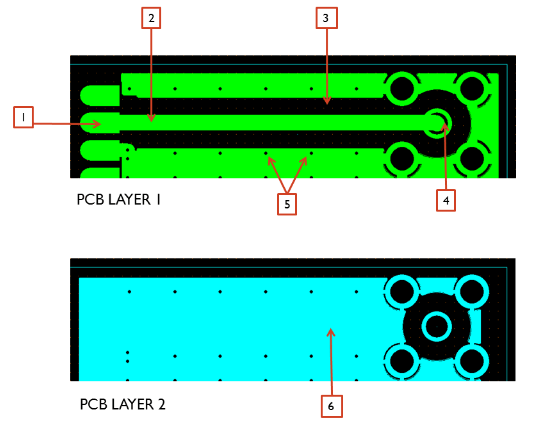
You may have experienced how large voltage and current spikes in the power circuit can interfere with your low voltage current control circuit. To minimize such interference problems, follow these guidelines:
Isolation – Make sure to keep the power ground and control ground separate for each power supply. If you must connect them together in the PCB, make sure it is as close to the end of the power path as possible.
Layout – If you have placed a ground plane on the middle layer, make sure to place a low impedance path to reduce the risk of any power circuit interference and help protect your control signals. The same guidelines can be followed to keep your digital and analog separate.
Coupling – To reduce capacitive coupling due to placing a large ground plane and routing above and below it, try to cross the analog ground only with analog signal lines.
4.Solve Heat Issues
Have you ever experienced degradation of circuit performance or even board damage due to heat issues? Many designers have experienced this due to not considering heat dissipation. Here are some guidelines to keep in mind to help solve heat dissipation issues:
▶ 1) Identify Troublesome Components
The first step is to start thinking about which components will dissipate the most heat on the board. This can be done by first finding the “thermal resistance” rating in the component’s datasheet and then following the recommended guidelines to move the generated heat. Of course, heat sinks and cooling fans can be added to keep component temperatures down, and also remember to keep critical components away from any high heat sources.
▶ 2) Add Hot Air Pads
Adding hot air pads is very useful in producing a manufacturable board, and they are essential for wave soldering applications on high copper content components and multi-layer boards. Since it is difficult to maintain process temperatures, it is always recommended to use hot air pads on through-hole components to make the soldering process as simple as possible by slowing the rate of heat dissipation at the component pins.
As a general guideline, always use hot air pads for any through-hole or vias that connect to a ground plane or power plane. In addition to the thermal pads, you can also add teardrops where the pads connect to the wires to provide additional copper/metal support. This will help reduce mechanical and thermal stress.

5.Popular Science of Hot Air Soldering Pads
Many engineers in charge of process or SMT technology in factories often encounter problems such as empty soldering, de-wetting or cold soldering on circuit board components. No matter how the process conditions are changed or how the reflow oven temperature is adjusted, there is a certain rate of non-wetting. What is going on?
Apart from the problem of component and circuit board oxidation, the root cause is that a large part of this type of poor soldering actually comes from the lack of layout design of the circuit board. The most common one is that some of the soldering feet of the component are connected to a large area of copper foil, causing these component soldering feet to have poor soldering after reflow soldering. Some hand-soldered components may also cause de-wetting or wrapping problems due to similar situations. Some components are even damaged due to overheating.
In general, PCB circuit design often requires laying a large area of copper foil as power supply (Vcc, Vdd or Vss) and ground (GND, Ground). These large copper foils are usually directly connected to the pins of some control circuits (ICs) and electronic components.
Unfortunately, if we want to heat these large copper foils to the melting temperature, it usually takes more time than independent solder pads (that is, the heating will be slower), and the heat dissipation is also faster. When one end of such a large copper foil wiring is connected to small components such as small resistors and small capacitors, and the other end is not, it is easy to cause welding problems due to inconsistent melting and solidification time; if the reflow soldering temperature curve is not adjusted well and the preheating time is insufficient, the solder feet of these components connected to the large copper foil are prone to cause cold soldering problems because they cannot reach the melting temperature.
During manual soldering (Hand Soldering), the solder feet of these components connected to the large copper foil will not be able to be soldered within the specified time due to too fast heat dissipation. The most common defective phenomenon is solder wrapping and cold soldering, where the solder is only soldered on the solder feet of the component but not connected to the solder pad of the circuit board. From the appearance, the entire solder joint will form a ball shape; even worse, in order to solder the soldering foot to the circuit board, the operator constantly increases the temperature of the soldering iron, or heats it for too long, causing the component to exceed the heat resistance temperature and be damaged without knowing it. As shown in the figure below.
Wrap soldering, cold soldering or false soldering
Since we know the problem point, we can have a solution. Generally, we will require the so-called Thermal Relief pad design to solve this type of welding problem caused by large copper foil connecting the component solder feet. As shown in the figure below, the wiring on the left does not use the hot air soldering pad, while the wiring on the right has already used the hot air soldering pad connection method. It can be seen that the contact area between the soldering pad and the large copper foil is only a few small lines, which can greatly limit the loss of temperature on the soldering pad and achieve a better welding effect.