
Classification and Advantages Analysis of Metal Core PCBs
Abstract
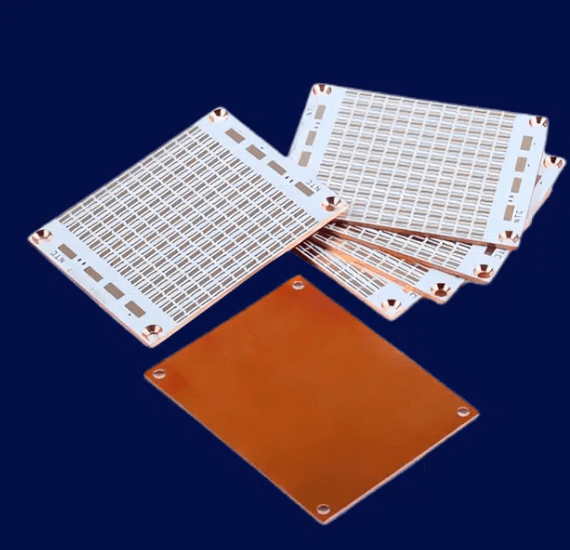
Metal Core Printed Circuit Boards (MCPCBs) are widely used in high-power and high-heat dissipation applications due to their superior thermal management capabilities. This article explores the classification of metal core PCBs based on their substrate materials, including Aluminum (Al), Copper (Cu), and Iron (Fe) based substrates. Additionally, the advantages of MCPCBs, such as enhanced thermal conductivity, improved mechanical strength, and better electrical performance, are analyzed in detail. The study provides insights into the selection of appropriate MCPCBs for various industrial applications, including LED lighting, automotive electronics, and power supplies.
1. Introduction
Printed Circuit Boards (PCBs) are essential components in modern electronics, providing mechanical support and electrical connections for electronic components. Traditional PCBs use FR4 (Flame Retardant 4) as the base material, which has limited thermal conductivity. In contrast, Metal Core PCBs (MCPCBs) incorporate a metal substrate, significantly improving heat dissipation.
MCPCBs are classified based on the type of metal used in the core, with Aluminum (Al), Copper (Cu), and Iron (Fe) being the most common. Each type offers distinct advantages depending on the application requirements. This paper examines the classification of MCPCBs and analyzes their benefits in various industries.
2. Classification of Metal Core PCBs
2.1 Aluminum-Based PCBs (Al-MCPCBs)
Aluminum is the most widely used metal substrate due to its excellent thermal conductivity, lightweight nature, and cost-effectiveness.
Key Features:
- Thermal Conductivity: 1-3 W/m·K (higher than FR4)
- Lightweight: Ideal for LED lighting and consumer electronics
- Cost-Effective: Cheaper than copper-based alternatives
Applications:
- LED Lighting (e.g., high-power LED modules)
- Power Supplies (e.g., voltage regulators)
- Automotive Electronics (e.g., headlight systems)
2.2 Copper-Based PCBs (Cu-MCPCBs)
Copper offers the highest thermal conductivity among metal substrates, making it suitable for extremely high-power applications.
Key Features:
- Thermal Conductivity: 380 W/m·K (superior to aluminum)
- High Durability: Resistant to thermal stress
- Better Electrical Conductivity: Useful for high-frequency circuits
Applications:
- High-Power Electronics (e.g., industrial motor controllers)
- RF/Microwave Circuits (e.g., radar systems)
- Aerospace & Defense Electronics
2.3 Iron-Based PCBs (Fe-MCPCBs)
Iron-based PCBs are less common but are used in applications requiring high mechanical strength and magnetic properties.
Key Features:
- Mechanical Strength: Higher rigidity than Al or Cu
- Magnetic Properties: Useful in electromagnetic applications
- Lower Cost than Copper: But heavier and less thermally conductive
Applications:
- Power Converters (e.g., transformers)
- Electromagnetic Devices (e.g., inductors, sensors)
3. Advantages of Metal Core PCBs
3.1 Superior Thermal Management
The primary advantage of MCPCBs is their ability to dissipate heat efficiently. Unlike FR4, which has a thermal conductivity of only 0.3 W/m·K, metal substrates (especially copper) can conduct heat 1000 times better, preventing overheating in high-power circuits.
3.2 Enhanced Mechanical Stability
Metal substrates provide better structural integrity, reducing the risk of warping under thermal stress. This is crucial for applications exposed to high temperatures, such as automotive and industrial electronics.
3.3 Improved Electrical Performance
Copper-based MCPCBs offer low impedance, making them ideal for high-frequency applications. The metal layer also acts as a ground plane, reducing electromagnetic interference (EMI).
3.4 Longer Lifespan of Components
By efficiently dissipating heat, MCPCBs extend the lifespan of sensitive electronic components, such as LEDs and power transistors, reducing failure rates and maintenance costs.
3.5 Environmentally Friendly
Aluminum and copper are recyclable, making MCPCBs a sustainable choice compared to traditional FR4 boards.
4. Industry Applications
4.1 LED Lighting
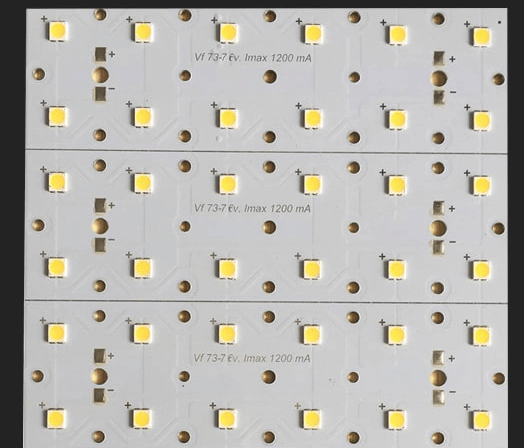
MCPCBs are extensively used in LED lighting due to their ability to handle high thermal loads, ensuring longer LED lifespan and consistent brightness.
4.2 Automotive Electronics
In electric vehicles (EVs) and traditional automotive systems, MCPCBs help manage heat in power converters, battery management systems (BMS), and LED headlights.
4.3 Power Electronics
Switching power supplies, inverters, and motor drives benefit from the high thermal conductivity of MCPCBs, improving efficiency and reliability.
4.4 Aerospace & Military Applications
The durability and thermal performance of MCPCBs make them suitable for avionics, radar systems, and satellite communications.
5. Conclusion
Metal Core PCBs offer significant advantages over traditional FR4 boards, particularly in thermal management, mechanical strength, and electrical performance. The choice between Aluminum, Copper, and Iron-based MCPCBs depends on the specific application requirements, including thermal conductivity, cost, and mechanical demands.
As electronic devices continue to demand higher power and miniaturization, MCPCBs will play an increasingly vital role in ensuring reliability and efficiency across industries such as LED lighting, automotive, and power electronics.