
Counterfeit Components: How to Avoid Fake Parts in PCB Assembly
Counterfeit electronic components account for 10-15% of the global electronics supply chain, costing manufacturers $169 billion annually according to semiconductor industry data. In PCB assembly, a single fake IC can trigger field failures, costly recalls, and regulatory violations that destroy product credibility.

If you want to protect your PCB assembly projects from counterfeit components, then you will need to understand detection methods, trusted sourcing strategies, incoming inspection protocols, and industry standards like AS5553 and AS6496. This guide covers verification techniques that hardware engineers use to identify fake parts before they reach production.
What Are Counterfeit Electronic Components?
Counterfeit electronic components are unauthorized parts misrepresented as genuine products from original manufacturers. These include remarked components (lower-grade parts relabeled as higher specifications), recycled parts from e-waste resold as new, cloned ICs with copied die patterns, and defective rejects that failed quality control but entered gray markets.
The 2026 threat landscape has evolved beyond simple clones. Counterfeiters now employ AI-assisted die replication, chemical-resistant epoxies that survive acetone tests, and laser etching matching authentic manufacturer markings. Traditional visual inspection alone cannot catch sophisticated fakes, requiring multi-layered verification combining authorized sourcing, physical testing, and electrical validation.
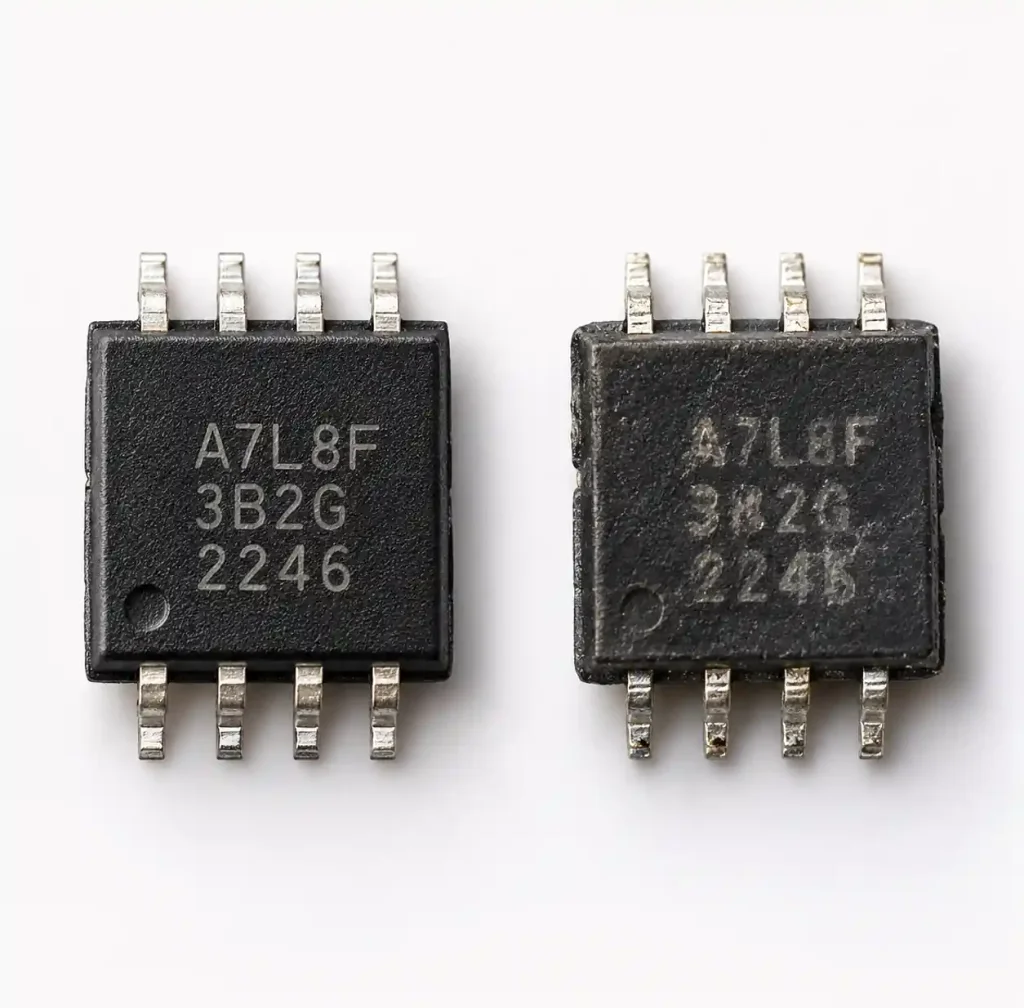
Counterfeit risks span all component categories: microcontrollers remarked for higher speeds, power management ICs with altered voltage ratings, memory chips relabeled with larger capacities, passive components with incorrect tolerances, and connectors with substandard plating.
Types of Counterfeit Components
Remarked Components
Remarked parts represent 60-70% of counterfeit incidents per AS5553 data. Authentic commercial-grade components get laser-etched with markings showing industrial or automotive specifications. A $2.50 commercial microcontroller becomes a $12 automotive-grade part with altered date codes.
Detection requires marking inspection under 30-50x magnification. Legitimate manufacturer markings show consistent depth and crisp edges. Remarked parts display inconsistent font heights, smudged edges, residual outlines from previous labels, and deeper laser etching than factory specifications.
Recycled and Refurbished Parts
Recycled components from discarded electronics constitute 15-20% of counterfeits. These parts experience thermal stress from desoldering, mechanical damage, and contamination from flux residue. Visual indicators include oxidized leads, flux residue on component bodies, uneven solder coatings, and mismatched date codes.
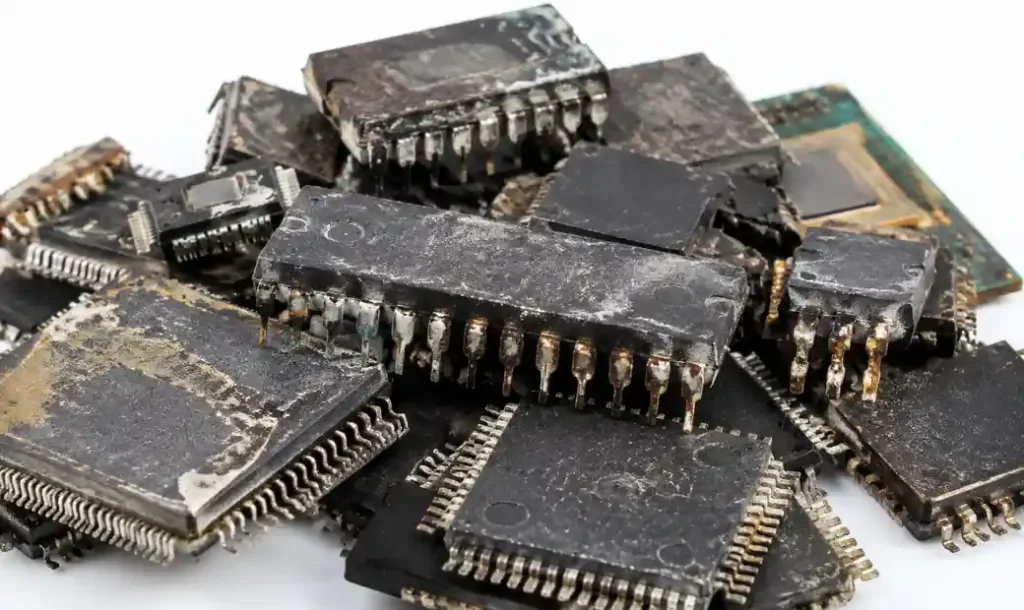
Electrical testing reveals degraded parameters: higher leakage currents, reduced noise margins, and out-of-spec timing indicating worn silicon.
Cloned ICs
High-value ICs warrant cloning where counterfeiters reverse-engineer die layouts and produce unauthorized copies. Clones account for 8-12% of counterfeits in processors, FPGAs, and high-speed transceivers. Detection requires X-ray imaging, decapsulation exposing die markings, and electrical parameter testing against datasheet specifications.
Detection Methods
| Detection Method | Effectiveness | Cost | Applications | Standards |
|---|---|---|---|---|
| Authorized Distributor | 95-98% prevention | Low | All components | AS5553, AS6496 |
| Visual Inspection (30-50x) | 60-70% catch rate | Low | Remarked parts | IPC-A-610 |
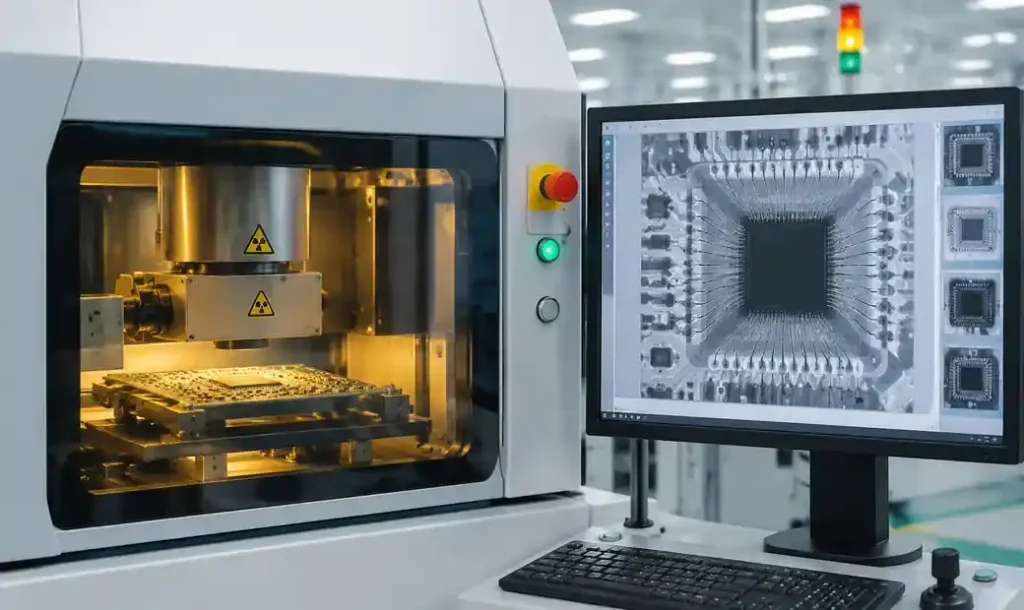
| X-Ray Inspection | 85-90% for defects | Medium | BGAs, QFNs | IDEA-STD-1010-B |
| Decapsulation Analysis | 99% conclusive | High | Suspect lots | AS6081 |
| Electrical Testing | 80-85% functional fakes | Medium | Active components | Datasheet specs |
Visual and Physical Inspection
Visual inspection under magnification remains the first defense. Compare component markings against manufacturer datasheets showing authentic fonts, logo placement, and date codes. Inconsistent marking depth, smudged fonts, and missing security features indicate remarking.
Physical inspection checks package integrity: mold compound color, lead frame alignment, and MSL bag condition. Suspect components show sanding marks, epoxy residue from die reattachment, or packages with mixed manufacturing lots.
X-Ray and Decapsulation
X-ray inspection reveals internal construction without destroying components. Bond wire configuration and die attach verify against manufacturer standards. Counterfeit indicators include missing bond wires, die size mismatches, irregular die attach, and contamination inside packages.
Decapsulation exposes die surfaces for inspection. Authentic components show consistent die markings and proper metallization. Counterfeits display altered markings, simplified layouts, and evidence of die grinding.
Trusted Sourcing Strategies
Authorized Distributor Hierarchy
Component sourcing follows risk-based hierarchy. Authorized distributors (Digi-Key, Mouser, Arrow, Avnet, Future Electronics) provide manufacturer traceability and certificates of conformance. These distributors maintain direct agreements with original component manufacturers (OCMs), ensuring authentic parts.
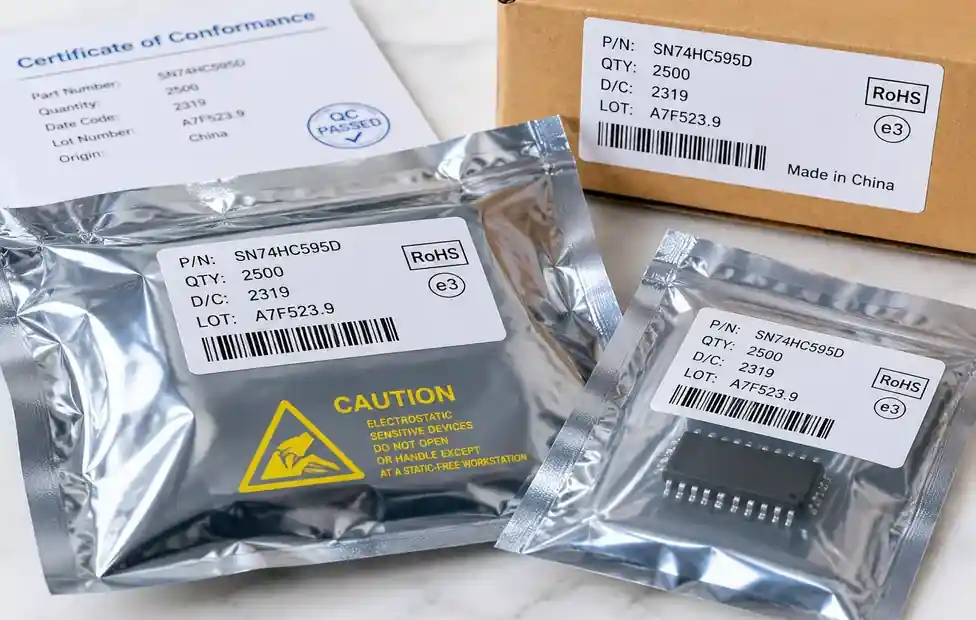
Manufacturer-direct purchasing works for high-volume projects where MOQ requirements (500-5,000 units) align with production needs. Independent distributors and brokers represent higher risk but serve roles during allocation shortages. Broker-sourced parts require incoming inspection including visual inspection, electrical testing, and X-ray analysis.
Authentication Programs
Major semiconductor manufacturers provide authentication services verifying authenticity through marking analysis and electrical testing. Texas Instruments, Analog Devices, STMicroelectronics, and Infineon offer free verification for volume customers.
Third-party authentication laboratories (ERAI Inc., Creative Electron) provide paid verification including X-ray inspection and decapsulation analysis. These services cost $150-$800 per component lot but prevent costly field failures.
Prevention Best Practices
Incoming Inspection
Establish incoming inspection protocols sampling 5-10% of component lots for visual verification. High-risk categories (microcontrollers, FPGAs, power management ICs) warrant 100% visual inspection. Inspection includes date code verification, MSL bag condition checks, and reel label verification.

Sample electrical testing validates parametric performance. Test 5-10 components per lot measuring supply current, output voltage accuracy, logic thresholds, and frequency response. Components failing parametric testing trigger lot rejection and supplier investigation.
Design for Anti-Counterfeiting
Specify current-generation components with active production status rather than obsolete parts more likely sourced through gray markets. Use standard packages (SOIC, QFP, 0603/0402 passives) with broad second-source availability rather than proprietary packages.
Design with allocation-resistant components avoiding high-demand categories during shortages. Engineer secondary BOM options identifying alternate components for critical functions.
Industry Standards
| Standard | Scope | Key Requirements | Industries |
|---|---|---|---|
| AS5553 | Counterfeit Parts Avoidance | Risk assessment, authorized sourcing | Aerospace, Defense, Medical |
| AS6496 | Counterfeit Parts Detection | Testing methods, sampling plans | Electronics Manufacturing |
| AS6081 | CAP Inspection | Destructive analysis procedures | Component Authentication |
| IDEA-STD-1010-B | Inspection Criteria | Visual and X-ray acceptance | Contract Manufacturing |
| IPC-1791 | Trusted Components | Supply chain security | PCB Assembly |
AS5553 Requirements
AS5553 establishes risk-based approaches for component procurement. Requirements include supplier qualification with approved vendor lists, purchasing priority favoring OCMs and authorized distributors, risk assessment scoring component categories, and inspection protocols defining sampling plans and acceptance criteria.
Organizations implement AS5553 through documented procedures covering component sourcing, receiving inspection, and suspect part handling. Establish counterfeit risk assessment matrices scoring components by value, obsolescence status, shortage conditions, and application criticality.
Medical and Automotive Compliance
Medical device manufacturers must comply with FDA 21 CFR Part 820 quality system regulations. Documentation requirements include supplier qualification records, incoming inspection data, lot traceability, and non-conforming material handling procedures. Medical PCB assembly requires IPC-6012 Class 3 workmanship with zero-defect policies.
Automotive electronics follow IATF 16949 quality management requiring production part approval processes (PPAP) and failure mode effects analysis (FMEA) addressing counterfeit risks. Implement traceability systems tracking components through manufacturing to finished vehicles.
Cost Impact
Counterfeit component costs extend beyond part replacement. Field failures trigger warranty claims costing $500-$5,000 per unit. Product recalls average $2-$8 million for medical or automotive applications involving safety risks. Brand damage creates 15-30% revenue reduction in affected product lines.
Prevention costs prove far lower than failure consequences. Authorized distributor premium adds 5-15% to component costs but eliminates 95-98% of counterfeit risk. Incoming inspection adds $0.50-$2.00 per assembly while preventing failures costing $50-$500 per unit.
Frequently Asked Questions
How common are counterfeit components in PCB assembly?
Counterfeit components represent 10-15% of the global electronics supply chain. Risk concentrates in allocation markets, obsolete components, and high-value ICs where profit margins justify counterfeiting. Authorized distributor sourcing reduces exposure to 2-5% risk levels.
What components are most frequently counterfeited?
High-value components see highest counterfeiting: microcontrollers remarked for higher speeds, power management ICs with altered voltage ratings, memory devices with relabeled capacities, FPGAs with cloned dies, automotive-grade components remarked from commercial, and legacy obsolete parts recycled from e-waste.
Can visual inspection detect all counterfeit components?
Visual inspection catches 60-70% of remarked components but misses sophisticated clones. Comprehensive detection requires multi-layered verification: authorized sourcing (95-98% prevention), visual inspection under magnification, X-ray imaging, electrical testing against datasheet specifications, and decapsulation analysis for high-value suspect components.
How much does counterfeit testing cost?
Basic visual inspection costs $0.25-$0.75 per component. X-ray inspection runs $1.50-$3.00 per component. Third-party authentication services charge $150-$800 per lot. Prevention through authorized distributor sourcing adds 5-15% premium but eliminates 95%+ of counterfeit risk.
What should I do if I receive suspect counterfeit components?
Immediately quarantine suspect components from production inventory. Document observations with photographs. Notify your supplier requesting investigation. Report incidents to ERAI (Electronic Resellers Association International). For safety-critical components, submit samples to manufacturer authentication services. Never use suspect components in production.
Are broker-sourced components always counterfeit?
Legitimate independent distributors serve essential roles sourcing obsolete components and providing supply during shortages. Not all broker-sourced parts are counterfeit, but risk increases significantly versus authorized distributors. Implement strict incoming inspection including visual inspection, electrical testing, solderability verification, and X-ray analysis.
Conclusion
Counterfeit component prevention requires disciplined sourcing strategies prioritizing authorized distributors, multi-layered inspection combining visual, X-ray, and electrical verification, and compliance with industry standards including AS5553 and AS6496. Authentication costs prove far lower than field failure consequences including warranty claims, recalls, and brand damage.
Andwin Circuits implements rigorous component verification protocols for all PCB assembly services, sourcing exclusively through authorized distributors and manufacturer-direct channels. Our incoming inspection procedures include visual verification, electrical testing, and X-ray analysis for critical components. With ISO 9001 and IATF 16949 certification, our quality management systems meet medical device and automotive requirements.
Contact us today for turnkey PCB assembly services with comprehensive component authentication and quality-guaranteed manufacturing backed by industry-leading inspection protocols.