High Frequency PCB Communication Circuits: Design, Challenges, and Applications
Introduction
In the modern era of wireless communication, the demand for high-speed data transmission and low-latency communication has driven the development of high-frequency printed circuit board (PCB) communication circuits. These circuits are the backbone of numerous technologies, including 5G networks, satellite communication, radar systems, and high-speed digital interfaces. High-frequency PCBs operate at frequencies typically above 1 GHz, where traditional PCB design principles no longer suffice due to the unique challenges posed by signal integrity, electromagnetic interference (EMI), and material properties. This article explores the design considerations, challenges, and applications of high-frequency PCB communication circuits.
1. Fundamentals of High-Frequency PCB Communication Circuits
High-frequency PCBs are designed to handle signals with short wavelengths, where the behavior of electrical signals is significantly influenced by the physical properties of the PCB materials and the layout of the circuit. At high frequencies, signals are more susceptible to losses, reflections, and crosstalk, which can degrade performance. Key concepts in high-frequency PCB design include:
- Signal Integrity: Ensuring that signals propagate through the PCB without distortion or loss.
- Impedance Matching: Matching the impedance of transmission lines to the source and load to minimize reflections.
- Electromagnetic Compatibility (EMC): Managing EMI to prevent interference with other circuits and comply with regulatory standards.
- Material Properties: Selecting PCB materials with low dielectric loss and stable permittivity at high frequencies.
2. Design Considerations for High-Frequency PCBs
Designing high-frequency PCBs requires careful attention to several factors to ensure optimal performance:
2.1 Material Selection
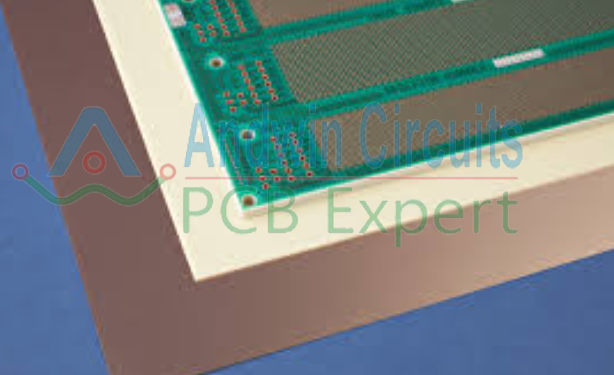
The choice of PCB material is critical for high-frequency applications. Common materials include:
- FR-4: A standard PCB material suitable for low-frequency applications but less ideal for high frequencies due to its higher dielectric loss.
- Rogers RO4000 Series: High-frequency laminates with low dielectric loss and stable electrical properties.
- PTFE (Teflon): Known for its excellent high-frequency performance and low loss tangent.
The dielectric constant (Dk) and loss tangent (Df) of the material are key parameters. A low Dk reduces signal propagation delay, while a low Df minimizes signal attenuation.
2.2 Transmission Line Design
Transmission lines, such as microstrips and striplines, are used to route high-frequency signals. Proper design is essential to maintain signal integrity:
- Microstrip: A signal trace on the outer layer of the PCB, separated from the ground plane by a dielectric layer. Microstrips are easy to fabricate but more susceptible to EMI.
- Stripline: A signal trace embedded between two ground planes, providing better EMI shielding but requiring more complex fabrication.
Impedance matching is crucial to prevent signal reflections. The characteristic impedance of the transmission line depends on the trace width, dielectric thickness, and material properties.
2.3 Layer Stackup
A well-designed layer stackup minimizes crosstalk and EMI while providing adequate power and ground planes. Key considerations include:
- Signal Layer Placement: High-speed signals should be routed on inner layers between ground planes to reduce EMI.
- Ground Planes: Continuous ground planes provide a low-impedance return path for high-frequency currents.
- Power Integrity: Decoupling capacitors should be placed close to power pins to suppress noise.
2.4 Via Design
Vias are used to connect different layers of the PCB but can introduce parasitic inductance and capacitance, which degrade high-frequency signals. Techniques to mitigate these effects include:
- Via Stitching: Using multiple vias to connect ground planes, reducing inductance.
- Back-Drilling: Removing unused portions of via barrels to minimize stub effects.
2.5 EMI and Crosstalk Mitigation
High-frequency circuits are prone to EMI and crosstalk, which can disrupt signal integrity. Strategies to mitigate these issues include:
- Shielding: Using grounded copper pours or metal enclosures to block EMI.
- Spacing: Increasing the distance between high-speed traces to reduce crosstalk.
- Differential Signaling: Using differential pairs to cancel out common-mode noise.
3. Challenges in High-Frequency PCB Design
Designing high-frequency PCBs presents several challenges:
3.1 Signal Loss
At high frequencies, signal loss due to conductor and dielectric losses becomes significant. Conductor loss is caused by the skin effect, where current flows primarily on the surface of the trace. Dielectric loss is due to the energy absorbed by the PCB material.
3.2 Parasitic Effects
Parasitic inductance and capacitance can distort high-frequency signals. These effects are caused by the physical dimensions of traces, vias, and components.
3.3 Thermal Management
High-frequency circuits often generate significant heat, which can affect performance and reliability. Proper thermal management, including the use of thermal vias and heat sinks, is essential.
3.4 Manufacturing Tolerances
High-frequency PCBs require tight manufacturing tolerances to ensure consistent performance. Variations in trace width, dielectric thickness, and material properties can impact impedance and signal integrity.
4. Applications of High-Frequency PCB Communication Circuits
High-frequency PCBs are used in a wide range of applications, including:
4.1 Wireless Communication
- 5G Networks: High-frequency PCBs enable the high data rates and low latency required for 5G communication.
- Wi-Fi and Bluetooth: PCBs operating at 2.4 GHz and 5 GHz bands are used in wireless devices.
4.2 Radar and Satellite Systems
- Radar: High-frequency PCBs are used in automotive radar and military radar systems.
- Satellite Communication: PCBs operating at microwave frequencies are used in satellite transponders and ground stations.
4.3 High-Speed Digital Interfaces
- PCIe and USB: High-frequency PCBs support high-speed data transfer in computers and peripherals.
- HDMI and DisplayPort: PCBs enable high-resolution video transmission.
4.4 Medical Devices
- MRI and RF Ablation: High-frequency PCBs are used in medical imaging and treatment systems.
5. Future Trends in High-Frequency PCB Design
The demand for higher performance and miniaturization is driving innovation in high-frequency PCB design:
- Advanced Materials: Development of new materials with lower loss tangents and higher thermal stability.
- 3D Printing: Additive manufacturing techniques for creating complex PCB structures.
- Integration with RF Components: Co-design of PCBs with integrated RF components to optimize performance.
- AI-Driven Design: Use of machine learning algorithms to optimize PCB layouts and predict performance.
Conclusion
High-frequency PCB communication circuits are essential for enabling the next generation of wireless and high-speed digital technologies. Designing these circuits requires a deep understanding of signal integrity, material properties, and electromagnetic principles. Despite the challenges, advancements in materials, manufacturing, and design tools are paving the way for even more sophisticated and reliable high-frequency PCBs. As the demand for faster and more efficient communication continues to grow, high-frequency PCBs will remain at the forefront of technological innovation.