PCB Trace Current Calculation: A Comprehensive Guide
Introduction to PCB Trace Current Capacity
Printed Circuit Board (PCB) trace current calculation is a fundamental aspect of electronic design that ensures reliable operation and prevents catastrophic failures. When electrical current flows through a PCB trace, it generates heat due to the inherent resistance of the copper conductor. Excessive current can lead to trace overheating, resulting in degraded performance, compromised signal integrity, or even complete trace failure.
Understanding how to properly calculate current-carrying capacity is essential for:
- Preventing thermal damage to PCB traces
- Ensuring long-term reliability of electronic devices
- Meeting safety standards and regulatory requirements
- Optimizing PCB layout and design
This comprehensive guide explores the key factors affecting PCB trace current capacity, presents calculation methods, and provides practical design considerations for engineers.
Factors Affecting PCB Trace Current Capacity
1. Trace Dimensions
The current-carrying capacity of a PCB trace is primarily determined by its cross-sectional area:
- Trace Width: The most directly adjustable parameter in PCB design
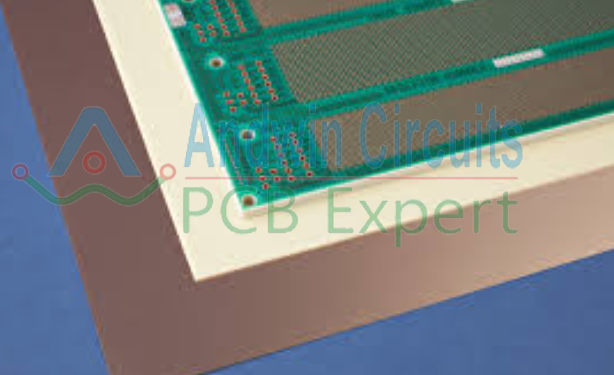
- Copper Thickness: Typically specified in ounces per square foot (oz/ft²) or directly in mils/microns
- Common thicknesses: 0.5 oz (17.5 µm), 1 oz (35 µm), 2 oz (70 µm)
- Thicker copper allows higher current capacity but increases cost
The cross-sectional area (A) can be calculated as:
A = Width (W) × Thickness (T)
2. Temperature Rise
The allowable temperature rise (ΔT) is the maximum increase above ambient temperature that the trace can sustain:
- Typical design limits: 10°C, 20°C, or 30°C rise
- Higher temperature rises allow more current but reduce reliability
- Standard reference: IPC-2152 provides guidelines for various temperature rises
3. Ambient Temperature
The surrounding environment affects the total temperature the trace will reach:
- Higher ambient temperatures require more conservative designs
- Critical for applications in hot environments (e.g., automotive under-hood)
4. Copper Purity and Surface Finish
- Electrolytic copper used in PCBs has about 1.7×10⁻⁶ Ω·cm resistivity
- Surface finishes (ENIG, HASL, etc.) slightly affect resistance but generally negligible for current calculations
5. PCB Material and Construction
- Substrate thermal conductivity affects heat dissipation
- Multilayer boards may have different thermal characteristics than single-layer
- Presence of nearby heat-generating components
PCB Trace Current Calculation Methods
1. IPC-2152 Standard Method
The IPC-2152 standard (“Standard for Determining Current-Carrying Capacity in Printed Board Design”) is the most authoritative reference for PCB trace current calculations. It provides detailed charts and formulas based on extensive empirical data.
Key aspects of IPC-2152:
- Considers internal vs. external traces (different cooling characteristics)
- Accounts for board thickness and copper area
- Provides correction factors for various conditions
For external traces:
I = k × (ΔT)^0.44 × (A)^0.725
Where:
- I = Current in amps
- ΔT = Temperature rise in °C
- A = Cross-sectional area in mils²
- k = 0.048 for external traces, 0.024 for internal traces
2. Simplified Formulas
For quick estimates, engineers often use simplified versions of the IPC formulas:
External traces:
I = 0.015 × ΔT^0.545 × W^0.725 × T^0.725
Internal traces:
I = 0.008 × ΔT^0.545 × W^0.725 × T^0.725
Where:
- W = Width in mils (1 mil = 0.001 inch)
- T = Thickness in mils
3. Online Calculators and Tools
Numerous online calculators implement the IPC-2152 equations, providing convenient access to accurate calculations:
- Saturn PCB Toolkit
- PCB Trace Width Calculator
- KiCad’s built-in calculator
- Altium’s online tools
These tools often include additional features like voltage drop calculation and fusing current estimates.
Practical Calculation Examples
Example 1: Basic Current Calculation
Calculate the current capacity for a 20 mil (0.5 mm) wide, 1 oz (1.4 mil thick) external trace with 20°C temperature rise.
Using the simplified formula:
I = 0.015 × 20^0.545 × 20^0.725 × 1.4^0.725
I = 0.015 × 4.72 × 7.24 × 1.28
I ≈ 0.66 A
Example 2: Determining Required Trace Width
Find the minimum trace width needed to carry 3A with 1 oz copper, 20°C rise (external trace).
Rearranging the formula:
W = [I / (0.015 × ΔT^0.545 × T^0.725)]^(1/0.725)
W = [3 / (0.015 × 4.72 × 1.28)]^1.38
W = [3 / 0.0906]^1.38
W ≈ 110 mils (2.8 mm)
Example 3: Multilayer Board Consideration
For the same 3A current on an internal layer:
W = [3 / (0.008 × 4.72 × 1.28)]^1.38
W ≈ 210 mils (5.3 mm)
This demonstrates how internal traces require significantly more width for the same current.
Advanced Considerations in PCB Trace Current
1. Transient Currents and Pulse Conditions
For short-duration current pulses, traces can handle higher currents than their continuous ratings. The fusing current (point at which the trace melts) can be estimated using:
I_fuse = k × A^0.75
Where k ≈ 0.6 for copper traces (A in circular mils)
2. Parallel Traces
When multiple parallel traces carry current to the same destination:
- Current divides based on relative resistance
- Unequal distribution may occur due to layout differences
- Best practice: Make parallel traces identical in length and geometry
3. High-Frequency Effects (Skin Effect)
At high frequencies (>100 kHz), current tends to flow near the surface of conductors:
- Effective resistance increases with frequency
- For RF applications, consider skin depth (δ):
δ = √(ρ / (π × μ × f))
Where ρ = resistivity, μ = permeability, f = frequency
4. Voltage Drop Considerations
For power distribution, voltage drop along traces may be more critical than temperature:
V_drop = I × R_trace
Where R_trace = ρ × L / (W × T)
5. Thermal Management Techniques
When high currents are unavoidable:
- Use thicker copper (2 oz or more)
- Expose traces to air (remove solder mask) for better cooling
- Add thermal relief connections
- Incorporate heatsinks or cooling fans
PCB Trace Current Tables for Quick Reference
Below are simplified tables based on IPC-2152 for common scenarios:
Table 1: External Traces (1 oz copper, 20°C rise)
| Width (mils) | Current (A) |
|---|---|
| 10 | 0.35 |
| 20 | 0.66 |
| 50 | 1.45 |
| 100 | 2.60 |
| 200 | 4.80 |
Table 2: Internal Traces (1 oz copper, 20°C rise)
| Width (mils) | Current (A) |
|---|---|
| 10 | 0.18 |
| 20 | 0.34 |
| 50 | 0.75 |
| 100 | 1.35 |
| 200 | 2.50 |
Design Best Practices
- Conservative Design: Always include a safety margin (20-30% below maximum)
- Thermal Analysis: Use thermal simulation tools for critical designs
- Current Density: Keep below 500 A/cm² for reliable long-term operation
- Via Current: Remember vias have limited current capacity (typically 1-2A per standard via)
- Documentation: Clearly annotate high-current traces in design files
- Prototyping: Verify thermal performance with actual testing
- Manufacturing Tolerances: Account for possible etching variations (typically ±1 mil)
Common Pitfalls and How to Avoid Them
- Ignoring Internal vs. External Trace Differences: Always specify which layer the trace is on when doing calculations
- Overlooking Cumulative Heating: Multiple nearby high-current traces can create hot spots
- Neglecting Ambient Conditions: Design for the worst-case operating environment
- Assuming Linear Scaling: Current capacity doesn’t scale linearly with width
- Forgetting About Board Thickness: Thicker boards generally allow slightly higher currents
- Ignoring Manufacturing Processes: Some processes may affect final copper thickness
Future Trends in PCB Current Handling
As electronics continue to evolve, several trends are emerging:
- Higher Power Density Designs: Driving need for more accurate thermal modeling
- Advanced Materials: Adoption of substrates with better thermal conductivity
- Embedded Cooling: Microfluidic channels and other innovative cooling solutions
- 3D Printed Electronics: New possibilities for trace geometry optimization
- AI-Assisted Design: Machine learning tools for automatic current optimization
Conclusion
Proper PCB trace current calculation is both a science and an art, requiring understanding of electrical principles, thermal dynamics, and practical manufacturing considerations. By applying the methods outlined in this guide—particularly those based on the IPC-2152 standard—designers can create robust, reliable PCBs that meet performance requirements while ensuring long-term operation.
Remember that while calculations provide essential guidance, real-world verification through prototyping and testing remains crucial, especially for high-current or mission-critical applications. As PCB technology continues to advance, staying informed about new materials, techniques, and calculation methods will help engineers push the boundaries of what’s possible in electronic design.