
The Evolution and Impact of AI-Powered PCB Autorouting Technology
Introduction to PCB Autorouting
Printed Circuit Board (PCB) design has undergone a remarkable transformation in recent years, largely driven by advancements in artificial intelligence. At the heart of this transformation lies PCB autorouting technology – once considered a simple convenience tool, now evolving into an intelligent design partner capable of handling increasingly complex routing challenges.
Traditional PCB design required engineers to manually route thousands of connections between components, a time-consuming process prone to human error. The introduction of basic autorouting algorithms in the 1980s promised to automate this process, but early versions often produced suboptimal results that required significant manual cleanup. Today, AI-powered autorouters represent a quantum leap forward, combining machine learning, optimization algorithms, and domain-specific knowledge to deliver routing solutions that rival or exceed human capabilities in many scenarios.
The Limitations of Traditional Autorouting
To appreciate the significance of AI in PCB autorouting, we must first understand the shortcomings of conventional approaches. Traditional autorouters relied primarily on:
- Rule-based algorithms: Following predetermined routing patterns and design rules
- Cost-function optimization: Minimizing metrics like total wire length or via count
- Sequential routing: Processing nets one at a time in a fixed order
These methods often struggled with:
- Complex design constraints: Modern PCBs must account for high-speed signals, impedance matching, EMI reduction, thermal management, and manufacturability
- Component density: Shrinking form factors and increasing functionality demand more connections in less space
- Design reuse: Maintaining consistency across product variants and generations
- Human preferences: Experienced designers develop routing styles that balance multiple objectives
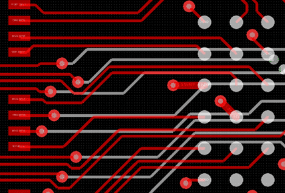
The result was that traditional autorouters frequently produced technically correct but impractical solutions, requiring extensive manual intervention that negated much of the promised time savings.
How AI Transforms PCB Autorouting
Modern AI-powered autorouters address these limitations through several key technological innovations:
Machine Learning from Design Patterns
AI autorouters analyze vast databases of successful PCB designs to learn:
- Preferred routing patterns for different component types
- Effective strategies for high-density areas
- Techniques for managing complex constraints
- Common solutions to recurring routing challenges
This learned knowledge enables the system to propose solutions that resemble those an experienced human designer might create, rather than purely algorithmic approaches.
Neural Network-Based Evaluation
Deep learning models evaluate potential routing solutions by considering:
- Signal integrity metrics
- Electromagnetic compatibility
- Thermal performance
- Mechanical stress
- Manufacturability
- Aesthetic qualities
This multi-objective evaluation surpasses simple cost functions by understanding the complex interplay between different design requirements.
Reinforcement Learning Optimization
Advanced autorouters employ reinforcement learning to:
- Explore alternative routing strategies
- Learn from iterative improvements
- Develop context-aware solutions
- Adapt to specific design styles
This approach allows the system to discover novel solutions that might not be immediately obvious, potentially outperforming human designers in certain aspects.
Constraint-Aware Routing
AI systems excel at managing the hundreds (sometimes thousands) of design constraints in modern PCBs:
- Differential pair routing
- Length matching requirements
- Impedance control
- Power delivery network optimization
- RF signal isolation
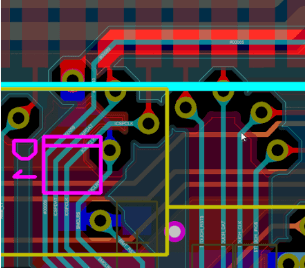
The AI can dynamically prioritize and negotiate between competing constraints in ways that would be extremely time-consuming for human designers.
Technical Architecture of AI PCB Autorouters
The most advanced AI autorouting systems typically incorporate several key components:
1. Design Analysis Module
- Parses schematics and component placement
- Identifies critical nets and constraint groups
- Estimates routing complexity
- Predicts potential problem areas
2. Knowledge Base
- Stores learned routing patterns
- Maintains constraint templates
- Contains manufacturing rules
- Includes historical design data
3. Routing Engine
- Core pathfinding algorithms (A*, maze routing)
- Multi-layer optimization
- Via placement strategies
- Escape routing for BGAs and fine-pitch components
4. Evaluation Network
- Neural networks for quality assessment
- Simulation interfaces (SI, thermal, EMI)
- Design rule verification
- Manufacturability analysis
5. Learning System
- Captures designer feedback
- Analyzes successful manual routing
- Updates routing preferences
- Improves future performance
Benefits of AI-Powered Autorouting
The implementation of AI in PCB autorouting delivers significant advantages:
1. Dramatic Time Savings
Complex boards that might require weeks of manual routing can often be completed in hours or days with AI assistance. The technology is particularly valuable for:
- Initial routing passes
- Design iterations
- Engineering change orders
- Variant designs
2. Improved Routing Quality
AI systems can:
- Optimize signal paths for better performance
- Reduce electromagnetic interference
- Improve thermal characteristics
- Enhance reliability
- Increase manufacturing yield
3. Handling Complexity
Modern designs with:
- High-speed digital (DDR, PCIe)
- Mixed-signal circuits
- RF components
- Advanced packaging (SiP, 3D IC)
benefit from AI’s ability to manage intricate constraint sets that would overwhelm human designers.
4. Knowledge Capture and Transfer
AI systems:
- Preserve company design expertise
- Standardize routing approaches
- Accelerate new engineer onboarding
- Maintain consistency across teams
5. Exploration of Design Alternatives
AI can rapidly generate and evaluate multiple routing solutions, enabling:
- Better design space exploration
- Quick comparison of alternatives
- Optimization for different priorities (cost vs. performance)
Challenges and Limitations
Despite significant advances, AI autorouting still faces several challenges:
1. Training Data Requirements
High-quality AI models require:
- Extensive datasets of successful designs
- Accurate labeling and annotation
- Diverse examples covering various domains
2. Computational Resources
Advanced routing algorithms demand:
- Significant processing power
- Specialized hardware (GPUs, TPUs)
- Optimized software infrastructure
3. Integration with Design Flows
Effective implementation requires:
- Seamless EDA tool integration
- Compatible file formats
- Efficient data exchange
4. Designer Acceptance
Some engineers remain skeptical about:
- Loss of control
- Opaque decision-making
- Difficulty in manual override
5. Edge Cases
AI may struggle with:
- Novel component packages
- Unusual design constraints
- Highly creative solutions
Current State of the Technology
As of 2023, AI-powered autorouting exists on a spectrum:
1. Assisted Routing Tools
- Suggest routing paths
- Complete partial routes
- Offer real-time guidance
- Examples: Altium’s ActiveRoute, Cadence’s Allegro AI
2. Semi-Autonomous Routers
- Handle significant portions automatically
- Require some human direction
- Need final review/cleanup
- Examples: Mentor’s Xpedition AMS, Zuken’s CR-8000
3. Full Autonomous Solutions
- Complete complex routing with minimal input
- Incorporate multi-physics simulation
- Learn from each design
- Emerging from research labs and startups
Future Directions
The evolution of AI autorouting will likely focus on:
1. Multi-Objective Optimization
Better balancing of:
- Electrical performance
- Thermal management
- Mechanical reliability
- Cost considerations
- Manufacturing yield
2. 3D Integration
Handling:
- Advanced packaging
- Stacked dies
- Through-silicon vias
- Heterogeneous integration
3. Generative Design
Creating:
- Novel routing patterns
- Custom component placement
- Optimized layer stacks
- Innovative interconnect solutions
4. Real-Time Collaboration
Enabling:
- Simultaneous human-AI design
- Interactive adjustment
- Immediate feedback
- Shared design intent
5. Cross-Domain Learning
Incorporating knowledge from:
- IC layout
- Mechanical design
- Antenna theory
- Thermal engineering
Implementation Considerations
For organizations adopting AI autorouting:
1. Start with Assisted Tools
Begin with AI features that:
- Complement existing workflows
- Provide clear value
- Require minimal process changes
2. Focus on High-Value Applications
Prioritize designs with:
- High routing complexity
- Tight constraints
- Frequent iterations
- Multiple variants
3. Establish Quality Assurance
Implement:
- Verification procedures
- Benchmarking metrics
- Human review checkpoints
- Continuous improvement
4. Invest in Training
Ensure staff understands:
- Tool capabilities
- Appropriate use cases
- Limitations
- Best practices
5. Participate in Development
Engage with vendors to:
- Influence product roadmaps
- Provide feedback
- Share domain knowledge
- Co-develop solutions
Conclusion
AI-powered PCB autorouting represents a fundamental shift in electronic design automation, transforming what was once a tedious manual process into a collaborative partnership between human creativity and machine intelligence. While not yet capable of completely replacing skilled layout engineers, modern AI autorouters already provide substantial productivity gains and quality improvements.
As the technology continues to advance, we can expect AI to take on increasingly complex routing challenges, handle more aspects of the design process, and ultimately enable new categories of electronic products that would be impractical to design using traditional methods. The future of PCB design lies not in choosing between human or artificial intelligence, but in effectively combining the strengths of both to achieve results neither could accomplish alone.
For engineering organizations, the strategic adoption of AI autorouting will become a key competitive differentiator, enabling faster time-to-market, higher performance products, and more efficient use of engineering talent. Those who embrace this technology early will be best positioned to lead in the increasingly complex and fast-paced world of electronic product development.