
RoHS Compliance for PCB: Lead-Free Assembly Requirements
If you manufacture PCBs for European or global markets, then you must understand RoHS compliance requirements that restrict hazardous substances and mandate lead-free assembly processes affecting material selection, soldering temperatures, and documentation.
Electronics waste contains toxic substances that contaminate soil and groundwater when improperly disposed. The European Union’s RoHS Directive restricts 10 hazardous materials in electrical and electronic equipment, with lead elimination creating the most significant manufacturing changes. Lead-free solder requires 30-35°C higher reflow temperatures, affecting PCB materials, component ratings, and assembly processes. Non-compliance blocks market access to the EU, UK, China, and other regions adopting similar standards.
This guide covers essential RoHS requirements, lead-free solder specifications, material compatibility, and documentation for compliant PCB assembly.
What is RoHS Compliance?
RoHS (Restriction of Hazardous Substances) Directive 2011/65/EU restricts hazardous materials in electrical and electronic equipment sold in the European Union. The directive aims to reduce environmental contamination and health risks from electronics waste by limiting toxic substance concentrations in products.
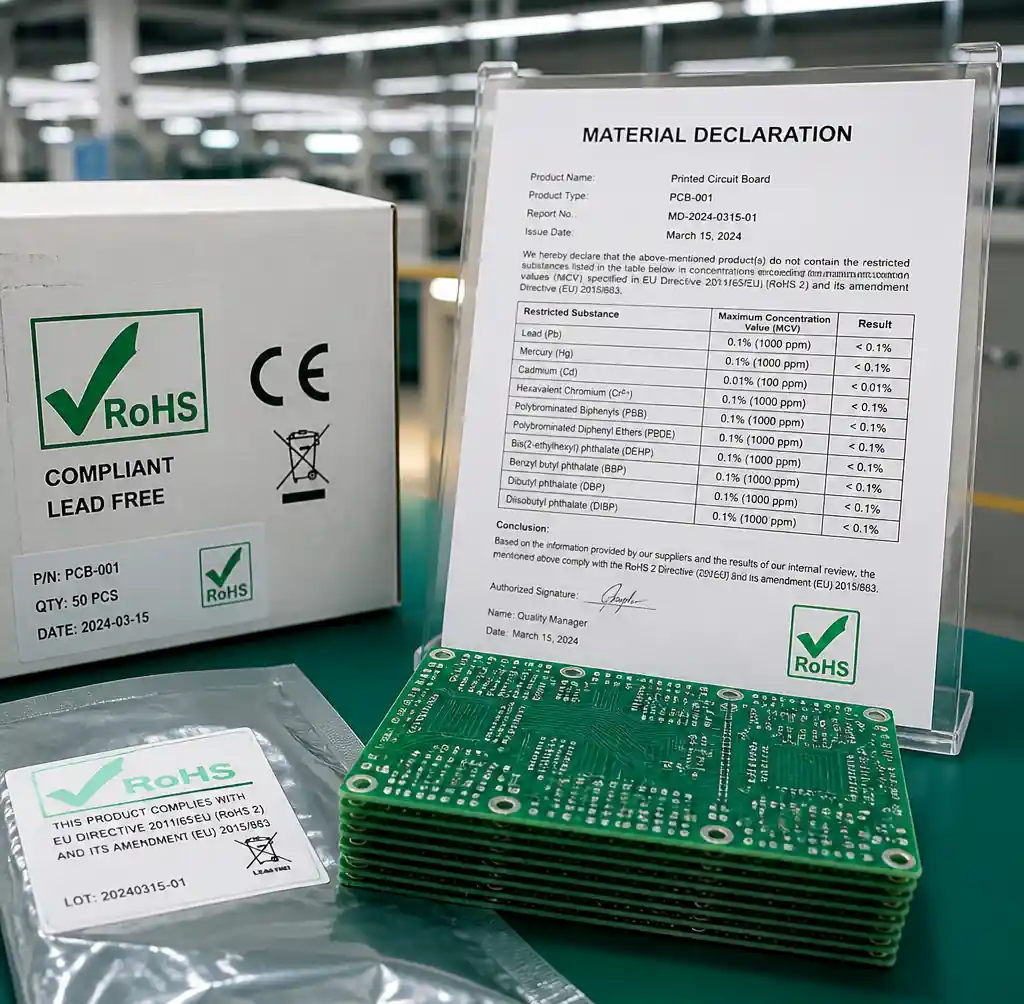
RoHS compliance applies to finished products, components, and materials throughout the supply chain. Manufacturers, importers, and distributors bear legal responsibility. The directive covers 11 equipment categories including telecommunications, medical devices, industrial monitoring, and consumer electronics. Products exceeding limits cannot be sold in covered markets, with penalties including recalls and fines up to €100,000+.
10 Restricted Substances Under RoHS
The current RoHS III directive restricts 10 hazardous substances with maximum concentration limits measured as weight percentage of homogeneous materials.
| Substance | Maximum Concentration | Common Sources in PCBs | Health/Environmental Impact |
|---|---|---|---|
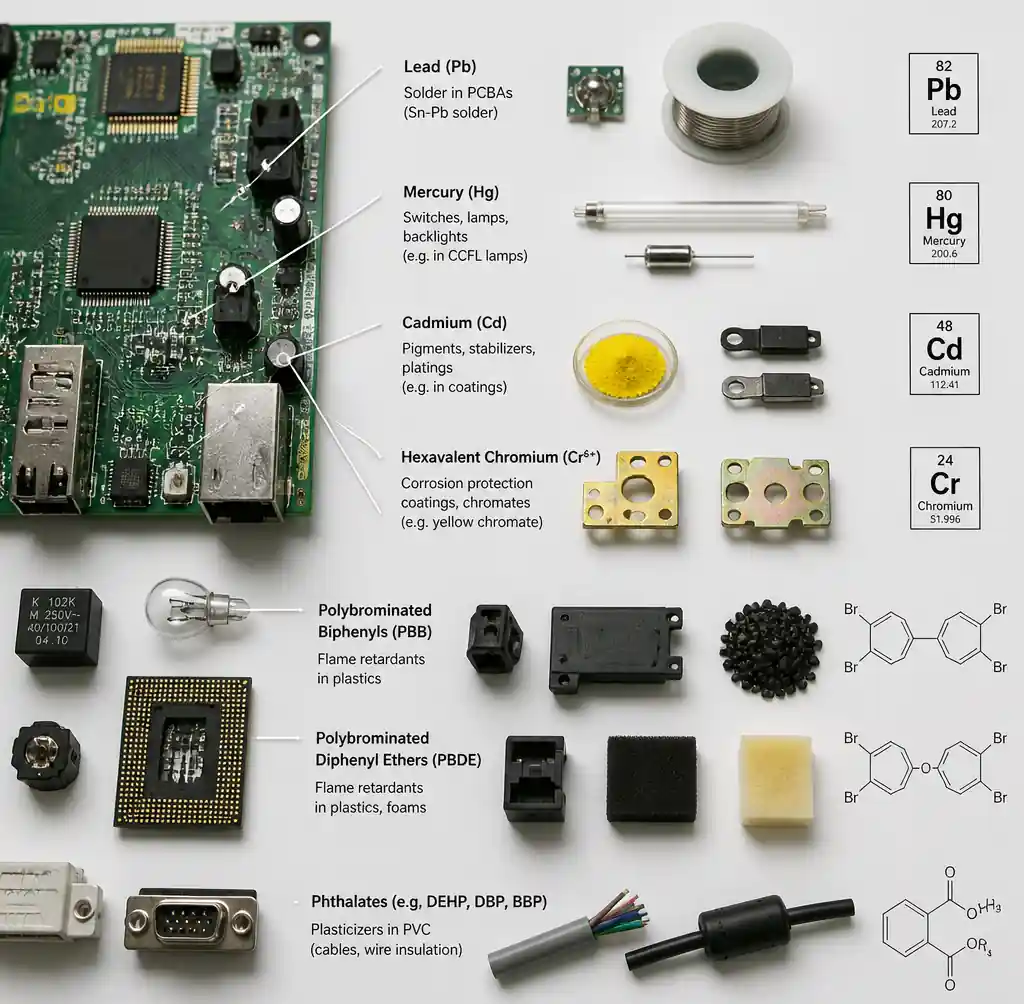
| Lead (Pb) | 0.1% (1000 ppm) | Solder, component leads, surface finishes | Neurological damage, kidney disease, developmental issues |
| Mercury (Hg) | 0.1% (1000 ppm) | Switches, relays, backlights, batteries | Brain and kidney damage, birth defects |
| Cadmium (Cd) | 0.01% (100 ppm) | Pigments, stabilizers, coatings, older batteries | Lung damage, kidney disease, cancer |
| Hexavalent Chromium (Cr6+) | 0.1% (1000 ppm) | Metal coatings, corrosion inhibitors | Cancer, respiratory issues, skin ulcers |
| Polybrominated Biphenyls (PBB) | 0.1% (1000 ppm) | Flame retardants in plastics, older PCBs | Thyroid disruption, developmental effects |
| Polybrominated Diphenyl Ethers (PBDE) | 0.1% (1000 ppm) | Flame retardants in plastics, enclosures | Neurological and reproductive harm |
| Bis(2-ethylhexyl) Phthalate (DEHP) | 0.1% (1000 ppm) | Cable insulation, plastic softeners | Reproductive toxicity, endocrine disruption |
| Benzyl Butyl Phthalate (BBP) | 0.1% (1000 ppm) | Adhesives, sealants, cable coatings | Reproductive and developmental toxicity |
| Dibutyl Phthalate (DBP) | 0.1% (1000 ppm) | Plasticizers in cables and connectors | Reproductive harm, fetal development issues |
| Diisobutyl Phthalate (DIBP) | 0.1% (1000 ppm) | Alternative plasticizer to DBP | Similar toxicity to DBP |
Lead elimination has driven the most significant PCB manufacturing changes, requiring transition from traditional tin-lead (SnPb) solder to lead-free alternatives. This affects component compatibility, reflow profiles, and material selection across the entire assembly process.
Lead-Free Solder Requirements
Lead-free solder replaced traditional 63/37 or 60/40 tin-lead eutectic solder as the industry standard for RoHS-compliant assembly. The most widely adopted alloy is SAC305 (96.5% Tin, 3.0% Silver, 0.5% Copper).
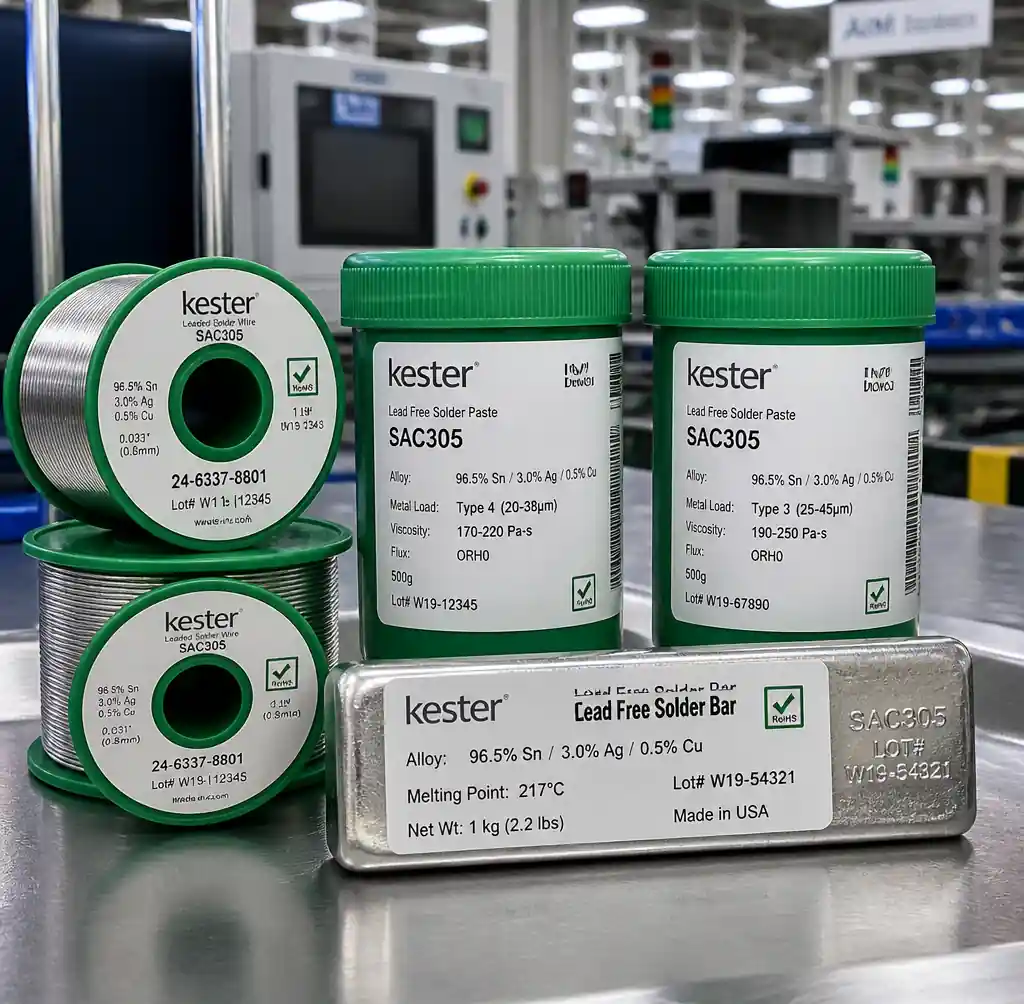
SAC305 offers the best balance of mechanical strength, thermal fatigue resistance, and cost. The 3% silver content provides adequate reliability while keeping costs reasonable. Melting point is 217°C compared to 183°C for tin-lead, requiring significant process adjustments. Alternative alloys include SAC405 (4% silver) for higher reliability and low-silver alloys (SAC105) for cost reduction.
Lead-free solder joints appear duller than shiny tin-lead joints. This visual difference is normal. However, lead-free alloys are less forgiving. Insufficient heat creates weak cold joints. Excessive heat causes component damage.
Reflow Temperature Profile Changes
Lead-free solder’s higher melting point requires elevated reflow temperatures throughout the thermal profile, creating thermal stress challenges for components and PCB materials.
| Profile Stage | Tin-Lead (SnPb) | Lead-Free (SAC305) | Purpose |
|---|---|---|---|
| Preheat Temperature | 150-180°C | 150-200°C | Activate flux, evaporate volatiles, reduce thermal shock |
| Soak Temperature | 150-180°C | 150-200°C | Equilibrate component temperatures |
| Soak Time | 60-120 seconds | 60-120 seconds | Minimize temperature gradients |
| Ramp to Peak | 1-3°C/second | 1-3°C/second | Controlled heating prevents damage |
| Peak Temperature | 210-225°C | 240-260°C | Complete solder melting and wetting |
| Time Above Liquidus | 30-60 seconds | 30-90 seconds | Ensure proper intermetallic formation |
| Cooling Rate | <4°C/second | <4°C/second | Prevent thermal shock and cracking |
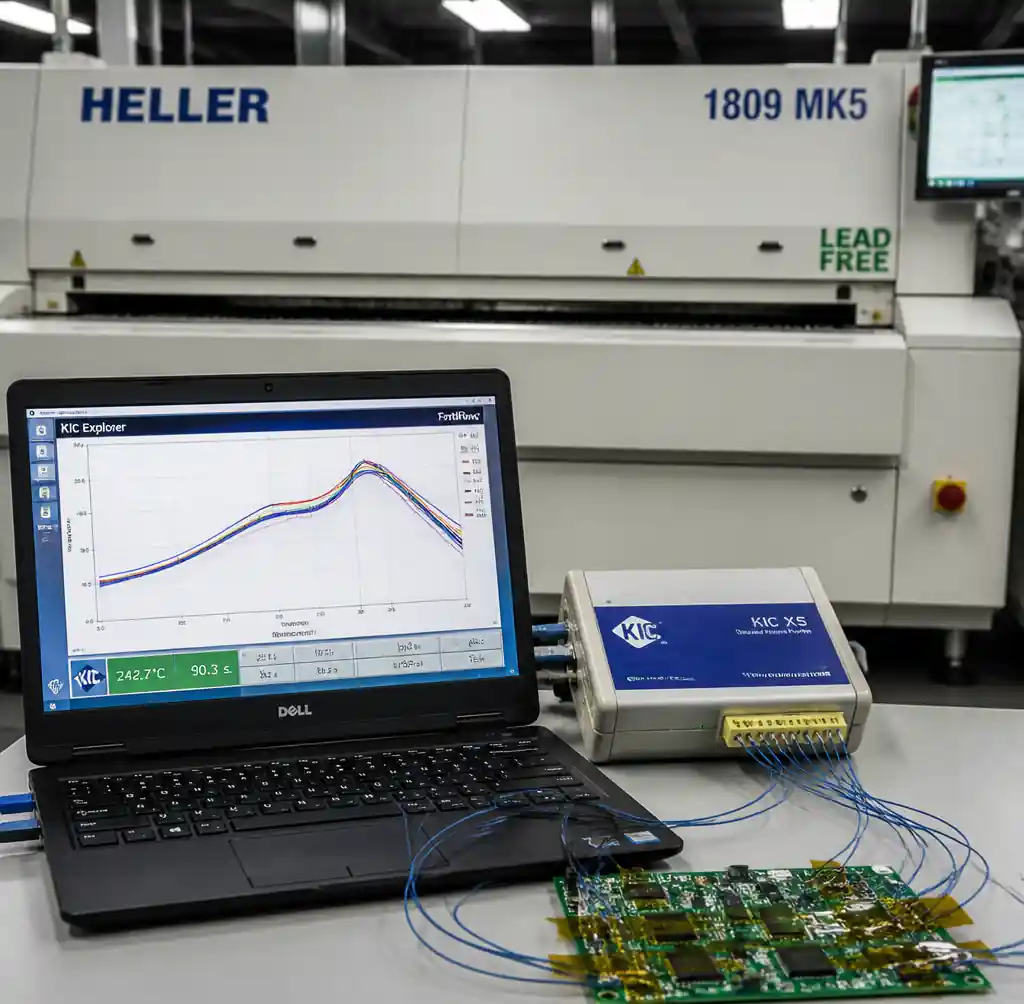
Peak temperature typically reaches 240-250°C for SAC305, approximately 30-35°C higher than tin-lead. Components must be rated for 260°C maximum body temperature per IPC/JEDEC J-STD-020. Some plastic components, connectors, and electrolytic capacitors may not tolerate these temperatures.
Temperature profiling balances complete solder reflow against thermal stress, accounting for board thermal mass and component density.
PCB Material Compatibility
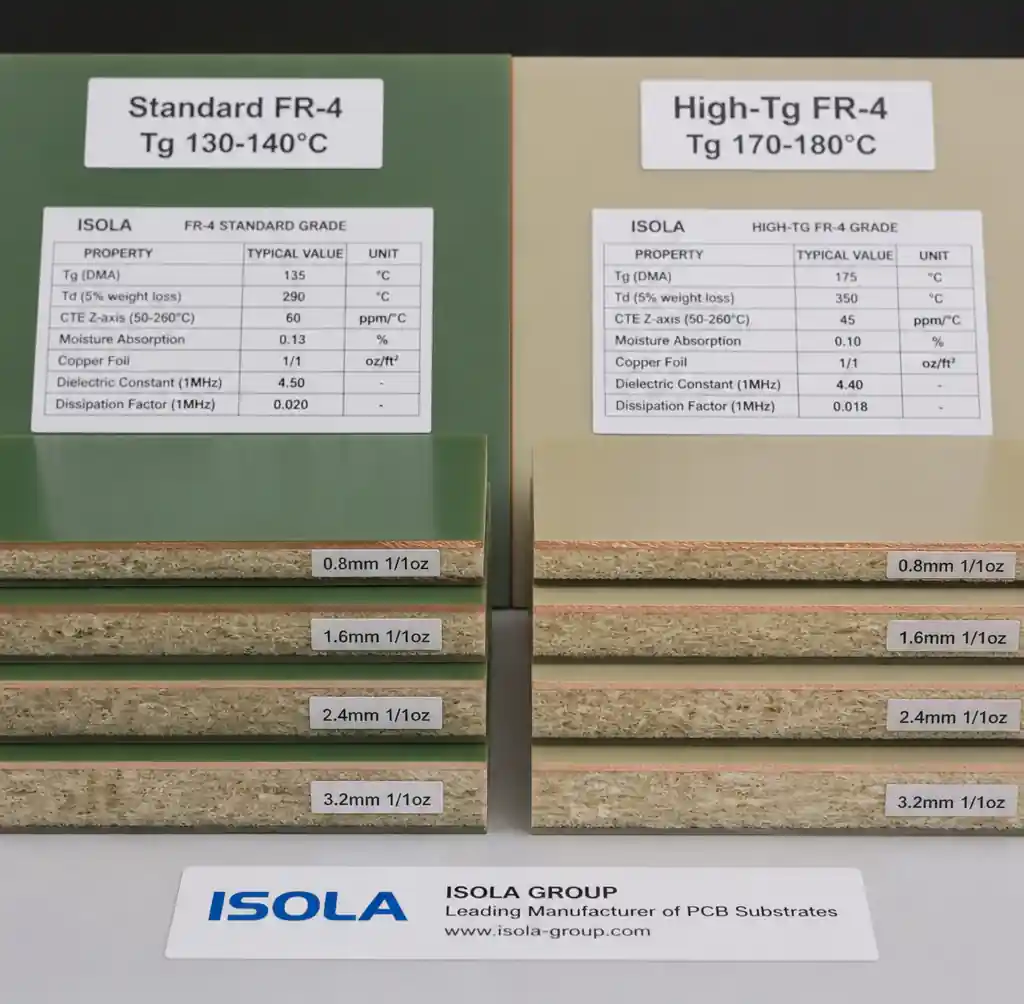
Standard FR-4 with glass transition temperature (Tg) 130-140°C becomes marginal for lead-free assembly due to elevated reflow temperatures. High-Tg materials provide necessary thermal stability.
| Material Property | Standard FR-4 | High-Tg FR-4 | Polyimide | Requirement |
|---|---|---|---|---|
| Glass Transition Temp (Tg) | 130-140°C | 170-180°C | 250-260°C | >150°C minimum for lead-free |
| Decomposition Temp (Td) | 310-330°C | 340-360°C | 380-400°C | Safety margin above peak temperature |
| CTE Z-axis (below Tg) | 50-70 ppm/°C | 45-55 ppm/°C | 40-50 ppm/°C | Lower CTE reduces via stress |
| Moisture Absorption | 0.10-0.15% | <0.10% | <0.05% | Moisture causes delamination |
| Typical Cost Multiplier | 1.0x | 1.2-1.5x | 2.5-4.0x | Cost vs. performance tradeoff |
High-Tg FR-4 (Tg 170-180°C) handles lead-free reflow temperatures with adequate safety margin. This material costs 20-50% more than standard FR-4 but remains economically viable. Polyimide substrates offer superior thermal performance (Tg >250°C) for extreme applications but cost 2.5-4x more.
Moisture absorption creates delamination risk during reflow. PCBs must be stored per IPC/JEDEC J-STD-033 moisture sensitivity levels. Boards exceeding floor life require baking at 105-125°C before assembly to remove absorbed moisture.
Component Sourcing and Verification
Every component must be RoHS-compliant with restricted substance concentrations below directive limits. Component sourcing requires systematic verification through material declarations.
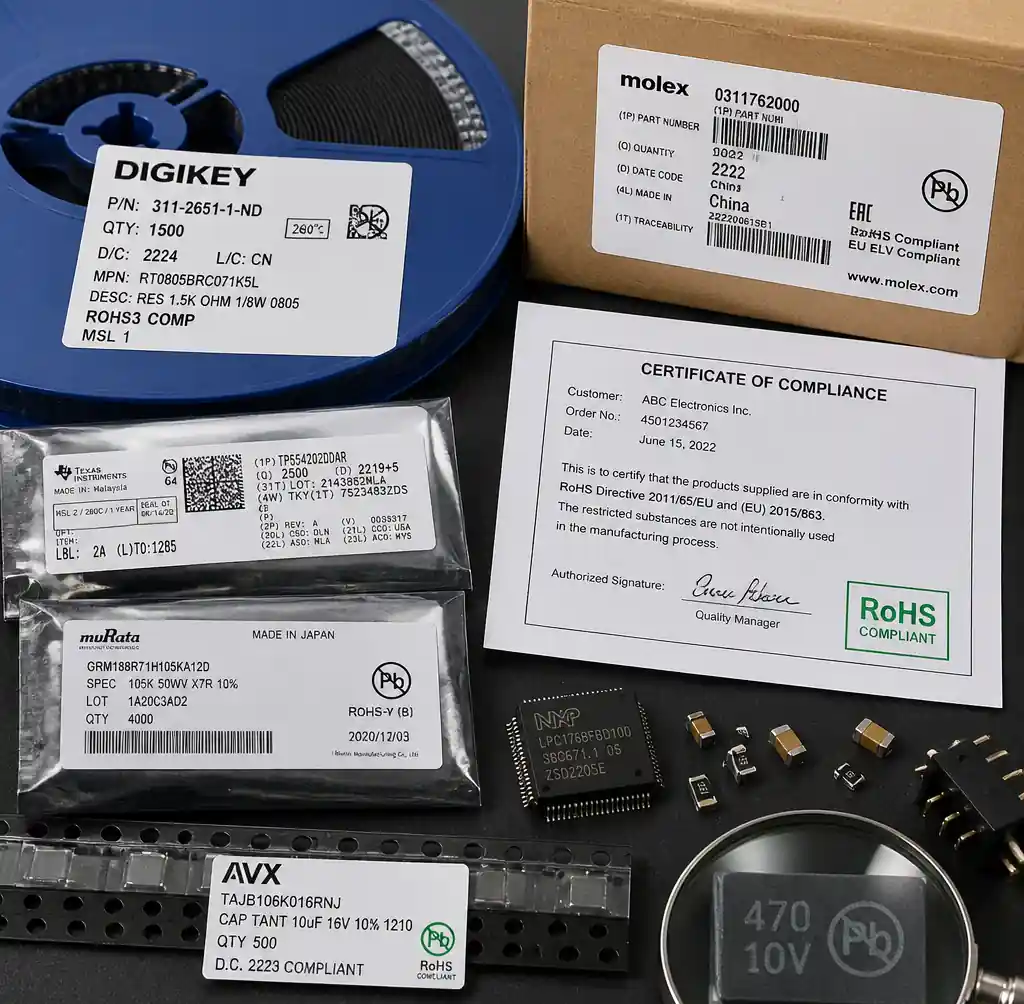
Manufacturers provide material declarations per IPC-1752 format or supplier certificates of compliance. Distributors mark RoHS components in catalogs with compliance documentation. The “Pb-free” symbol (crossed-out “Pb” in circle) appears on some packages, though absence of marking does not indicate non-compliance.
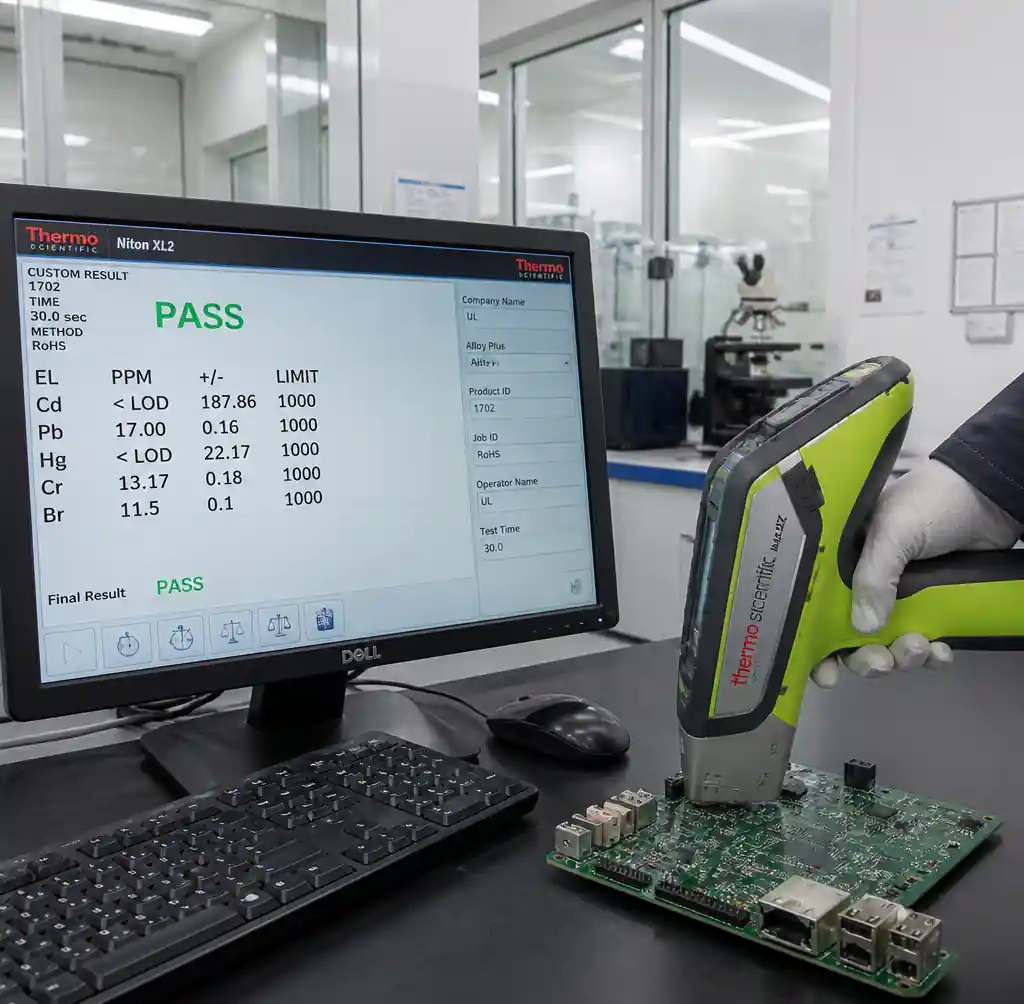
Incoming inspection for high-volume production includes X-ray fluorescence (XRF) testing verifying restricted substance concentrations. XRF provides non-destructive elemental analysis detecting lead, cadmium, mercury, and chromium. However, XRF cannot distinguish hexavalent chromium states, requiring wet chemistry testing for chromium verification.
RoHS Documentation Requirements
RoHS compliance requires comprehensive documentation demonstrating conformity from raw materials through finished products.
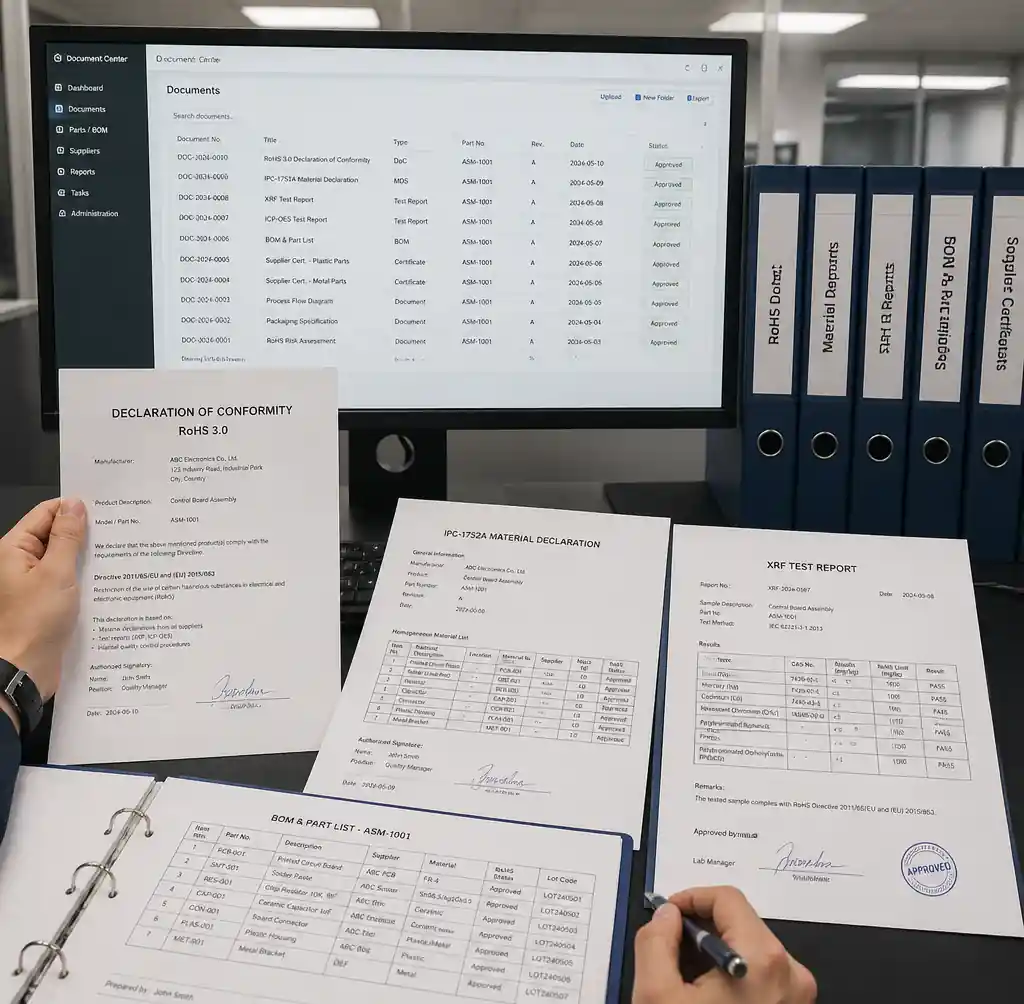
The Declaration of Conformity (DoC) is the primary legal document asserting product RoHS compliance. Manufacturers must prepare DoC for each product model entering covered markets. The technical file contains material declarations, test reports, supplier certifications, bill of materials (BOM) with compliance status, and process controls.
Bill of Materials must identify each component with RoHS compliance status, manufacturer part numbers, supplier information, and traceability codes. For complex assemblies, database management tracks compliance data across BOMs. Documentation must be retained 10 years after the last product is placed on the market for regulatory verification.
RoHS Exemptions
The RoHS directive includes exemptions permitting restricted substances where alternatives are scientifically impractical or substitution causes greater environmental harm.
Common exemptions include lead in high-temperature solder (melting point >85% lead), lead in electronic ceramics, and cadmium in electrical contacts. Medical devices and industrial monitoring equipment have separate exemption annexes with longer validity periods.
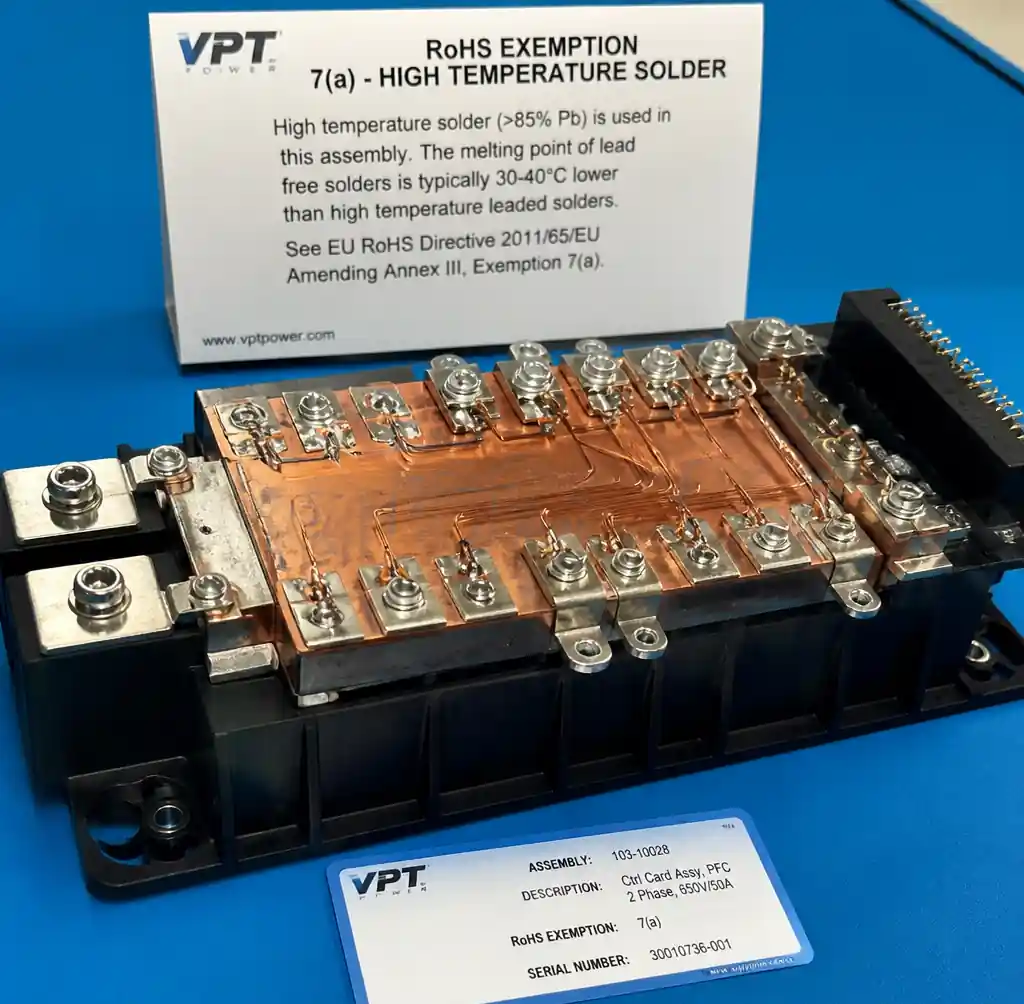
Exemptions are time-limited and require monitoring expiration dates. Products manufactured before exemption expiration may be sold after expiration. Using exemptions requires documentation identifying exemption numbers and justifying necessity within scope.
Testing and Certification
RoHS compliance testing verifies restricted substance concentrations do not exceed maximum limits, providing objective evidence supporting compliance declarations.
X-ray Fluorescence (XRF) screening provides fast, non-destructive elemental analysis detecting lead, mercury, cadmium, and bromine. Portable XRF analyzers enable incoming inspection and production monitoring. XRF has limitations including difficulty with light elements and inability to distinguish chromium oxidation states.
Wet chemistry testing (ICP-OES, ICP-MS) provides definitive quantitative analysis through destructive testing. These methods are required for hexavalent chromium determination and confirmation of XRF failures. Testing costs $50-200 per sample.
Third-party certification provides independent verification. Accredited laboratories perform testing per IEC 62321 standard. Certification marks like CE indicate claimed compliance but do not replace technical file requirements.
FAQs
What is the difference between RoHS 2 and RoHS 3?
RoHS 3 added four phthalates (DEHP, BBP, DBP, DIBP) to the six substances restricted by RoHS 2, totaling 10 restricted substances. Implementation began July 2019 for most equipment.
Can I mix lead-free and leaded components on the same PCB?
Mixing is possible but creates challenges. Lead-free solder requires higher temperatures that may damage leaded components. The preferred approach uses lead-free components and solder throughout.
Does RoHS apply to B2B industrial equipment?
Yes, industrial monitoring and control instruments fall under RoHS scope. Category 9 exemptions expired July 2017 for most applications.
How do I verify supplier RoHS compliance claims?
Request material declarations per IPC-1752 format. Review supplier certifications and conduct incoming XRF screening for high-risk components. Require third-party test reports for critical applications.
What surface finish is RoHS-compliant for PCBs?
Common RoHS-compliant surface finishes include ENIG, Immersion Silver, Immersion Tin, and OSP. HASL using lead-free solder is also compliant.
Do I need CE marking for RoHS compliance?
CE marking addresses multiple EU directives potentially including RoHS, EMC, and Low Voltage Directive. RoHS compliance is one component of CE marking.
Conclusion
RoHS compliance requires systematic management of materials, processes, and documentation from component sourcing through finished assembly. Lead-free solder transition creates thermal management challenges requiring high-Tg PCB materials, elevated reflow temperatures, and components rated for 260°C processing. Comprehensive supplier qualification, incoming inspection, and document retention demonstrate conformity to regulatory authorities and customers.
If you need RoHS-compliant PCB assembly services for your electronics products, Andwin Circuits provides complete turnkey solutions with lead-free processes, high-temperature capable materials up to 50 layers, and comprehensive compliance documentation. Our facility maintains ISO 9001 and IATF 16949 certification with established RoHS compliance processes for automotive, medical, telecommunications, and industrial applications. We provide material declarations, test reports, and technical files supporting your regulatory requirements.
Contact us today for RoHS-compliant PCB manufacturing and assembly with full compliance documentation and certification support.