
Conformal Coating Types: Which One Protects Your PCB Best?
I’ve seen assemblies fail in automotive testing because engineers picked acrylic for high-temperature environments, and epoxy coating made component replacement impossible during rework. After years working with PCBA conformal coating across industrial, automotive, and medical applications, coating type selection determines reliability outcomes.
This guide compares five major coating types—acrylic (AR), silicone (SR), urethane (UR), epoxy (ER), and parylene (XY)—based on real application data. You’ll learn which coating survives your specific environment for industrial control boards, automotive electronics, or medical devices.
Why Coating Selection Matters
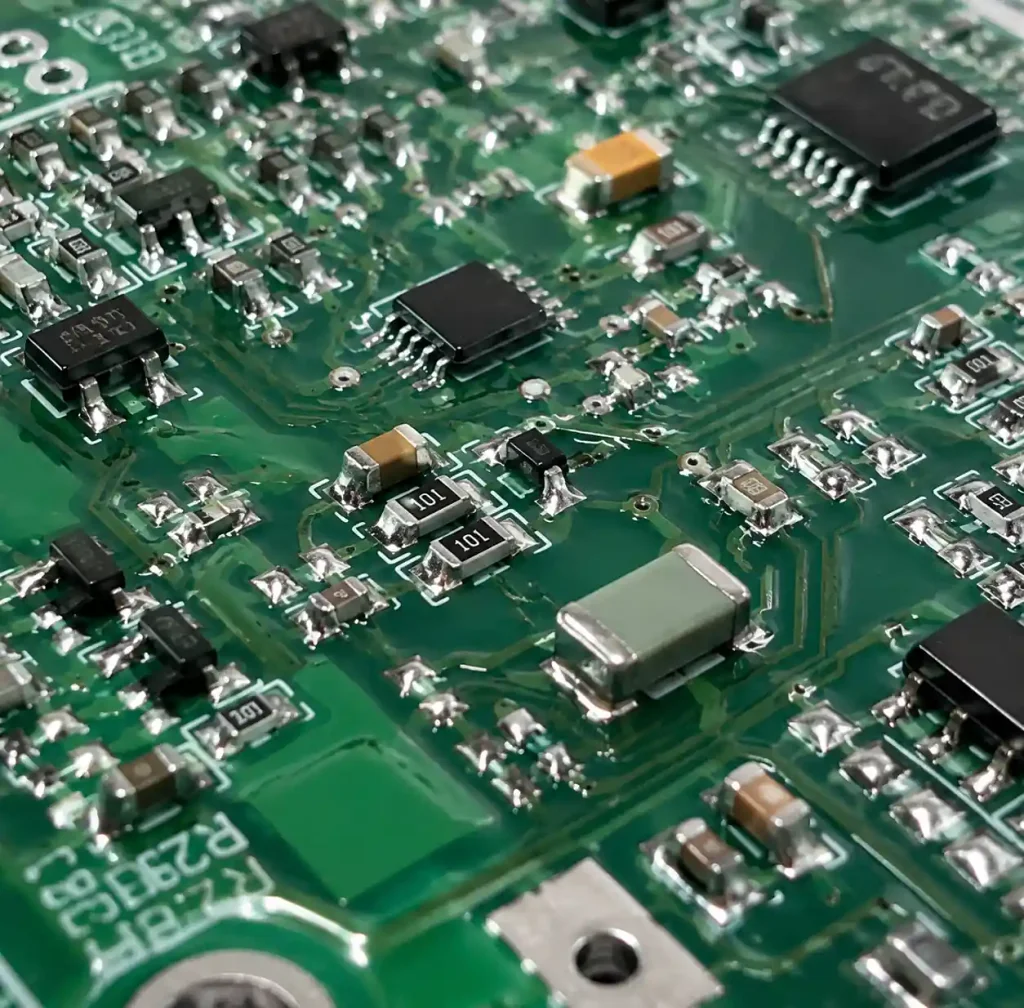
Conformal coating creates a 25-125 micron barrier between PCBs and hostile environments. Silicone handles -65°C to +200°C but offers weak chemical resistance. Epoxy blocks chemicals effectively but cracks under thermal cycling. Parylene penetrates best yet costs 5-10× more.
Coating choice impacts environmental protection, rework feasibility, and production cost. At Andwin Circuits, we apply all five types across product lines based on operating temperature, chemical exposure, humidity, and repair requirements.
Acrylic (AR): Fast-Drying and Reworkable
Acrylic dominates consumer electronics with 10-30 minute cure and clean solvent removal. Operating range -40°C to +125°C, dielectric strength 1,200-1,500 V/mil. Good moisture resistance but poor chemical resistance.
When we assemble PCBs for R&D clients, acrylic enables debug and recoat cycles. Removes cleanly with isopropyl alcohol. Fails above 105°C continuous exposure—avoid for chemical splash environments.
Silicone (SR): Extreme Temperature Flexibility
Silicone handles temperature extremes best. Operating range -65°C to +200°C, ideal for automotive electronics in engine bays and power electronics. Dielectric strength 500-1,000 V/mil, excellent moisture resistance.
Maintains adhesion during thermal expansion between rigid-flex PCBs and metal housings. We coat Metal Core PCBs with silicone when chassis cycles 50°C.
Weakness: poor chemical resistance and low surface tension causes edge crawl. Cure 24 hours at 25°C or 1 hour at 100°C.
Urethane (UR): Abrasion and Solvent Resistance
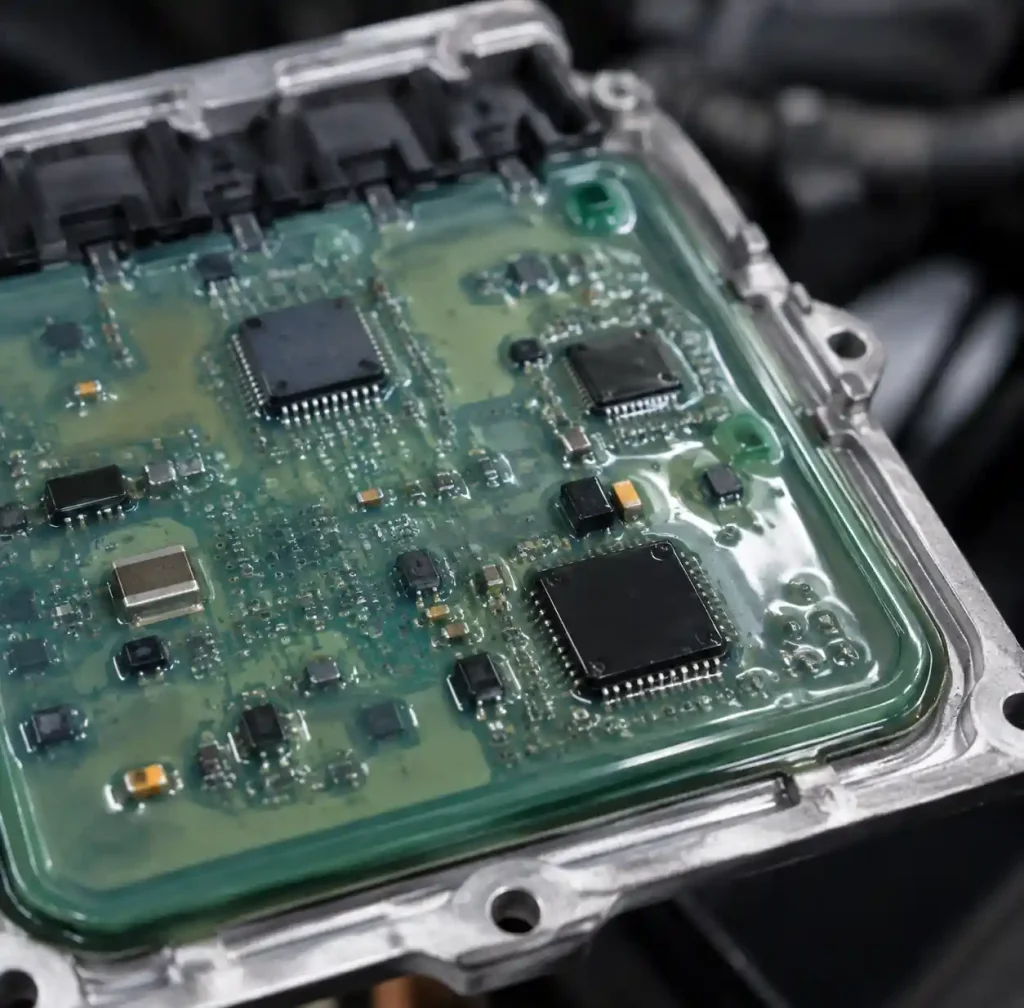
Urethane balances chemical resistance, moisture protection, and abrasion resistance. Operating range -40°C to +130°C, dielectric strength 1,000-1,500 V/mil. Excellent for industrial control systems and outdoor LED drivers.
Two-component formulations create cross-linked polymers with exceptional toughness. Only practical choice for vibration-heavy environments. Requires 2-7 days full cure or heat acceleration (80°C for 2 hours).
Epoxy (ER): Maximum Chemical Protection
Epoxy provides strongest chemical barrier and highest dielectric strength (1,500-2,000 V/mil). Operating range -40°C to +150°C. Ideal for subsea sensors and medical devices undergoing sterilization.
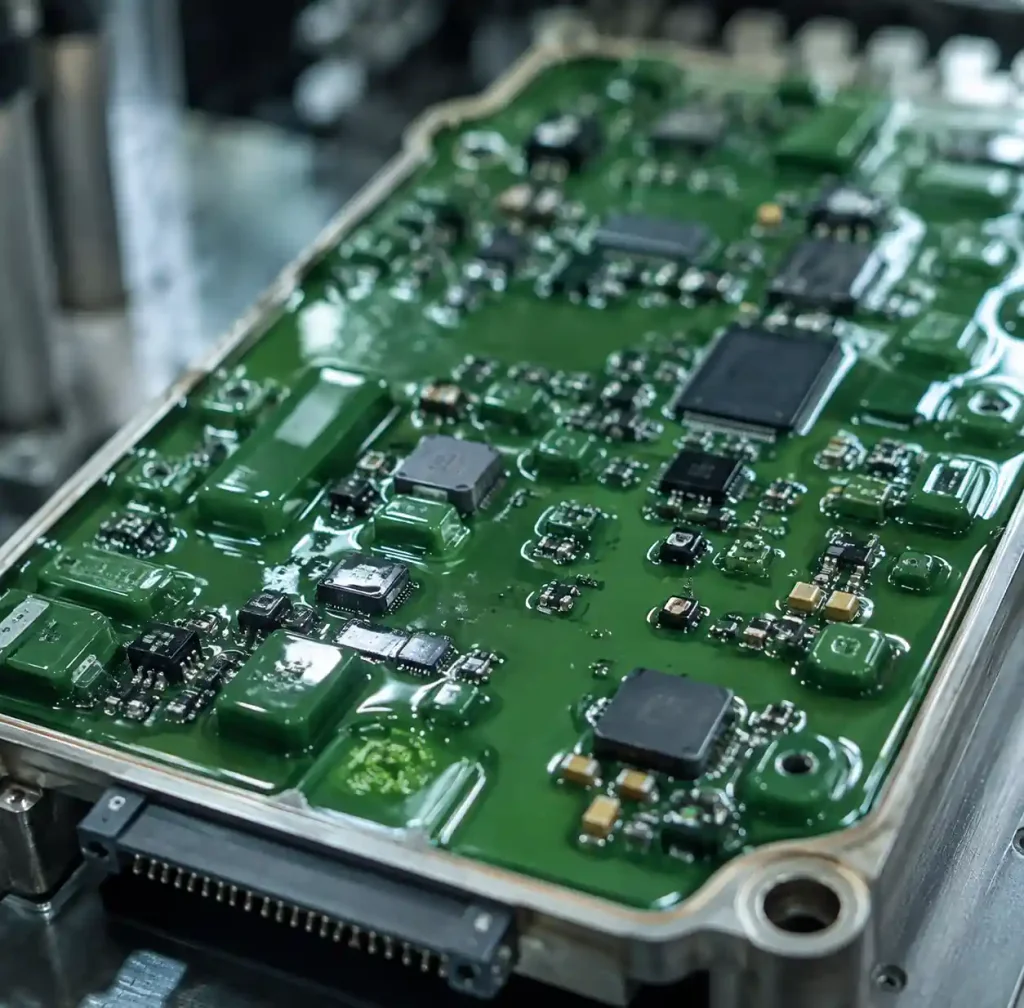
Hard epoxy shell stresses fine-pitch components during thermal cycling. We see cracked solder joints on 0.4mm BGAs after 500 cycles. Rework nearly impossible—removal damages components. Only specify when protection justifies sacrificing repairability.
Parylene (XY): Vapor-Deposited Precision
Parylene applies through vapor deposition, creating perfectly uniform coating. Operating range -60°C to +220°C, dielectric strength 2,000-7,000 V/mil—highest of all types.
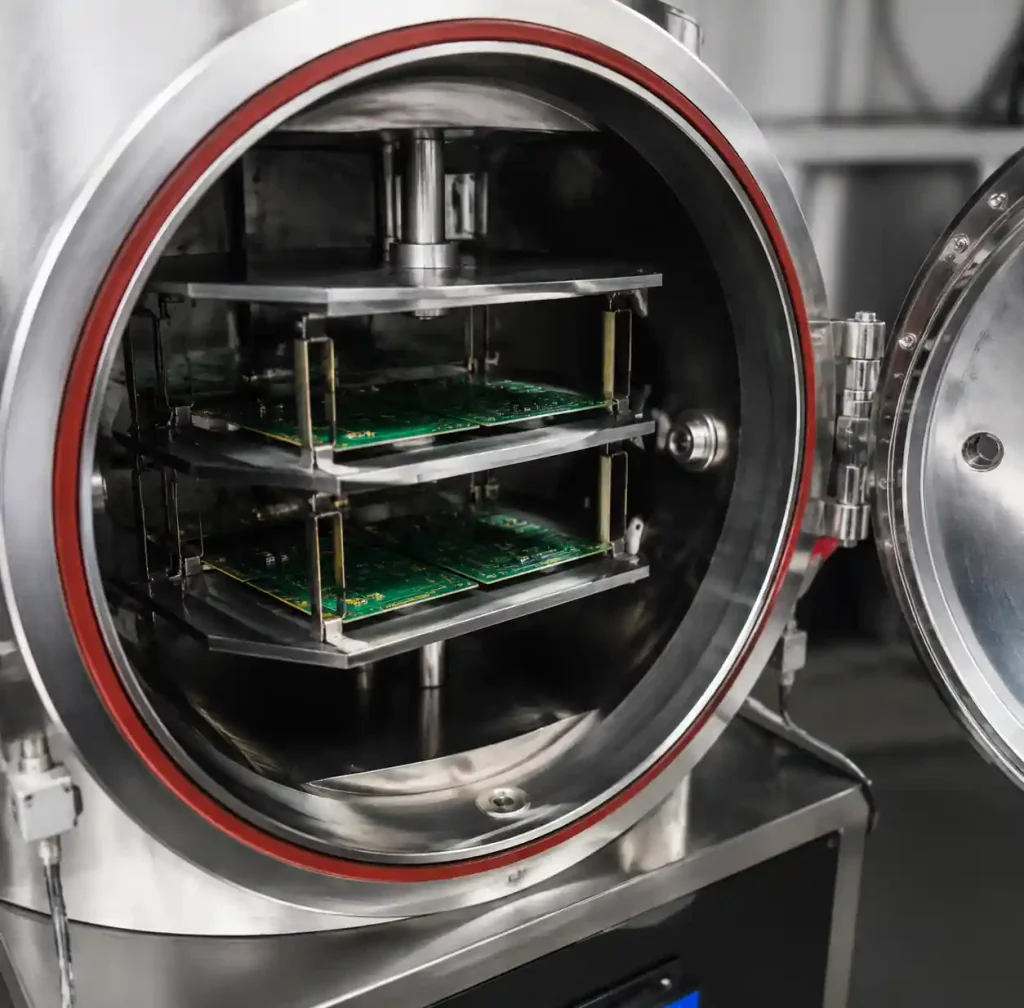
Coats uniformly under low-clearance components and inside vias. For high-frequency PCBs, parylene’s 12-25 micron consistency maintains controlled impedance. Used in aerospace and implantable medical devices.
Cost: $5-$50 per board versus $0.10-$2.00 for other types. Requires specialized CVD equipment and 2-24 hours deposition.
Performance Comparison Table
| Property | Acrylic (AR) | Silicone (SR) | Urethane (UR) | Epoxy (ER) | Parylene (XY) |
|---|---|---|---|---|---|
| Temperature Range | -40°C to +125°C | -65°C to +200°C | -40°C to +130°C | -40°C to +150°C | -60°C to +220°C |
| Moisture Protection | Good | Excellent | Excellent | Excellent | Excellent |
| Chemical Resistance | Poor | Poor | Very Good | Excellent | Very Good |
| Dielectric Strength | 1,200-1,500 V/mil | 500-1,000 V/mil | 1,000-1,500 V/mil | 1,500-2,000 V/mil | 2,000-7,000 V/mil |
| Flexibility | Fair | Excellent | Good | Poor | Excellent |
| Rework Ease | Easy | Difficult | Difficult | Nearly Impossible | Difficult |
| Cure Time | 10-30 min | 24 hrs | 2-7 days | 4-7 days | 2-24 hrs |
| Typical Cost | Low | Moderate | Moderate | Moderate-High | Very High |
Selection by Environment
| Environment | Recommended Coating | Reason |
|---|---|---|
| Consumer Electronics (indoor, <50°C) | Acrylic (AR) | Low cost, reworkable, sufficient protection |
| Automotive Engine Bay | Silicone (SR) | Temperature cycling -40°C to +150°C |
| Industrial Controls | Urethane (UR) | Chemical exposure, abrasion resistance |
| Chemical Processing | Epoxy (ER) / Parylene | Continuous acid/base/solvent contact |
| Outdoor Telecom | Silicone (SR) / Urethane (UR) | Temperature extremes, UV exposure |
| Medical Implantables | Parylene (Type C) | Biocompatibility, sterilization resistance |
| Power Inverters | Silicone (SR) / Epoxy (ER) | High voltage isolation, thermal cycling |
Application Methods and Quality Control
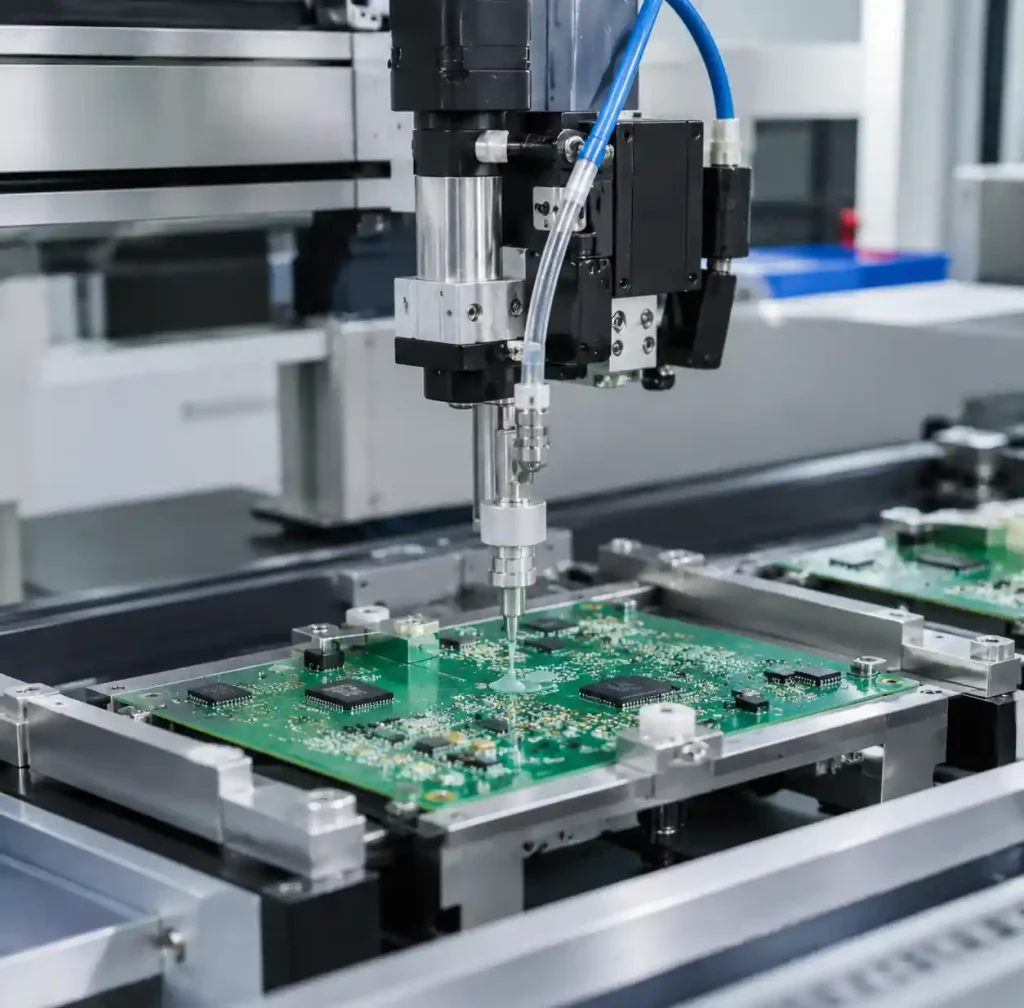
Application method impacts coating uniformity. At Andwin Circuits, we use selective coating robots for production volumes above 1,000 units/month.
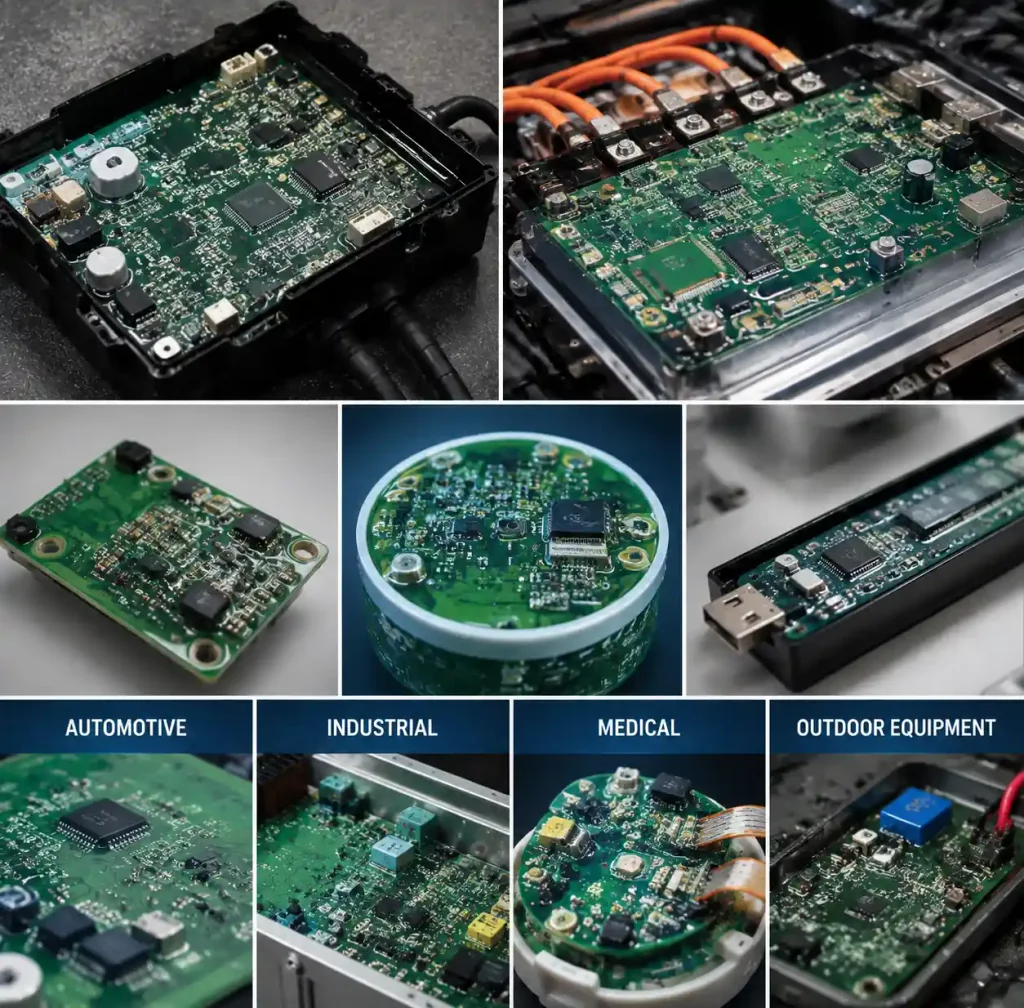
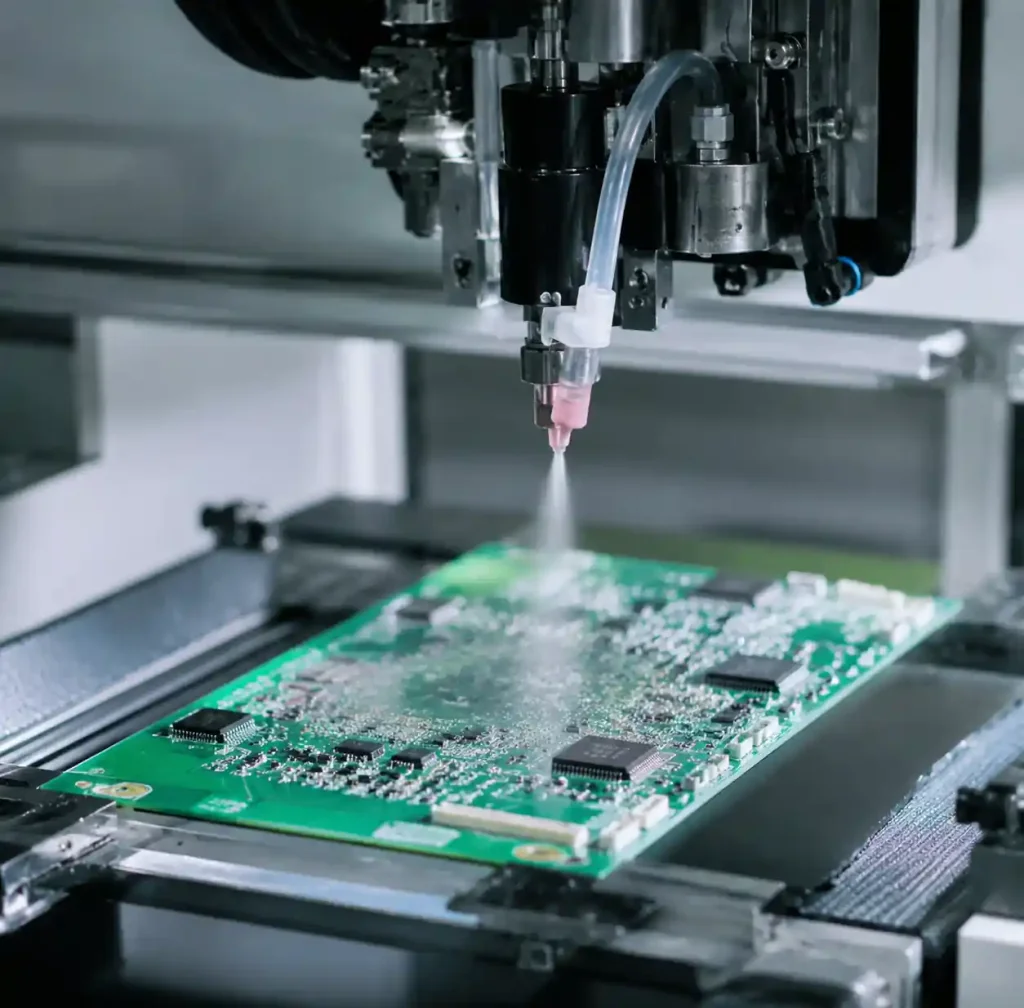
Spray coating applies fastest but creates 50-150 micron thickness variation. Selective coating uses automated valves to coat only specified areas, leaving connectors accessible. Vapor deposition (parylene) occurs in vacuum chambers with zero thickness variation.
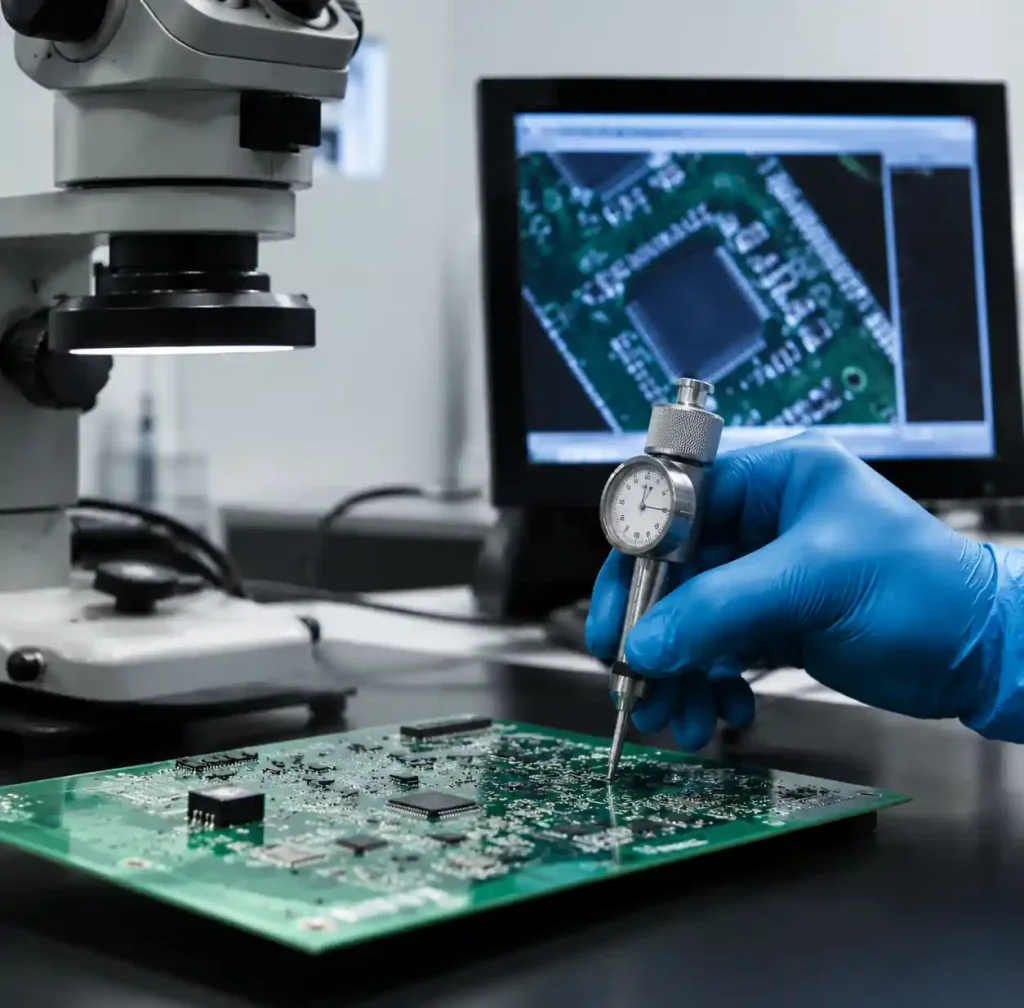
IPC-A-610 specifies minimum 25 microns coating thickness. We measure using eddy current gauges. For Class 3 medical assemblies, 100% optical inspection verifies coverage.
Testing requires 85°C/85% RH humidity exposure for 1,000 hours and thermal cycling per IPC standards. Surface preparation prevents 80% of failures: clean with IPA, dry completely, apply within 4 hours, pre-heat to 50-70°C.
FAQ
Can I apply multiple coating types on the same PCB?
Yes, but it complicates process control. We occasionally apply urethane over high-power sections and acrylic over low-power sections for thermal management with rework access.
Does conformal coating affect PCB thermal performance?
Yes. Coating adds thermal resistance. For Metal Core PCBs with heat sink mounting, impact is minimal. For FR4 with convection cooling, coating raises temperatures 5-15°C depending on thickness.
How long does coating last?
Properly applied coatings last 10-25 years in typical environments. Harsh conditions reduce lifespan to 5-10 years. Silicone with UV inhibitors performs best outdoors.
Can coating repair existing corrosion?
No. Coating over corrosion traps moisture and accelerates failure. Clean corrosion completely and passivate exposed copper before coating.
Does coating affect high-frequency signal integrity?
Yes. Coating dielectric properties affect impedance above 1 GHz. Parylene has the most stable properties (Dk 2.95-3.15). For high-frequency telecom PCBs, verify coating impact through testing.
Conclusion
Conformal coating selection determines whether PCBs survive their environment or fail prematurely. Acrylic works for consumer environments and reworkable prototypes. Silicone handles temperature extremes in automotive applications. Urethane provides protection for industrial controls facing chemicals and abrasion. Epoxy delivers maximum chemical resistance when rework isn’t required. Parylene offers highest reliability for medical and aerospace applications.
At Andwin Circuits, we help clients select coatings based on operating temperature, chemical exposure, humidity, rework requirements, and production volume. We apply all five major coating types across our PCB assembly services, ensuring appropriate protection without unnecessary cost. Proper surface preparation and the right coating type deliver the 10-25 year field life customers expect.