
Functional testing methods of PCB circuit boards and what are the regulatory requirements?
Functional testing methods of PCB circuit boards and what are the regulatory requirements?
With the rapid development of science and technology, PCB circuit boards have become an important part of various electronic equipment. Functional testing of PCB circuit boards to ensure their performance and quality has become a hot topic in current research.
This article will delve into the methods and specification requirements of PCB circuit board functional testing, aiming to improve the quality and reliability of circuit boards.
The earliest printed circuit boards used were paper-based copper-clad printed boards. Since the emergence of semiconductor transistors in the 1950s, demand for printed boards has increased dramatically.
In particular, the rapid development and widespread application of integrated circuits have made electronic equipment smaller and smaller, and circuit wiring density and difficulty have become increasingly high, which requires printed boards to be constantly updated. At present, the types of printed boards have developed from single panels to double panels, multi-layer boards and flexible boards; the structure and quality have also developed to ultra-high density, miniaturization and high reliability; new design methods, design supplies and Board-making materials and board-making processes are constantly emerging.
In recent years, various computer-aided design (CAD) printed circuit board application software has been popularized and promoted in the industry. Among specialized printed circuit board manufacturers, mechanized and automated production have completely replaced manual operations.
PCB circuit board overview
PCB circuit board is a key component used to realize the functions of electronic equipment. It is mainly composed of conductive materials, insulating materials and base materials. The PCB circuit board realizes the connection between electronic components by arranging conductive lines on specific levels to complete specific functions.
Functional testing methods
In order to ensure the normal function of the PCB circuit board, there are a variety of functional testing methods for different application scenarios and needs. Here are several common testing methods:
a. Make a phone call test method
This method is mainly used to detect the audio signal transmission quality of PCB circuit boards. Judge the board’s audio performance by making a call and listening to the clarity of the call. In order to ensure the accuracy of the test results, this test should be conducted in a quiet environment as much as possible.
b. Send email test method
This method is mainly used to detect the network connection function of PCB circuit boards. By sending and receiving emails, observe whether the network communication of the circuit board is normal. To ensure the validity of the test, the stability of the network connection should be ensured.
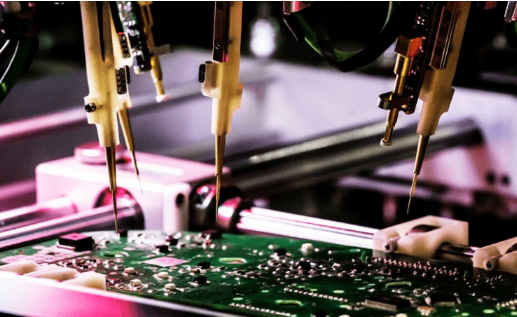
c. Running program testing method
This method is used to detect the performance of PCB circuit boards under specific program execution. Run a specific program on the circuit board and observe delays, freezes, crashes and other phenomena during program execution to evaluate the performance of the circuit board.
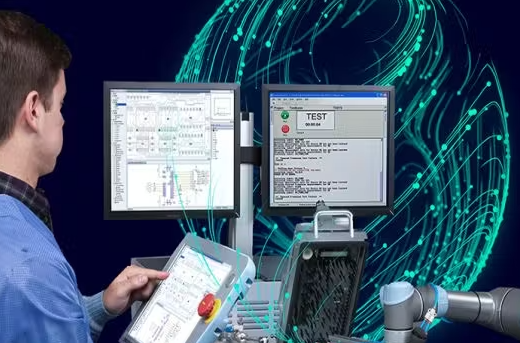
requirements
In order to ensure the accuracy and reliability of PCB circuit board functional testing, the following are the specification requirements we should follow during the testing process:
a. Test time
When performing functional testing, a uniform test time should be specified to facilitate evaluation of circuit board performance changes over different time periods. Generally speaking, the test time should be based on the needs of most users.
b. Test frequency
In order to fully understand the performance of the PCB circuit board, a reasonable test frequency should be set. A frequency that is too high may cause the test time to be too long, and a frequency that is too low may not accurately reflect the performance of the circuit board. Therefore, when determining the test frequency, the balance between test efficiency and accuracy must be fully considered.
c. Data collection and analysis
During the functional testing process, attention should be paid to data collection and analysis. By collecting test data under different conditions, we conduct in-depth analysis to identify potential improvements in board performance. At the same time, abnormal data that appears during the testing process must be investigated and analyzed in a timely manner to avoid misjudgment.
d. Environmental control
The functions of PCB circuit boards are greatly affected by environmental factors. Therefore, during the functional test process, environmental conditions, such as temperature, humidity, dust, etc., should be strictly controlled to reduce the impact of external factors on the test results.
e. Personnel training and specifications
The accuracy of functional testing is also affected by the tester. In order to improve the accuracy of testing, testers should be professionally trained to understand the testing process, be familiar with testing methods, and master testing techniques. At the same time, strict testing specifications should also be formulated to ensure that testers operate according to unified standards.
Conclusion
Functional testing of PCB circuit boards is a key link to ensure the performance and quality of electronic equipment. This article introduces various functional testing methods and corresponding specification requirements. Practice has proven that the application of these methods and specifications can help accurately evaluate the performance of circuit boards, thereby improving the reliability and stability of electronic equipment. It is crucial for electronic product manufacturers to strictly follow these test methods and specifications to ensure product quality and user satisfaction.
As a supplier of PCB boards, we guarantee to provide customers with high-quality products and personalized customized services, including Heavy copper PCB, Copper core PCB, Metal core PCB, Ceramic PCB, etc. If you need it please contact