
PCB Sourcing for African Electronics Market: Logistics and Import Guide
If you manufacture electronics in Africa or plan to expand into this fast-growing market, then you need to understand PCB sourcing logistics, import regulations, and payment strategies that directly impact your production timeline and cost structure.
Africa’s electronics manufacturing sector is expanding rapidly, with the consumer electronics market growing from $1.5 billion in 2025 to $3 billion by 2035. The Middle East and Africa PCB market is growing at 4.2% CAGR through 2031, driven by assembly operations in Kenya, Nigeria, South Africa, and Egypt. Most African manufacturers source PCBs from China, facing complex import procedures, extended shipping times, and payment barriers requiring careful planning.
This guide covers logistics considerations, customs clearance, shipping options, and payment terms for sourcing PCBs into African markets.
Understanding the African Electronics Market Landscape
Africa’s electronics sector is transitioning from import dependency to regional assembly. The continent is expected to be the fastest-growing PC market globally with 8.58% CAGR through 2031, while manufacturing gains momentum in South Africa, Kenya, Nigeria, and Egypt.

Countries like Kenya, Nigeria, Rwanda, and Ghana invest in technical education and innovation hubs supporting electronics assembly. South Africa leads regional PCB assembly capabilities with localized support and shorter cycles than importing finished assemblies from Asia. However, PCB fabrication occurs predominantly in China, Taiwan, and Southeast Asia due to economies of scale.
Strategic PCB sourcing balances cost, lead time, and quality. While local assembly reduces product lead time, PCB fabrication remains import-dependent, requiring international logistics expertise.
Import Regulations by Key African Countries
Import regulations vary across African countries, impacting duty rates, certification requirements, and clearance timelines. Understanding country-specific requirements prevents delays and compliance issues.
| Country | Customs Duty on PCBs | VAT/Import Tax | Special Requirements | Clearance Time |
|---|---|---|---|---|
| South Africa | 0% (HS 8473.30) | 15% VAT on CIF | ICASA approval for RF devices | 3-5 days |
| Kenya | Varies by classification | 16% VAT | KRA declaration, EAC origin | 4-7 days |
| Nigeria | Varies by schedule | 7.5% VAT | SONCAP for some electronics | 7-14 days |
| Egypt | 5-14% by type | 14% VAT | Import license may be required | 5-10 days |
South Africa Import Requirements
South Africa applies 0% duty on computer component PCBs (HS 8473.30) but charges 15% VAT on CIF value. The South African Revenue Service (SARS) processes declarations through a streamlined system.
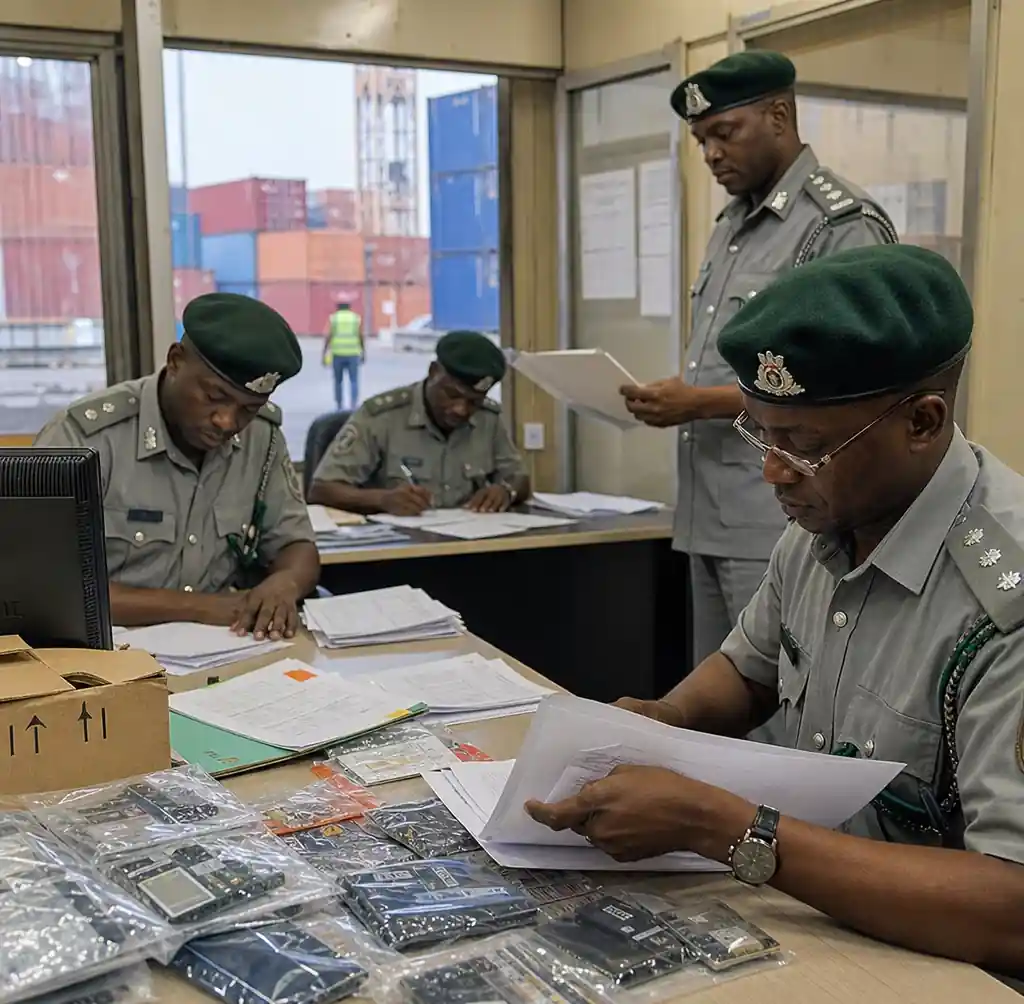
Telecommunications and RF devices require ICASA approval before import. Verify whether your assemblies contain wireless modules triggering this requirement, as approval adds 2-4 weeks.
Kenya Import Procedures
Kenya follows East African Community (EAC) protocols, offering preferential treatment for EAC-origin goods. PCBs from China undergo Kenya Revenue Authority (KRA) declaration with 16% VAT on CIF value plus duty.
Work with a registered customs agent in Mombasa or Nairobi who understands KRA procedures. Kenya’s Single Customs Territory initiative improved clearance efficiency, but documentation accuracy remains critical.
Nigeria Import Considerations
Nigeria’s customs clearance takes 7-14 days depending on port congestion and documentation. The Standards Organisation of Nigeria (SON) requires SONCAP certification for some electronics, though bare PCBs typically don’t trigger this.
Engage a Nigerian customs broker before shipment to verify classification and certification. Duty payment through the Nigeria Customs Service portal is mandatory, and value discrepancies trigger inspection.
Shipping Methods: Air Freight vs Sea Freight
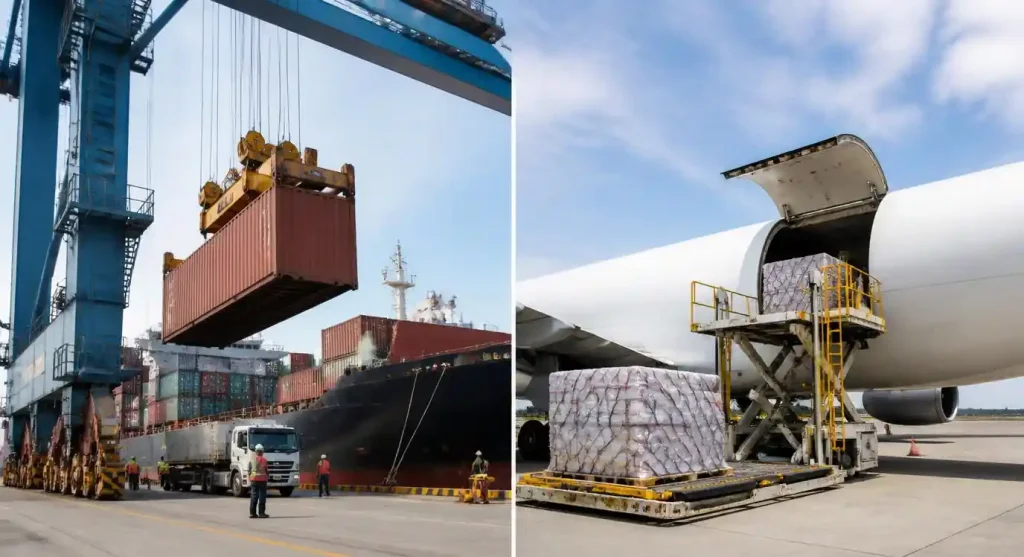
Shipping method selection impacts your working capital, inventory planning, and demand response. Most PCB shipments from China to Africa use sea freight for cost efficiency, with air freight reserved for prototypes or urgent orders.
| Shipping Method | Transit Time | Cost per kg | Best For | Minimum Volume |
|---|---|---|---|---|
| Sea Freight (FCL) | 30-48 days | $0.50-1.50 | Production runs >500 pcs | 20ft or 40ft container |
| Sea Freight (LCL) | 30-48 days | $2-4 | Medium batches 100-500 pcs | 1 CBM minimum |
| Air Freight | 5-10 days | $8-15 | Prototypes, urgent orders | No minimum |
| Express Courier | 3-7 days | $20-35 | Samples, emergencies | No minimum |
Sea Freight to Major African Ports
Sea freight from Chinese ports (Shenzhen, Shanghai, Ningbo) takes 30-48 days. Kenya’s Mombasa port receives shipments in 22-32 days, South Africa’s Durban and Cape Town in 36-48 days, Nigeria’s Lagos in 30-40 days.
Full container loads (FCL) ship 20ft or 40ft containers at $125 per CBM for less-than-container loads. Sea freight suits production runs exceeding 500 PCBs when 6-8 week procurement cycles work.
Port congestion affects reliability. Lagos and Mombasa experience periodic congestion adding 5-10 days. Build buffer time and use established freight forwarders with port relationships.
Air Freight for Time-Sensitive Orders
Air freight reduces transit to 5-10 days from Chinese airports to Nairobi, Johannesburg, Lagos, or Cairo. Rates run $8-15 per kilogram. For a 10kg PCB shipment, air costs $80-150 versus $20-40 for sea freight—a 3-5x premium.
Use air freight for prototypes requiring quick validation, urgent replacements, or when production delays cost more than the freight premium. For orders under 20kg, air freight often delivers better total cost factoring reduced working capital tie-up.
Customs Clearance Process
Customs clearance procedures vary by country but follow a common framework requiring commercial documentation, tariff classification, duty payment, and release authorization. Understanding this process prevents delays disrupting production schedules.

Required Documentation
Standard customs clearance requires a commercial invoice showing FOB or CIF value, packing list detailing quantities and weights, bill of lading or airway bill as shipment proof, and country-specific import declaration forms. South Africa uses the SARS Single Administrative Document, Kenya requires the KRA Customs Declaration.
Your Chinese PCB manufacturer should provide accurate invoices showing individual line items for PCB types, quantities, and unit prices. Undervaluing shipments to reduce duty creates compliance risks including penalties, holds, and blacklisting.
Working with Customs Brokers
Engaging a licensed customs broker in your destination country is essential for navigating local procedures. Brokers handle tariff classification, calculate duties and taxes, submit electronic declarations, arrange payment, and coordinate release with carriers.
Select brokers with electronics import experience who accurately classify PCBs under correct HS codes. In South Africa, computer assembly PCBs typically fall under HS 8473.30 (0% duty), while industrial equipment PCBs may have different classifications with 5-10% duty rates.
Clearance Timeline Expectations
Clearance timelines impact inventory planning. South Africa typically clears shipments in 3-5 days with proper documentation, Kenya requires 4-7 days, Nigeria needs 7-14 days, Egypt processes imports in 5-10 days. These assume accurate documentation and no physical inspections.
Physical inspections add 3-7 days and occur more frequently with new importers, high-value shipments, or documentation discrepancies. Maintain consistent supplier relationships and accurate declarations to minimize inspection probability.
Payment Terms and Currency Considerations
Payment terms affect cash flow and supplier relationships. Most Chinese PCB manufacturers require deposit payments for new customers, with milestones tied to production stages.
Standard Payment Terms
New customers face 50% deposit upon order confirmation and 50% balance before shipment via wire transfer (T/T). Established customers with 3-6 months history may negotiate 30/70 terms, while high-volume customers achieve net 30 or net 60 terms.
Request payment against inspection or quality hold-points rather than time-based milestones. Structure payments as 30% upon order, 40% upon first article inspection approval, 30% before shipment. This protects quality without unfair supplier burden.
Currency and Transfer Considerations
Payments to Chinese suppliers occur in USD or RMB. Wire transfers from African banks to Chinese accounts take 2-4 business days with fees of $25-50 plus 0.5-1% of transaction value. Account for these costs in landed cost calculations.
Some African countries maintain currency controls restricting foreign exchange access or requiring central bank approval. Nigeria’s Central Bank monitors allocations, potentially delaying payments during forex scarcity. Kenya and South Africa have more liquid forex markets with fewer restrictions.
Lead Time Planning for African Markets
Total procurement lead time combines PCB manufacturing, shipping transit, customs clearance, and local distribution. Accurate lead time planning prevents production disruptions and reduces expedite costs.

A typical PCB sourcing cycle from China to African assembly facilities requires 6-10 weeks. PCB manufacturing consumes 10-15 days for standard builds or 7 days for quick-turn service, shipping takes 3-7 days for air or 30-48 days for sea, customs clearance adds 3-14 days, and local distribution requires 1-3 days.
Plan production schedules around 8-week lead times for sea freight or 4-week for air freight. Build 1-2 week buffers for unexpected delays including port congestion, customs inspections, or documentation issues.
Urgent requirements may justify quick-turn manufacturing (7 days) with air freight (5-10 days), delivering boards in 2-3 weeks total. However, quick-turn premiums add 30-50% to manufacturing costs, and air freight costs 3-5x sea rates. Reserve quick-turn options for genuine emergencies rather than compensating for poor planning.
Packaging Requirements for Long Transit
PCBs traveling 30-48 days by sea require robust packaging protecting against moisture, physical damage, and temperature variations. Standard PCB packaging may not survive extended ocean transit and tropical climates.
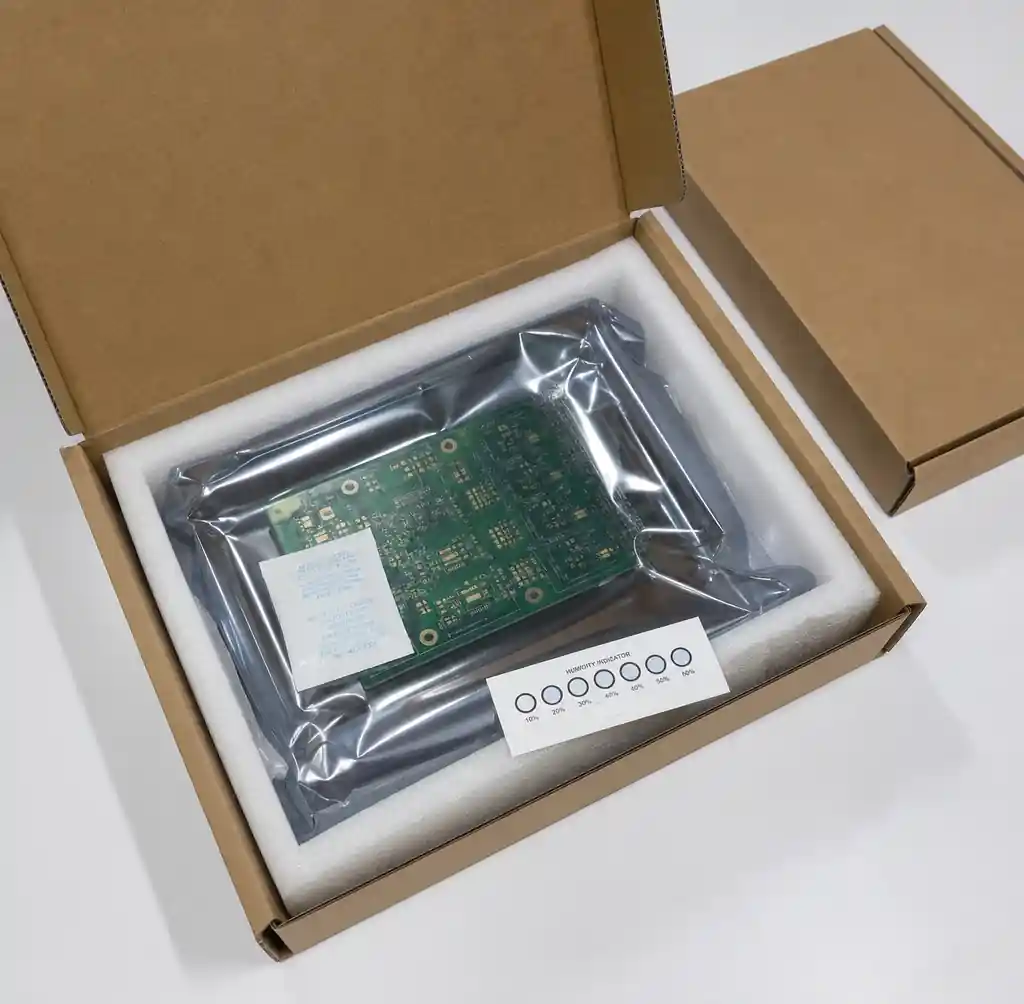
PCBs are moisture-sensitive devices requiring vacuum-sealed bags with desiccant packs meeting IPC-1601 moisture sensitivity level (MSL) requirements. For African shipments experiencing high humidity during transit and storage, specify MSL 3 or better packaging with humidity indicator cards.
Your PCB manufacturer should seal boards in anti-static vacuum bags with silica gel desiccant, enclose vacuum bags in cartons with foam or bubble wrap cushioning, and palletize cartons on wooden pallets with stretch wrap protection.
Sea freight exposes shipments to stacking weight, handling impacts, and container movement during rough seas. Cartons should withstand 200kg stacking load per square meter and include “Fragile” and “Keep Dry” markings in English and local languages. Damaged boards create production delays worth far more than incremental packaging expenses.
Local Distribution and Warehousing Options
Once PCBs clear customs, local distribution to your assembly facility requires coordination with freight forwarders or logistics providers. Some manufacturers benefit from local warehousing rather than direct-to-facility delivery.
Direct delivery from port to assembly facility works for just-in-time operations receiving regular shipments every 2-4 weeks. Local warehousing makes sense when sourcing multiple PCB types with varying demand patterns, when assembly facilities lack receiving capacity, or when distributing to multiple locations.
South Africa, Kenya, and Nigeria have commercial warehousing offering electronics-grade facilities with humidity control and security. Warehousing costs range from $5-15 per pallet per month depending on location and service level.
Road infrastructure quality varies significantly. Routes from Mombasa port to Nairobi benefit from well-maintained highways with 8-10 hour transit, while routes from Lagos port to inland Nigerian cities face road quality issues extending transit to 2-4 days. Select assembly facility locations considering port proximity and road infrastructure.
Working with Chinese PCB Manufacturers
Successful PCB sourcing requires selecting manufacturers with African market experience, clear communication protocols, and quality systems aligned with your requirements.

Evaluate PCB manufacturers on technical capabilities matching your specifications (HDI PCB, rigid-flex, layer count, surface finish), quality certifications (ISO 9001, UL, IPC standards), export experience to Africa, communication responsiveness, and payment term flexibility.
Manufacturers with established African customer bases understand packaging requirements, documentation accuracy, and lead time expectations specific to this market. Verify African experience by requesting reference customers in your destination country.
Time zone differences between China (UTC+8) and African countries (UTC+0 to UTC+3) create 5-8 hour offsets requiring asynchronous communication. Establish weekly video calls during overlapping work hours, use email for detailed specifications with 24-hour response expectations, and leverage WhatsApp or WeChat for quick questions.
Provide complete specifications upfront including PCB stackup details, material requirements, surface finish preferences (ENIG, HASL, OSP), testing requirements (electrical testing, controlled impedance verification), and packaging instructions. Incomplete specifications cause revision cycles consuming lead time.
Establish clear acceptance criteria before production, request first article inspection (FAI) with photos or physical samples before full production, and require final inspection reports with electrical test data. For critical projects, consider third-party inspection services operating in Chinese manufacturing regions.
Andwin Circuits provides comprehensive quality control including 100% electrical testing, AOI inspection, and detailed inspection reports for every order. Our ISO 9001 certified processes ensure consistent quality for African customers requiring reliable PCB assembly services.
FAQs
What are the typical import duties on PCBs in African countries?
Import duties vary by country and PCB classification. South Africa applies 0% duty on computer component PCBs (HS 8473.30) but charges 15% VAT. Kenya imposes duties based on tariff schedules plus 16% VAT. Nigeria’s duties vary by classification with 7.5% VAT. Consult a customs broker for accurate classification and duty calculation specific to your PCB type and destination country.
How long does sea freight take from China to Africa?
Sea freight transit times from Chinese ports to African destinations range from 22-48 days. Mombasa, Kenya receives shipments in 22-32 days, Lagos, Nigeria in 30-40 days, and South African ports in 36-48 days. Add 5-10 days for potential port congestion and 3-14 days for customs clearance when planning total lead time.
Should I use air freight or sea freight for PCB shipments?
Use sea freight for production runs exceeding 500 PCBs when 6-8 week lead times are acceptable, as sea freight costs $0.50-1.50 per kg versus $8-15 per kg for air freight. Reserve air freight for prototypes requiring quick validation (2-3 week total time), urgent replacement orders, or when production delays would cost more than the 3-5x freight premium.
What payment terms do Chinese PCB manufacturers offer?
New customers typically pay 50% deposit and 50% balance before shipment via wire transfer. After establishing 3-6 months of order history, you may negotiate 30/70 terms or payment against inspection milestones. High-volume customers with strong relationships can achieve net 30-60 payment terms.
Do I need special certifications to import PCBs into African countries?
Most bare PCBs don’t require special certifications, but PCB assemblies containing wireless modules or RF components may require telecommunications authority approval (ICASA in South Africa, for example). Nigeria’s SONCAP certification applies to certain finished electronics but rarely to bare PCBs. Consult customs brokers in your destination country to verify requirements for your specific product.
How should PCBs be packaged for African shipments?
PCBs require vacuum-sealed anti-static bags with desiccant packs meeting IPC-1601 MSL 3 specifications for moisture protection during 30-48 day sea transit and tropical storage conditions. Cartons should withstand 200kg/m² stacking loads with foam cushioning and “Fragile/Keep Dry” markings. Inadequate packaging causes moisture damage or physical damage requiring costly replacements.
Conclusion
Successfully sourcing PCBs for African electronics manufacturing requires understanding country-specific import regulations, selecting appropriate shipping methods balancing cost and lead time, and establishing reliable communication with Chinese manufacturers. South Africa, Kenya, and Nigeria each present unique customs requirements, with duty rates ranging from 0-14% plus VAT on CIF values.
The key to reliable PCB sourcing lies in accurate documentation, robust packaging for long transit, and manufacturer relationships built on quality and communication. As Africa’s electronics sector grows at 4-8% annually, manufacturers who master international PCB logistics gain competitive advantages in this expanding market.
Andwin Circuits serves African electronics manufacturers with high-quality PCB manufacturing and assembly services, providing complete documentation, robust packaging, and responsive communication optimized for cross-border logistics. Contact us to discuss your PCB requirements and receive expert guidance on specifications, lead times, and shipping options tailored to your African manufacturing operations.