
PCB Design Rules-Ceramic pcb Design Rules
I am writing to you today to discuss the design rules for ceramic printed circuit boards (PCBs).
As you may know, ceramic PCBs are becoming increasingly popular in the electronics industry
due to their superior thermal and electrical properties. However, designing a ceramic PCB requires
a different set of rules and considerations compared to traditional PCBs.
First and foremost, it is important to understand the properties of the ceramic material being used.
Ceramic PCBs are typically made from alumina (Al2O3) or aluminum nitride (AlN), which have high
thermal conductivity and low coefficient of thermal expansion (CTE). This means that the ceramic
material can dissipate heat more efficiently and is less likely to expand or contract with changes in
temperature. These properties make ceramic PCBs ideal for high-power and high-temperature applications.

When designing a ceramic PCB, the following rules should be considered:
1. Trace Width and Spacing
The trace width and spacing on a ceramic PCB should be wider than on a traditional
PCB. This is because the ceramic material is more brittle and can crack or chip more
easily than other materials. A wider trace width and spacing will provide more support
and reduce the risk of damage during fabrication and assembly.
2. Via Placement
Vias are used to connect different layers of a PCB. When designing a ceramic PCB,
the via placement should be carefully considered. Vias should be placed away from
the edges of the board and should not be too close to each other. This is because
the ceramic material is more prone to cracking and chipping, and vias too close to
the edge or each other can weaken the board.
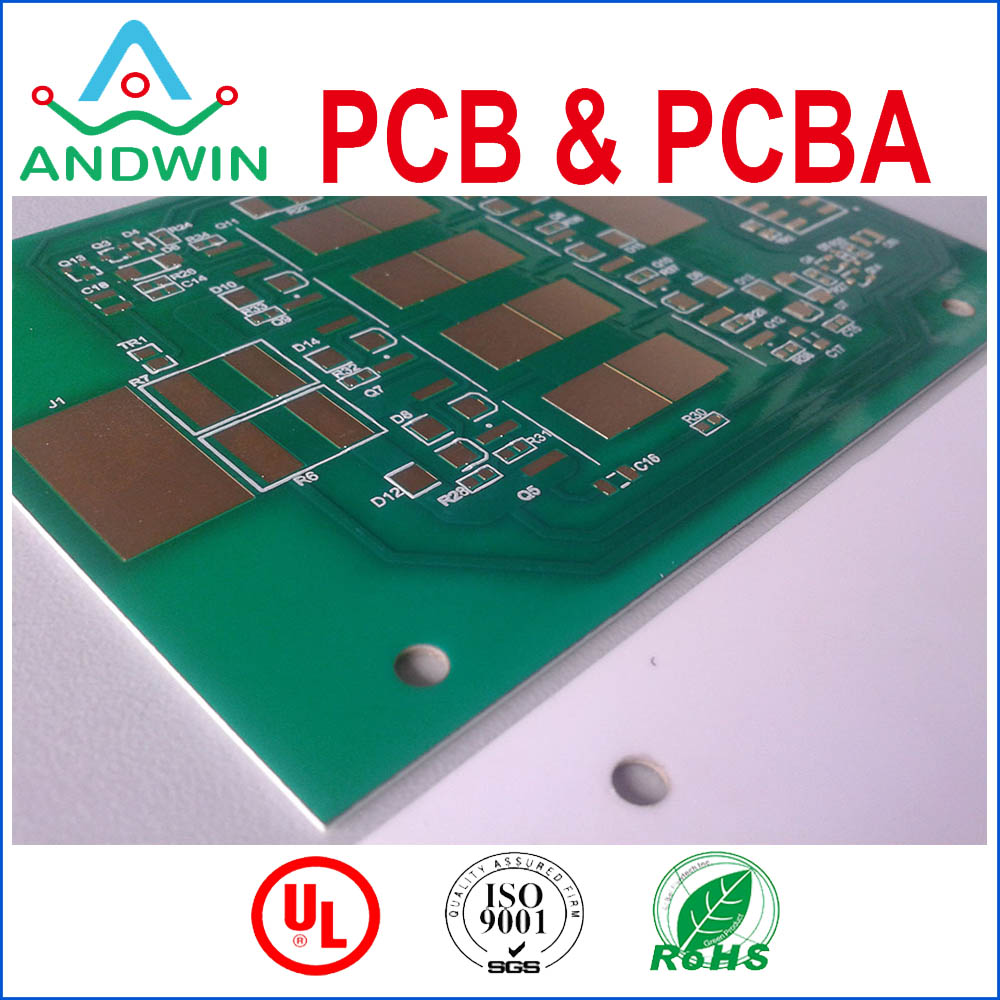
3. Pad Size
The pad size on a ceramic PCB should be larger than on a traditional PCB. This
is because the ceramic material is more brittle and can crack or chip more easily
than other materials. A larger pad size will provide more support and reduce the
risk of damage during fabrication and assembly.
4. Component Placement
When placing components on a ceramic PCB, it is important to consider the thermal
properties of the ceramic material. Components that generate a lot of heat should be
placed away from the edges of the board and should be spaced out to allow for proper
heat dissipation. Additionally, components should not be placed too close to each other,
as this can cause thermal hotspots and reduce the lifespan of the components.
5. Solder Mask
The solder mask on a ceramic PCB should be thicker than on a traditional PCB. This is
because the ceramic material is more porous and can absorb more solder than other
materials. A thicker solder mask will prevent excess solder from seeping into the ceramic
material and causing damage.
6. Board Thickness
The thickness of a ceramic PCB should be carefully considered. Thicker boards
will provide more support and reduce the risk of damage during fabrication and
assembly. However, thicker boards may also be more expensive and may not be
suitable for all applications.
7. Fabrication and Assembly
When fabricating and assembling a ceramic PCB, it is important to use the proper
equipment and techniques. Ceramic PCBs require more care and attention during
fabrication and assembly due to their brittle nature. Specialized equipment and
techniques may be required to prevent damage to the board.
In conclusion, designing a ceramic PCB requires a different set of rules and considerations
compared to traditional PCBs. The properties of the ceramic material must be carefully
considered when designing the board, and the board must be fabricated and assembled
with care to prevent damage. By following these design rules, you can ensure that your
ceramic PCB is reliable and long-lasting.
Thank you for taking the time to read this letter. If you have any questions or would like
further information, please do not hesitate to contact me.