
High speed pcb materials
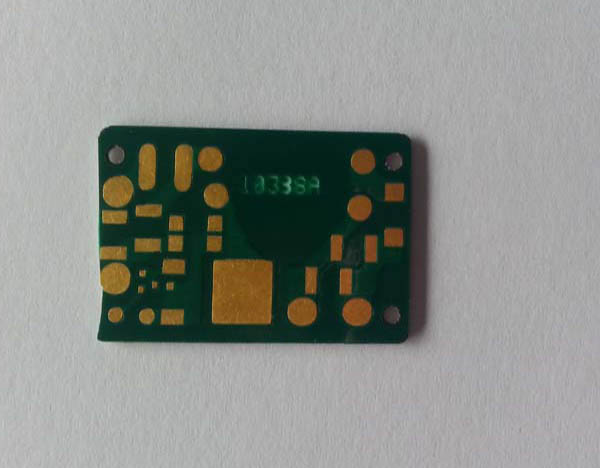
High speed PCB materials are materials that are used to manufacture high-speed printed circuit boards (PCBs) that can handle high-frequency signals and provide reliable performance.
These materials have low dielectric constant (Dk) and low dissipation factor (Df), which reduces signal loss and distortion.
1. FR-4:
This is a popular material for high-speed PCBs due to its low cost and good mechanical properties.
However, it has a relatively high Dk and Df, which limits its use in high-frequency applications.
2. Rogers:
This is a family of high-performance laminates that have low Dk and Df, making them suitable for high-frequency applications.
Rogers materials are also known for their excellent thermal stability.
3. Isola:
This is another family of high-performance laminates that have low Dk and Df, making them suitable for high-speed PCBs.
Isola materials are also known for their high thermal conductivity and excellent mechanical properties.
4. Arlon:
This is a family of laminates that have low Dk and Df, making them suitable for high-frequency applications.
Arlon materials are also known for their high-temperature performance and good mechanical properties.
5. Teflon:
This is a high-performance material that has extremely low Dk and Df, making it ideal for high-frequency applications.
Teflon materials are also known for their excellent thermal stability and chemical resistance.
high speed pcb layout
High speed PCB layout refers to the design and layout of printed circuit boards (PCBs) that are intended for use in high-speed electronic systems.
These systems typically operate at frequencies above 1 GHz and require careful attention to signal integrity,
power distribution, and electromagnetic compatibility (EMC) to ensure reliable and efficient operation.
Some key considerations for high speed PCB layout include:
1. Signal Integrity:
High-speed signals are susceptible to noise and interference, which can cause signal degradation and data errors.
To ensure signal integrity, designers must carefully route and terminate high-speed traces, minimize signal reflections,
and use impedance-controlled traces.
2. Power Distribution:
High-speed systems require stable and clean power supplies to avoid voltage drops and noise.
Designers must carefully plan the power distribution network,
including the placement and routing of power and ground planes and decoupling capacitors.
3. EMC:
High-speed systems can generate electromagnetic interference (EMI) that can interfere with other nearby electronic devices.
To minimize EMI, designers must carefully manage the placement and routing of high-speed traces,
use shielding and filtering techniques, and ensure proper grounding.
4. Thermal Management:
High-speed systems can generate significant heat, which can affect the performance and reliability of the PCB.
Designers must carefully plan the placement and routing of components to ensure proper thermal management and avoid hot spots.
Overall, high speed PCB layout requires a deep understanding of the electrical and mechanical properties of the PCB and the electronic system it is intended for.
It also requires the use of specialized design tools and simulation software to ensure optimal performance and reliability.