
double layer pcb design
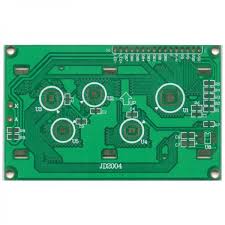
Basic principles and techniques of two-layer PCB design.
In modern electronic design, two-layer PCB (printed circuit board) design is one of the most common choices. Its basic principles and techniques not only determine the performance of the circuit, but also affect the manufacturing cost and reliability of the product. First of all, it is crucial to understand the basic principles of two-layer PCB design. Two-layer PCBs are usually composed of two layers of conductive materials with a layer of insulating material in the middle. The upper and lower layers are used for wiring and placing components respectively. This structure makes the design more flexible, but it also brings some challenges.
1. Reasonable layout is one of the key steps in two-layer PCB design
The layout of components directly affects the transmission path of the signal and the overall performance of the circuit. When laying out, related components should be placed together as much as possible to shorten the signal path and reduce electromagnetic interference. In addition, the layout of the power supply and ground wires also needs special attention. Generally, the power supply line and ground wire should be as wide as possible to reduce resistance and inductance, thereby improving the stability of the power supply.
2. Wiring
After the layout is completed, wiring is the next important task. Some basic principles should be followed when wiring, such as avoiding right-angle turns as much as possible, because right-angle turns can cause signal reflection and interference.
On the contrary, using 45-degree angles or arc turns can effectively reduce these problems. In addition, signal lines should be as short and straight as possible to reduce signal delay and loss. For high-speed signal lines, it is very important to maintain constant impedance, which can be achieved by controlling line width and line spacing.

3. Power and ground line design
Transitioning to the design of power and ground lines, the design of power and ground lines is particularly important in two-layer PCBs. Generally, the ground line should try to form a complete ground plane to provide good shielding effect and low impedance path.
The power line should be as wide as possible to reduce voltage drop and current noise. In some cases, multiple power lines can be used to share the current load, thereby improving the stability of the power supply.
4. The use of vias
The use of vias is also an important skill in two-layer PCB design. Vias are used to connect the conductive paths of the upper and lower layers, but too many vias will increase manufacturing costs and complexity. Therefore, the number of vias should be minimized, and blind or buried vias should be used to optimize the design when necessary.
5. Testing and verification are key steps to ensure the success of two-layer PCB design.
After the design is completed, comprehensive electrical testing and functional verification should be carried out to ensure the performance and reliability of the circuit.
By using simulation software, potential problems can be discovered and solved in advance, thus reducing later modifications and rework.
In summary, although the two-layer PCB design is relatively simple, it still needs to follow a series of basic principles and techniques. Reasonable layout, precise routing, optimized design of power and ground lines, and effective use of vias are all key factors to ensure the success of the design. Through continuous learning and practice, designers can achieve better results in two-layer PCB design.
GET PCB MANUFACTURING AND ASSEMBLY QUOTE NOW!
Signal integrity analysis in double-layer PCB design.
1. Signal integrity analysis
In double-layer PCB design, signal integrity analysis is a crucial link. Signal integrity refers to the ability of a signal to maintain its original form during transmission, which is essential to ensure the normal operation of the circuit.
First of all, the core of signal integrity analysis lies in understanding the transmission path of the signal on the PCB. Since the structure of the double-layer PCB is relatively simple, the design of the signal path requires special attention to avoid signal distortion and interference.
2. Impedance matching
Next, considering signal integrity, designers must pay attention to impedance matching. Impedance mismatch can cause signal reflection, which can cause signal distortion and data errors. Impedance matching can be effectively achieved by accurately calculating and adjusting the trace width, spacing, and dielectric constant of the interlayer medium. In addition, reasonable routing layout is also the key to ensure signal integrity.
Routing should avoid sharp turns and irregular shapes as much as possible to reduce signal reflection and loss.
GET PCB AND ASSEMBLY SERVICE QUOTE NOW!
3. Design of power and ground planes
Further exploration, the design of power and ground planes also has a significant impact on signal integrity. In a double-layer PCB, usually only one layer is used for signal transmission, and the other layer is used as the power and ground planes. In order to reduce power noise and ground bounce noise, designers should ensure low impedance connection between the power and ground planes and minimize the voltage difference between the power and ground planes. In addition, proper decoupling capacitor layout can also effectively filter out high-frequency noise and improve signal integrity.
4. Signal crosstalk
In addition, signal crosstalk is one of the common problems in double-layer PCB design. Crosstalk refers to the phenomenon that the signal on one signal line interferes with the adjacent signal line. In order to reduce crosstalk, designers should maintain appropriate spacing between signal lines and try to avoid parallel routing. Using a shielding layer or shielded routing is also an effective solution that can significantly reduce the impact of crosstalk.
5. Temperature and environmental factors000
Finally, signal integrity analysis also needs to consider temperature and environmental factors. Temperature changes affect the dielectric constant and conductivity of PCB materials, thereby affecting signal transmission characteristics. Therefore, during the design process, temperature compensation and environmental adaptability must be considered to ensure the stability of the signal under various working conditions.
In summary, signal integrity analysis in double-layer PCB design involves multiple aspects, including impedance matching, trace layout, power and ground plane design, crosstalk control, and environmental adaptability. By comprehensively considering these factors, designers can effectively improve signal integrity and ensure the reliability and performance of the circuit. Signal integrity analysis is not only a technical challenge, but also a reflection of the designer’s wisdom and experience.
