
micro circuit board
1. Application of microcircuit boards in IoT devices.
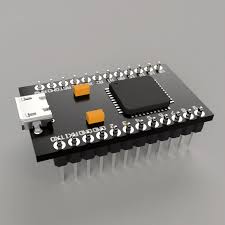
The application of microcircuit boards in IoT devices has become an important driving force for the development of modern science and technology.
With the continuous advancement of science and technology, the demand for IoT devices is increasing, and the emergence of microcircuit boards provides a more compact and efficient solution for these devices.
First of all, the small size of microcircuit boards allows them to be easily embedded in various IoT devices, whether smart home devices, wearable devices, or industrial automation systems. This compact design not only saves space, but also improves the portability and aesthetics of the device.
In addition, the high integration of microcircuit boards is another important reason for their widespread use in IoT devices. High integration means that more functions can be implemented on a small circuit board, thereby reducing the need for multiple independent components. This not only simplifies the design and manufacturing process, but also reduces production costs. More importantly, high integration enables IoT devices to operate more efficiently, provide faster response speeds and lower energy consumption.
At the same time, the reliability and durability of microcircuit boards also provide guarantees for the stable operation of IoT devices. Since IoT devices usually need to work in various complex and harsh environments, microcircuit boards must have high anti-interference capabilities and durability. Modern microcircuit boards use advanced manufacturing processes and materials to maintain stable performance under extreme temperature, humidity and vibration conditions. This reliability enables IoT devices to operate stably and for a long time in various application scenarios, thereby improving user trust and satisfaction.
Further, the scalability and flexibility of microcircuit boards also make it possible for the diversified application of IoT devices. Through modular design, microcircuit boards can be customized and expanded according to different application requirements. For example, in smart home systems, different sensors and control modules can be seamlessly integrated through microcircuit boards, thereby achieving comprehensive monitoring and intelligent control of the home environment. Similarly, in industrial automation systems, microcircuit boards can be used in conjunction with various sensors and actuators to achieve precise control and optimization of the production process.
In short, the application of microcircuit boards in IoT devices not only improves the performance and reliability of the equipment, but also provides broad space for its diversification and personalization. With the continuous advancement of science and technology, microcircuit boards will continue to play an important role in the field of IoT and promote the development of intelligence and automation. Through continuous innovation and optimization, microcircuit boards will bring us more convenient and efficient IoT devices, further improving our way of life and work.
GET PCB MANUFACTURING AND ASSEMBLY QUOTE NOW!
2. Application and development trend of micro PCB in modern electronic devices
The application and development trend of micro PCB in modern electronic devices is a fascinating topic that deserves in-depth discussion. With the continuous advancement of science and technology, electronic devices are becoming smaller and smaller, but more and more powerful. All of this is inseparable from the support of micro PCB. Micro PCB, or micro printed circuit board, is one of the core components of electronic devices. It not only determines the performance of the device, but also affects the size and weight of the device.
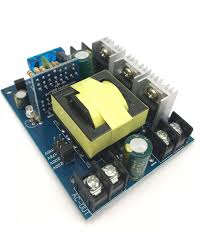
(1) The application of micro PCB in smartphones is particularly significant.
As an indispensable tool in modern people’s lives, smartphones have complex and sophisticated internal structures. The emergence of micro PCB enables smartphones to integrate more functions while maintaining a small appearance. By closely arranging various electronic components on micro PCB, manufacturers can achieve higher performance and more functions in a limited space. This not only improves the user experience, but also promotes the rapid development of the smartphone industry.
(2) The application of micro PCB in wearable devices cannot be ignored.
Wearable devices, such as smart watches and fitness trackers, require devices to be both lightweight and powerful. The high density and high integration of micro PCBs enable these devices to accommodate complex circuits and multiple sensors in a small form factor, thereby realizing multiple functions such as heart rate monitoring, step counting, and GPS positioning. This technological advancement not only improves the practicality of the equipment, but also brings more convenience and health management possibilities to users.
(3) The application of micro PCBs in medical devices is also expanding.
Modern medical devices, such as portable electrocardiographs and blood glucose monitors, require the equipment to be both accurate and easy to carry. The high precision and high reliability of micro PCBs enable these devices to achieve complex medical detection and data processing functions in a compact form factor. This not only improves the portability of medical equipment, but also provides patients with a more convenient means of health monitoring.
Looking to the future, the development trend of micro PCBs will be more diversified and intelligent. With the popularization of IoT technology, more and more devices will require micro PCBs to achieve interconnection. The design of micro PCBs will pay more attention to high efficiency and low power consumption to meet the requirements of IoT devices for battery life and performance. In addition, with the development of artificial intelligence technology, micro PCBs will be endowed with more intelligent functions, making electronic devices more intelligent and automated.
In short, micro PCBs are widely used in modern electronic devices and have a bright future. It not only promotes the development of smartphones, wearable devices and medical devices, but will also play an important role in the future fields of IoT and AI. Through continuous innovation and technological progress, micro PCBs will continue to lead the trend of miniaturization and intelligence of electronic devices, bringing more convenience and possibilities to people’s lives.