
Hdi pcb china
Advantages Of HDI PCB China Manufacturers.
High-Density Interconnect (HDI) Printed Circuit Boards (PCBs) have become a cornerstone in the electronics industry, offering numerous advantages over traditional PCBs. When it comes to manufacturing HDI PCBs, China has emerged as a global leader, providing a range of benefits that make it an attractive option for businesses worldwide.
One of the primary advantages of HDI PCB manufacturing in China is cost-effectiveness.
Chinese manufacturers benefit from economies of scale, which allow them to produce high-quality HDI PCBs at a lower cost compared to other regions. This cost advantage is further amplified by the availability of raw materials and a well-established supply chain network, ensuring that production processes are both efficient and economical.
In addition to cost savings, the technological expertise available in China is another significant advantage.
Chinese manufacturers have invested heavily in state-of-the-art equipment and advanced manufacturing techniques, enabling them to produce HDI PCBs with exceptional precision and reliability. This technological prowess is complemented by a highly skilled workforce, which is adept at handling the complexities associated with HDI PCB production. Consequently, businesses can expect superior quality products that meet stringent international standards.
Moreover, the speed of production is a critical factor that sets Chinese manufacturers apart.
The ability to rapidly scale up production and meet tight deadlines is essential in the fast-paced electronics industry. Chinese manufacturers excel in this regard, thanks to their streamlined production processes and efficient project management practices. This agility not only helps in reducing time-to-market but also provides a competitive edge to businesses looking to stay ahead in the innovation curve.
Another noteworthy advantage is the comprehensive range of services offered by Chinese HDI PCB manufacturers.
From design and prototyping to mass production and testing, these manufacturers provide end-to-end solutions that cater to the diverse needs of their clients. This holistic approach simplifies the supply chain, reduces logistical complexities, and ensures seamless integration of various stages of the production process. As a result, businesses can focus on their core competencies while relying on their manufacturing partners for high-quality HDI PCBs.
Furthermore, the regulatory environment in China is conducive to manufacturing, with policies that support industrial growth and innovation.
Government initiatives aimed at fostering technological advancements and improving manufacturing capabilities have created a favorable ecosystem for HDI PCB production. These policies not only encourage investment in cutting-edge technologies but also promote collaboration between industry players, thereby driving continuous improvement and innovation.
Additionally, the geographical advantage of China cannot be overlooked.
Its strategic location in Asia, coupled with well-developed transportation infrastructure, facilitates easy access to global markets. This geographical proximity to major electronics hubs ensures that businesses can efficiently distribute their products worldwide, thereby enhancing their market reach and customer base.
In conclusion, the advantages of HDI PCB manufacturing in China are manifold, encompassing cost-effectiveness, technological expertise, rapid production capabilities, comprehensive service offerings, a supportive regulatory environment, and strategic geographical positioning. These factors collectively make China an ideal destination for businesses seeking high-quality HDI PCBs. By leveraging these benefits, companies can not only achieve significant cost savings but also enhance their competitive advantage in the global electronics market.
Key Players In The Chinese HDI PCB Market
The Chinese market for High-Density Interconnect (HDI) Printed Circuit Boards (PCBs) has seen significant growth over the past decade, driven by the rapid advancement of technology and the increasing demand for miniaturized electronic devices. As a result, several key players have emerged as leaders in this competitive industry, each contributing to the market’s expansion and innovation. Understanding these key players provides valuable insights into the dynamics of the HDI PCB market in China.
One of the foremost companies in this sector is Zhen Ding Technology Holding Limited.
As a leading manufacturer of HDI PCBs, Zhen Ding has established a strong reputation for its high-quality products and advanced manufacturing capabilities. The company has invested heavily in research and development, enabling it to produce cutting-edge PCBs that meet the stringent requirements of various industries, including consumer electronics, telecommunications, and automotive. Zhen Ding’s commitment to innovation and quality has positioned it as a key player in the Chinese HDI PCB market.
Another significant player is Unimicron Technology Corporation, which has also made substantial contributions to the HDI PCB industry in China.
Unimicron is known for its extensive product portfolio and its ability to deliver customized solutions to meet the specific needs of its clients. The company’s state-of-the-art manufacturing facilities and robust supply chain management have enabled it to maintain a competitive edge in the market. Furthermore, Unimicron’s strategic partnerships with leading technology companies have facilitated the development of advanced HDI PCBs, further solidifying its position in the industry.
In addition to Zhen Ding and Unimicron, Shennan Circuits Company Limited (SCC) is another prominent player in the Chinese HDI PCB market.
SCC has a long history of excellence in PCB manufacturing and has consistently demonstrated its ability to adapt to the evolving demands of the market. The company’s focus on technological innovation and its commitment to sustainability have earned it a strong reputation among its peers. SCC’s comprehensive range of HDI PCBs caters to various applications, including smartphones, tablets, and other portable electronic devices, making it a key contributor to the market’s growth.
Moreover, Tripod Technology Corporation has emerged as a notable player in the HDI PCB market in China.
Tripod’s emphasis on quality control and its continuous investment in advanced manufacturing technologies have enabled it to produce high-performance HDI PCBs that meet international standards. The company’s dedication to customer satisfaction and its ability to deliver reliable products have made it a preferred choice for many global electronics manufacturers. Tripod’s strategic expansion into new markets and its focus on innovation have further strengthened its position in the industry.
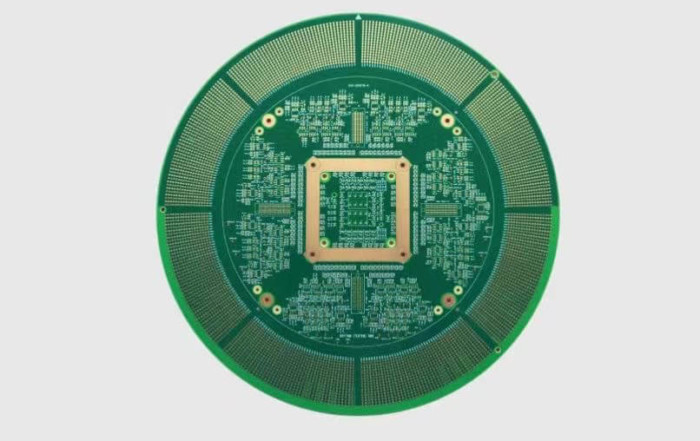
Lastly, TTM Technologies, Inc. is a key player that cannot be overlooked when discussing the Chinese HDI PCB market. TTM Technologies has a strong global presence and has leveraged its extensive experience in PCB manufacturing to establish a significant foothold in China. The company’s advanced production capabilities and its focus on delivering high-quality, cost-effective solutions have made it a trusted partner for many leading electronics companies. TTM Technologies’ commitment to continuous improvement and its proactive approach to addressing market challenges have contributed to its success in the HDI PCB market.
In conclusion, the Chinese HDI PCB market is characterized by the presence of several key players, each contributing to the industry’s growth and innovation. Companies like Zhen Ding Technology Holding Limited, Unimicron Technology Corporation, Shennan Circuits Company Limited, Tripod Technology Corporation, and TTM Technologies, Inc. have established themselves as leaders through their commitment to quality, innovation, and customer satisfaction. As the demand for advanced electronic devices continues to rise, these key players are well-positioned to drive the future growth of the HDI PCB market in China.
Cost-Effective HDI PCB Production In China
High-Density Interconnect (HDI) printed circuit boards (PCBs) have become a cornerstone in the electronics industry, particularly for applications requiring compact, high-performance designs. As the demand for these advanced PCBs continues to rise, China has emerged as a leading hub for cost-effective HDI PCB production. This development is driven by a combination of advanced manufacturing capabilities, economies of scale, and a robust supply chain infrastructure.
One of the primary reasons for the cost-effectiveness of HDI PCB production in China is the country’s significant investment in state-of-the-art manufacturing facilities.
Chinese manufacturers have adopted cutting-edge technologies and automated processes that enhance production efficiency and reduce labor costs. These advancements enable Chinese firms to produce high-quality HDI PCBs at a fraction of the cost compared to their counterparts in other regions. Moreover, the competitive landscape in China fosters continuous innovation and improvement, further driving down production costs.
In addition to technological advancements, the economies of scale achieved by Chinese manufacturers play a crucial role in cost reduction.
The sheer volume of HDI PCBs produced in China allows manufacturers to spread fixed costs over a larger number of units, thereby lowering the per-unit cost. This scale of production is supported by a vast network of suppliers and subcontractors, which ensures a steady supply of raw materials and components at competitive prices. Consequently, Chinese manufacturers can offer HDI PCBs at prices that are highly attractive to global customers.
Furthermore, the robust supply chain infrastructure in China significantly contributes to the cost-effectiveness of HDI PCB production.
The country boasts an extensive network of suppliers, logistics providers, and distribution channels that streamline the entire production process. This well-established supply chain minimizes lead times and reduces transportation costs, ensuring that manufacturers can meet tight deadlines without compromising on quality. Additionally, the proximity of suppliers and manufacturers facilitates better communication and collaboration, leading to more efficient problem-solving and continuous process optimization.
Another factor that enhances the cost-effectiveness of HDI PCB production in China is the availability of skilled labor.
China has a large pool of highly trained engineers and technicians who possess the expertise required to design and manufacture complex HDI PCBs. This skilled workforce is instrumental in maintaining high production standards while keeping labor costs relatively low. Moreover, the Chinese government’s emphasis on education and vocational training ensures a steady supply of qualified professionals to support the growing demand for HDI PCBs.
It is also worth noting that Chinese manufacturers benefit from favorable government policies and incentives that promote the electronics industry.
These policies include tax breaks, subsidies, and grants that reduce the overall cost of production. Additionally, the Chinese government actively supports research and development initiatives, encouraging manufacturers to invest in new technologies and processes that further enhance cost efficiency.
In conclusion, the cost-effective production of HDI PCBs in China is the result of a confluence of factors, including advanced manufacturing capabilities, economies of scale, a robust supply chain infrastructure, a skilled workforce, and supportive government policies. As a result, China has positioned itself as a global leader in the HDI PCB market, offering high-quality products at competitive prices. This advantageous position not only benefits Chinese manufacturers but also provides global customers with access to affordable, cutting-edge HDI PCBs, thereby driving innovation and growth in the electronics industry worldwide.

Technological Innovations In China’s HDI PCB Industry
China has emerged as a global leader in the High-Density Interconnect (HDI) Printed Circuit Board (PCB) industry, driven by continuous technological innovations and advancements. The HDI PCB market in China has experienced significant growth, fueled by the increasing demand for miniaturized electronic devices and the rapid development of the Internet of Things (IoT), 5G technology, and advanced consumer electronics. This growth is underpinned by China’s robust manufacturing infrastructure, skilled workforce, and substantial investments in research and development.
One of the key technological innovations in China’s HDI PCB industry is the adoption of advanced manufacturing techniques.
Laser Direct Imaging (LDI) and laser drilling have revolutionized the production process, enabling the creation of finer lines and spaces, which are essential for the miniaturization of electronic components. These techniques have significantly improved the precision and efficiency of HDI PCB manufacturing, allowing for the production of complex and high-performance PCBs that meet the stringent requirements of modern electronic devices.
Moreover, the integration of automation and smart manufacturing technologies has further enhanced the capabilities of China’s HDI PCB industry.
Automated Optical Inspection (AOI) systems, for instance, have become a standard in the production process, ensuring high-quality and defect-free PCBs. Additionally, the implementation of Industry 4.0 principles, such as the use of IoT devices and data analytics, has optimized production workflows, reduced lead times, and minimized production costs. These advancements have positioned China as a competitive player in the global HDI PCB market.
In addition to manufacturing innovations, material advancements have played a crucial role in the evolution of HDI PCBs in China.
The development of high-performance laminate materials, such as low-loss and high-frequency substrates, has enabled the production of PCBs that can operate at higher speeds and frequencies. These materials are essential for applications in 5G technology, where signal integrity and performance are critical. Furthermore, the use of environmentally friendly materials and processes has become increasingly important, aligning with global sustainability trends and regulations.
China’s HDI PCB industry has also benefited from strong collaboration between academia, industry, and government.
Research institutions and universities have been instrumental in driving innovation through cutting-edge research and development projects. Government support, in the form of policies and funding, has further accelerated the growth of the industry. For example, initiatives such as the “Made in China 2025” plan have emphasized the importance of advancing the country’s manufacturing capabilities, including the HDI PCB sector.
The global demand for HDI PCBs is expected to continue rising, driven by the proliferation of advanced technologies and the increasing complexity of electronic devices.
China’s HDI PCB industry is well-positioned to capitalize on this trend, thanks to its technological prowess and innovative capabilities. However, the industry must also navigate challenges such as supply chain disruptions, trade tensions, and the need for continuous investment in research and development to maintain its competitive edge.
In conclusion, technological innovations have been the cornerstone of China’s HDI PCB industry’s growth and success. Advanced manufacturing techniques, automation, material advancements, and strong collaboration between various stakeholders have collectively propelled the industry to new heights. As the demand for high-performance and miniaturized electronic devices continues to grow, China’s HDI PCB industry is poised to play a pivotal role in shaping the future of electronics manufacturing on a global scale.