
Prototype metal core pcb
Advantages Of Using Prototype Metal Core PCBs In High-Power Applications
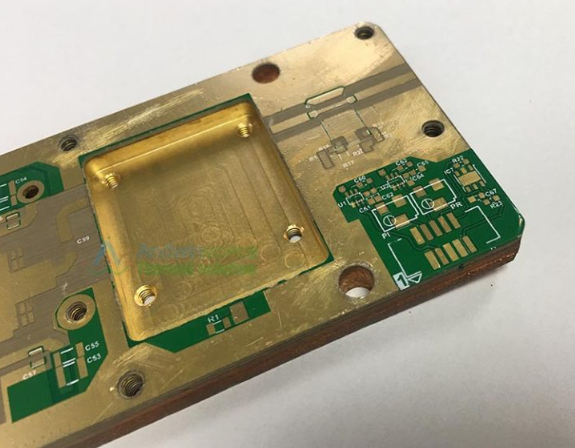
Prototype metal core printed circuit boards (PCBs) have emerged as a pivotal innovation in the realm of high-power applications, offering a multitude of advantages that make them indispensable in various industries.
These PCBs, characterized by their metal core, typically aluminum or copper, are designed to efficiently manage and dissipate heat, a critical factor in high-power electronic devices. The unique properties of metal core PCBs confer several benefits that enhance the performance, reliability, and longevity of electronic systems.
One of the primary advantages of using prototype metal core PCBs in high-power applications is their superior thermal management capabilities.
Traditional PCBs, often made from materials like FR4, struggle to dissipate heat effectively, leading to potential overheating and failure of electronic components. In contrast, the metal core in these advanced PCBs acts as a heat sink, rapidly conducting heat away from sensitive components and distributing it evenly across the board. This efficient thermal management not only prevents overheating but also allows for higher power densities, enabling the design of more compact and powerful electronic devices.
Moreover, the enhanced thermal conductivity of metal core PCBs contributes to improved reliability and durability of electronic systems.
By maintaining lower operating temperatures, these PCBs reduce the thermal stress on components, thereby minimizing the risk of thermal fatigue and extending the lifespan of the device. This is particularly crucial in high-power applications where components are subjected to significant thermal cycling. Consequently, the use of metal core PCBs can lead to reduced maintenance costs and fewer instances of system failure, which is a significant advantage for industries that rely on continuous and dependable operation.
In addition to thermal management, metal core PCBs offer mechanical robustness that is beneficial in high-power applications.
The metal core provides structural integrity, making these PCBs more resistant to mechanical stress and vibration compared to their traditional counterparts. This robustness is especially valuable in applications such as automotive, aerospace, and industrial machinery, where electronic systems are often exposed to harsh environmental conditions. The ability to withstand such conditions without compromising performance ensures that metal core PCBs can deliver consistent and reliable operation in demanding environments.
Furthermore, the use of prototype metal core PCBs facilitates the development and testing of new high-power electronic designs.
Prototyping is a critical phase in the design process, allowing engineers to evaluate the performance and feasibility of their designs before mass production. Metal core PCBs enable accurate simulation of real-world operating conditions, providing valuable insights into thermal performance and mechanical stability. This capability allows for iterative design improvements, ensuring that the final product meets the stringent requirements of high-power applications.
Another notable advantage is the potential for cost savings in the long run.
Although metal core PCBs may have a higher initial cost compared to traditional PCBs, their ability to enhance the performance and reliability of electronic systems can lead to significant cost reductions over the product’s lifecycle. Reduced failure rates, lower maintenance requirements, and extended device lifespans translate into lower total cost of ownership, making metal core PCBs a cost-effective solution for high-power applications.
In conclusion, prototype metal core PCBs offer a range of advantages that make them highly suitable for high-power applications. Their superior thermal management, enhanced reliability, mechanical robustness, and facilitation of effective prototyping contribute to the development of more efficient, durable, and cost-effective electronic systems. As industries continue to demand higher performance and reliability from their electronic devices, the adoption of metal core PCBs is likely to become increasingly prevalent, driving further innovation and advancement in high-power electronics.
Design Considerations For Prototype Metal Core PCBs
When designing prototype metal core printed circuit boards (PCBs), several critical considerations must be taken into account to ensure optimal performance and reliability. Metal core PCBs, often utilized in applications requiring efficient heat dissipation, such as LED lighting, power supplies, and automotive electronics, present unique challenges and opportunities compared to traditional FR4-based PCBs. Understanding these design considerations is essential for engineers and designers aiming to leverage the benefits of metal core PCBs effectively.
One of the primary considerations in designing prototype metal core PCBs is thermal management.
The metal core, typically made of aluminum or copper, serves as a heat sink, efficiently dissipating heat away from critical components. This characteristic is particularly advantageous in high-power applications where excessive heat can lead to component failure or reduced lifespan. Therefore, designers must carefully analyze the thermal requirements of the application and select an appropriate metal core material and thickness to ensure adequate heat dissipation. Additionally, the placement of heat-generating components should be strategically planned to maximize thermal efficiency.
Another crucial aspect is the electrical insulation between the metal core and the conductive layers.
Metal core PCBs typically feature a dielectric layer that electrically isolates the metal core from the circuit traces while maintaining thermal conductivity. The choice of dielectric material and its thickness significantly impact the thermal performance and electrical insulation properties of the PCB. Designers must balance these factors to achieve the desired thermal and electrical characteristics, ensuring that the dielectric layer can withstand the operating voltage and temperature conditions of the application.
Mechanical considerations also play a vital role in the design of prototype metal core PCBs.
The metal core adds rigidity and strength to the PCB, which can be beneficial in applications subject to mechanical stress or vibration. However, this increased rigidity can also pose challenges during the manufacturing process, particularly in terms of drilling and routing. Designers must work closely with PCB manufacturers to ensure that the chosen design can be fabricated using available processes and equipment. This collaboration is essential to avoid issues such as delamination or misalignment, which can compromise the performance and reliability of the final product.
Furthermore, the layout and routing of traces on a metal core PCB require careful attention.
The presence of the metal core can affect signal integrity and electromagnetic compatibility (EMC). Designers must consider the potential for signal interference and crosstalk, especially in high-frequency applications. Proper grounding and shielding techniques, along with careful trace routing, are essential to mitigate these issues. Additionally, the thermal expansion properties of the metal core and dielectric materials must be considered to prevent stress on solder joints and components during thermal cycling.
In addition to these technical considerations, cost and manufacturability are also important factors in the design of prototype metal core PCBs.
While metal core PCBs offer superior thermal performance, they can be more expensive to produce than traditional FR4 PCBs. Designers must weigh the benefits of improved thermal management against the increased cost and complexity of manufacturing. Early collaboration with PCB manufacturers can help identify cost-effective solutions and streamline the prototyping process.
In conclusion, designing prototype metal core PCBs involves a comprehensive understanding of thermal management, electrical insulation, mechanical properties, signal integrity, and manufacturability. By carefully considering these factors and collaborating closely with PCB manufacturers, designers can create robust and reliable metal core PCBs that meet the demanding requirements of high-power and high-performance applications. The successful implementation of these design considerations will ultimately lead to enhanced product performance and longevity, making metal core PCBs a valuable choice for a wide range of electronic applications.
Thermal Management Solutions With Prototype Metal Core PCBs
In the realm of modern electronics, thermal management has emerged as a critical concern, particularly as devices become more compact and powerful. One innovative solution that has gained significant traction is the use of prototype metal core printed circuit boards (PCBs). These specialized PCBs are designed to efficiently dissipate heat, thereby enhancing the performance and longevity of electronic components. The integration of metal cores within PCBs represents a significant advancement in thermal management technology, addressing the challenges posed by high-power applications.
Prototype metal core PCBs are constructed with a metal substrate, typically aluminum or copper, which serves as the core material.
This metal core is sandwiched between layers of dielectric material and copper circuitry. The primary advantage of using a metal core lies in its superior thermal conductivity compared to traditional FR4 substrates. By effectively conducting heat away from critical components, metal core PCBs help maintain optimal operating temperatures, thereby preventing overheating and potential damage.
The importance of thermal management cannot be overstated, especially in applications such as LED lighting, power supplies, and automotive electronics.
In these high-power environments, excessive heat can lead to reduced efficiency, performance degradation, and even catastrophic failure. Prototype metal core PCBs offer a robust solution by providing a direct thermal path from the heat-generating components to the metal core, which then dissipates the heat more efficiently than conventional materials. This enhanced thermal performance translates to improved reliability and extended lifespan of electronic devices.
Moreover, the use of prototype metal core PCBs is not limited to high-power applications alone.
They are also beneficial in scenarios where space constraints and weight considerations are paramount. For instance, in aerospace and military applications, where both performance and durability are critical, metal core PCBs offer a lightweight yet effective thermal management solution. The ability to maintain lower operating temperatures in such demanding environments ensures that electronic systems remain functional and reliable under extreme conditions.
Transitioning from traditional FR4 PCBs to metal core PCBs involves several considerations.
One of the key factors is the design and manufacturing process, which requires specialized techniques to handle the metal substrate. The dielectric material used in metal core PCBs must possess high thermal conductivity while maintaining electrical insulation properties. Additionally, the choice of metal core material, whether aluminum or copper, depends on the specific thermal and mechanical requirements of the application. Aluminum is often preferred for its balance of thermal performance and cost-effectiveness, while copper offers superior thermal conductivity at a higher cost.
Furthermore, the prototyping phase is crucial in the development of metal core PCBs.
During this stage, designers can evaluate the thermal performance, mechanical stability, and overall functionality of the PCB in real-world conditions. Prototyping allows for iterative testing and optimization, ensuring that the final product meets the stringent requirements of the intended application. By leveraging advanced simulation tools and thermal analysis software, engineers can predict and mitigate potential thermal issues before moving to full-scale production.
In conclusion, prototype metal core PCBs represent a significant advancement in thermal management solutions for modern electronics. Their ability to efficiently dissipate heat, coupled with their versatility in various high-power and space-constrained applications, makes them an invaluable asset in the design and manufacturing of reliable electronic devices. As technology continues to evolve, the adoption of metal core PCBs is poised to play a pivotal role in addressing the thermal challenges of next-generation electronic systems.
Comparing Prototype Metal Core PCBs To Traditional FR4 PCBs
When comparing prototype metal core PCBs to traditional FR4 PCBs, it is essential to understand the fundamental differences in their construction, performance, and applications. Metal core PCBs, often referred to as MCPCBs, incorporate a metal substrate, typically aluminum or copper, which serves as the core material. In contrast, traditional FR4 PCBs utilize a fiberglass-reinforced epoxy laminate as their core. This distinction in core materials significantly influences the thermal management, mechanical properties, and overall performance of the PCBs.
One of the primary advantages of metal core PCBs is their superior thermal conductivity.
The metal substrate in MCPCBs allows for efficient heat dissipation, which is crucial in applications where high power and heat generation are prevalent. For instance, LED lighting systems, power supplies, and automotive electronics often employ MCPCBs to manage heat effectively and ensure reliable operation. In comparison, traditional FR4 PCBs have limited thermal conductivity due to the insulating nature of the fiberglass-epoxy material. Consequently, FR4 PCBs may require additional thermal management solutions, such as heat sinks or thermal vias, to handle high-temperature environments.
Moreover, the mechanical strength of metal core PCBs is another notable benefit.
The metal substrate provides enhanced rigidity and durability, making MCPCBs less prone to warping or mechanical stress. This characteristic is particularly advantageous in applications subjected to harsh environmental conditions or mechanical vibrations, such as industrial machinery and aerospace electronics. On the other hand, FR4 PCBs, while offering adequate mechanical strength for many applications, may not withstand extreme conditions as effectively as their metal core counterparts.
In terms of electrical performance, both MCPCBs and FR4 PCBs can be designed to meet specific requirements.
However, the choice of substrate material can influence the overall performance characteristics. Metal core PCBs, with their excellent thermal management capabilities, can support higher current densities and power levels without compromising reliability. This makes them suitable for high-power applications where efficient heat dissipation is critical. Conversely, FR4 PCBs are widely used in a broad range of electronic devices due to their versatility, cost-effectiveness, and ease of manufacturing. They are well-suited for low to moderate power applications where thermal management is less of a concern.
Despite the advantages of metal core PCBs, there are also some considerations to keep in mind.
The manufacturing process for MCPCBs can be more complex and costly compared to traditional FR4 PCBs. The metal substrate requires specialized fabrication techniques, such as drilling and etching, which can increase production time and expenses. Additionally, the weight of metal core PCBs is generally higher than that of FR4 PCBs, which may be a factor in applications where weight is a critical consideration.
In conclusion, the choice between prototype metal core PCBs and traditional FR4 PCBs depends on the specific requirements of the application. Metal core PCBs offer superior thermal management, mechanical strength, and suitability for high-power applications, making them ideal for environments where heat dissipation and durability are paramount. On the other hand, traditional FR4 PCBs provide versatility, cost-effectiveness, and ease of manufacturing, making them a popular choice for a wide range of electronic devices. By carefully evaluating the performance characteristics and application needs, designers can make informed decisions to select the most appropriate PCB technology for their projects.