
Special rogers hdi pcb board
Advantages Of Using Special Rogers HDI PCB Boards In High-Frequency Applications
Special Rogers HDI PCB boards have become increasingly prominent in high-frequency applications, offering a range of advantages that make them indispensable in various advanced technological fields. These boards, known for their superior performance and reliability, are particularly favored in industries where precision and efficiency are paramount.
One of the primary benefits of using Special Rogers HDI PCB boards is their exceptional dielectric properties.
These boards are constructed from materials that exhibit low dielectric constant and low loss tangent, which are crucial for maintaining signal integrity at high frequencies. This characteristic ensures minimal signal loss and distortion, thereby enhancing the overall performance of the electronic device.
Moreover, the thermal management capabilities of Special Rogers HDI PCB boards are noteworthy.
High-frequency applications often generate significant amounts of heat, which can adversely affect the performance and longevity of electronic components. The materials used in these boards possess excellent thermal conductivity, allowing for efficient heat dissipation. This not only helps in maintaining optimal operating temperatures but also contributes to the durability and reliability of the device. Additionally, the ability to manage thermal stress effectively reduces the risk of component failure, which is a critical consideration in high-frequency applications.
Another significant advantage of Special Rogers HDI PCB boards is their dimensional stability.
These boards maintain their structural integrity under varying environmental conditions, including changes in temperature and humidity. This stability is essential for high-frequency applications, where even minor deviations can lead to performance issues. The consistent performance of these boards under different conditions ensures that the electronic devices function reliably, regardless of the external environment. Furthermore, the dimensional stability of these boards facilitates precise manufacturing processes, leading to higher quality and consistency in the final products.
The miniaturization capabilities of Special Rogers HDI PCB boards also play a crucial role in their suitability for high-frequency applications.
As technology advances, there is a growing demand for smaller, more compact electronic devices. These boards support high-density interconnects, allowing for more components to be placed on a single board without compromising performance. This capability is particularly beneficial in applications such as telecommunications, aerospace, and medical devices, where space constraints are a significant concern. The ability to integrate more functionality into a smaller footprint not only enhances the performance of the device but also contributes to cost savings in terms of materials and manufacturing processes.
In addition to these technical advantages, the reliability and longevity of Special Rogers HDI PCB boards cannot be overstated.
The high-quality materials and advanced manufacturing processes used in their production result in boards that are highly resistant to wear and tear. This durability is especially important in high-frequency applications, where devices are often subjected to rigorous operating conditions. The long lifespan of these boards reduces the need for frequent replacements, thereby lowering maintenance costs and ensuring continuous operation.
In conclusion, the advantages of using Special Rogers HDI PCB boards in high-frequency applications are manifold. Their exceptional dielectric properties, thermal management capabilities, dimensional stability, miniaturization potential, and overall reliability make them an ideal choice for a wide range of advanced technological applications. As industries continue to push the boundaries of what is possible with high-frequency electronics, the role of these specialized PCB boards will undoubtedly become even more critical, driving innovation and enhancing performance across various sectors.
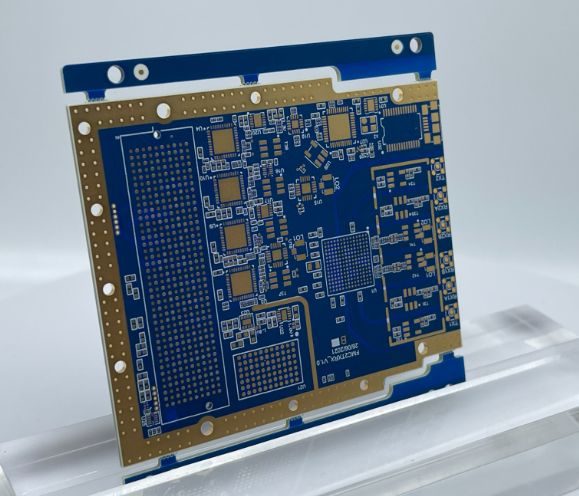
Design Considerations For Special Rogers HDI PCB Boards
When designing special Rogers HDI (High-Density Interconnect) PCB boards, several critical considerations must be taken into account to ensure optimal performance and reliability. The unique properties of Rogers materials, combined with the intricate nature of HDI technology, necessitate a meticulous approach to design and fabrication.
To begin with, material selection is paramount.
Rogers materials are renowned for their superior electrical properties, such as low dielectric constant and low loss tangent, which are essential for high-frequency applications. These materials provide excellent signal integrity, making them ideal for RF and microwave circuits. However, the choice of the specific Rogers laminate must align with the intended application, considering factors such as thermal management, mechanical stability, and cost.
Transitioning to the layout design, the miniaturization inherent in HDI technology demands precise planning.
The use of microvias, which are significantly smaller than traditional vias, allows for higher component density and more complex routing. However, the placement and size of these microvias must be carefully controlled to avoid signal integrity issues and ensure reliable connections. Additionally, the aspect ratio of the microvias, which is the ratio of the hole depth to its diameter, should be optimized to maintain structural integrity and manufacturability.
Another critical aspect is the stack-up configuration.
The layer stack-up in HDI PCBs is more complex than in conventional PCBs due to the multiple layers of microvias and buried vias. A well-designed stack-up not only supports the electrical performance but also enhances thermal management and mechanical strength. It is essential to balance the number of signal layers with power and ground planes to minimize electromagnetic interference (EMI) and ensure stable power distribution.
Signal integrity is another crucial consideration in the design of Rogers HDI PCB boards.
High-speed signals are susceptible to various forms of degradation, including crosstalk, reflection, and attenuation. To mitigate these issues, designers must employ advanced techniques such as controlled impedance routing, differential pair routing, and proper termination. The use of Rogers materials, with their low dielectric constant, helps to maintain signal integrity by reducing signal delay and dispersion.
Thermal management is also a significant concern, especially in high-power applications.
The high thermal conductivity of certain Rogers materials can aid in dissipating heat more effectively. However, designers must also incorporate thermal vias, heat sinks, and other cooling mechanisms to manage the heat generated by densely packed components and high-speed signals. Proper thermal management ensures the longevity and reliability of the PCB.
Manufacturability is another vital consideration.
The advanced features of HDI technology, such as fine lines and spaces, microvias, and sequential lamination, require specialized fabrication processes. It is crucial to collaborate closely with the PCB manufacturer during the design phase to ensure that the design can be produced reliably and cost-effectively. Design for manufacturability (DFM) guidelines should be followed to avoid issues such as misregistration, insufficient plating, and warpage.
In conclusion, designing special Rogers HDI PCB boards involves a comprehensive understanding of material properties, layout intricacies, signal integrity, thermal management, and manufacturability. By carefully considering these factors, designers can create high-performance PCBs that meet the stringent demands of modern electronic applications. The synergy between advanced materials like Rogers laminates and HDI technology paves the way for innovative solutions in fields ranging from telecommunications to aerospace, driving the next generation of electronic devices.
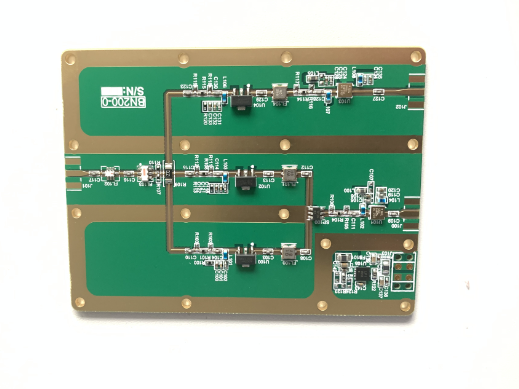
Manufacturing Challenges And Solutions For Special Rogers HDI PCB Boards
Manufacturing special Rogers HDI (High-Density Interconnect) PCB boards presents a unique set of challenges that require innovative solutions to ensure high performance and reliability. These boards, known for their superior electrical properties and high-frequency performance, are increasingly used in advanced applications such as aerospace, telecommunications, and medical devices. However, the intricate nature of HDI designs, combined with the specialized materials used in Rogers PCBs, necessitates a meticulous approach to manufacturing.
One of the primary challenges in manufacturing special Rogers HDI PCB boards is the precise handling of the Rogers material itself.
Rogers laminates, such as RO4000 and RO3000 series, are renowned for their low dielectric constant and low loss tangent, which are critical for high-frequency applications. However, these materials are also more sensitive to thermal and mechanical stress compared to traditional FR-4 substrates. This sensitivity requires careful control of the lamination process to prevent warping and delamination. Advanced lamination techniques, including the use of vacuum lamination and controlled temperature profiles, are essential to maintain the integrity of the Rogers material.
Another significant challenge is the drilling and via formation process.
HDI PCBs often feature microvias, which are small-diameter vias that connect multiple layers within the board. The precision required for drilling these microvias is heightened when working with Rogers materials, as any deviation can lead to signal integrity issues. Laser drilling is commonly employed to achieve the necessary precision, but it requires careful calibration and maintenance to ensure consistent results. Additionally, the aspect ratio of the vias must be carefully managed to avoid issues such as voids or incomplete plating, which can compromise the board’s performance.
The plating process also presents unique challenges.
Rogers materials have different chemical properties compared to traditional substrates, which can affect the adhesion of copper during the plating process. To address this, specialized surface treatments and adhesion promoters are often used to enhance the bond between the copper and the Rogers laminate. Furthermore, the plating process must be carefully monitored to ensure uniform copper deposition, particularly in the small and densely packed features typical of HDI designs.
Thermal management is another critical aspect of manufacturing special Rogers HDI PCB boards.
The high-frequency applications for which these boards are designed often generate significant heat, which must be effectively dissipated to maintain performance and reliability. The thermal conductivity of Rogers materials is generally lower than that of traditional substrates, necessitating the use of additional thermal management techniques. These may include the incorporation of thermal vias, heat sinks, and advanced thermal interface materials to ensure efficient heat dissipation.
Quality control is paramount throughout the manufacturing process.
Given the high performance and reliability requirements of applications using special Rogers HDI PCB boards, rigorous testing and inspection protocols are essential. Automated optical inspection (AOI), X-ray inspection, and electrical testing are commonly employed to detect any defects or inconsistencies. Additionally, impedance control is critical for high-frequency applications, requiring precise control of trace widths and spacing during the manufacturing process.
In conclusion, the manufacturing of special Rogers HDI PCB boards involves a complex interplay of materials science, precision engineering, and advanced manufacturing techniques. By addressing the challenges associated with material handling, drilling, plating, thermal management, and quality control, manufacturers can produce high-performance PCBs that meet the demanding requirements of advanced applications. Through continuous innovation and adherence to stringent manufacturing standards, the industry can continue to advance the capabilities and reliability of these specialized circuit boards.
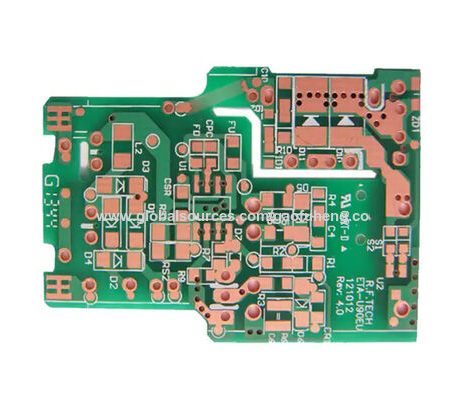
Comparing Special Rogers HDI PCB Boards To Traditional PCB Materials
Special Rogers HDI PCB boards represent a significant advancement in printed circuit board technology, offering numerous advantages over traditional PCB materials. High-Density Interconnect (HDI) technology, combined with Rogers’ specialized materials, provides superior performance in various applications, particularly in high-frequency and high-speed environments.
To understand the benefits of Special Rogers HDI PCB boards, it is essential to compare them with traditional PCB materials, examining aspects such as material properties, performance characteristics, and application suitability.
Traditional PCB materials, such as FR-4, have been the industry standard for many years.
FR-4 is a composite material made of woven fiberglass cloth with an epoxy resin binder that is flame resistant. While FR-4 is cost-effective and suitable for a wide range of applications, it has limitations in high-frequency and high-speed scenarios. The dielectric constant and loss tangent of FR-4 are relatively high, which can lead to signal integrity issues and increased power loss at higher frequencies. Additionally, the thermal management capabilities of FR-4 are limited, making it less suitable for applications that generate significant heat.
In contrast, Special Rogers HDI PCB boards utilize advanced materials specifically designed to address the shortcomings of traditional PCB materials.
Rogers Corporation, a leader in high-performance PCB materials, offers a range of laminates and prepregs that exhibit low dielectric constants and low loss tangents. These properties are crucial for maintaining signal integrity and minimizing power loss in high-frequency applications. Furthermore, Rogers materials often have superior thermal management capabilities, allowing for better heat dissipation and improved reliability in demanding environments.
One of the key advantages of Special Rogers HDI PCB boards is their ability to support higher circuit densities.
HDI technology enables the creation of smaller vias, finer lines, and spaces, as well as multiple layers of interconnections. This increased density allows for more complex and compact designs, which is particularly beneficial in applications such as mobile devices, aerospace, and advanced computing. The combination of Rogers’ materials and HDI technology results in PCBs that can handle higher data rates and more complex signal routing, making them ideal for cutting-edge electronic devices.
Moreover, the mechanical properties of Rogers materials contribute to the overall durability and reliability of the PCB.
These materials often exhibit better dimensional stability and lower moisture absorption compared to traditional FR-4. This means that Special Rogers HDI PCB boards are less prone to warping and other mechanical deformations, which can be critical in applications where environmental conditions vary significantly. The enhanced reliability of these boards ensures consistent performance over the product’s lifespan, reducing the likelihood of failures and maintenance requirements.
In addition to performance benefits, Special Rogers HDI PCB boards also offer advantages in the manufacturing process.
The advanced materials used in these boards are compatible with various fabrication techniques, including laser drilling and sequential lamination. These techniques enable the precise creation of microvias and other intricate features, which are essential for achieving the high densities associated with HDI technology. The compatibility of Rogers materials with advanced manufacturing processes ensures that the final product meets stringent quality and performance standards.
In conclusion, Special Rogers HDI PCB boards provide a superior alternative to traditional PCB materials, particularly in high-frequency and high-speed applications. The advanced material properties, combined with the benefits of HDI technology, result in PCBs that offer improved signal integrity, thermal management, and mechanical reliability. As electronic devices continue to evolve and demand higher performance, the adoption of Special Rogers HDI PCB boards is likely to increase, driving innovation and enabling the development of more advanced and compact electronic systems.