
Rogers rf pcb
Design Techniques For Rogers RF PCB
Designing Rogers RF PCBs requires a meticulous approach to ensure optimal performance in high-frequency applications. The unique properties of Rogers materials, such as low dielectric constant and low loss tangent, make them ideal for RF and microwave circuits. However, leveraging these advantages necessitates a thorough understanding of specific design techniques.
To begin with, selecting the appropriate Rogers material is crucial.
Rogers offers a variety of laminates, each with distinct characteristics tailored for different applications. For instance, Rogers RO4350B is widely used due to its excellent electrical properties and cost-effectiveness. Once the material is chosen, the next step involves careful consideration of the substrate thickness. Thicker substrates can reduce signal loss but may also increase the risk of signal dispersion. Therefore, balancing these factors is essential for achieving the desired performance.
Transitioning to the layout design, maintaining signal integrity is paramount.
This involves minimizing signal loss and crosstalk, which can be achieved by controlling the impedance of transmission lines. Microstrip and stripline configurations are commonly used in Rogers RF PCBs. Microstrip lines, which consist of a conductive trace on the top layer of the PCB with a ground plane beneath, are simpler to design but more susceptible to external interference. In contrast, stripline configurations, where the conductive trace is sandwiched between two ground planes, offer better isolation but are more complex to fabricate.
Furthermore, the use of via structures in Rogers RF PCBs requires careful planning.
Vias can introduce inductance and capacitance, potentially degrading signal quality. To mitigate these effects, designers often employ techniques such as back-drilling to remove unused via stubs or using blind and buried vias to minimize signal path discontinuities. Additionally, ensuring a consistent ground plane is vital for maintaining signal integrity. Any gaps or breaks in the ground plane can lead to impedance mismatches and signal reflections.
Another critical aspect is the management of thermal performance.
High-frequency circuits can generate significant heat, which must be effectively dissipated to prevent performance degradation. Rogers materials typically have good thermal conductivity, but incorporating thermal vias and heat sinks can further enhance heat dissipation. Moreover, considering the coefficient of thermal expansion (CTE) is important to ensure that the PCB material and components expand and contract at similar rates, thereby avoiding mechanical stress and potential failure.
Transitioning to the assembly process, the choice of solder mask and surface finish can impact the performance of Rogers RF PCBs.
Low-loss solder masks are preferred to minimize signal attenuation. Similarly, surface finishes such as immersion silver or gold are often used to ensure good conductivity and reliability. During assembly, maintaining a clean environment is essential to prevent contamination, which can affect the electrical properties of the PCB.
In conclusion, designing Rogers RF PCBs involves a comprehensive understanding of material properties, layout techniques, via management, thermal considerations, and assembly processes. By meticulously addressing each of these aspects, designers can harness the full potential of Rogers materials to create high-performance RF and microwave circuits. The careful balance of these factors ensures that the final product meets the stringent requirements of modern high-frequency applications, providing reliable and efficient performance.
Benefits Of Using Rogers Materials In RF PCB
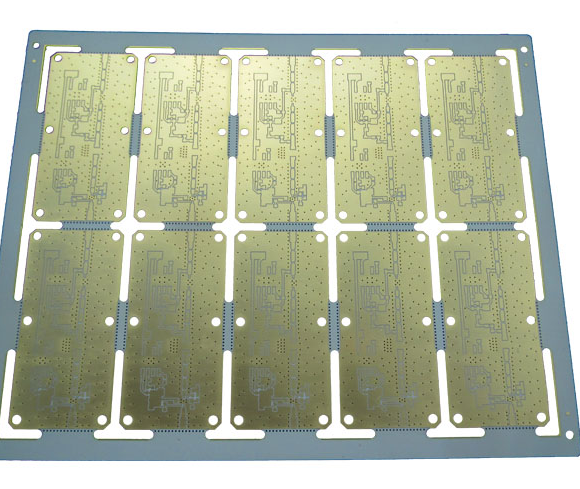
Rogers materials have become a cornerstone in the design and manufacturing of Radio Frequency (RF) Printed Circuit Boards (PCBs), offering a multitude of benefits that make them highly desirable for various high-frequency applications. One of the primary advantages of using Rogers materials in RF PCBs is their exceptional dielectric properties. These materials exhibit low dielectric constant (Dk) and low dielectric loss (Df), which are crucial for maintaining signal integrity and minimizing signal loss at high frequencies. This ensures that the performance of RF circuits remains consistent and reliable, even in demanding environments.
In addition to their superior dielectric properties, Rogers materials also offer excellent thermal management capabilities.
Effective thermal management is essential in RF applications, where components can generate significant amounts of heat. Rogers materials have high thermal conductivity, which helps in dissipating heat efficiently, thereby preventing overheating and ensuring the longevity and reliability of the RF PCB. This is particularly important in applications such as telecommunications, aerospace, and defense, where equipment is often subjected to extreme conditions.
Moreover, Rogers materials are known for their dimensional stability, which is a critical factor in the manufacturing process of RF PCBs.
Dimensional stability refers to the material’s ability to maintain its size and shape under varying environmental conditions, such as changes in temperature and humidity. This stability ensures that the PCB maintains its structural integrity and that the components remain accurately aligned, which is vital for the proper functioning of high-frequency circuits. The consistent performance of Rogers materials under different conditions makes them an ideal choice for applications that require high precision and reliability.
Another significant benefit of using Rogers materials in RF PCBs is their ease of fabrication.
These materials are compatible with standard PCB manufacturing processes, which means that they can be easily integrated into existing production lines without the need for specialized equipment or techniques. This compatibility not only reduces manufacturing costs but also shortens production times, allowing for faster time-to-market for new products. Additionally, Rogers materials are available in a wide range of thicknesses and configurations, providing designers with the flexibility to create custom solutions tailored to specific application requirements.
Furthermore, Rogers materials exhibit excellent chemical resistance, which enhances the durability and longevity of RF PCBs.
In many applications, PCBs are exposed to harsh chemicals and environmental conditions that can degrade the materials and affect their performance. The chemical resistance of Rogers materials ensures that the PCBs remain functional and reliable over extended periods, even in challenging environments. This makes them suitable for use in industrial, automotive, and medical applications, where reliability and durability are paramount.
Lastly, the use of Rogers materials in RF PCBs contributes to improved signal performance and reduced electromagnetic interference (EMI).
The low dielectric loss and high thermal conductivity of these materials help in maintaining signal integrity, while their stable dielectric properties minimize signal distortion and crosstalk. This results in clearer, more accurate signal transmission, which is essential for high-frequency applications such as wireless communication, radar systems, and satellite technology.
In conclusion, the benefits of using Rogers materials in RF PCBs are manifold, ranging from superior dielectric properties and thermal management to dimensional stability, ease of fabrication, chemical resistance, and enhanced signal performance. These advantages make Rogers materials an indispensable choice for high-frequency applications, ensuring reliable, efficient, and long-lasting performance in a wide array of industries.
Common Challenges In Rogers RF PCB Manufacturing
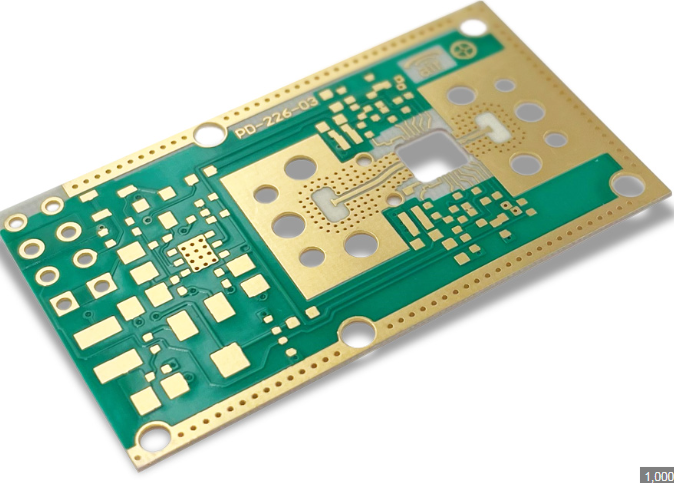
Rogers RF PCB manufacturing is a specialized field that demands precision and expertise due to the unique properties and applications of these high-frequency circuit boards. One of the primary challenges in this domain is the material selection. Rogers materials, known for their superior dielectric properties and low signal loss, are not as straightforward to handle as traditional FR-4 substrates. The choice of the specific Rogers laminate, such as RO4350B or RO3003, depends on the application’s frequency requirements and environmental conditions. This necessitates a thorough understanding of the material properties and their impact on the overall performance of the RF PCB.
Another significant challenge is the precise control of the dielectric constant (Dk) and dissipation factor (Df).
These parameters are critical in RF applications as they directly influence signal integrity and transmission efficiency. Variations in Dk and Df can lead to impedance mismatches, signal loss, and increased noise, which are detrimental to high-frequency circuits. Therefore, manufacturers must employ meticulous process controls and advanced testing methodologies to ensure consistency and reliability in these parameters.
Thermal management is also a crucial aspect of Rogers RF PCB manufacturing.
High-frequency circuits often generate substantial heat, which can affect the performance and longevity of the PCB. Rogers materials typically have better thermal conductivity compared to standard FR-4, but effective heat dissipation still requires careful design considerations. This includes the use of thermal vias, heat sinks, and appropriate layer stack-ups to manage and dissipate heat efficiently. Failure to address thermal issues can result in component failure and reduced operational lifespan of the PCB.
Moreover, the manufacturing process itself poses several challenges.
Rogers materials are more sensitive to mechanical stress and require specialized handling during drilling, cutting, and lamination. The precision required in these processes is higher than that for conventional PCBs, as any deviation can affect the electrical performance. For instance, the drilling process must be carefully controlled to avoid creating burrs or debris that can interfere with signal paths. Similarly, the lamination process must ensure uniform pressure and temperature distribution to avoid delamination or voids.
Additionally, the etching process for Rogers RF PCBs demands higher accuracy.
The fine line widths and tight tolerances required for high-frequency circuits necessitate advanced etching techniques and equipment. Any over-etching or under-etching can lead to signal integrity issues and impedance mismatches. Therefore, manufacturers must invest in state-of-the-art equipment and continuously monitor and adjust the etching process to maintain the required precision.
Furthermore, the assembly of Rogers RF PCBs presents its own set of challenges.
The soldering process must be carefully controlled to prevent thermal damage to the sensitive materials. The choice of solder paste and reflow profiles must be optimized to ensure reliable solder joints without compromising the integrity of the Rogers substrate. Additionally, the placement of components must be precise to avoid any misalignment that could affect the electrical performance.
In conclusion, Rogers RF PCB manufacturing is a complex and demanding process that requires a deep understanding of material properties, precise process controls, and advanced manufacturing techniques. The challenges associated with material selection, dielectric constant control, thermal management, mechanical handling, etching accuracy, and assembly precision must be meticulously addressed to ensure the production of high-performance RF PCBs. As the demand for high-frequency applications continues to grow, manufacturers must continually refine their processes and invest in advanced technologies to meet the stringent requirements of Rogers RF PCB manufacturing.
Applications Of Rogers RF PCB In Modern Electronics
Rogers RF PCBs, or Radio Frequency Printed Circuit Boards, have become indispensable in the realm of modern electronics due to their superior performance characteristics. These specialized PCBs are crafted from Rogers materials, which are renowned for their low dielectric loss, high thermal conductivity, and excellent dimensional stability. Consequently, they are highly sought after in applications where signal integrity and thermal management are paramount.
One of the primary applications of Rogers RF PCBs is in the telecommunications industry.
As the demand for faster and more reliable communication networks continues to surge, the need for high-frequency circuits that can handle large amounts of data with minimal signal loss becomes critical. Rogers RF PCBs are ideal for this purpose, as they offer low signal attenuation and high-frequency stability. This makes them a preferred choice for components such as antennas, power amplifiers, and filters in cellular base stations, satellite communication systems, and radar equipment.
In addition to telecommunications, Rogers RF PCBs are extensively used in the aerospace and defense sectors.
These industries require electronic systems that can operate reliably under extreme conditions, including high temperatures, high altitudes, and intense vibrations. The exceptional thermal management properties of Rogers materials ensure that the PCBs can dissipate heat efficiently, thereby maintaining optimal performance even in harsh environments. Furthermore, the high dimensional stability of Rogers RF PCBs ensures that they remain reliable and accurate over time, which is crucial for mission-critical applications such as avionics, missile guidance systems, and electronic warfare equipment.
The automotive industry is another domain where Rogers RF PCBs have found significant applications.
With the advent of advanced driver-assistance systems (ADAS) and the push towards autonomous vehicles, the need for high-frequency and high-reliability electronic components has never been greater. Rogers RF PCBs are used in various automotive radar systems, which are essential for functions such as collision avoidance, lane departure warnings, and adaptive cruise control. The low dielectric loss and high thermal conductivity of Rogers materials ensure that these radar systems can operate with high precision and reliability, thereby enhancing vehicle safety and performance.
Moreover, the medical field has also benefited from the advancements in Rogers RF PCB technology.
Medical devices such as MRI machines, CT scanners, and wireless patient monitoring systems require high-frequency circuits that can deliver accurate and reliable performance. Rogers RF PCBs are well-suited for these applications due to their excellent signal integrity and thermal management capabilities. This ensures that medical devices can provide precise diagnostic information and maintain consistent performance over extended periods.
Furthermore, the growing trend of Internet of Things (IoT) devices has also spurred the demand for Rogers RF PCBs.
IoT devices often operate at high frequencies and require efficient power management to ensure long battery life and reliable connectivity. Rogers RF PCBs provide the necessary performance characteristics to meet these requirements, making them an ideal choice for IoT applications such as smart home devices, wearable technology, and industrial automation systems.
In conclusion, the applications of Rogers RF PCBs in modern electronics are vast and varied. Their superior performance characteristics make them indispensable in industries such as telecommunications, aerospace and defense, automotive, medical, and IoT. As technology continues to advance and the demand for high-frequency, high-reliability electronic components grows, the importance of Rogers RF PCBs in modern electronics is only set to increase.