
Pcb manufacturing facility
Optimizing Workflow in a PCB Manufacturing Facility
Optimizing workflow in a PCB manufacturing facility is a multifaceted endeavor that requires a strategic approach to ensure efficiency, quality, and cost-effectiveness. The first step in this process involves a thorough analysis of the current workflow to identify bottlenecks and inefficiencies. By mapping out each stage of production, from design and prototyping to assembly and testing, facility managers can gain a comprehensive understanding of where improvements are needed.
One critical aspect of optimizing workflow is the implementation of advanced manufacturing technologies.
Automation plays a pivotal role in this regard, as it can significantly reduce manual labor and minimize human error. For instance, automated optical inspection (AOI) systems can quickly and accurately detect defects in PCBs, thereby enhancing quality control. Additionally, surface-mount technology (SMT) machines can place components on PCBs with high precision and speed, further streamlining the assembly process.
Transitioning to a more digitalized operation also offers substantial benefits.
Utilizing manufacturing execution systems (MES) can provide real-time data on production status, equipment performance, and inventory levels. This information enables facility managers to make informed decisions and swiftly address any issues that arise. Moreover, integrating MES with enterprise resource planning (ERP) systems can enhance coordination between different departments, ensuring that materials and resources are optimally allocated.
Another crucial factor in optimizing workflow is the layout of the manufacturing facility.
A well-designed layout minimizes the distance that materials and components need to travel, thereby reducing transit time and the risk of damage. Lean manufacturing principles, such as the 5S methodology—Sort, Set in order, Shine, Standardize, and Sustain—can be applied to organize the workspace efficiently. This approach not only improves productivity but also fosters a safer working environment.
Employee training and engagement are equally important in achieving an optimized workflow.
Skilled and knowledgeable workers are better equipped to operate advanced machinery and adhere to quality standards. Regular training sessions and workshops can keep employees updated on the latest industry practices and technological advancements. Furthermore, fostering a culture of continuous improvement encourages employees to contribute ideas for enhancing workflow and addressing challenges.
Supply chain management also plays a vital role in the optimization process.
Establishing strong relationships with reliable suppliers ensures a steady flow of high-quality materials, which is essential for maintaining production schedules. Just-in-time (JIT) inventory systems can be employed to reduce inventory costs and minimize waste. However, it is crucial to strike a balance between having sufficient inventory to meet production demands and avoiding excess stock that ties up capital.
Quality control is another area that cannot be overlooked.
Implementing rigorous testing procedures at various stages of production helps to identify and rectify defects early on, thereby reducing the likelihood of costly rework or recalls. Statistical process control (SPC) techniques can be used to monitor and control production processes, ensuring that they remain within specified limits and consistently produce high-quality PCBs.
In conclusion, optimizing workflow in a PCB manufacturing facility involves a combination of technological advancements, strategic planning, and employee engagement. By adopting automation, digitalization, efficient layout designs, continuous training, effective supply chain management, and stringent quality control measures, facilities can achieve significant improvements in productivity, quality, and cost-efficiency. These efforts not only enhance the overall performance of the manufacturing process but also position the facility to better meet the evolving demands of the electronics industry.
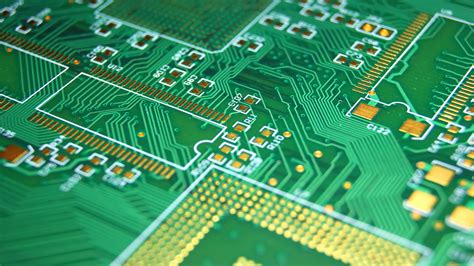
Latest Technological Advancements in PCB Manufacturing
The field of printed circuit board (PCB) manufacturing has witnessed significant technological advancements in recent years, driven by the increasing demand for more efficient, compact, and reliable electronic devices.
One of the most notable developments is the adoption of advanced materials, which has revolutionized the way PCBs are designed and produced.
High-frequency laminates, for instance, have become essential in the production of PCBs for high-speed communication devices, offering superior signal integrity and reduced signal loss. This shift towards advanced materials is complemented by the integration of sophisticated design software, which allows for more precise and complex PCB layouts, ultimately enhancing the performance and functionality of electronic devices.
In addition to material advancements, the manufacturing process itself has undergone substantial improvements.
Automation and robotics have become integral components of modern PCB manufacturing facilities, significantly increasing production efficiency and consistency. Automated optical inspection (AOI) systems, for example, are now widely used to detect defects in PCBs with remarkable accuracy, ensuring that only high-quality products reach the market. Furthermore, the implementation of surface mount technology (SMT) has streamlined the assembly process, allowing for the placement of smaller and more densely packed components on PCBs. This not only reduces the overall size of electronic devices but also enhances their performance by minimizing the distance that electrical signals need to travel.
Another key technological advancement in PCB manufacturing is the development of multi-layer PCBs, which have become increasingly prevalent in modern electronic devices.
These PCBs consist of multiple layers of conductive material separated by insulating layers, enabling more complex circuitry and greater functionality within a smaller footprint. The production of multi-layer PCBs requires advanced fabrication techniques, such as laser drilling and sequential lamination, which have been refined over the years to achieve higher precision and reliability. As a result, multi-layer PCBs are now commonly used in a wide range of applications, from consumer electronics to aerospace and medical devices.
Moreover, the rise of flexible and rigid-flex PCBs has opened up new possibilities for electronic device design.
Flexible PCBs, made from materials such as polyimide, can be bent and folded to fit into unconventional shapes and spaces, making them ideal for wearable technology and other compact devices. Rigid-flex PCBs, which combine the benefits of both rigid and flexible PCBs, offer enhanced durability and reliability, particularly in applications that require frequent bending or movement. The manufacturing of these advanced PCBs involves specialized processes, such as roll-to-roll processing and precision laser cutting, which have been optimized to ensure high-quality and consistent results.
In parallel with these advancements, the industry has also seen a growing emphasis on sustainability and environmental responsibility.
PCB manufacturers are increasingly adopting eco-friendly practices, such as using lead-free solder and implementing recycling programs for waste materials. Additionally, advancements in chemical etching and plating processes have reduced the environmental impact of PCB production, making it more sustainable in the long term.
In conclusion, the latest technological advancements in PCB manufacturing have significantly enhanced the efficiency, reliability, and functionality of electronic devices. From the adoption of advanced materials and automation to the development of multi-layer and flexible PCBs, these innovations have transformed the industry and opened up new possibilities for electronic design. As the demand for more sophisticated and compact devices continues to grow, it is likely that PCB manufacturing will continue to evolve, driven by ongoing research and development efforts aimed at pushing the boundaries of what is possible.
Quality Control Measures in PCB Production
In the realm of printed circuit board (PCB) manufacturing, quality control measures are paramount to ensure the reliability and functionality of the final product. The intricate nature of PCBs, which serve as the backbone of electronic devices, necessitates rigorous quality control protocols at every stage of production. This article delves into the various quality control measures implemented in a PCB manufacturing facility, highlighting their importance and the methodologies employed to maintain high standards.
To begin with, the initial phase of PCB production involves the careful selection of raw materials.
Ensuring the quality of these materials is the first step in preventing defects in the final product. Manufacturers typically source materials from reputable suppliers and conduct thorough inspections upon receipt. These inspections often include verifying the specifications of copper-clad laminates, solder masks, and other essential components. By establishing stringent criteria for material acceptance, manufacturers can mitigate the risk of defects arising from substandard inputs.
As the production process progresses, photolithography plays a crucial role in defining the circuit patterns on the PCB.
During this stage, precision is of utmost importance. Any deviation can lead to circuit failures or short circuits. To address this, manufacturers employ advanced imaging systems and automated optical inspection (AOI) equipment. These tools are capable of detecting minute discrepancies in the circuit patterns, ensuring that only flawless boards proceed to the next stage. The use of AOI not only enhances accuracy but also significantly reduces the time required for manual inspections.
Following photolithography, the etching process removes unwanted copper to reveal the desired circuit paths.
Quality control during etching involves monitoring the chemical composition and temperature of the etching solution. Consistent parameters are crucial to achieving uniform etching across all boards. Additionally, periodic sampling and testing of etched boards help identify any deviations early on, allowing for prompt corrective actions.
Subsequently, the drilling process creates vias and holes necessary for component placement and interlayer connections.
Precision drilling is essential to maintain the integrity of the PCB. Manufacturers utilize computer numerical control (CNC) machines to achieve high precision and repeatability. Quality control measures at this stage include verifying drill bit sharpness, alignment, and depth accuracy. Regular maintenance and calibration of CNC machines further ensure consistent performance.
The application of solder masks and silkscreens follows drilling.
Solder masks protect the copper traces from oxidation and prevent solder bridges during component assembly. Silkscreens provide essential information such as component labels and orientation marks. Quality control in this phase involves inspecting the uniformity and adhesion of the solder mask and the clarity of the silkscreen print. Automated inspection systems and visual checks are commonly employed to detect any anomalies.
Finally, the assembled PCBs undergo electrical testing to verify their functionality.
This step is critical as it ensures that the boards meet the required electrical specifications. Manufacturers use various testing methods, including in-circuit testing (ICT) and functional testing. ICT checks for shorts, opens, and component values, while functional testing simulates the board’s operation in its intended application. Any boards that fail these tests are subjected to failure analysis to identify and rectify the root cause.
In conclusion, quality control measures in PCB production are integral to delivering reliable and high-performance products. From material selection to final testing, each stage of the manufacturing process incorporates stringent protocols to detect and address potential issues. By leveraging advanced technologies and maintaining rigorous standards, PCB manufacturers can ensure the production of defect-free boards that meet the demands of modern electronic applications.
Sustainability Practices in PCB Manufacturing Facilities
Sustainability practices in PCB manufacturing facilities have become increasingly important as the industry seeks to balance technological advancement with environmental responsibility. The production of printed circuit boards (PCBs) involves various processes that can have significant environmental impacts, including the use of hazardous chemicals, substantial water consumption, and the generation of electronic waste. Consequently, manufacturers are adopting a range of sustainability practices to mitigate these effects and promote a more eco-friendly approach to PCB production.
One of the primary areas of focus in sustainable PCB manufacturing is the reduction of hazardous substances.
Traditional PCB production often involves the use of chemicals such as lead, mercury, and cadmium, which pose significant risks to both human health and the environment. To address this, many facilities are transitioning to lead-free soldering processes and using alternative materials that are less harmful. This shift not only complies with regulations such as the Restriction of Hazardous Substances (RoHS) directive but also aligns with broader environmental goals.
In addition to reducing hazardous substances, PCB manufacturers are also implementing measures to minimize water usage.
The production process typically requires large volumes of water for cleaning and rinsing PCBs, which can lead to substantial water waste. To combat this, facilities are investing in advanced water recycling and treatment systems. These systems allow for the reuse of water within the manufacturing process, significantly reducing overall consumption and minimizing the discharge of contaminated water into the environment.
Energy efficiency is another critical component of sustainability in PCB manufacturing.
The industry is known for its high energy demands, particularly during processes such as etching and lamination. To address this, manufacturers are increasingly adopting energy-efficient technologies and practices. For instance, the use of energy-efficient lighting, heating, and cooling systems can substantially reduce a facility’s energy consumption. Additionally, some manufacturers are exploring renewable energy sources, such as solar or wind power, to further decrease their carbon footprint.
Waste management is also a significant concern in PCB manufacturing.
The production process generates various types of waste, including scrap materials, chemical by-products, and defective PCBs. To enhance sustainability, facilities are implementing comprehensive waste management strategies. These strategies often involve the recycling of scrap materials and the safe disposal of hazardous waste. Moreover, some manufacturers are adopting a circular economy approach, where defective or end-of-life PCBs are refurbished and reused, thereby reducing the overall volume of electronic waste.
Furthermore, sustainable practices in PCB manufacturing extend to the design phase.
By incorporating eco-design principles, manufacturers can create PCBs that are easier to recycle and have a lower environmental impact throughout their lifecycle. This includes designing for disassembly, using recyclable materials, and minimizing the use of non-renewable resources. Such practices not only contribute to sustainability but also enhance the overall efficiency and cost-effectiveness of the manufacturing process.
In conclusion, sustainability practices in PCB manufacturing facilities are essential for reducing the environmental impact of the industry.
By focusing on reducing hazardous substances, minimizing water and energy consumption, implementing effective waste management strategies, and incorporating eco-design principles, manufacturers can significantly enhance their sustainability efforts. These practices not only help protect the environment but also ensure compliance with regulatory standards and meet the growing demand for eco-friendly products. As the industry continues to evolve, the adoption of sustainable practices will play a crucial role in shaping the future of PCB manufacturing.