
High voltage pcb design guidelines
Importance Of Clearance And Creepage In High Voltage PCB Design guidelines
In the realm of high voltage PCB design, the importance of clearance and creepage cannot be overstated. These two parameters are critical in ensuring the safety, reliability, and performance of the printed circuit board, particularly when dealing with high voltage applications. Clearance refers to the shortest distance through the air between two conductive parts, while creepage is the shortest path along the surface of an insulating material between two conductive parts. Both are essential in preventing electrical arcing and ensuring the longevity of the PCB.
To begin with, clearance is a fundamental aspect of high voltage PCB design.
It is crucial to maintain adequate clearance to prevent electrical arcing, which can lead to catastrophic failures, including short circuits, component damage, and even fire hazards. The required clearance distance depends on several factors, including the operating voltage, environmental conditions, and the type of insulation material used. For instance, higher operating voltages necessitate larger clearance distances to ensure that the electric field does not exceed the breakdown strength of the air. Additionally, environmental factors such as humidity, altitude, and contamination can influence the required clearance distance, as they can affect the dielectric properties of the air.
Transitioning to creepage, this parameter is equally important in high voltage PCB design.
Creepage distance is influenced by the same factors as clearance, but it also takes into account the properties of the insulating material on the PCB surface. The choice of material, its surface finish, and the presence of contaminants can all impact the required creepage distance. For example, materials with higher comparative tracking index (CTI) values can withstand higher voltages before tracking occurs, allowing for shorter creepage distances. However, in environments with high levels of contamination or moisture, longer creepage distances may be necessary to prevent surface tracking and ensure reliable operation.
Moreover, regulatory standards and guidelines play a significant role in determining the appropriate clearance and creepage distances for high voltage PCB designs.
Organizations such as the International Electrotechnical Commission (IEC) and Underwriters Laboratories (UL) provide comprehensive standards that outline the minimum requirements for clearance and creepage distances based on the operating voltage and environmental conditions. Adhering to these standards is not only essential for ensuring the safety and reliability of the PCB but also for achieving regulatory compliance and market acceptance.
In addition to adhering to regulatory standards, designers must also consider the practical aspects of implementing adequate clearance and creepage distances in their PCB layouts. This involves careful planning and optimization of the board layout to ensure that sufficient space is allocated for these critical parameters. Techniques such as increasing the spacing between high voltage traces, using conformal coatings, and incorporating barriers or slots can help achieve the required clearance and creepage distances without compromising the overall design.
Furthermore, advanced simulation tools and software can aid designers in accurately predicting and optimizing clearance and creepage distances. These tools can model the electric field distribution and identify potential areas of concern, allowing designers to make informed decisions and implement necessary design modifications early in the development process.
In conclusion, the importance of clearance and creepage in high voltage PCB design cannot be emphasized enough. Ensuring adequate distances between conductive parts is paramount in preventing electrical arcing, maintaining the reliability of the PCB, and achieving regulatory compliance. By understanding the factors that influence clearance and creepage, adhering to established standards, and utilizing advanced design tools, designers can create high voltage PCBs that are both safe and reliable.

Material Selection For High Voltage PCB Applications
When designing high voltage printed circuit boards (PCBs), the selection of appropriate materials is paramount to ensure both performance and safety. The materials chosen must withstand high voltages, prevent electrical arcing, and maintain structural integrity under various environmental conditions. To achieve these objectives, several key factors must be considered, including dielectric properties, thermal performance, mechanical strength, and environmental resistance.
First and foremost, the dielectric properties of the material are crucial.
Dielectric strength, which measures a material’s ability to resist electrical breakdown, is a primary consideration. Materials with high dielectric strength, such as FR-4, polyimide, and PTFE (Teflon), are often preferred for high voltage applications. These materials can withstand high electric fields without breaking down, thereby preventing short circuits and ensuring reliable operation. Additionally, the dielectric constant, which affects signal integrity and impedance, must be carefully selected to match the specific requirements of the high voltage application.
Thermal performance is another critical aspect of material selection.
High voltage PCBs often operate in environments where temperature fluctuations are common. Therefore, materials with high thermal conductivity and low thermal expansion coefficients are desirable. High thermal conductivity ensures efficient heat dissipation, preventing hotspots that could lead to material degradation or failure. Low thermal expansion coefficients minimize the risk of mechanical stress and warping, which can occur due to temperature changes. Materials such as ceramic-filled PTFE and certain high-performance laminates offer excellent thermal properties suitable for high voltage applications.
Mechanical strength is equally important in high voltage PCB design.
The materials must be robust enough to withstand physical stresses during manufacturing, assembly, and operation. High tensile strength and flexural strength are essential to prevent cracking, delamination, and other mechanical failures. Materials like FR-4, which is reinforced with woven glass fabric, provide the necessary mechanical strength while maintaining good electrical properties. Additionally, the material’s ability to resist moisture absorption is vital, as moisture can significantly reduce dielectric strength and lead to electrical failures.
Environmental resistance is another factor that cannot be overlooked.
High voltage PCBs are often exposed to harsh conditions, including humidity, chemicals, and UV radiation. Therefore, materials with excellent chemical resistance and low moisture absorption are preferred. For instance, polyimide and PTFE materials exhibit superior resistance to chemicals and moisture, making them suitable for demanding environments. Furthermore, UV-resistant materials are essential for applications exposed to sunlight or other sources of UV radiation, as prolonged exposure can degrade the material and compromise its performance.
In addition to these primary considerations, other factors such as cost, availability, and ease of manufacturing also play a role in material selection.
While high-performance materials may offer superior properties, they can be more expensive and challenging to source. Therefore, a balance must be struck between performance requirements and practical constraints. Collaborating with material suppliers and PCB manufacturers can provide valuable insights into the best material choices for specific high voltage applications.
In conclusion, selecting the right materials for high voltage PCB applications involves a comprehensive evaluation of dielectric properties, thermal performance, mechanical strength, and environmental resistance. By carefully considering these factors, designers can ensure the reliability, safety, and longevity of high voltage PCBs. The choice of materials not only impacts the immediate performance of the PCB but also its ability to withstand the rigors of its operating environment over time. Therefore, a meticulous approach to material selection is essential for the successful design and implementation of high voltage PCBs.
Techniques For Effective High Voltage PCB Layout
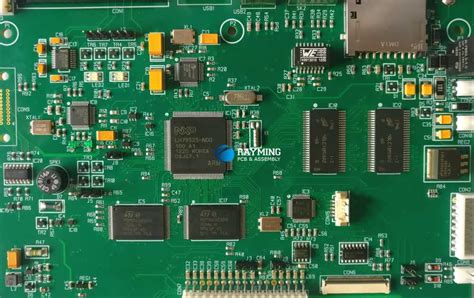
Designing a high voltage printed circuit board (PCB) requires meticulous attention to detail and adherence to specific guidelines to ensure safety, reliability, and performance. One of the primary considerations in high voltage PCB design is the spacing between conductive elements. Adequate clearance and creepage distances are essential to prevent electrical arcing and ensure insulation integrity. Clearance refers to the shortest distance through the air between two conductive parts, while creepage is the shortest path along the surface of an insulating material. Both distances must be calculated based on the operating voltage, environmental conditions, and applicable safety standards.
In addition to spacing, the choice of materials plays a crucial role in high voltage PCB design.
The dielectric properties of the substrate material must be carefully selected to withstand high voltages without breaking down. FR4, a commonly used PCB material, may not always be suitable for high voltage applications. Instead, materials with higher dielectric strength, such as polyimide or ceramic-filled laminates, may be required. These materials offer better insulation and thermal stability, which are critical for maintaining performance under high voltage stress.
Another important technique involves the use of conformal coatings and potting compounds.
These protective layers can significantly enhance the dielectric strength of the PCB by providing an additional barrier against moisture, dust, and other contaminants. Conformal coatings are typically applied as a thin film over the entire board, while potting compounds are used to encapsulate specific components or areas. Both methods help to prevent surface tracking and improve the overall reliability of the high voltage PCB.
Thermal management is also a key consideration in high voltage PCB design.
High voltage components often generate significant amounts of heat, which can affect the performance and longevity of the board. Effective thermal management techniques, such as the use of thermal vias, heat sinks, and proper component placement, are essential to dissipate heat efficiently. Thermal vias are small holes filled with conductive material that help transfer heat from the top layer of the PCB to the bottom layer or to an internal heat plane. Heat sinks, on the other hand, are external devices attached to components to increase the surface area for heat dissipation.
Furthermore, the layout of the PCB traces must be carefully planned to minimize electromagnetic interference (EMI) and ensure signal integrity.
High voltage traces should be routed with smooth, gradual bends rather than sharp angles to reduce the risk of arcing and improve current flow. Additionally, keeping high voltage and low voltage traces separate can help prevent cross-talk and interference. Shielding techniques, such as the use of ground planes and guard traces, can also be employed to further reduce EMI and enhance the overall performance of the PCB.
Grounding is another critical aspect of high voltage PCB design.
A solid and well-planned grounding strategy is essential to ensure safety and proper operation. Multiple ground points should be avoided to prevent ground loops, which can cause noise and interference. Instead, a single-point ground or a star grounding configuration is recommended. This approach helps to maintain a consistent reference potential across the entire board and reduces the risk of voltage fluctuations.
In conclusion, designing an effective high voltage PCB requires a comprehensive understanding of various techniques and considerations. By carefully managing spacing, material selection, protective coatings, thermal management, trace layout, and grounding, designers can create PCBs that are safe, reliable, and capable of withstanding the demands of high voltage applications. Adhering to these guidelines not only ensures compliance with safety standards but also enhances the overall performance and longevity of the PCB.
Safety Considerations In High Voltage PCB Design
When designing high voltage printed circuit boards (PCBs), safety considerations are paramount to ensure both the functionality and reliability of the system, as well as the protection of users and equipment. High voltage PCBs are used in various applications, including power supplies, industrial equipment, and medical devices, where the potential for electrical hazards is significant. Therefore, adhering to stringent safety guidelines is essential.
One of the primary safety considerations in high voltage PCB design is the selection of appropriate materials.
The dielectric properties of the substrate material must be carefully chosen to withstand high voltages without breaking down. Materials such as FR4, while commonly used in standard PCBs, may not always be suitable for high voltage applications. Instead, materials with higher dielectric strength, such as polyimide or ceramic-based substrates, are often preferred. These materials provide better insulation and reduce the risk of electrical arcing.
In addition to material selection, the layout of the PCB plays a crucial role in ensuring safety.
Adequate spacing between conductive elements is necessary to prevent electrical arcing and short circuits. The minimum clearance distances are typically determined by industry standards such as IPC-2221, which provides guidelines based on the operating voltage. For instance, higher voltages require greater spacing to ensure that the electric field does not exceed the breakdown strength of the air or the PCB material. Furthermore, the use of conformal coatings can enhance insulation and protect against environmental factors such as moisture and dust, which can compromise the integrity of the PCB.
Another critical aspect of high voltage PCB design is the implementation of proper grounding techniques.
A well-designed grounding system helps to manage the return paths of high voltage currents and minimizes the risk of ground loops, which can lead to unintended current paths and potential hazards. Utilizing a single-point ground or a star grounding configuration can effectively reduce noise and improve the overall safety of the PCB. Additionally, incorporating ground planes and shielding can further enhance the protection against electromagnetic interference (EMI) and ensure stable operation.
Thermal management is also a significant consideration in high voltage PCB design.
High voltage components often generate substantial amounts of heat, which can affect the performance and longevity of the PCB. Effective thermal management strategies, such as the use of heat sinks, thermal vias, and proper component placement, are essential to dissipate heat efficiently. Ensuring that components are not subjected to excessive temperatures will help maintain their reliability and prevent potential failures that could lead to safety hazards.
Moreover, the choice of components themselves is critical in high voltage applications.
Components must be rated for the specific voltage levels they will encounter in the circuit. Using components with appropriate voltage ratings and derating them to provide a safety margin can prevent over-stressing and potential breakdowns. Additionally, incorporating protective devices such as fuses, varistors, and transient voltage suppression (TVS) diodes can safeguard the PCB against voltage spikes and surges.
Finally, thorough testing and validation are indispensable in high voltage PCB design.
Rigorous testing under various operating conditions ensures that the PCB can handle the intended voltage levels without failure. High voltage testing, insulation resistance testing, and hipot (high potential) testing are some of the methods used to verify the integrity and safety of the PCB. By identifying and addressing potential issues during the testing phase, designers can mitigate risks and ensure the safe operation of the final product.
In conclusion, safety considerations in high voltage PCB design encompass a range of factors, including material selection, layout design, grounding techniques, thermal management, component choice, and thorough testing. By adhering to these guidelines, designers can create high voltage PCBs that are not only functional and reliable but also safe for users and equipment.