
First acquaintance with optical modules: classification of optical modules
Speaking of optical modules, many people who have used optical modules must be very clear that there are many types of optical modules, but there are still many people who have only seen or know that there are optical modules. But how to classify optical modules, I believe that many people are just like us when we first came into contact with optical modules. We only know that they are all optical modules, but we are a little confused about what the specific differences are. Without further ado, let us introduce our protagonist today.
The optical module (optical module) is composed of optoelectronic devices, functional circuits and optical interfaces.
The optoelectronic devices include two parts: transmitting and receiving. Simply put, the function of the optical module is to convert the electrical signal into an optical signal at the transmitting end. After being transmitted through the optical fiber, the receiving end converts the optical signal into an electrical signal. Common transmission methods are shown in the figure below.
From the perspective of structural composition, most basic optical modules adopt the form of integrated transceiver, which is mainly composed of optical transmitting component TOSA (Transmitting Optical Sub-Assembly), optical receiving component ROSA (Receiving Optical Sub-Assembly), transmitting driving circuit (laser chip), receiving signal processing circuit (detector chip).
In addition, there is a BOSA (Bi-Directional Optical Sub-Assembly) component that combines the transmitting component and the receiving component into one, forming a single-fiber bidirectional optical module. BOSA can be regarded as an integration of TOSA and ROSA, and has the functions of optical transmission and reception. The internal structure of a simple optical module is roughly shown in the figure below.
At the transmitting end, the driver chip processes the original electrical signal and then drives the semiconductor laser (LD) or light-emitting diode (LED) to emit a modulated optical signal.
At the receiving end, after the optical signal comes in, it is converted into an electrical signal by the optical detector chip, and the electrical signal is output after passing through the preamplifier.
Why is it difficult to understand optical modules? The main reason is that there are too many types of them, and they can be classified from different perspectives. In layman’s terms, the same thing has many different names. What’s more, sometimes the same name can have many different things, so people are often confused. Commonly used methods can be classified according to the maximum transmission rate of a single port (single port bandwidth), interface package type, wavelength, transmission mode, transmission distance and modulation format. Below we introduce several common classification methods.
According to the maximum transmission rate of a single port (the maximum transmission bandwidth of a single port is more appropriate):
1.Classification by the maximum transmission rate of a single port:
According to the maximum transmission bandwidth of a single port, that is, the total transmission rate of an optical port can be divided into: 3.2Tbps (3.2TE) optical module, 1.6Tbps (1.6TE) optical module, 800Gbps (800GE) optical module, 400Gbps (400GE) optical module, 200Gbps (200GE) optical module, 100Gbps (100GE) optical module, 40Gbps (40GE) optical module, 25Gbps (25GE) optical module, 10Gbps (10GE) optical module, 1.25Gbps (1GE) optical module, FE optical module, etc. The 1.6T optical module we are talking about actually refers to the maximum transmission rate of this optical module per port is 1.6Tbps.
2.Classification by single-pair maximum transmission rate (this classification is generally less used, and is mainly concerned by designers and simulators)
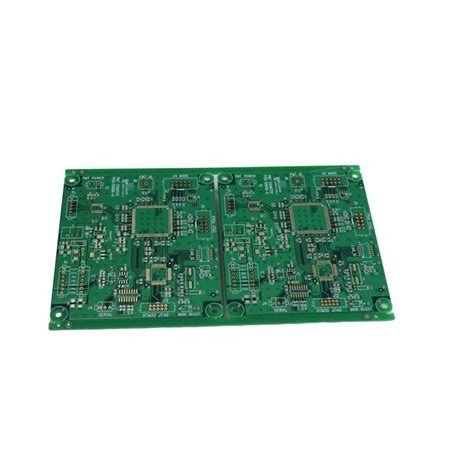
Classification is based on the maximum electrical signal rate of a single pair of error-free transmission that the optical device can carry, that is, the transmission rate of a single pair of differential signals that we care about during design and simulation. It can be divided into: 125Mbps, 1.25Gbps, 10.3125Gbps, 25/28Gbps, 50/56Gbps, 100/112Gbps and 200G/224Gbps optical modules. The single-pair differential rate multiplied by the number of sending or receiving pairs determines the maximum rate of the single port above, and also determines how much data this optical module can transmit per second. For example, the 1.6TE optical module above is generally obtained by multiplying the single-pair differential rate of 200G/224Gbps by 8 pairs. That is to say, the single-pair differential signal rate of the 1.6TE optical module we are making now is as high as 200/224Gbps. Such a high-speed transmission rate is transmitted on the PCB board, which puts a huge test on the PCB design and board making process. In this case, it is necessary to ensure the performance of the channel through precise simulation during the design process, and reliable processing is also required to ensure the landing of the final product. There should not be too much deviation in any link.
3.Classification by interface packaging type (the most common)
The higher the transmission rate, the more complex the structure, which results in different interface packaging types. Common optical module packaging types include: SFP (1GE) optical module, SFP+ (10GE) optical module, SFP28 (25GE) optical module, QSFP+ (40GE) optical module, CFP (40GE-100GE) optical module, CFP2 /CFP4 (100GE-400GE) optical module, QSFP28 (100GE) optical module, QSFP-DD (400GE-800GE) optical module, OSFP (800GE) optical module, OSFP-XD/OSFP224 (1.6TE) optical module, etc. There is also the early GBIC with a relatively low rate, which is the Giga Bit-rate Interface Converter (Gigabit Interface Converter) optical module. Before 2000, GBIC was the most popular optical module packaging and the most widely used Gigabit module form. Let’s take a look at the introduction of each specific optical module.
SFP, the full name of Small Form Pluggable, is a small hot-swappable optical module. Its small size is relative to GBIC packaging. The volume of SFP is half that of GBIC module, and more than double the number of ports can be configured on the same panel. In terms of function, the two are not much different, and both support hot plugging. The maximum bandwidth supported by SFP is 4Gbps.
XFP is the abbreviation of 10-Gigabit Small Form-factor Pluggable, also known as 10G SFP. XFP uses a full-speed single-channel serial module connected by an XFI (10Gb serial interface).
SFP+, like XFP, is a 10G optical module. The size of SFP+ is the same as SFP, which is more compact than XFP (reduced by about 30%) and has lower power consumption (reduced some signal control functions). In addition, in order to increase capacity and space, multiple SFP+ ports will be made into one device, giving rise to zSFP+ and so on.
QSFP, the abbreviation of Quad Small Form-factor Pluggable, is also a four-channel SFP interface. Many mature key technologies in XFP are applied to this design. According to the speed, QSFP can be divided into 4x10GQSFP+, 4x25GQSFP28, 8x25GQSFP28-DD optical modules, etc. Taking QSFP28 as an example, it is suitable for 4x25GE access ports. Using QSFP28, you can upgrade directly from 25G to 100G without going through 40G, which greatly simplifies the wiring difficulty and reduces costs. Like SFP+, for capacity and space considerations, multiple QSFP interfaces will be stacked up and down and left and right as a whole, thus deriving interfaces such as QSFP+, zQSFP+ and microQSFP, as shown in the figure below.
QSFP-DD, DD refers to “Double Density”. The 4 channels of QSFP are increased by one row of channels, becoming 8 channels. It is compatible with the CDFP solution, and the original QSFP28 module can still be used, just insert another module. The number of electrical port gold fingers of QSFP-DD is twice that of QSFP28. Each QSFP-DD uses 25Gbps NRZ or 50Gbps PAM4 signal format. With PAM4, it can support up to 400Gbps rate.
OSFP, short for Octal Small Form Factor Pluggable, “O” stands for “octal”, it is designed to use 8 electrical channels to achieve 400GbE (8*56GbE, but the 56GbE signal is formed by 25G DML laser under PAM4 modulation), slightly larger than QSFP-DD, with higher wattage optical engine and transceiver, and slightly better heat dissipation performance.
CFP, short for Centum gigabits Form Pluggable, is also called dense wavelength division optical communication module. The transmission rate can reach 100-400Gbps. CFP is designed based on the SFP interface, with a larger size and supports 100Gbps data transmission. CFP can support a single 100G signal and one or more 40G signals.
The difference between CFP, CFP2, CFP4, and CFP8 lies in the volume. The volume of CFP2 is half of that of CFP, and CFP4 is one quarter of that of CFP. CFP8 is a package specifically proposed for 400G, and its size is comparable to that of CFP2. It supports channel rates of 25Gbps and 50Gbps, and achieves a 400Gbps module rate through 16x25G or 8x50G electrical interfaces.
On the optical port side, 8-way 53Gbps PAM4 or 4-way 106Gbps PAM4 are mainly used to achieve 400G signal transmission, and 8-way 53Gbps PAM4 electrical signals are used on the electrical port side, using OSFP or QSFP-DD packaging.
In comparison, QSFP-DD has a smaller package size (similar to the QSFP28 package of traditional 100G optical modules) and is more suitable for data center applications.
The OSFP package size is slightly larger, and because it can provide more power consumption, it is more suitable for telecommunications applications.
Several other uncommon classification methods:
According to the transmission distance, there are 100m, 300m, 550m, 10km, 20km, 40km, 80km, 120km and 160km optical modules;
According to the transmission wavelength, there are 850nm, 1310nm, 1490nm, 1550nm optical modules;
According to the transmission mode, there are single-mode (yellow), multi-mode (orange-yellow, blue-green) optical modules;
This issue’s question: What else do you want to know about the deeper introduction of optical modules? We will give targeted answers based on your responses.