
Research on electromagnetic compatibility of switching power supply PCB board
With the improvement of power semiconductor device performance and the innovation of switching conversion technology, power electronics technology has been widely used in various power supply equipment. At present, switching power supply products are becoming more and more small, high-speed and high-density. This trend has led to increasingly serious electromagnetic compatibility issues.
The high-frequency switching process of voltage and current generates a large amount of EMI (electromagnetic interference). If this part of interference is not restricted, it will seriously affect the normal operation of surrounding electrical equipment. Therefore, the PCB design of the switching power supply is a crucial aspect in solving the electromagnetic compatibility problem of the switching power supply. The reason why PCB is regarded as an indispensable and important component in the design of switching power supply is that it bears the dual connection function of the electrical components and mechanical components of the switching power supply, and is the key to reducing the EMI design of electronic equipment.
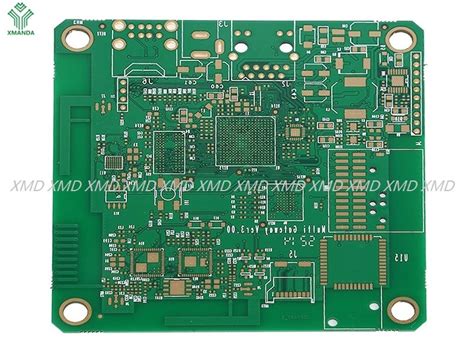
1 Electromagnetic interference problems in PCB design
1.1 Electromagnetic coupling interference
In circuit design, electromagnetic coupling interference mainly affects other circuits through conduction coupling and common-mode impedance coupling. From the perspective of EMC design, the switching power supply circuit is different from the ordinary digital circuit, and has relatively obvious interference sources and sensitive lines. Generally speaking, the interference sources of switching power supplies are mainly concentrated on components and wires with large voltage and current change rates, such as power field effect tubes, fast recovery diodes, high-frequency transformers and wires connected to them. Sensitive lines mainly refer to control circuits and lines directly connected to interference measurement equipment, because these interference couplings may directly affect the normal operation of the circuit and the interference level of external emission. Common-mode impedance coupling is when the current of two circuits passes through a common impedance, the voltage formed by the current of one circuit on the common impedance will affect the other circuit.
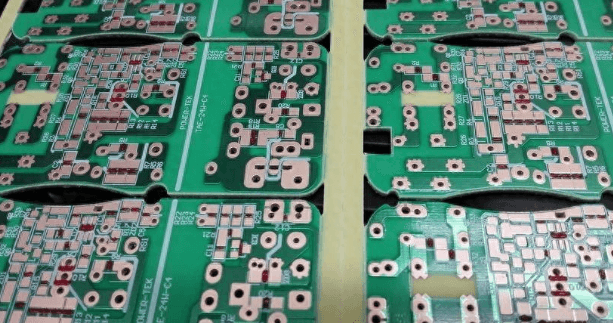
1.2 Crosstalk Interference
Crosstalk interference between strips, wires, and cables in printed circuit boards (PCBs) is one of the most difficult problems to overcome in printed circuit board circuits. The crosstalk mentioned here is crosstalk in a broader sense. Regardless of whether its source is a useful signal or noise, crosstalk is represented by the mutual capacitance and mutual inductance of the wires. For example, a stripline on a PCB carries control and logic levels, and a second stripline close to it carries low-level signals. When the parallel wiring length exceeds 10 cm, crosstalk interference is expected; when a long cable carries several sets of serial or parallel high-speed data and remote control lines, crosstalk interference also becomes a major problem. Crosstalk between nearby wires and cables is caused by electric fields through mutual capacitance and magnetic fields through mutual inductance.
When considering the crosstalk problem in PCB striplines, the most important issue is to determine which is more important, electric field (mutual capacitance) or magnetic field (mutual inductance) coupling. The determination of which coupling model depends mainly on line impedance, frequency and other factors. Generally speaking, capacitive coupling is dominant at high frequencies, but if one or both of the source or receiver uses shielded cables and grounds the shield at both ends, magnetic field coupling will be dominant. In addition, at low frequencies, there is generally lower circuit impedance and inductive coupling is dominant.
1.3 Electromagnetic radiation interference
Radiated interference is interference introduced due to the radiation of electromagnetic waves in space. PCB electromagnetic radiation is divided into two types: differential mode radiation and common mode radiation. In most cases, the conducted interference generated by the switching power supply is mainly common-mode interference, and the radiation effect of common-mode interference is much greater than differential-mode interference. Therefore, reducing common-mode interference is particularly important in the EMC design of the switching power supply.
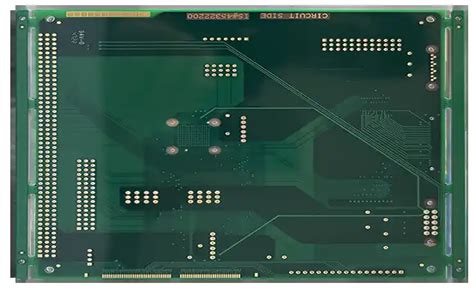
2 Interference suppression steps of PCB
2.1 PCB design information
When designing PCB, you need to understand the design information of the circuit board, which includes the following:
(1) Component quantity, component size, and component package;
(2) Overall layout requirements, component layout location, presence or absence of high-power components, and special requirements for chip component heat dissipation;
(3) The speed of digital chips, whether the PCB is divided into low-speed, medium-speed, and high-speed areas, and which are interface input and output areas;
(4) Type, rate, and transmission direction of signal lines, impedance control requirements of signal lines, bus rate direction and driving conditions, key signals, and protection measures;
(5) Type of power supply, type of ground, noise tolerance requirements for power supply and ground, and setting and division of power supply and ground planes;
(6) Type and rate of clock lines, source and destination of clock lines, clock delay requirements, and maximum routing requirements.
2.2 PCB layering
First, determine the number of wiring layers and power supply layers required to achieve the function within an acceptable cost range. The number of layers of a circuit board is determined by detailed functional requirements, anti-interference, separation of signal categories, device density, bus wiring and other factors. At present, circuit boards have gradually developed from single-layer, double-layer, and four-layer boards to more layers. Multilayer printed circuit board design is the main measure to meet electromagnetic compatibility standards. The requirements are:
(1) Allocating separate power layers and ground layers can effectively suppress inherent common-mode interference and reduce point source impedance;
(2) The power plane and ground plane are as close to each other as possible, and the ground plane is generally above the power plane;
(3) It is best to layout digital circuits and analog circuits in different layers;
(4) The wiring layer is preferably adjacent to the entire metal plane;
(5) Clock circuits and high-frequency circuits are the main sources of interference and should be handled separately.
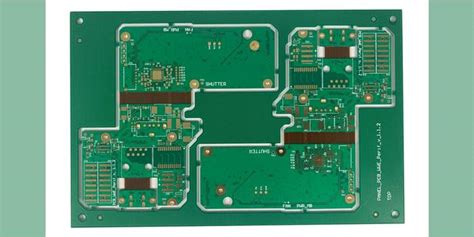
2.3 PCB layout
The key to the electromagnetic compatibility design of printed circuit boards is layout and wiring, which is directly related to the performance of the circuit board. At present, the EDA automation level of circuit board layout is very low, requiring a lot of manual layout. Before layout, it is necessary to determine the PCB size that meets the function at the lowest possible cost. If the PCB size is too large and the devices are scattered during layout, the transmission line may be very long, which will increase the impedance, reduce the anti-noise ability and increase the cost. If the devices are placed in a centralized manner, the heat dissipation will be poor and the adjacent lines will easily generate coupling crosstalk. Therefore, the layout must be carried out according to the circuit functional units, while taking into account factors such as electromagnetic compatibility, heat dissipation and interface. Some principles should be followed when making the overall layout:
(1) Arrange each functional circuit unit according to the flow of circuit signals to keep the signal flow in the same direction;
(2) Take the core component of each functional circuit unit as the center and layout other components around it;
(3) Shorten the connection between high-frequency components as much as possible and try to reduce their distributed parameters;
(4) Components susceptible to interference should not be too close to each other, and input and output components should be kept away
;