
Summary of ten PCB heat dissipation methods
With the continuous improvement of electronic equipment performance, heat dissipation has become an important part of the design that cannot be ignored. Poor heat dissipation will not only lead to a decline in equipment performance, but may also shorten the service life of the equipment. The following are ten strategies to improve the heat dissipation efficiency of PCBs.
For electronic equipment, a certain amount of heat will be generated during operation, which will cause the internal temperature of the equipment to rise rapidly. If the heat is not dissipated in time, the equipment will continue to heat up, the device will fail due to overheating, and the reliability of the electronic equipment will decrease.
In the field of modern electronics, with the continuous reduction of device size and the continuous improvement of performance, the problem of thermal management has become increasingly prominent and cannot be ignored. If the heat generated by electronic equipment during operation is not handled properly and cannot be dissipated, it will quietly endanger the stability and life of the equipment like a subtle threat.
Electronic equipment will generate a certain amount of heat during operation, causing the internal temperature of the equipment to rise rapidly. If this heat is not dissipated in time, the equipment will continue to heat up, causing the components to fail due to overheating, thereby reducing the reliability and performance of electronic equipment. How to verify the manufacturability of PCB at the source is crucial, which is also a key issue in PCB manufacturing.
Therefore, it is crucial to effectively manage the heat dissipation of circuit boards. The heat dissipation of PCB plays a vital role, so let’s discuss some PCB heat dissipation techniques.
Widely used heat dissipation PCB materials include copper-clad epoxy glass cloth substrates or phenolic resin glass cloth substrates, and a few also use paper-based copper clad boards.
Although these substrates have excellent electrical and processing properties, their heat dissipation is poor. As a cooling method for high-heating components, it is almost impossible to rely on the heat conduction of the PCB resin itself, but to dissipate the heat from the surface of the component to the surrounding air.
But as electronic products enter the era of miniaturization, high-density assembly, and high-heating of components, it is far from enough to rely solely on the small surface area of components for heat dissipation.
At the same time, due to the widespread use of surface mount components such as QFP and BGA, the heat generated by electronic components is widely transferred to the PCB. Therefore, the most effective way to solve the heat dissipation problem is to enhance the inherent heat dissipation ability of the PCB in direct contact with the heat-generating components, thereby allowing the heat to be conducted or dissipated through the PCB.
Therefore, it is very important to do a good job of heat dissipation of the circuit board. The heat dissipation of the PCB circuit board is a very important link, so what are the heat dissipation techniques of the PCB circuit board? Let’s discuss it together.
01 Dissipate heat through the PCB board itself.
Currently, the most widely used PCB board materials are copper-clad/epoxy glass cloth substrates or phenolic resin glass cloth substrates, and there are also a small number of paper-based copper-clad boards.
Although these substrates have excellent electrical properties and processing properties, they have poor heat dissipation. As a heat dissipation path for high-heat components, it is almost impossible to expect the PCB resin itself to conduct heat, but to dissipate heat from the surface of the component to the surrounding air.
However, as electronic products have entered the era of miniaturization, high-density installation, and high-heat assembly, it is not enough to rely solely on the surface of components with very small surface areas to dissipate heat.
At the same time, due to the large-scale use of surface-mounted components such as QFP and BGA, the heat generated by the components is transferred to the PCB board in large quantities. Therefore, the best way to solve the heat dissipation problem is to improve the heat dissipation capacity of the PCB itself that is in direct contact with the heat-generating components, and conduct or dissipate it through the PCB board.
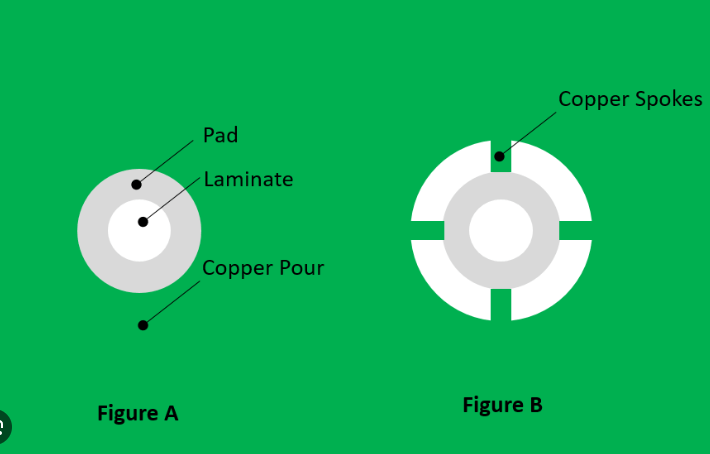
1.Utilize the heat dissipation potential of PCB boards
Although traditional PCB boards such as copper-clad epoxy glass cloth substrates have excellent electrical performance, their heat dissipation capacity is limited. In order to meet the challenges of high power density, modern PCB design needs to consider the thermal conductivity of the board. By optimizing the board selection and layout, the heat dissipation efficiency can be significantly improved.
2.Application of heat sinks and thermal conductive materials
For high-power devices, simple PCB heat dissipation may not be enough to meet the needs. At this time, a heat sink or thermal conductive plate can be used to assist heat dissipation. For multiple heat-generating devices, you can consider customizing a heat dissipation cover or a flat heat sink, and use a thermal phase change thermal pad to improve contact efficiency.
3.Optimization of device arrangement
When designing a PCB, the device should be arranged according to its heat generation and heat resistance. Place devices with poor heat resistance upstream of the cooling airflow, and place devices with good heat resistance downstream to achieve more effective thermal management.
4.Strategies for routing design
Reasonable routing design is equally important for heat dissipation. By adding copper foil lines and thermal vias, the thermal conduction efficiency of the PCB can be improved. At the same time, calculating the equivalent thermal conductivity of the PCB helps to evaluate and optimize the heat dissipation design.
5.Detailed adjustment of the layout
In the PCB layout, high-power devices should be arranged as close to the edge as possible to shorten the heat conduction path. In the vertical direction, these devices should be arranged above to reduce the impact on other devices.
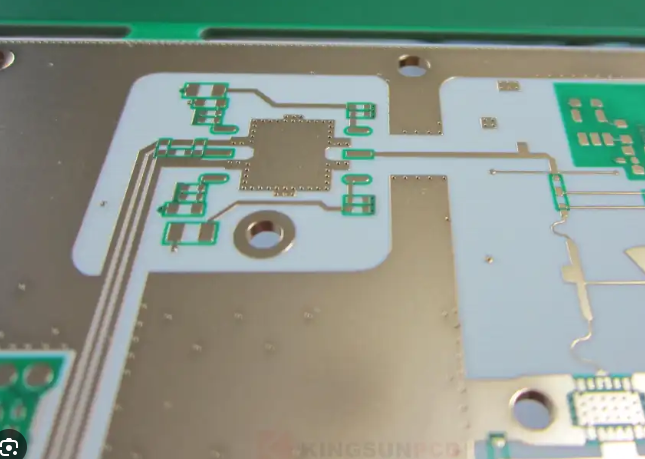
6.Planning of air flow paths
Air flow is the key to PCB heat dissipation. The air flow path should be considered during design, and the devices should be reasonably configured to avoid forming large airspaces in certain areas to promote air flow.
7.Placement of sensitive devices
For temperature-sensitive devices, they should be placed in areas with lower temperatures, avoid being placed directly above the heating devices, and be staggered on the horizontal plane.
8.Heat dissipation optimization of heating devices
Arrange devices with high power consumption and high heat generation near the location with the best heat dissipation conditions, and avoid placing them in the corners and edges of the PCB unless there are additional heat dissipation devices.
9.Avoid the concentration of hot spots
In PCB design, areas with excessively high power density should be avoided to prevent the formation of hot spots. By evenly distributing the power, the uniformity of the PCB surface temperature can be maintained.
10.Application of innovative heat dissipation technology
In addition to traditional heat dissipation methods, innovative heat dissipation technologies such as heat pipes, phase change materials, and microchannel cooling can also be explored to meet the growing heat dissipation needs.