
Overview of Printed Wiring Assembly (PWA)
Introduction
With the rapid development of electronic technology, printed wiring assembly (PWA) plays a vital role as an indispensable part of electronic products. PWA is not only a carrier of electronic components, but also the key to achieve electrical connection and signal transmission. This article will explore the definition, manufacturing process, application field and future development trend of printed wiring assembly in depth.
What is a printed wiring assembly?
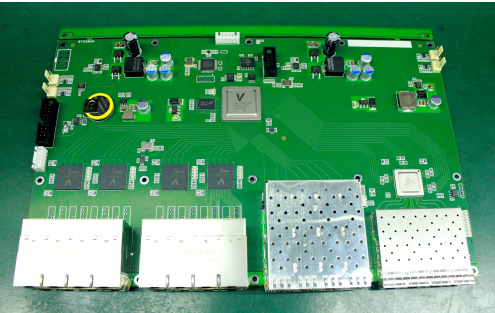
Printed wiring assembly (PWA) refers to the assembly of electronic components (such as resistors, capacitors, integrated circuits, etc.) through printed circuit boards (PCBs) to form a complete circuit system. PWA usually consists of the following parts:
Printed circuit board (PCB): As a foundation, PCB provides electrical connection and mechanical support.
Electronic components: including various passive components (such as resistors, capacitors) and active components (such as integrated circuits, diodes, etc.).
Welding connection: The electronic components are fixed on the PCB through welding technology to ensure the reliability of electrical connection.
Manufacturing process of PWA
The manufacturing process of PWA can be divided into several main steps:
1.PCB design
Before manufacturing PWA, PCB design is required first. Designers use professional software (such as Altium Designer, Eagle, etc.) to draw circuit diagrams and PCB layouts. Factors such as electrical performance, signal integrity, and thermal management need to be considered during the design process.
2.PCB manufacturing
PCB manufacturing includes the following steps:
Substrate selection: Select a suitable PCB substrate (such as FR-4, CEM-1, etc.).
Graphic transfer: Transfer the circuit pattern to the PCB substrate through photolithography.
Etching: Remove excess copper layers to form circuit patterns.
Drilling: Drill holes according to design requirements to install electronic components.
Surface treatment: Treat the PCB surface to improve welding performance and corrosion resistance.
3.Component assembly
Component assembly is a key step in PWA manufacturing, mainly including the following methods:
Manual soldering: Suitable for small batch production or prototyping.
Wave soldering: Suitable for mass production, soldering is achieved by dipping the PCB into molten solder.
Reflow soldering: Suitable for surface mount components (SMD), heating to melt the solder and connect the components.
4.Testing and inspection
After assembly, the PWA needs to be tested to ensure its performance and reliability. Common testing methods include:
Functional testing: Verify whether the PWA can work properly.
Electrical testing: Check the electrical characteristics of the circuit, such as resistance, voltage, etc.
Environmental testing: Test the stability of the PWA under different temperature and humidity conditions.
Application areas of PWA
Printed circuit assemblies are widely used in various fields. The following are some of the main application areas:
- Consumer electronics
In consumer electronics, PWA is a core component of devices such as smartphones, tablets, and TVs. With the popularity of smart devices, the requirements for PWA are getting higher and higher, such as smaller size, higher integration, and lower power consumption.
- Industrial equipment
In industrial automation and control systems, PWA is widely used in devices such as sensors, controllers, and drives. Its high reliability and durability enable it to work normally in harsh environments.
- Medical equipment
Medical equipment has extremely high requirements for PWA, and its safety and reliability must be ensured. PWA plays an important role in pacemakers, monitors, and diagnostic equipment.
- Automotive electronics
With the development of automotive electronics technology, PWA is increasingly used in automobiles, including engine control units (ECUs), in-vehicle entertainment systems, and safety systems. Automotive PWA needs to have anti-vibration, high temperature resistance, and moisture resistance.
Future development trends of PWA
With the continuous advancement of technology, the development of PWA is also facing new challenges and opportunities. Here are some future development trends:
- Miniaturization and high density
As electronic products develop towards miniaturization and high density, the design and manufacturing of PWA also need to continue to innovate. Using smaller components and more compact layouts will be an important direction for future PWA design.
- Intelligence
With the development of the Internet of Things (IoT) and artificial intelligence (AI), PWA will increasingly integrate intelligent functions. In the future, PWA may have intelligent features such as self-diagnosis and self-repair to improve the reliability and safety of the system.
- Environmental protection and sustainable development
With the increase of environmental awareness, the manufacturing process of PWA needs to pay more attention to environmental protection. The use of environmentally friendly materials and the reduction of waste emissions and energy consumption will be important trends in the future manufacturing of PWA.
- Application of 3D printing technology
The application of 3D printing technology in PWA manufacturing will bring revolutionary changes to the industry. Through 3D printing, more complex structures and higher design freedom can be achieved, which can improve production efficiency and reduce costs.
Conclusion
As a core component of modern electronic products, the importance of printed circuit assemblies (PWA) is self-evident. With the continuous advancement of technology, the design and manufacturing of PWA are also evolving. In the future, PWA will usher in new development opportunities in miniaturization, intelligence and environmental protection. Through continuous innovation and improvement, PWA will continue to promote the development of the electronics industry and bring more convenience and possibilities to people’s lives.