
Flex PCB SMT Assembly Best Practices for Reliable Electronics Manufacturing
Key Takeaways
Successful flex PCB SMT assembly hinges on balancing precision, material compatibility, and process control. A well-executed PCBA process begins with selecting thermally stable substrates and adhesives that withstand repeated flexing while maintaining solder joint integrity. Critical steps include optimizing stencil designs for solder paste application and calibrating reflow profiles to prevent warping or delamination.
Emphasizing automated optical inspection (AOI) and X-ray testing ensures defects like micro-cracks or misaligned components are detected early. Designers must prioritize PCB assembly guidelines tailored for flexible circuits, such as avoiding sharp bends near solder joints and integrating strain-relief features. Thermal management strategies, such as using copper pours or heat-resistant coatings, further enhance reliability.
By aligning PCBA workflows with flex-specific requirements—from material prep to final testing—manufacturers reduce risks of assembly errors and improve product longevity. These foundational practices set the stage for deeper exploration of each phase in the following sections.
Key Steps in Flex PCB SMT Assembly
Executing flex PCB SMT assembly requires meticulous attention to process flow to ensure reliability in demanding applications. The workflow begins with design validation, where engineers verify that the flexible circuit’s layout aligns with PCBA requirements, including bend radii and component placement zones. Following this, material preparation focuses on selecting compatible substrates (e.g., polyimide) and adhesives that withstand thermal cycling during PCB assembly.
A critical stage involves solder paste application, where stencil printing must account for the flex board’s uneven surface. High-precision dispensers or laser-cut stencils help achieve uniform deposition, minimizing voids in fine-pitch components. Next, component placement leverages automated pick-and-place systems with vision alignment to compensate for substrate flexing. For temperature-sensitive parts, low-temperature soldering profiles are prioritized to prevent delamination.
Post-reflow, inspection protocols such as automated optical inspection (AOI) and X-ray imaging identify soldering defects or micro-cracks caused by mechanical stress. Functional testing then validates signal integrity across flexing cycles, ensuring the PCBA meets performance benchmarks. Throughout these steps, maintaining controlled environments (e.g., humidity <30%) prevents moisture absorption in hygroscopic materials.
By integrating these practices, manufacturers optimize yield rates in flex PCB SMT assembly while addressing the unique challenges of flexible circuit manufacturing.
Material Selection Tips for Flex PCB Assembly
Selecting appropriate materials forms the foundation of successful flex PCB assembly, directly influencing durability and performance in demanding applications. For substrate layers, polyimide films are preferred due to their excellent thermal stability and mechanical flexibility, which withstand repeated bending cycles. When choosing adhesives, opt for acrylic or epoxy formulations that balance bond strength with elasticity to prevent delamination during dynamic operations.
Conductive materials require careful evaluation: rolled annealed (RA) copper is ideal for flexible circuits, offering superior ductility compared to electrodeposited alternatives. Pairing this with thin dielectric layers ensures optimal signal integrity while maintaining bend radius requirements. For PCBA processes, solder mask compatibility is critical—liquid photoimageable (LPI) coatings provide precise patterning without compromising flexibility.
Additionally, consider environmental factors such as moisture resistance and operating temperature ranges. Materials like coverlays or flexible solder masks protect circuits from contaminants, while low-temperature soldering pastes minimize thermal stress during SMT assembly. Always validate material choices against industry standards (e.g., IPC-6013) to ensure reliability across the product lifecycle. By aligning material properties with application demands, manufacturers mitigate risks of fatigue fractures and electrical failures in flex PCB assembly workflows.
Precision Soldering for Flexible Circuits
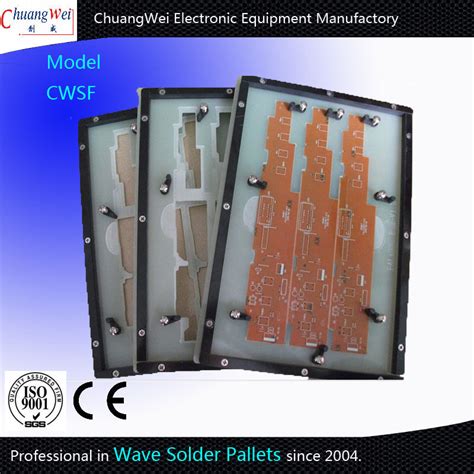
Achieving reliable solder joints in flexible PCB assembly requires specialized techniques to accommodate the unique challenges of thin, pliable substrates. Unlike rigid PCBA, flex circuits demand tighter control over temperature profiles and solder paste application to prevent delamination or warping.
Tip: Always verify the glass transition temperature (Tg) of the flex material before setting reflow parameters to avoid thermal damage.
Critical considerations include:
- Solder paste selection: Low-temperature alloys (e.g., Sn-Bi) reduce stress on polyimide films.
- Stencil design: Laser-cut apertures with trapezoidal walls improve paste release for fine-pitch components.
- Reflow profiling: Ramp rates ≤2°C/sec and peak temperatures ≤240°C minimize thermal shock.
| Parameter | Flex PCB Requirement | Rigid PCB Typical Value |
|---|---|---|
| Peak Temperature | 220–235°C | 240–260°C |
| Dwell Time | 45–60 seconds | 60–90 seconds |
| Cooling Rate | ≤3°C/sec | ≤4°C/sec |
For high-density interconnects, consider using vacuum-assisted fixtures during soldering to maintain planar alignment. Post-soldering inspections should prioritize micro-section analysis to detect hairline cracks caused by repetitive flexing. As one industry study notes:
"X-ray inspection identifies 97% of voiding defects in BGA joints on flex circuits, compared to 82% with optical methods."
Automated optical alignment systems are increasingly critical in PCB assembly workflows, particularly when handling components smaller than 01005 packages. When transitioning from rigid to flex PCBA, always account for the coefficient of thermal expansion (CTE) mismatch between copper traces and the base material.
Quality Control in SMT Assembly Processes
Implementing rigorous quality control protocols is essential for successful PCB assembly of flexible circuits. Automated optical inspection (AOI) systems are critical for detecting solder joint defects, component misalignment, or missing parts during PCBA workflows. These systems analyze up to 98% of surface features at speeds exceeding 20,000 inspections per hour, ensuring consistency across high-volume production runs.
Following automated inspections, X-ray imaging provides non-destructive analysis of hidden connections, such as blind vias or micro-BGA joints, which are common in compact flex circuit designs. To validate electrical integrity, in-circuit testing (ICT) verifies component functionality, while functional circuit testing (FCT) simulates real-world operating conditions for the PCBA.
Equally critical is the verification of material compatibility. Flex substrates like polyimide require precise thermal profiling during reflow soldering to prevent delamination or warping. Process validation through statistical process control (SPC) tools ensures that variables such as solder paste volume and peak temperature remain within ±3% of target specifications. By integrating these layered inspection methods, manufacturers achieve defect rates below 50 parts per million (PPM) in advanced flex PCB assembly lines.
Designing Durable Flex PCB Layouts
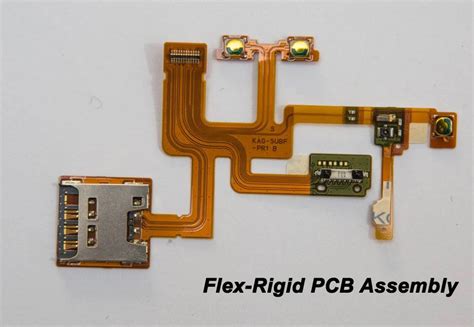
Creating robust layouts for flex PCB SMT assembly demands a balance between electrical performance and mechanical resilience. A critical first step is optimizing the bend radius to prevent stress fractures during repeated flexing. Designers should route traces perpendicular to the bend axis and avoid abrupt changes in width, which can weaken copper layers. Incorporating PCBA-friendly pad geometries, such as teardrop-shaped connections, minimizes cracking risks during soldering or dynamic movement.
Material compatibility is equally vital—selecting polyimide substrates with matched coefficients of thermal expansion (CTE) ensures stability during PCB assembly processes like reflow soldering. Staggering components across high-flex zones reduces localized stress, while anchor points or stiffeners in rigid-flex designs enhance durability. For multilayer configurations, symmetrical stack-ups prevent warping and improve signal integrity.
Transitioning from rigid to flexible sections requires gradual tapering, and using curved traces instead of right angles mitigates stress concentration. Simulation tools, such as finite element analysis (FEA), can predict mechanical behavior under bending cycles, allowing iterative refinements before prototyping. By aligning layout strategies with SMT assembly constraints, manufacturers achieve reliable PCBA outcomes that withstand both operational demands and environmental factors like vibration or thermal cycling.
Thermal Management in Flex PCB Assembly
Effective thermal management is critical in flex PCB assembly due to the material’s sensitivity to heat fluctuations. Unlike rigid boards, flexible circuits often operate in dynamic environments where repeated bending can exacerbate thermal stress. To ensure reliability during PCBA, engineers must balance heat dissipation with mechanical flexibility. Key strategies include selecting substrates with high thermal conductivity, such as polyimide films, and incorporating thermal relief pads to minimize heat transfer during soldering.
Precision in PCB assembly also demands controlled reflow profiles to prevent warping or delamination. For instance, using a gradual ramp-up during reflow reduces thermal shock, while infrared preheating ensures uniform temperature distribution across the flex circuit. Additionally, thermal vias or copper pours can enhance heat dissipation in high-density designs without compromising flexibility.
Quality validation through thermal cycling tests simulates real-world conditions, verifying that the PCBA withstands repeated temperature changes. By integrating these practices, manufacturers mitigate risks like solder joint fatigue and material degradation, ensuring durable performance in applications ranging wearables to aerospace systems.
Testing Methods for PCB Reliability
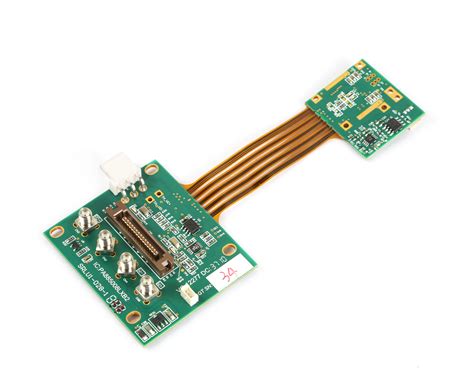
Verifying the reliability of flexible circuits in PCB assembly requires rigorous testing protocols tailored to the unique stresses faced by dynamic flex applications. Key methods include In-Circuit Testing (ICT) to validate electrical continuity and Automated Optical Inspection (AOI) for detecting soldering defects like micro-cracks or misaligned components. For PCBA involving high-density flexible boards, thermal cycling tests simulate temperature fluctuations to assess material fatigue, while bend endurance tests replicate repeated flexing to ensure mechanical durability.
Environmental stress screening, such as humidity exposure or vibration testing, is critical for applications like wearables or automotive electronics, where moisture resistance and shock tolerance are non-negotiable. Advanced techniques like X-ray inspection identify hidden flaws in solder joints, particularly in multilayer flex designs. Additionally, highly accelerated life testing (HALT) pushes components beyond operational limits to uncover failure points early in the PCB assembly lifecycle.
To align with industry standards like IPC-6013, manufacturers often integrate impedance testing for high-frequency circuits and cross-section analysis to verify layer alignment. These methods, combined with real-time functional testing, ensure that PCBA outputs meet both performance benchmarks and long-term reliability expectations in demanding environments.
Avoiding Flex PCB Assembly Errors
Minimizing errors in flex PCB assembly begins with understanding the unique challenges posed by flexible substrates. Unlike rigid boards, flex circuits require careful handling to prevent mechanical stress during PCBA processes. One common pitfall involves improper material pairing—using adhesives or stiffeners incompatible with the base polyimide can lead to delamination or cracking under bending loads. To mitigate this, verify that all components and surface finishes (e.g., ENIG or immersion silver) are rated for dynamic flexing applications.
Precision in solder paste application is critical, as uneven deposition on thin copper traces may cause bridging or weak joints. Employ laser-cut stencils with fine apertures and ensure reflow profiles are optimized for flexible materials, which often have lower thermal mass. Additionally, misaligned components during pick-and-place can strain solder joints; using optical alignment systems and rigid-flex carrier panels improves positional accuracy.
Real-time inspection tools like automated optical inspection (AOI) and X-ray imaging help detect microfractures or voids in solder connections before final assembly. Lastly, adhere to design-for-manufacturing (DFM) guidelines—such as avoiding sharp bends near solder points—to reduce stress concentrations. By integrating these practices into PCB assembly workflows, manufacturers can significantly enhance the reliability of flexible electronics.
Conclusion
In modern electronics manufacturing, achieving reliable flex PCB SMT assembly requires meticulous attention to both design and process execution. By integrating optimized material selection with precision PCB assembly techniques, manufacturers can address the unique challenges posed by flexible circuits. Durability and signal integrity depend on maintaining strict thermal profiles during soldering and implementing robust quality control protocols throughout PCBA production.
As component density increases in compact devices, thermal management strategies become critical to prevent material stress in dynamic applications. Proactive error prevention—through comprehensive design rule checks and real-time process monitoring—reduces rework rates while maintaining bend-cycle performance. Successful flex PCB assembly hinges on balancing mechanical flexibility with electrical reliability, particularly in applications requiring repeated flexion or exposure to environmental stressors.
The combination of advanced inspection tools (like automated optical alignment systems) and standardized testing methodologies ensures consistent results across production batches. Engineers must also consider end-use conditions when specifying adhesives, stiffeners, and surface finishes to enhance solder joint longevity. Ultimately, the evolution of PCBA standards for flexible electronics demands ongoing collaboration between designers and manufacturers to align technical capabilities with application-specific requirements.
Frequently Asked Questions
What distinguishes flex PCB assembly from rigid PCB assembly?
Flex PCBA requires specialized handling due to the pliable nature of substrates. Unlike rigid boards, materials like polyimide demand controlled soldering temperatures and strain relief designs to prevent cracking. Dynamic applications further necessitate stress-testing post-assembly.
How does material selection impact flex PCB reliability?
Choosing high-grade flexible substrates and compatible adhesives directly affects durability. For instance, mismatched coefficients of thermal expansion (CTE) between layers can cause delamination during PCB assembly. Experts recommend materials with proven performance in bend cycles.
What soldering techniques suit flex PCB SMT processes?
Laser soldering or low-temperature solder pastes minimize thermal stress on thin flex layers. Precision placement of components using PCBA-optimized equipment ensures joint integrity, especially for fine-pitch parts.
Why is quality control critical in flex PCB manufacturing?
Microscopic cracks or misaligned traces in flex circuits often escape visual inspection. Automated optical inspection (AOI) and bend-testing protocols are essential to validate PCB assembly reliability, particularly for high-frequency applications.
Can standard SMT equipment handle flex PCB production?
While conventional machines can be adapted, dedicated fixtures for flex board support are advised. Roll-to-roll processing systems excel in high-volume PCBA workflows by reducing handling-induced damage.
Need Expert Support for Your Flex PCB Project?
For tailored solutions in PCB assembly and PCBA design, please click here to consult our engineering team. We specialize in optimizing flex circuit performance for mission-critical applications.