
Flexible PCB Production: Processes, Materials, and Applications
Introduction
Printed Circuit Boards (PCBs) are essential components in modern electronics, providing mechanical support and electrical connections for electronic components. Among various types of PCBs, Flexible PCBs (FPCBs) have gained significant popularity due to their lightweight, bendable, and space-saving properties. Flexible PCBs are widely used in consumer electronics, medical devices, automotive systems, and aerospace applications.
This article explores the production process of flexible PCBs, including material selection, fabrication techniques, and key applications.
1. Materials Used in Flexible PCB Production
The choice of materials is critical in flexible PCB manufacturing, as they determine the board’s durability, flexibility, and performance. The primary materials include:
A. Substrate (Base Material)
The most common substrate for flexible PCBs is polyimide (PI), known for its excellent thermal stability, chemical resistance, and mechanical flexibility. Other materials include:
- Polyester (PET) – Cost-effective but less heat-resistant than polyimide.
- Liquid Crystal Polymer (LCP) – Offers high-frequency performance, used in RF applications.
B. Conductive Layers
- Copper Foil – The most widely used conductive material due to its high conductivity and flexibility.
- Electrodeposited (ED) Copper – Cheaper but less flexible.
- Rolled Annealed (RA) Copper – More flexible and durable.
- Silver or Gold Plating – Used for high-reliability applications like medical devices.
C. Adhesives & Coverlays
- Acrylic or Epoxy Adhesives – Bond copper to the substrate.
- Coverlay (Polyimide + Adhesive) – Protects circuits from environmental damage.
D. Stiffeners (Optional)
- FR4, Aluminum, or Polyimide – Added to areas requiring rigidity (e.g., connector sections).
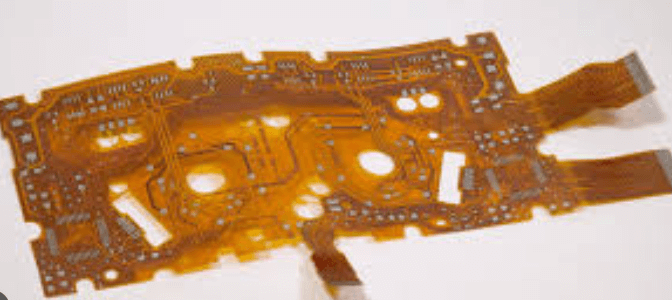
2. Flexible PCB Manufacturing Process
The production of flexible PCBs involves several precise steps:
Step 1: Design & Layout
- Engineers use CAD software (e.g., Altium, Eagle) to design the circuit.
- Considerations include bend radius, layer stack-up, and impedance control.
Step 2: Material Preparation
- The polyimide substrate is cleaned, and copper foil is laminated onto it using heat and adhesive.
Step 3: Circuit Patterning
- Photolithography: A photoresist is applied, exposed to UV light through a mask, and developed to create the circuit pattern.
- Etching: Unwanted copper is removed using chemical etching (ferric chloride or ammonium persulfate).
- Laser Direct Imaging (LDI) – An advanced method for high-precision PCBs.
Step 4: Drilling & Cutting
- Laser or Mechanical Drilling – Creates vias and holes for interconnections.
- Punching or Laser Cutting – Defines the board outline.
Step 5: Plating & Surface Finish
- Electroplating – Deposits copper in vias for conductivity.
- Surface Finishes:
- ENIG (Electroless Nickel Immersion Gold) – Good for fine-pitch components.
- OSP (Organic Solderability Preservative) – Cost-effective but less durable.
- Immersion Silver/Tin – Alternative to ENIG.
Step 6: Coverlay Application
- A polyimide coverlay is laminated over the circuit for insulation and protection.
Step 7: Electrical Testing & Inspection
- Automated Optical Inspection (AOI) – Detects defects like shorts or open circuits.
- Flying Probe Testing – Checks electrical continuity.
Step 8: Final Assembly & Packaging
- Components are soldered (SMT or through-hole).
- Boards are cut, inspected, and packaged for shipment.
3. Types of Flexible PCBs
Flexible PCBs come in several configurations:
A. Single-Layer Flexible PCBs
- Simplest form, with one conductive layer.
- Used in low-cost applications like calculators and sensors.
B. Double-Layer Flexible PCBs
- Two conductive layers with plated through-holes.
- Common in automotive and industrial controls.
C. Multilayer Flexible PCBs
- Three or more conductive layers, offering high-density interconnects.
- Used in smartphones, medical imaging, and aerospace.
D. Rigid-Flex PCBs
- Combines rigid and flexible sections for complex designs.
- Found in military, aerospace, and advanced medical devices.
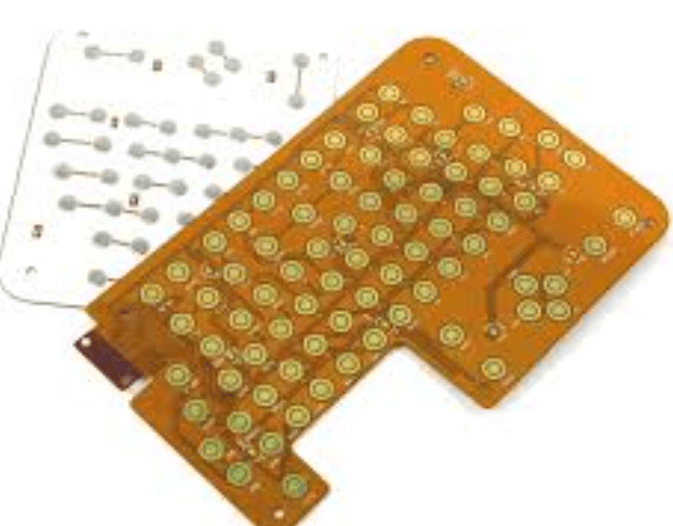
4. Advantages of Flexible PCBs
- Space & Weight Savings – Thinner and lighter than rigid PCBs.
- High Durability – Can withstand vibrations and bending.
- Improved Reliability – Fewer interconnects reduce failure points.
- Design Flexibility – Can be shaped to fit unique enclosures.
- Thermal Management – Polyimide dissipates heat efficiently.
5. Applications of Flexible PCBs
Flexible PCBs are used in various industries:
A. Consumer Electronics
- Smartphones, wearables, foldable displays (e.g., Samsung Galaxy Z Fold).
- Cameras, headphones, and gaming consoles.
B. Automotive Industry
- Dashboard controls, LED lighting, battery management systems.
- Sensors and infotainment systems.
C. Medical Devices
- Pacemakers, hearing aids, endoscopes.
- Wearable health monitors (e.g., ECG patches).
D. Aerospace & Defense
- Satellites, drones, avionics systems.
- Military-grade communication devices.
E. Industrial & IoT Applications
- Robotics, industrial sensors, smart home devices.
6. Challenges in Flexible PCB Production
Despite their advantages, manufacturing flexible PCBs presents challenges:
- High Material Costs – Polyimide and specialty adhesives are expensive.
- Complex Assembly – Requires precision handling to avoid damage.
- Thermal & Mechanical Stress – Repeated bending can cause fatigue.
- Design Limitations – Requires careful consideration of bend radius and layer stack-up.
7. Future Trends in Flexible PCB Technology
- Stretchable Electronics – Emerging for wearable and biomedical applications.
- 3D Printed Flexible Circuits – Enables rapid prototyping.
- Embedded Components – Reduces size and improves performance.
- Eco-Friendly Materials – Biodegradable substrates for sustainability.
Conclusion
Flexible PCB production is a sophisticated process requiring advanced materials, precise manufacturing techniques, and rigorous testing. With their unique advantages, FPCBs are revolutionizing industries from consumer electronics to aerospace. As technology evolves, we can expect even more innovative applications and improvements in flexible circuit design and manufacturing.
By understanding the materials, processes, and challenges involved, manufacturers can optimize flexible PCB production for high-performance applications.