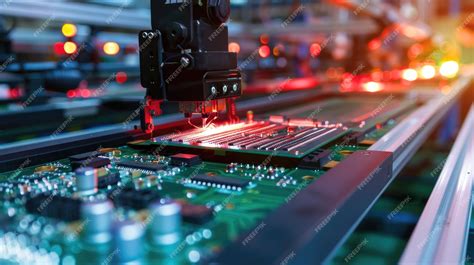
Automated PCB Assembly: Optimizing Electronics Production Workflows
Key Takeaways
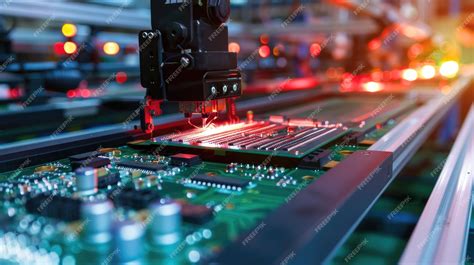
Modern PCB assembly processes are undergoing radical transformation through automation, delivering measurable improvements in production quality and operational efficiency. By integrating robotic systems into PCBA workflows, manufacturers achieve sub-millimeter precision in component placement, reducing human-induced variability.
Industry Insight: "Adopting automated PCB assembly isn’t just about speed—it’s about creating repeatable processes that minimize defects while scaling output," notes a senior electronics manufacturing engineer.
Key advantages include:
- 30-50% faster throughput compared to manual assembly lines
- Error rates below 0.1% for high-density PCB layouts
- Real-time quality analytics via machine vision systems
| Metric | Manual Assembly | Automated PCBA |
|---|---|---|
| Avg. Defects per Unit | 2.5% | 0.08% |
| Components/Hour | 800-1,200 | 4,500-6,000 |
| Rework Costs | 12-18% | 2-4% |
Transitioning to automated workflows requires strategic planning, particularly in calibration protocols and staff training. While upfront investments in robotic PCB assembly equipment are significant, long-term cost savings from reduced material waste and higher yield rates justify the shift. For electronics manufacturers, this evolution isn’t optional—it’s a competitive imperative as IoT and 5G demand faster, error-free PCB production.
Automating PCB Production Workflows
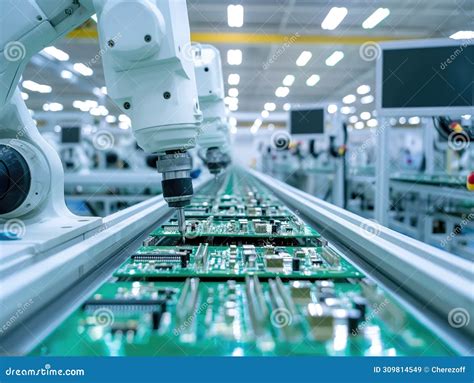
The integration of automated PCB assembly systems has redefined modern electronics manufacturing by replacing labor-intensive processes with precision-driven robotic workflows. Advanced PCBA lines now leverage programmable machinery to handle tasks such as component placement, soldering, and inspection, minimizing human intervention. For instance, pick-and-place robots achieve micron-level accuracy when positioning surface-mount devices (SMDs), while automated soldering systems ensure consistent joint quality across high-volume batches. This shift not only accelerates production cycles but also enables real-time adjustments through machine learning algorithms, which optimize material usage and workflow sequencing.
By standardizing PCB assembly stages, manufacturers reduce variability between batches—a critical advantage for industries demanding strict compliance with ISO standards. Automated optical inspection (AOI) systems further enhance reliability by identifying defects like misalignments or solder bridges early in the process. As a result, scalability becomes achievable without compromising quality, allowing enterprises to meet fluctuating market demands efficiently. The transition to PCBA automation also lowers long-term operational costs by curbing rework rates and material waste, aligning with lean manufacturing principles. These advancements lay the groundwork for exploring next-generation innovations, such as collaborative robotics and AI-driven predictive maintenance, within electronics production ecosystems.
Enhancing PCB Precision With Robotics
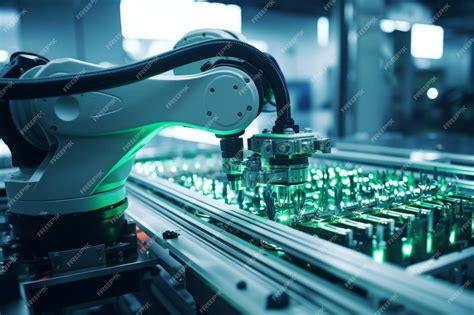
Modern PCB assembly processes achieve unprecedented accuracy through advanced robotic systems. Industrial robots equipped with sub-100 micron precision now handle component placement, solder paste application, and inspection tasks, minimizing deviations that human operators might overlook. For instance, robotic pick-and-place machines position PCBA components like micro-BGA packages or 01005 capacitors with repeatable accuracy, ensuring consistent electrical performance across high-volume production runs. These systems integrate vision-guided alignment and real-time feedback loops, correcting placement errors within milliseconds to maintain tolerances below 0.05mm.
The shift toward automation also addresses challenges in mixed-technology assemblies, where surface-mount (SMT) and through-hole components coexist. Dual-arm collaborative robots (cobots) streamline complex workflows, executing tasks such as fine-pitch IC placements or thermal-sensitive soldering without compromising speed or precision. Additionally, automated optical inspection (AOI) systems paired with machine learning algorithms detect microscopic defects—such as solder bridging or tombstoning—with 99.98% reliability, a significant improvement over manual checks. By embedding robotics into PCB assembly lines, manufacturers reduce rework rates by up to 70% while achieving alignment accuracies that exceed industry standards for next-gen applications like 5G modules or IoT devices.
This evolution in PCBA technology not only elevates product quality but also creates a foundation for scalable, error-resistant manufacturing ecosystems. Seamless integration with digital twin simulations further refines robotic calibration, ensuring precision remains consistent even as design complexities escalate.
Error Reduction in PCB Automation
Modern PCB assembly processes achieve unprecedented error mitigation through robotic integration and advanced quality control protocols. Automated systems minimize human intervention, addressing common issues like PCBA solder defects, component misalignment, and polarity errors. For instance, robotic placement machines equipped with vision-guided alignment ensure components are positioned within ±0.025mm tolerances, reducing manual calibration discrepancies by over 90%.
Closed-loop feedback mechanisms in automated PCB assembly lines detect anomalies in real time, triggering immediate corrections before defects propagate downstream. Machine learning algorithms further refine error prediction, analyzing historical production data to identify patterns in thermal profiling or solder paste application. This proactive approach slashes rework rates, with industry studies showing a 40–60% reduction in post-assembly corrections for PCBA workflows.
Additionally, automated optical inspection (AOI) systems scan boards at speeds exceeding 500 components per minute, flagging micro-cracks or bridging issues imperceptible to the human eye. By integrating these technologies, manufacturers maintain compliance with IPC-A-610 standards while achieving defect rates as low as 0.01% in high-volume production. Such precision not only safeguards product reliability but also streamlines compliance testing, accelerating time-to-market for complex electronics.
Boosting PCB Workflow Efficiency
Modern PCB assembly processes leverage automation to eliminate bottlenecks that traditionally hinder production timelines. By integrating robotic placement systems with real-time data analytics, manufacturers achieve 30–50% faster cycle times compared to manual workflows. Advanced PCBA lines now synchronize component placement, soldering, and inspection into seamless sequences, minimizing idle periods between stages. For instance, automated conveyor systems ensure boards move precisely between pick-and-place machines and reflow ovens without manual intervention, maintaining consistent throughput even during high-volume orders.
A critical advantage lies in adaptive scheduling algorithms, which dynamically prioritize tasks based on material availability and machine capacity. This prevents resource underutilization—a common issue in traditional setups—while enabling just-in-time material delivery to assembly stations. Additionally, PCB assembly workflows benefit from machine learning-driven predictive maintenance, which identifies potential equipment failures before they disrupt production. By reducing unplanned downtime by up to 40%, manufacturers sustain operational continuity and meet tight delivery schedules.
These optimizations not only accelerate output but also create synergies with upstream design teams. Automated PCBA systems feed performance data back to engineers, enabling iterative improvements that further streamline workflows. As production lines become more interconnected, the entire electronics manufacturing ecosystem evolves toward unprecedented efficiency benchmarks.
Robotic PCB Assembly Cost Savings
While the upfront investment in PCB assembly robotics may appear substantial, the long-term financial benefits consistently outweigh initial expenditures. Automated systems reduce labor-intensive processes by up to 70%, directly lowering recurring payroll expenses. For instance, robotic pick-and-place machines in PCBA lines can populate thousands of components per hour with near-zero human intervention, minimizing overtime costs and shift dependencies.
Material waste, a critical cost driver in electronics manufacturing, drops significantly with automation. Vision-guided robots achieve placement accuracy within ±25 microns, virtually eliminating errors that lead to rework or scrapped boards. This precision translates to annual savings of 15–25% on raw materials, particularly for high-volume orders.
Additionally, automated PCB assembly lines optimize energy consumption through smart scheduling and reduced idle time. Integrated analytics tools monitor equipment performance, flagging inefficiencies like component feeder jams before they escalate into costly downtime. Manufacturers report ROI periods as short as 18 months, driven by cumulative savings from higher throughput, reduced defects, and lower operational overhead.
By aligning robotic capabilities with lean manufacturing principles, companies unlock scalable cost structures—a strategic advantage in competitive electronics markets.
Transforming Electronics Manufacturing
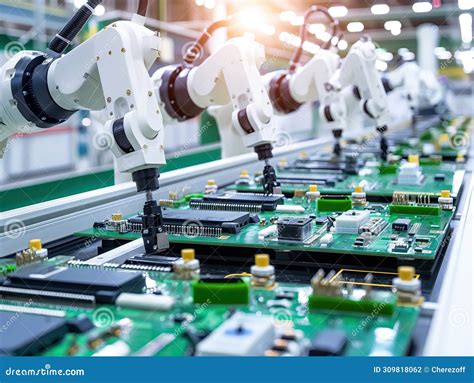
The integration of automated PCB assembly systems has redefined modern electronics manufacturing, shifting traditional workflows toward scalable, data-driven processes. By replacing manual soldering and component placement with robotic precision, PCBA (printed circuit board assembly) lines now achieve micron-level accuracy, enabling consistent production of complex multilayer boards. Advanced systems leverage machine vision to validate component alignment in real time, while adaptive algorithms adjust parameters for varying board geometries—critical for industries demanding high-reliability electronics, such as aerospace and medical devices.
This transformation extends beyond speed and accuracy. Automated PCB assembly minimizes human intervention in repetitive tasks, freeing engineers to focus on design optimization and innovation. Modular robotic cells allow manufacturers to reconfigure lines rapidly, accommodating evolving product requirements without costly downtime. Additionally, closed-loop feedback mechanisms in PCBA workflows detect anomalies early, reducing material waste by up to 30% compared to manual methods.
As factories adopt Industry 4.0 frameworks, automated PCB assembly systems increasingly interface with IoT-enabled platforms, enabling predictive maintenance and production analytics. This seamless connectivity ensures that every stage—from solder paste application to final inspection—operates at peak efficiency, solidifying robotics as the cornerstone of next-generation electronics manufacturing.
Future Trends in PCB Automation
The evolution of PCB assembly processes continues to accelerate, driven by emerging technologies that promise to redefine electronics manufacturing. Industry leaders anticipate widespread adoption of AI-driven inspection systems, which leverage machine learning to detect microscopic defects in PCBA with unprecedented accuracy. Collaborative robots (cobots) are also gaining traction, working alongside human operators to handle intricate tasks like component placement while adapting dynamically to workflow changes.
Another critical development involves IoT-enabled assembly lines, where interconnected machines share real-time data to optimize production schedules and material usage. This shift toward smart factories aligns with sustainability goals, as energy-efficient automation reduces waste in PCB assembly cycles. Additionally, advancements in modular robotic systems enable faster reconfiguration for high-mix, low-volume production—a growing demand in industries like medical devices and aerospace.
Looking ahead, hybrid models combining additive manufacturing with traditional PCBA techniques may unlock new design possibilities, particularly for flexible and high-density circuits. As miniaturization trends intensify, nanoscale automation tools will likely become essential for assembling next-generation microelectronics. These innovations not only reinforce precision but also position PCB automation as a cornerstone of Industry 4.0, ensuring manufacturers remain competitive in an increasingly connected world.
Conclusion
The integration of automated PCB assembly systems marks a pivotal advancement in modern electronics manufacturing. By leveraging robotic precision and intelligent software, PCBA processes achieve unparalleled consistency, minimizing human-induced deviations while accelerating production timelines. As industries evolve toward Industry 4.0 standards, the synergy between automated PCB assembly and data-driven analytics further refines error detection, ensuring near-flawless output even in high-volume runs.
Beyond immediate gains in workflow efficiency, the long-term economic benefits of PCBA automation—such as reduced material waste and lower rework costs—strengthen competitiveness in fast-paced markets. Manufacturers adopting these systems also gain flexibility to scale operations seamlessly, adapting to shifting consumer demands without compromising quality.
Looking ahead, advancements in machine learning and real-time monitoring will likely push automated PCB assembly toward fully adaptive production ecosystems. This progression not only solidifies automation as a cornerstone of electronics manufacturing but also underscores its role in driving sustainable innovation across global supply chains.
FAQs
How does automated PCB assembly improve production consistency?
Automated PCBA systems utilize robotic precision to place components within micron-level tolerances, eliminating variations caused by manual handling. This ensures identical output across high-volume batches, critical for mission-critical electronics.
What cost factors should manufacturers consider when adopting PCB automation?
While initial investments in PCB assembly robotics may seem substantial, long-term savings stem from reduced labor costs, minimized rework, and higher throughput. Automated optical inspection (AOI) further cuts expenses by catching defects early in high-speed production lines.
Can automated PCBA handle complex, multi-layer boards?
Modern systems integrate AI-driven vision systems and adaptive feeders to manage intricate designs, including high-density interconnect (HDI) boards. This flexibility makes automated PCB assembly viable for both prototype development and mass production.
How does automation address component shortages in electronics manufacturing?
Smart PCBA platforms leverage real-time inventory tracking and predictive algorithms to optimize component usage, reducing waste. Some systems even auto-adjust workflows for alternative parts, ensuring supply chain resilience.
Is robotic PCB assembly suitable for small-scale producers?
Yes. Modular automation solutions allow smaller manufacturers to implement scalable PCB assembly workflows. Cloud-based monitoring tools further enable cost-effective quality control, bridging the gap between boutique shops and large-scale factories.
Explore Advanced PCB Assembly Solutions Today
For tailored PCBA systems that align with your production goals, please click here to discover how our automated solutions can transform your electronics manufacturing workflow.