
Custom PCB Manufacturing: Precision Meets Rapid Turnaround

Key Takeaways
When navigating PCB manufacturing options, understanding core value propositions helps optimize your project’s success. Leading PCB manufacturing companies prioritize balancing precision engineering with accelerated timelines, ensuring prototypes transition from design to physical boards within 24 hours. This agility is critical whether you require small-batch prototyping (starting at $2/5pcs) or complex multi-layer designs.
Cost efficiency remains central to PCB manufacturing cost considerations. By leveraging advanced techniques like 3-5 axis milling and hybrid FDM/SLA 3D printing, manufacturers minimize material waste while maintaining tight tolerances. For businesses scaling operations, aligning with a PCB manufacturing business that offers 24/5 engineering support ensures seamless troubleshooting and design adjustments, even during high-volume production.
Global accessibility further enhances value, with suppliers providing instant quotes and logistics coordination across continents. This eliminates bottlenecks, allowing you to focus on iterative testing and market readiness. By integrating rapid turnaround with rigorous quality checks, modern services ensure affordability never compromises reliability—a non-negotiable in industries from aerospace to IoT. With streamlined workflows, your projects gain speed without sacrificing the exacting standards demanded by today’s electronics landscape.
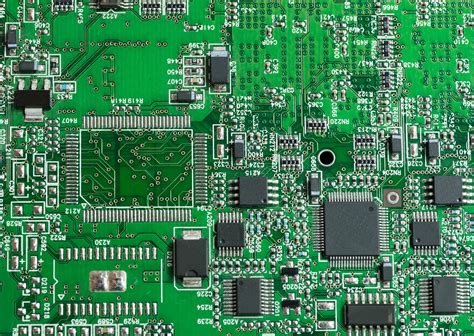
Custom PCB Manufacturing: Speed & Precision Combined
When selecting a PCB manufacturing partner, you need solutions that balance technical accuracy with accelerated timelines. Modern PCB manufacturing companies leverage advanced technologies like 3-5 axis CNC milling and FDM/SLA 3D printing to deliver prototypes in as little as 24 hours, starting from $2/5pcs. This ensures your design iterations stay agile without compromising on precision—critical for industries like aerospace or medical devices where tolerances are measured in microns.
A key advantage lies in optimizing PCB manufacturing cost through scalable workflows. For example:
| Service Tier | Turnaround | Cost Range |
|---|---|---|
| Prototyping | 24 hours | $2–$10/5pcs |
| Mid-Volume | 3–5 days | $1.50–$8/unit |
| High-Volume | 7–10 days | $0.80–$5/unit |
By integrating automated quality checks and real-time collaboration tools, leading PCB manufacturing business providers minimize errors while maintaining speed. Global support networks further enhance efficiency, offering 24/5 engineering assistance to troubleshoot design files or material choices. For instance, advanced milling techniques enable tighter trace spacing, reducing signal loss in high-frequency applications.
Whether you’re iterating a prototype or scaling production, the synergy of rapid turnaround and exacting standards ensures your project stays competitive. This approach not only meets tight deadlines but also aligns with long-term cost-efficiency goals—a hallmark of top-tier PCB manufacturing services.
24-Hour PCB Prototyping From 2/5pcs
When time-sensitive projects demand rapid iteration, PCB manufacturing services offering 24-hour prototyping become indispensable. Leading PCB manufacturing companies now enable you to receive functional prototypes in as little as one day, starting from $2 per 5 pieces for basic designs. This accelerated timeline is achieved through automated workflows, precision laser drilling, and direct integration with CAD software, ensuring your design transitions seamlessly from concept to physical board.
Tip: Optimize your design files for manufacturability upfront—clear layer labeling and standardized file formats (like Gerber or ODB++) minimize back-and-forth revisions, keeping your project on track.
The PCB manufacturing cost for prototypes depends on factors like layer count, material selection, and surface finish. However, economies of scale in modern PCB manufacturing business models allow even low-volume orders to benefit from competitive pricing. Advanced 3-5 axis milling ensures tight tolerances for complex geometries, while FDM/SLA 3D printing supports hybrid prototypes integrating custom enclosures or mechanical components.
Global engineering teams provide 24/5 technical support to address design challenges, ensuring your prototype aligns with performance requirements before full-scale production. By leveraging these capabilities, you reduce development cycles without compromising on quality—a critical advantage in industries like IoT, automotive, or medical devices where speed-to-market dictates success.
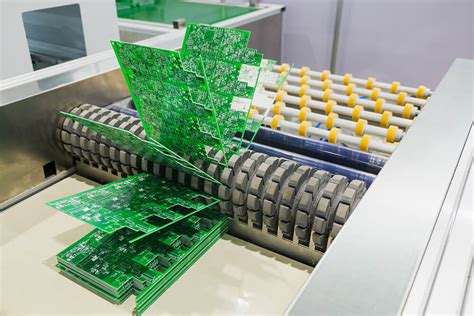
Multi-Axis Milling & 3D Printing for Custom PCBs
When developing specialized circuit boards, PCB manufacturing processes must balance precision with flexibility. Modern PCB manufacturing companies leverage multi-axis milling (3-5 axis systems) to achieve tolerances as tight as ±0.001" for complex designs, ensuring precise routing of traces and cutouts even on high-density layouts. This capability is critical for prototyping high-frequency or thermally sensitive applications where material integrity cannot be compromised.
Complementing these subtractive methods, additive technologies like FDM and SLA 3D printing enable rapid iteration of non-conductive enclosures or jigs, slashing lead times for auxiliary components. By integrating both approaches, businesses optimize PCB manufacturing cost while maintaining rigorous quality standards—ideal for startups scaling their PCB manufacturing business or enterprises refining mission-critical systems.
Transitioning between design iterations becomes seamless with automated toolpath generation and real-time adjustments, allowing engineers to validate form, fit, and function within hours. Whether you’re iterating a single-layer board or a multi-stage assembly, this hybrid workflow ensures scalability without sacrificing the speed-to-market demanded by today’s electronics sector.

Global PCB Solutions: Engineering Support 24/5
When partnering with PCB manufacturing companies, access to round-the-clock engineering support ensures your projects stay on track, regardless of time zones. Leading providers integrate PCB manufacturing expertise with real-time collaboration tools, enabling instant feedback on design adjustments, material choices, or production timelines. This 24/5 availability minimizes delays, particularly for complex multilayer boards or high-frequency designs requiring precise validation.
Balancing PCB manufacturing cost with quality demands a global network. By leveraging distributed production hubs, manufacturers optimize material sourcing and logistics, reducing overhead while maintaining compliance with international standards. For businesses scaling their PCB manufacturing business, this approach ensures consistent output—whether you’re prototyping 5-piece orders or ramping up to volume production.
Advanced platforms now automate quote generation, letting you compare pricing and lead times transparently. Combined with dedicated technical teams, this model streamlines decision-making for projects requiring 3-5 axis milling or hybrid 3D-printed components. The result? A seamless bridge between design intent and manufacturable reality, backed by engineers who understand both your technical requirements and commercial priorities.
Cost-Effective PCB Production With Rapid Turnaround
When evaluating PCB manufacturing options, balancing affordability with speed remains critical for projects of any scale. Leading PCB manufacturing companies leverage advanced fabrication techniques and optimized supply chains to minimize PCB manufacturing cost while maintaining rigorous quality standards. By strategically selecting materials, streamlining design validation, and scaling production volumes, you can achieve significant cost savings without compromising turnaround times.
Modern PCB manufacturing business models often integrate automated quoting systems and just-in-time inventory management, enabling faster order processing. For instance, high-volume orders benefit from bulk material pricing, while smaller batches utilize modular production lines to avoid delays. Cost-effective solutions might include hybrid approaches—combining traditional etching with 3D-printed substrates for complex geometries—to reduce waste and accelerate prototyping.
Moreover, rapid turnaround hinges on transparent communication between engineering teams and clients. Many providers now offer real-time project tracking, allowing you to monitor progress and approve revisions instantly. This agility ensures that even last-minute design changes won’t derail timelines. By aligning PCB manufacturing workflows with your project’s specific requirements, you gain both financial efficiency and the flexibility to meet tight deadlines—a dual advantage in fast-paced industries.
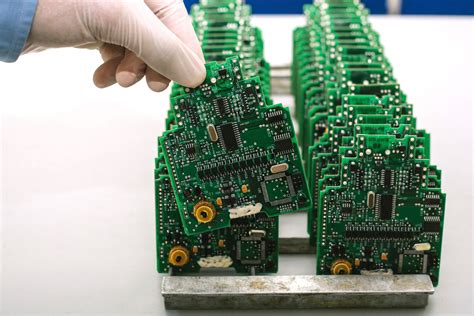
Advanced Prototyping: From Design to Delivery
When developing custom electronics, your design’s transition from digital schematics to functional prototypes hinges on PCB manufacturing processes that prioritize both precision and agility. Leading PCB manufacturing companies leverage advanced 3-5 axis milling systems to produce high-tolerance circuit boards, ensuring even complex multi-layer designs meet exact specifications. Simultaneously, additive technologies like FDM and SLA 3D printing accelerate structural validation, allowing you to test enclosures or mechanical integrations within hours.
This approach not only reduces PCB manufacturing cost through material-efficient workflows but also maintains rapid turnaround timelines—critical for iterative development. By collaborating directly with engineering teams, you gain insights into design optimizations that enhance manufacturability without compromising performance. Automated quoting systems further streamline the process, providing instant cost breakdowns aligned with your project’s scale and complexity.
For businesses scaling from prototypes to volume production, aligning with a PCB manufacturing business that integrates prototyping and mass production under one roof ensures consistency. Real-time progress tracking and 24/5 technical support minimize delays, letting you focus on refining end-user applications while professionals handle the technical heavy lifting.
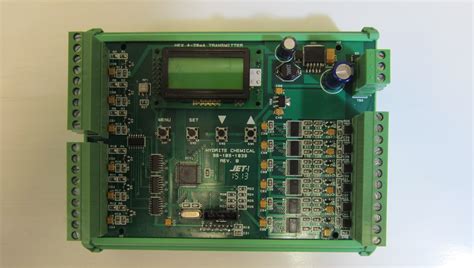
Custom PCB Services: Quality Meets Affordability
When sourcing PCB manufacturing solutions, balancing quality with budget constraints remains a critical challenge. Leading PCB manufacturing companies now leverage advanced fabrication techniques and optimized supply chains to deliver high-performance boards without inflating PCB manufacturing cost. By integrating automated quality checks and precision etching processes, these providers ensure electrical reliability even for complex designs, while bulk-order discounts and material optimization strategies make small-batch production economically viable.
For startups and established enterprises alike, managing PCB manufacturing business expenses hinges on transparent pricing models and scalable workflows. Modern services often offer tiered pricing—enabling you to choose between standard FR-4 substrates or premium materials like Rogers or polyimide—based on your project’s technical demands. This flexibility ensures cost efficiency across prototyping and mass production phases. Additionally, partnerships with global suppliers reduce lead times and logistics overhead, further aligning quality outcomes with budgetary goals.
By prioritizing design-for-manufacturability (DFM) feedback and real-time cost calculators, these providers empower you to refine layouts before production, minimizing waste and rework. Whether you require high-density interconnects or thermal management solutions, the right partner transforms PCB manufacturing from a cost center into a competitive advantage.
Streamlined PCB Manufacturing for Global Clients
As your project scales from prototyping to full-scale production, PCB manufacturing companies must balance operational agility with uncompromising quality. Modern streamlined workflows eliminate bottlenecks through automated design verification and standardized material sourcing, ensuring your PCB manufacturing cost remains predictable even for complex multilayered designs. This operational efficiency doesn’t sacrifice precision—advanced optical inspection (AOI) systems validate every micron of trace alignment, while ISO-certified processes guarantee compliance across international markets.
For businesses managing global supply chains, leading PCB manufacturing business providers offer unified platforms where you can track orders in real time, request engineering adjustments via 24/5 support, and receive instant logistics updates—whether your boards are destined for single-board controllers in Berlin or IoT devices in Shenzhen. By consolidating prototyping and mass production under one roof, these suppliers reduce lead times by up to 40%, a critical advantage when synchronizing with overseas assembly partners.
The true value lies in scalability: flexible order volumes adapt to your market demands without inflating per-unit costs. Whether you’re iterating a medical device prototype or ramping up automotive-grade PCB production, streamlined manufacturing ecosystems ensure your technical requirements align seamlessly with commercial objectives—no matter where your operations span.
Conclusion
When navigating the complexities of PCB manufacturing, choosing the right partner ensures your project balances precision, speed, and affordability. Leading PCB manufacturing companies leverage advanced technologies—from multi-axis milling to additive processes—to deliver prototypes in as little as 24 hours, even at low volumes. This agility is critical whether you’re iterating designs or scaling production, as it directly impacts time-to-market and resource allocation.
Understanding PCB manufacturing cost drivers—such as material selection, layer count, and turnaround time—helps you optimize budgets without compromising quality. For startups and enterprises alike, aligning with a PCB manufacturing business that offers transparent pricing and global engineering support ensures you’re not just paying for parts but investing in expertise. Whether you’re prototyping or moving to high-volume runs, the right provider bridges innovation with practicality, turning complex designs into reliable, market-ready solutions.
By prioritizing partners who integrate cutting-edge capabilities with responsive service, you secure a competitive edge in industries where precision and speed define success.
Frequently Asked Questions
How quickly can you deliver custom PCB prototypes?
Most PCB manufacturing companies offer 24-hour turnaround for prototypes, with pricing starting at $2 for 5 pieces. This speed is achieved through automated workflows and 3-5 axis milling integration, ensuring precision without compromising timelines.
What factors influence PCB manufacturing cost?
Cost depends on material selection, layer count, and finishing options like HASL or ENIG. Bulk orders typically reduce per-unit expenses, while advanced features (e.g., FDM/SLA 3D printing) may increase initial PCB manufacturing investment.
How do I verify a PCB manufacturing business meets quality standards?
Look for ISO-certified PCB manufacturing companies with traceable quality control processes. Reputable providers share test reports, offer design-for-manufacturability (DFM) feedback, and maintain transparent communication during production.
Can you support both prototyping and large-scale production?
Yes, modern PCB manufacturing services streamline workflows from 5-piece prototypes to 10,000+ unit batches. Integrated systems enable seamless scaling, with global support teams managing logistics and compliance for international clients.
Ready to Start Your Project?
For instant quotes and 24/5 engineering support, please click here to explore our custom PCB solutions. Submit your design files today to leverage rapid turnaround and precision-driven PCB manufacturing cost optimization.