
Mastering Custom PCB Production: Efficiency Meets Precision
Key Takeaways
When navigating PCB manufacturing, understanding core optimization strategies ensures you balance speed with precision. Choosing the right PCB manufacturing companies requires evaluating their expertise in handling complex designs while maintaining tight tolerances. For instance, partnering with firms that offer fast-turnaround PCB manufacturing solutions can accelerate prototyping without compromising on layer alignment or material integrity.
Tip: Always request detailed breakdowns of PCB manufacturing cost components—this helps identify areas for budget optimization, such as bulk ordering or material substitutions.
A critical factor in managing your PCB manufacturing business is streamlining assembly processes. Automated optical inspection (AOI) systems and standardized testing protocols minimize errors, reducing rework cycles. Additionally, leveraging advanced techniques like laser drilling or HDI (High-Density Interconnect) technology enhances reliability for high-frequency applications.
Cost-effectiveness doesn’t mean cutting corners. Instead, focus on design-for-manufacturability (https://www.andwinpcba.com) early in the design phase can prevent signal integrity issues downstream. By aligning your priorities with proven engineering practices, you’ll achieve professional-grade results while maintaining competitive timelines.
Custom PCB Production Optimization Strategies
To optimize custom PCB production, you need to balance efficiency with precision while keeping PCB manufacturing costs manageable. Start by collaborating with PCB manufacturing companies that offer design-for-manufacturability (DFM) analysis—this ensures your board layout aligns with fabrication capabilities, reducing errors and revisions. Streamline material selection by prioritizing industry-grade substrates that meet performance requirements without over-specifying, which can inflate expenses unnecessarily.
Leverage automated quoting tools from reputable PCB manufacturing business partners to accelerate prototyping phases. These systems analyze design complexity and volume to provide real-time cost estimates, helping you make informed decisions faster. For high-volume orders, consider panelization strategies to maximize material usage and minimize waste—a critical factor in controlling PCB manufacturing overhead.
Adopt modular design principles to simplify assembly, especially when working with mixed-technology boards. Partnering with manufacturers that integrate automated optical inspection (AOI) ensures consistent quality without sacrificing turnaround times. Finally, maintain open communication with your fabrication team to align expectations, whether prioritizing speed for iterative prototypes or precision for mission-critical production runs. By refining these strategies, you create a workflow where PCB manufacturing cost efficiency coexists with technical excellence.
Fast-Turnaround PCB Manufacturing Solutions
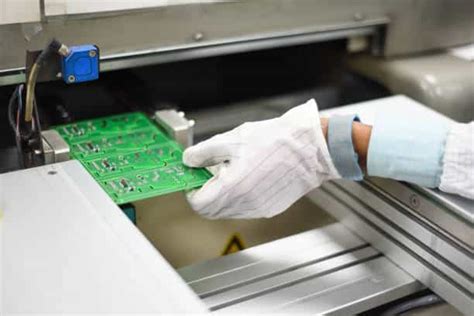
When deadlines tighten, partnering with PCB manufacturing companies that prioritize rapid production cycles becomes critical. Modern PCB manufacturing processes leverage automated workflows and advanced prototyping tools to slash lead times without compromising quality. By integrating just-in-time material sourcing and AI-driven design validation, these providers ensure your boards move from concept to delivery in days, not weeks.
A key factor in accelerating timelines lies in optimizing PCB manufacturing cost structures. Companies employing panelization techniques or bulk-order discounts can reduce expenses while maintaining speed. However, balancing affordability with precision requires careful coordination between your design team and the PCB manufacturing business handling fabrication. Tools like real-time order tracking and collaborative project portals help streamline communication, minimizing revisions that delay production.
For industries like IoT or automotive electronics, where rapid iteration is non-negotiable, selecting manufacturers with same-day turnaround options for prototypes ensures you stay ahead of competitors. Always verify if your supplier uses high-speed drilling systems or direct laser imaging to achieve micron-level accuracy under tight deadlines. By aligning your priorities with a manufacturer’s technical capabilities, you secure both speed and reliability in every batch.
Precision Engineering for Professional PCBs
Achieving professional-grade circuit boards requires balancing PCB manufacturing tolerances with application-specific demands. Precision engineering ensures signal integrity by optimizing trace widths, layer alignment, and material selection—critical for high-frequency or miniaturized designs. When selecting PCB manufacturing companies, verify their capability to handle ±0.002" tolerances and advanced substrates like Rogers or polyimide.
| Factor | Standard Manufacturing | Precision Engineering |
|---|---|---|
| Trace Width Tolerance | ±20% | ±5% |
| Layer Alignment | ±3 mil | ±1 mil |
| Material Options | FR4 Only | High-Frequency/High-Temp |
Managing PCB manufacturing cost becomes strategic here: tighter specs may increase upfront expenses but reduce rework risks. For instance, opting for laser-drilled vias instead of mechanical drilling improves accuracy but requires specialized equipment. Leading PCB manufacturing business models prioritize DFM (Design for Manufacturing) feedback loops, helping you avoid over-engineering while maintaining performance.
By leveraging automated optical inspection (AOI) and impedance testing, you ensure consistency across batches—a non-negotiable for aerospace or medical applications. This approach aligns with industry benchmarks, where yield rates directly correlate with process control rigor.
Cost-Effective Custom Circuit Board Design
When designing custom circuit boards, balancing PCB manufacturing cost with performance requires strategic planning. Start by collaborating with experienced PCB manufacturing companies that offer transparent pricing models. Many providers now use design-for-manufacturability (DFM) tools to identify potential inefficiencies early, helping you avoid costly revisions. For instance, opting for standard substrate materials or minimizing layer counts can reduce PCB manufacturing expenses without compromising functionality.
Consider panelization—grouping multiple designs onto a single board—to optimize material usage and lower per-unit costs. However, ensure your design adheres to the manufacturer’s guidelines for spacing and tooling to prevent delays. Advanced PCB manufacturing business practices, such as bulk ordering or leveraging economies of scale, further enhance affordability.
To maintain cost efficiency, prioritize clear communication with your supplier about tolerances and testing requirements. While tighter specifications improve precision, they often escalate PCB manufacturing cost. Striking this balance ensures professional-grade results while aligning with budget constraints—a critical step before transitioning to streamlined assembly processes.
Streamlining PCB Assembly for Maximum Efficiency
To achieve peak efficiency in PCB manufacturing, you must focus on optimizing every stage of the assembly process. Modern PCB manufacturing companies leverage automated pick-and-place systems and reflow soldering technologies to minimize human error while accelerating production timelines. By integrating design-for-manufacturability (DFM) principles early, you ensure components are positioned to avoid bottlenecks during assembly, directly reducing PCB manufacturing cost and material waste.
Advanced software tools, such as automated optical inspection (AOI) and X-ray testing, enable real-time quality checks without slowing down throughput. This balance is critical for maintaining precision in high-volume orders, especially when partnering with PCB manufacturing business specialists who prioritize scalable solutions. For instance, standardized panelization techniques allow multiple boards to be processed simultaneously, cutting downtime and maximizing equipment utilization.
Transitioning from prototyping to full-scale production becomes seamless when assembly workflows are pre-optimized. By aligning your design specifications with the capabilities of your manufacturer, you eliminate redundant steps and ensure faster turnaround times. This approach not only streamlines operations but also strengthens your ability to meet tight deadlines without compromising on the reliability of your final product.

Quality Control in Custom PCB Fabrication
When designing custom circuit boards, ensuring quality control is non-negotiable for balancing precision and pcb manufacturing cost. Reputable pcb manufacturing companies deploy automated optical inspection (AOI) systems to scan for micro-defects like solder bridging or misaligned components, while X-ray testing verifies internal layer integrity in multilayer designs. These protocols minimize costly rework and delays, directly impacting your project’s timeline and budget.
You’ll find that rigorous testing extends beyond visual checks. Functional testing under simulated operating conditions—such as thermal cycling or signal integrity analysis—validates performance in real-world scenarios. For pcb manufacturing business models prioritizing reliability, statistical process control (SPC) tracks production trends to preemptively address deviations. This proactive approach ensures zero defects reach assembly, safeguarding your reputation.
However, quality assurance isn’t just about tools—it’s about collaboration. Partnering with pcb manufacturing specialists who document every inspection phase provides transparency. Certifications like ISO 9001 or IPC-A-600 compliance further reinforce trust, ensuring your boards meet industry-leading standards without inflating pcb manufacturing cost. By integrating these practices, you maintain consistency across prototypes and high-volume runs alike.
Advanced Techniques for Reliable PCB Prototyping
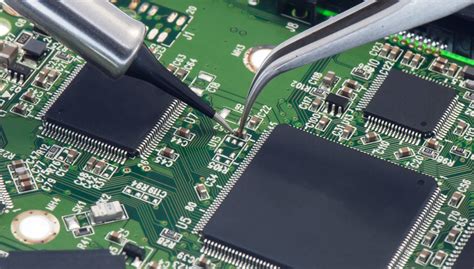
When prototyping custom PCBs, achieving reliability requires balancing technical precision with process optimization. Leading PCB manufacturing companies now employ automated optical inspection (AOI) systems to detect micro-defects in real time, reducing errors before mass production. You’ll find that integrating design for manufacturability (DFM) checks early in the process minimizes rework, directly lowering PCB manufacturing cost while accelerating timelines.
For complex designs, controlled impedance routing ensures signal integrity, especially in high-frequency applications. Pairing this with advanced materials like polyimide substrates enhances thermal stability—a critical factor for professional-grade boards. When selecting partners for your PCB manufacturing business, prioritize those offering rapid prototyping with multi-layer alignment accuracy below 25µm. This precision prevents misregistration issues that compromise functionality.
Transitioning from prototype to full-scale production? Use panelization strategies to optimize material usage without sacrificing quality. Advanced PCB manufacturing workflows now leverage machine learning algorithms to predict failure points, further refining yield rates. By combining these techniques, you maintain consistency across batches while meeting tight deadlines—a hallmark of modern, cost-effective prototyping.
Balancing Speed and Accuracy in PCB Production
When optimizing PCB manufacturing, achieving equilibrium between rapid delivery and meticulous execution requires strategic planning. While PCB manufacturing companies often prioritize faster turnaround to meet client deadlines, cutting corners can compromise signal integrity or thermal performance. To maintain precision, you’ll need advanced design validation tools and automated optical inspection (AOI) systems that identify defects without slowing production.
Managing PCB manufacturing cost effectively involves selecting materials with optimal yield rates and leveraging batch processing for high-volume orders. However, balancing speed becomes trickier with complex multilayer designs, where even minor alignment errors can escalate PCB manufacturing business risks. Implementing real-time monitoring during etching and drilling phases ensures accuracy while adhering to tight schedules.
Transitioning between prototyping and full-scale production? Consider hybrid workflows where critical stages use slower, high-precision methods, while standardized steps employ faster machinery. This approach minimizes bottlenecks without sacrificing dimensional tolerances or electrical reliability. By aligning your team’s priorities with scalable technologies, you’ll refine the delicate interplay of efficiency and exactness in every project.
Conclusion
When navigating the complexities of PCB manufacturing, the balance between speed and precision defines your success. Partnering with experienced PCB manufacturing companies ensures access to advanced technologies and streamlined workflows, directly addressing challenges like PCB manufacturing cost and time-to-market pressures. As you refine your PCB manufacturing business strategy, prioritize suppliers that offer transparent pricing models, scalable production tiers, and rigorous quality assurance protocols.
By integrating automated design validation and real-time project tracking, you eliminate bottlenecks while maintaining the technical rigor required for professional-grade boards. Remember, cost optimization isn’t just about reducing expenses—it’s about aligning material choices, layer counts, and tolerances with your application’s exact needs. Whether prototyping or scaling production, a collaborative approach with your manufacturer strengthens reliability across every batch.
Ultimately, the future of PCB manufacturing lies in leveraging data-driven insights to anticipate challenges before they arise. Stay informed about emerging materials and fabrication techniques, and you’ll consistently deliver circuits that meet both performance benchmarks and budgetary constraints.
FAQs
How do PCB manufacturing companies ensure quality in custom designs?
Reputable PCB manufacturing firms use automated optical inspection (AOI) and electrical testing to verify circuit integrity. They adhere to IPC-A-600 standards, ensuring your boards meet performance benchmarks while balancing PCB manufacturing cost and precision.
What factors influence PCB manufacturing cost for small batches?
Material selection, layer count, and surface finish directly impact expenses. For low-volume orders, PCB manufacturing business models often prioritize modular pricing—letting you pay only for features like impedance control or lead-free finishes.
Can fast-turnaround services compromise accuracy?
Advanced PCB manufacturing workflows combine laser direct imaging (LDI) with DFM checks to maintain tight tolerances even under tight deadlines. Many companies offer 24-hour prototyping without sacrificing ±0.1mm dimensional accuracy.
How do you choose between PCB manufacturing companies for complex designs?
Evaluate certifications (ISO 9001, UL listing), multi-layer expertise, and their ability to handle HDI designs. Look for suppliers providing real-time production tracking—a hallmark of scalable PCB manufacturing business operations.
What sustainability practices exist in modern PCB production?
Leading manufacturers use halogen-free laminates and water-soluble fluxes, reducing environmental impact. Some optimize panel utilization to lower PCB manufacturing cost while minimizing material waste by up to 15%.
Ready to Optimize Your Next Project?
Streamline your PCB manufacturing process with precision-engineered solutions. Click here to explore tailored services that align with your technical and budgetary needs.