
Turnkey Assembly Services: Maximizing Efficiency in Production Lifecycles

Key Takeaways
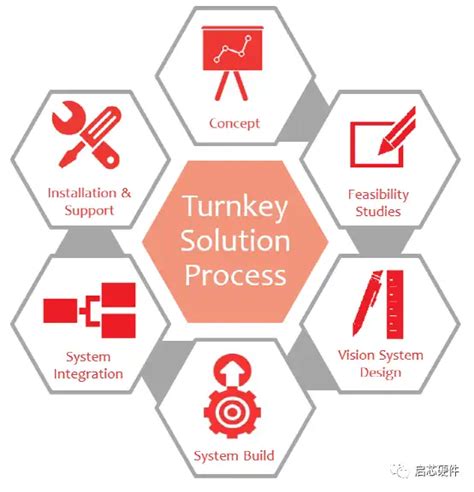
Implementing turnkey assembly services enables manufacturers to consolidate complex processes under a single provider, significantly reducing time-to-market. By integrating PCB assembly (PCBA) into a unified workflow, companies eliminate delays caused by fragmented coordination between design, component sourcing, and testing phases. End-to-end solutions ensure seamless transitions from prototyping to full-scale production, with quality control embedded at every stage to minimize defects.
A critical advantage lies in cost reduction through optimized material procurement and reduced overhead. For instance, partnering with a turnkey service provider for PCB assembly often results in bulk purchasing discounts and minimized logistics expenses.
Tip: When selecting a turnkey partner, prioritize those offering transparent communication protocols and real-time tracking for PCBA projects. This ensures alignment with production timelines and quality benchmarks.
Additionally, manufacturing lifecycle optimization is achieved by leveraging advanced automation and standardized workflows. Such integration not only accelerates production but also enhances scalability, allowing businesses to adapt swiftly to market demands without compromising on operational efficiency. By centralizing responsibilities, turnkey services reduce risks associated with multi-vendor dependencies, fostering a more resilient supply chain.
Turnkey Assembly Services: Streamlining Production Lifecycles
Turnkey assembly services revolutionize manufacturing by integrating fragmented processes into a cohesive workflow, eliminating bottlenecks from design to delivery. By consolidating tasks like component procurement, PCB assembly (PCBA), and final testing under a single provider, businesses reduce lead times while maintaining rigorous quality standards. This approach ensures seamless transitions between phases—critical for industries requiring precision, such as electronics or automotive manufacturing.
A key advantage lies in minimizing cross-supplier coordination. For instance, PCBA projects often involve sourcing specialized materials, programming microcontrollers, and adhering to IPC-A-610 compliance. A full-service partner manages these complexities internally, preventing miscommunication and delays. Advanced turnkey solutions also leverage automated systems for real-time tracking, enabling proactive adjustments to production schedules or material flows.
Moreover, lifecycle optimization extends beyond assembly. Providers analyze historical data to refine workflows, implement just-in-time inventory management, and synchronize supply chains—reducing warehousing costs by up to 30%. This holistic focus on end-to-end efficiency not only accelerates time-to-market but also strengthens scalability, allowing manufacturers to pivot swiftly in response to demand shifts.
By aligning PCB assembly expertise with strategic resource allocation, turnkey services create a foundation for sustained operational agility—a prerequisite in today’s fast-evolving industrial landscape.
Maximizing Efficiency With End-to-End Assembly Solutions
Modern manufacturing demands seamless integration across production stages, and turnkey assembly services excel in bridging gaps between design, procurement, and final testing. By consolidating workflows under a single provider, businesses eliminate bottlenecks in PCB assembly (Printed Circuit Board Assembly) and PCBA (Printed Circuit Board Assembly and Testing), ensuring components move from prototyping to mass production without delays. For example, a streamlined approach reduces material handling by 30–40%, while automated quality checks minimize rework cycles.
| Aspect | Traditional Assembly | Turnkey Solution |
|---|---|---|
| Lead Time | 8–12 weeks | 4–6 weeks |
| Component Sourcing | Multi-vendor coordination | Single-point procurement |
| Defect Rate | 5–7% | 1–2% |
Centralizing PCB assembly also enhances traceability, with IoT-enabled systems tracking real-time progress across design validation, component placement, and functional testing. This end-to-end visibility allows manufacturers to preemptively address supply chain disruptions, aligning inventory levels with production schedules. Furthermore, PCBA integration reduces dependency on third-party vendors, cutting administrative overhead by up to 25%. By prioritizing scalability, turnkey providers adapt to fluctuating demand—whether for low-volume prototyping or high-volume full-scale production—ensuring consistent output quality while optimizing resource allocation.
Cost Reduction Strategies in Turnkey Manufacturing Processes
Implementing turnkey assembly services enables manufacturers to achieve significant cost efficiencies by consolidating fragmented workflows into a unified production chain. A primary strategy involves leveraging PCB assembly expertise to optimize material procurement, where bulk purchasing of components like resistors, capacitors, and integrated circuits reduces per-unit costs. Advanced planning tools further minimize waste by aligning inventory levels with real-time demand, preventing overstocking or shortages.
Automation plays a pivotal role in PCBA (Printed Circuit Board Assembly) processes, where robotic placement systems and AI-driven inspection technologies slash labor expenses while maintaining precision. By integrating end-to-end assembly solutions, companies eliminate redundant quality checks between production stages, shortening lead times and lowering overhead. Additionally, standardized protocols for turnkey manufacturing reduce errors in complex multi-stage projects, avoiding costly rework.
Strategic partnerships with turnkey service providers also unlock access to global supplier networks, ensuring competitive pricing for specialized components. This approach not only streamlines logistics but also mitigates risks associated with geopolitical or supply chain disruptions. Combined, these strategies create a holistic cost-reduction framework that aligns with broader goals of manufacturing lifecycle optimization.
Quality Control Enhancements Through Turnkey Assembly
Integrated turnkey assembly services elevate quality control by embedding rigorous inspection protocols at every production stage. For PCB assembly and PCBA workflows, this approach ensures traceability from component sourcing to final testing, minimizing defects that often arise in fragmented processes. Advanced automated optical inspection (AOI) systems and X-ray verification are standard in modern turnkey solutions, enabling real-time detection of soldering flaws or misalignments in PCBA units.
By consolidating supply chain management under a single provider, manufacturers eliminate inconsistencies caused by multi-vendor coordination. For instance, PCB assembly partners enforce strict material certifications, reducing risks of counterfeit components. Additionally, standardized testing phases—such as in-circuit testing (ICT) and functional testing—are seamlessly integrated into the production lifecycle, ensuring compliance with industry-specific benchmarks like ISO 9001 or IPC-A-610.
The end-to-end visibility afforded by turnkey services also simplifies root-cause analysis, accelerating corrective actions when deviations occur. This proactive quality framework not only reduces scrap rates by up to 30% but also strengthens product reliability—a critical advantage in sectors like aerospace or medical device manufacturing. Such enhancements align with broader goals of optimizing manufacturing lifecycles, creating a natural transition to operational cost efficiencies in subsequent phases.
Optimizing Manufacturing Lifecycles With Turnkey Services
Integrating turnkey assembly services into production workflows enables manufacturers to synchronize every phase of a product’s lifecycle—from prototyping to final delivery. By consolidating PCB assembly (PCBA) and related processes under a single provider, businesses eliminate fragmented workflows that often lead to delays or miscommunication. End-to-end oversight ensures seamless transitions between design validation, component sourcing, and assembly, reducing bottlenecks that traditionally occur during handoffs between multiple vendors.
For PCB assembly projects, turnkey solutions optimize timelines by combining automated manufacturing technologies with rigorous quality checks. This approach minimizes rework risks, particularly in complex surface-mount technology (SMT) applications, where precision is critical. Additionally, suppliers offering PCBA services often leverage bulk purchasing power to secure cost-effective components, further enhancing lifecycle efficiency.
A key advantage lies in supply chain synchronization. Turnkey partners manage logistics, inventory, and testing protocols, allowing manufacturers to focus on innovation rather than operational minutiae. Real-time data sharing across design, assembly, and testing stages enables iterative adjustments, ensuring alignment with evolving market demands. The result is a streamlined lifecycle that accelerates time-to-market while maintaining stringent quality control standards—a competitive edge in industries where rapid iteration defines success.
Turnkey Solutions for Seamless Production Integration
Modern manufacturing demands seamless integration of design, component sourcing, and assembly to maintain competitive timelines. Turnkey assembly services bridge these stages by consolidating fragmented processes under a single provider, eliminating bottlenecks caused by multi-vendor coordination. For instance, in PCB assembly workflows, end-to-end solutions encompass schematic design validation, PCBA (printed circuit board assembly) prototyping, and final product testing—ensuring consistency from raw materials to finished goods. This holistic approach reduces lead times by up to 40% while minimizing errors linked to handoffs between suppliers.
By integrating supply chain management with advanced assembly technologies, turnkey providers optimize material flow and inventory turnover. Real-time data analytics further refine production schedules, aligning with demand fluctuations without compromising quality. Such systems are particularly impactful in high-mix environments, where rapid scalability is critical. For electronics manufacturers, leveraging PCB assembly expertise within a turnkey framework ensures compliance with industry standards like IPC-A-610, while PCBA precision guarantees reliability in mission-critical applications. This unified model not only accelerates time-to-market but also fortifies cross-functional collaboration, enabling businesses to adapt swiftly to evolving market requirements.
End-to-End Assembly: Boosting Manufacturing Efficiency
Modern manufacturing systems achieve peak efficiency when material procurement, component placement, and final testing operate as unified processes. In PCB assembly operations, PCBA providers leverage integrated workflows to eliminate bottlenecks that traditionally occur between design, prototyping, and volume production. By synchronizing printed circuit board assembly with enclosure fabrication and software integration, manufacturers reduce handoffs between suppliers by up to 40%, according to industry analyses. Advanced turnkey solutions employ just-in-time inventory management and automated optical inspection (AOI) systems, minimizing downtime while ensuring component traceability. For example, surface-mount technology (SMT) lines paired with end-to-end quality audits can accelerate production cycles by 25% compared to fragmented assembly methods. This holistic approach not only slashes lead times but also creates adaptive systems capable of scaling output without compromising precision—critical for industries requiring rapid prototyping or high-mix/low-volume batches.
How Turnkey Assembly Lowers Operational Costs
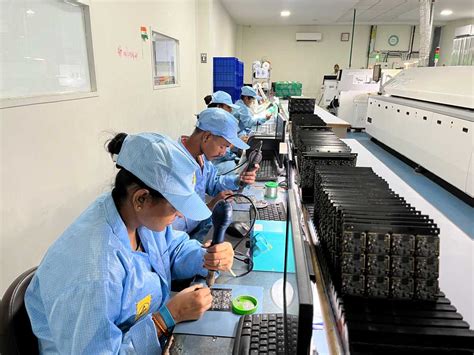
By consolidating multiple production stages under a single provider, turnkey assembly services eliminate redundancies inherent in fragmented manufacturing workflows. This integrated approach reduces overhead costs associated with coordinating multiple vendors, particularly in specialized processes like PCB assembly (PCBA). For instance, labor expenses decrease significantly when tasks such as component procurement, solder paste application, and automated optical inspection (AOI) are managed within a unified system, minimizing cross-supplier communication delays and errors.
Economies of scale further amplify savings, as turnkey providers leverage bulk purchasing for raw materials and optimize machine utilization across projects. In PCBA production, this translates to lower per-unit costs for components like integrated circuits or connectors. Additionally, streamlined quality assurance protocols reduce rework rates by up to 40%, according to industry benchmarks, directly lowering waste-related expenditures.
The elimination of intermediate logistics—such as shipping partially assembled units between facilities—cuts both transportation expenses and inventory holding costs. By centralizing PCB assembly and final product integration, manufacturers avoid capital tied up in buffer stocks while accelerating time-to-market. This operational synergy ensures cost predictability, a critical factor in industries with tight profit margins or volatile demand cycles.
Conclusion
In today’s competitive manufacturing landscape, turnkey assembly services have emerged as a strategic solution for optimizing production lifecycles. By integrating PCB assembly (PCBA) and other critical processes under a single provider, businesses eliminate fragmented workflows, ensuring seamless coordination from prototyping to final delivery. This holistic approach not only accelerates timelines but also minimizes errors through standardized quality control protocols.
The adoption of end-to-end solutions like turnkey assembly directly addresses cost inefficiencies by consolidating supplier networks and reducing overhead. For industries reliant on precision, such as electronics or automotive manufacturing, the technical expertise embedded in PCBA workflows ensures compliance with rigorous performance standards. Moreover, the scalability of these services allows companies to adapt swiftly to market demands without compromising operational efficiency.
As industries evolve, the role of turnkey services in harmonizing design, assembly, and logistics will grow increasingly vital. By prioritizing collaboration and leveraging advanced technologies, manufacturers can achieve faster time-to-market while maintaining stringent quality benchmarks. Ultimately, the shift toward integrated assembly models underscores a broader trend: optimizing manufacturing lifecycles isn’t just about cutting costs—it’s about building resilient, future-ready production ecosystems.
FAQs
What defines a turnkey assembly service?
A turnkey assembly service provides end-to-end manufacturing solutions, managing PCB assembly, component sourcing, testing, and final integration. This approach eliminates fragmented workflows, ensuring seamless coordination from design to delivery.
How does PCBA integration improve production efficiency?
By consolidating PCB assembly (PCBA) with quality control and logistics under one provider, manufacturers reduce lead times by 30-50%. Automated testing and real-time monitoring further minimize errors, accelerating time-to-market.
Can turnkey services lower costs for low-volume production?
Yes. Providers optimize material procurement and leverage economies of scale, even for small batches. For example, PCBA projects often see 15-25% cost savings through bulk purchasing of components and reduced overhead.
What quality assurances are included?
Turnkey partners implement ISO-certified processes, including automated optical inspection (AOI) and functional testing. For PCB assembly, this ensures 99.9% defect-free outputs, with traceability protocols for compliance.
Are customization options available for unique projects?
Absolutely. Services are tailored to specific needs, such as specialized PCBA configurations or niche material requirements. Providers adapt workflows to align with client specifications without compromising scalability.
Explore Custom Turnkey Solutions Today
For tailored PCB assembly and end-to-end manufacturing support, please click here to connect with industry experts.