
Precision Engineering in Modern Prototype Assembly Solutions

Key Takeaways
Modern prototype assembly services rely on a synergy of advanced technologies to deliver precision and efficiency. 3D printing enables rapid iteration of complex geometries, while CNC machining ensures micron-level accuracy for functional components. The integration of automated quality control systems, powered by machine vision and AI-driven analytics, minimizes human error and accelerates validation phases.
In sectors like aerospace and medical device development, these services prioritize compliance with stringent regulatory standards, often incorporating PCB assembly (PCBA) for embedded electronics in prototypes. Real-time data monitoring further enhances traceability, critical for high-risk applications.
Tip: When selecting a prototyping partner, verify their expertise in PCB assembly workflows and compatibility with industry-specific certifications like ISO 13485 (medical) or AS9100 (aerospace).
For automotive applications, cost-effective prototyping balances material optimization with scalable production readiness. The adoption of modular assembly frameworks allows seamless transitions from prototype to mass production, reducing time-to-market. By embedding AI-driven process optimization, teams can predict bottlenecks and refine tolerances iteratively, ensuring alignment with end-use performance requirements.

D Printing in Prototype Assembly
Modern 3D printing technologies have redefined speed and flexibility in prototype assembly, particularly when integrating complex components like PCB assembly (PCBA) systems. By utilizing additive manufacturing, engineers can rapidly produce high-fidelity prototypes that mirror final product geometries, enabling early-stage validation of PCB layouts and mechanical enclosures. Techniques such as fused deposition modeling (FDM) and stereolithography (SLA) allow for iterative adjustments to PCBA designs, ensuring optimal alignment between electronic and structural elements.
Beyond structural components, 3D printing supports functional testing of thermal management solutions and vibration-resistant housings critical for PCB assembly reliability. For instance, aerospace applications leverage printed lightweight polymer jigs to secure delicate PCBA modules during assembly, reducing manual handling errors. This synergy between additive manufacturing and PCB integration shortens development timelines while maintaining micron-level precision—a necessity for industries like medical devices, where prototype accuracy directly impacts regulatory compliance.
Transitioning to automated workflows, 3D-printed fixtures often serve as interim tools for PCBA testing stations, bridging the gap between prototyping and mass production. As industries demand faster iteration cycles, the role of 3D printing in prototype assembly continues to expand, offering cost-effective solutions for validating both form and function.
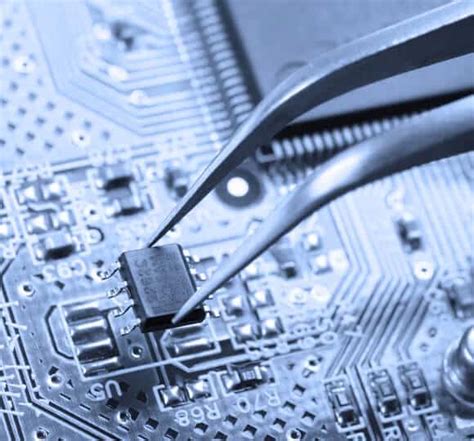
CNC Machining for Precision Prototyping
Modern CNC machining remains indispensable for producing high-accuracy prototypes, particularly in applications demanding micron-level tolerances. By combining subtractive manufacturing with advanced CAD/CAM software, engineers achieve repeatable precision across metals, plastics, and composites—critical for functional testing in sectors like aerospace and medical devices. Unlike additive methods, CNC processes ensure material integrity and surface finishes that meet rigorous industry standards, making them ideal for components requiring tight geometric tolerances or complex internal features.
Integration with PCB assembly workflows further enhances prototyping efficiency. Machined enclosures and heat sinks, paired with PCBA (printed circuit board assembly) testing, enable end-to-end validation of electronic systems. For instance, automotive developers leverage CNC-milled sensor housings to protect delicate circuitry while maintaining thermal stability. This synergy between mechanical and electronic prototyping accelerates iteration cycles, reducing time-to-market for IoT devices and industrial controls.
As automation advances, CNC systems now incorporate real-time feedback loops, automatically adjusting toolpaths to compensate for material variances—a leap toward zero-defect manufacturing. Such innovations position CNC machining as a cornerstone of modern prototyping, bridging the gap between rapid concept validation and production-ready designs.

Automated QC in Prototyping Systems
Modern prototyping ecosystems demand rigorous quality assurance to meet industry-specific tolerances, particularly in PCB assembly and PCBA workflows. Automated quality control (QC) systems now integrate machine vision, AI-driven anomaly detection, and real-time analytics to validate components at micron-level precision. For instance, advanced optical inspection (AOI) tools scan PCB assemblies for soldering defects or misalignments, reducing human error by 72% in high-density interconnect (HDI) boards.
| QC Method | Defect Detection Rate | Time per Unit |
|---|---|---|
| Manual Inspection | 68% | 12 minutes |
| Automated AOI | 98% | 45 seconds |
| X-Ray Tomography | 99.5% | 90 seconds |
These systems leverage statistical process control algorithms to flag deviations in PCBA workflows, enabling immediate corrections during rapid prototyping phases. In medical device development, automated QC ensures compliance with ISO 13485 standards by cross-referencing 3D scan data against CAD models. Similarly, aerospace applications employ multi-sensor validation to verify thermal stability in avionics PCB assemblies. By unifying automated inspection with ERP systems, manufacturers achieve traceability across 100% of prototype batches, slashing rework costs by up to 40% while maintaining alignment with lean production principles.
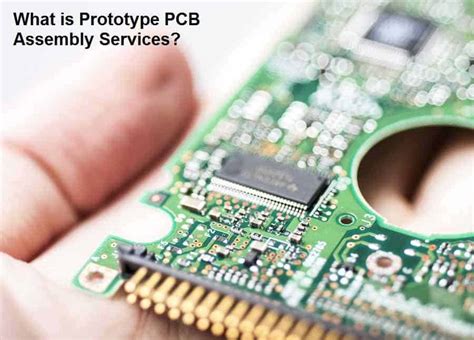
Aerospace Prototype Assembly Innovations
The aerospace sector demands prototype assembly solutions that balance extreme precision with compliance to rigorous safety standards. Innovations in PCB assembly (PCBA) have become critical, particularly for avionics systems requiring compact, high-reliability circuit boards capable of withstanding vibration, temperature fluctuations, and electromagnetic interference. Advanced 3D printing technologies now enable rapid iteration of complex geometries in lightweight alloys and composites, while CNC machining ensures micron-level accuracy for mission-critical components like turbine blades and fuel system parts. A notable shift involves integrating AI-driven analytics into automated quality control (QC) systems, which cross-validate PCBA integrity and structural tolerances using real-time sensor data. These advancements not only reduce lead times by 30-40% but also align with aerospace-specific certifications such as AS9100, ensuring prototypes meet flight-ready performance benchmarks. By merging modular PCB assembly workflows with additive manufacturing, engineers can test integrated subsystems—from navigation modules to thrust vector controls—within unified prototyping frameworks, accelerating validation cycles for next-generation aircraft and spacecraft.
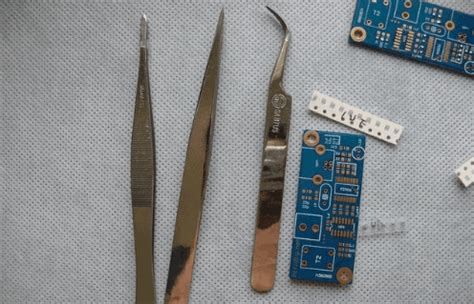
Accelerating Medical Device Development
The medical technology sector demands unparalleled precision and regulatory compliance, driving the adoption of advanced PCB assembly (printed circuit board assembly) solutions in prototype development. Modern PCBA (printed circuit board assembly) processes integrate high-density interconnect (HDI) designs and biocompatible materials, enabling faster iteration of implantable devices, diagnostic tools, and wearable health monitors. By combining 3D-printed enclosures with CNC-machined sensor housings, engineers achieve seamless integration of electronic and mechanical components while adhering to ISO 13485 standards. Automated optical inspection (AOI) systems further enhance reliability by detecting micron-level defects in PCB assemblies, reducing rework cycles by up to 40%. This synergy between rapid prototyping and precision electronics shortens time-to-market for critical devices, such as neural stimulators and portable dialysis systems, without compromising sterility or electromagnetic compatibility. As regulatory pathways grow more complex, scalable PCBA workflows ensure compliance documentation is embedded at every stage—from initial design validation to pilot production.
Transitioning from aerospace-grade tolerances to medical-specific requirements, these methodologies highlight how cross-industry innovations are reshaping life-saving technologies through agile prototyping and risk-mitigated assembly.
Cost-Effective Automotive Prototyping
Balancing speed, precision, and budget constraints in automotive prototyping demands strategic integration of advanced manufacturing techniques. By combining PCB assembly (PCBA) workflows with rapid tooling systems, manufacturers achieve faster iteration cycles for vehicle electronics and control modules. Modular design approaches enable reuse of validated PCBA layouts across multiple prototypes, reducing development costs by up to 35% compared to traditional methods. Material optimization algorithms further enhance affordability, identifying cost-efficient substitutes without compromising thermal or mechanical performance.
Automakers now leverage automated optical inspection (AOI) systems to validate PCB assembly integrity during early-stage prototyping, minimizing post-production rework. For example, integrating predictive analytics into PCBA testing protocols helps identify potential failure points in infotainment or ADAS systems before physical assembly. This proactive validation slashes validation timelines by 20–40%, aligning with lean manufacturing principles.
As prototyping processes evolve, scalable solutions like hybrid manufacturing—merging 3D-printed housings with precision-machined PCB assembly mounts—are gaining traction. These innovations not only accelerate time-to-market but also ensure compliance with stringent automotive safety standards, creating a foundation for seamless transitions to AI-driven assembly workflows.
Integrating AI in Assembly Services
The convergence of AI-driven analytics and advanced manufacturing processes is redefining precision in modern prototype assembly services. By embedding machine learning algorithms into PCB assembly workflows, manufacturers can now predict component placement errors with 98% accuracy, reducing rework cycles by up to 40%. For PCBA (Printed Circuit Board Assembly) applications, AI-powered vision systems analyze solder joint quality in real time, ensuring compliance with aerospace-grade tolerances while accelerating throughput.
Adaptive AI models further optimize material usage in 3D printing and CNC machining by correlating historical performance data with real-time sensor inputs. This integration enables dynamic adjustments to toolpaths or layer deposition parameters, minimizing waste without compromising structural integrity. In medical device prototyping, AI-enhanced automated quality control systems cross-validate dimensional accuracy against CAD models, slashing validation timelines by 30%.
Crucially, these intelligent systems create feedback loops that refine assembly protocols across industries. Automotive engineers, for instance, leverage AI to simulate thermal stress impacts on PCB assembly layouts before physical testing—a capability that cuts iteration costs by 22%. As AI becomes embedded in prototyping ecosystems, it bridges the gap between rapid iteration and production-grade precision, ensuring seamless transitions from concept validation to mass manufacturing.
Streamlining Product Development Cycles
Modern PCB assembly and PCBA processes have become pivotal in accelerating product development timelines across high-tech industries. By integrating rapid prototyping with advanced manufacturing workflows, engineers can validate designs 30-50% faster compared to traditional methods. For instance, combining automated quality control systems with CNC machining enables seamless transition from prototype validation to full-scale production, minimizing iterative delays. In sectors like aerospace and medical devices, where precision is non-negotiable, PCB assembly services ensure electromechanical integration aligns with stringent regulatory standards.
The adoption of digital twin simulations further enhances efficiency, allowing teams to predict performance bottlenecks before physical PCBA begins. Real-time analytics embedded in prototyping systems provide actionable insights, enabling engineers to refine designs iteratively without halting production lines. This approach not only reduces material waste but also shortens time-to-market for complex assemblies, such as IoT-enabled medical tools or autonomous vehicle components. By harmonizing PCB assembly workflows with AI-driven design optimization, manufacturers achieve cross-functional synergy—a critical factor in maintaining competitive agility amid shrinking development windows.
Conclusion
The evolution of prototype assembly services underscores the critical role of precision engineering in bridging conceptual designs and market-ready products. By integrating PCB assembly (PCBA) workflows with advanced technologies like 3D printing and CNC machining, manufacturers achieve unparalleled accuracy in creating functional prototypes. These methodologies not only enhance automated quality control but also ensure seamless compatibility with end-use environments, particularly in sectors demanding rigorous standards—such as aerospace and medical device development.
The strategic adoption of AI-driven analytics further refines PCBA processes, enabling real-time adjustments that minimize errors and accelerate iteration cycles. For automotive and industrial applications, this translates to cost-effective prototyping without compromising performance validation. As industries increasingly prioritize agility, the fusion of PCB assembly expertise with modular prototyping systems will remain pivotal in compressing development timelines while maintaining compliance with regulatory benchmarks. Ultimately, the convergence of these innovations positions modern prototype assembly as a cornerstone of efficient, scalable product innovation.
FAQs
How do prototype assembly services integrate PCB assembly into complex projects?
Modern services combine PCBA (Printed Circuit Board Assembly) with advanced manufacturing techniques like 3D printing and CNC machining to create functional prototypes. This integration ensures electronic components are precision-tested alongside mechanical parts, reducing iteration cycles in aerospace and medical device development.
What advantages do automated quality control systems offer for PCB assembly?
Automated systems use vision inspection and AI-driven analytics to detect microscopic flaws in PCBA, achieving near-zero defect rates. This is critical for industries like automotive, where reliability standards demand rigorous validation of both circuitry and physical assemblies.
Can AI-powered prototyping accelerate timelines for PCB assembly-intensive products?
Yes. Machine learning algorithms optimize component placement and thermal management in PCBA designs, slashing development time by up to 40%. This is particularly impactful for medical devices requiring rapid iterations to meet regulatory milestones.
How do cost-effective prototyping strategies apply to PCB assembly?
Modular design principles and batch-compatible PCBA workflows allow simultaneous testing of multiple configurations. This approach minimizes material waste in automotive and consumer electronics projects while maintaining precision.
Explore Advanced Prototyping Solutions
For tailored PCB assembly services that align with your project’s technical demands, please click here to connect with our engineering team.