
Proven PCB Design Techniques for Reliable Electronics

Key Takeaways
When approaching PCB manufacturing, understanding foundational principles ensures your design translates into reliable hardware. Start by defining clear design rules that align with your PCB manufacturing companies‘ capabilities—this prevents costly reworks. For instance, confirming minimum trace widths and spacing requirements early avoids fabrication issues.
"Always request your manufacturer’s design guidelines before finalizing layouts. This simple step can reduce PCB manufacturing cost by 20-30% through optimized material usage."
Consider these critical factors when preparing designs:
| Design Consideration | Traditional Approach | Optimized Strategy |
|---|---|---|
| Component Placement | Manual arrangement | Signal path analysis with thermal zones |
| Layer Stacking | Symmetrical layers | Impedance-controlled stackups |
| DFM Checks | Post-design review | Real-time rule validation |
Prioritize thermal management and signal integrity—two areas where PCB manufacturing business constraints often clash with design ambitions. Use ground planes strategically to minimize EMI, and verify dielectric materials match your application’s frequency requirements. If you’re designing high-speed boards, remember that PCB manufacturing tolerances directly affect impedance matching—simulate with actual fab house parameters.
For cost-sensitive projects, balance performance needs with PCB manufacturing cost drivers like layer count and surface finishes. Prototype with standard FR-4, but upgrade to specialized substrates (e.g., Rogers for RF) only when necessary. Finally, leverage your PCB manufacturing companies‘ engineering support—most offer free design-for-manufacturability reviews to catch errors before production.
Core Principles of Reliable PCB Design
To ensure good PCB design, you must prioritize fundamentals that align with PCB manufacturing realities. Start by optimizing component placement for signal integrity and thermal management—crowded layouts increase interference risks and complicate assembly. Maintain adequate trace spacing and follow impedance-matching protocols to prevent crosstalk, especially in mixed-signal designs.
Collaborating with trusted PCB manufacturing companies early helps identify cost-saving opportunities without compromising quality. For instance, adjusting via sizes or panelization strategies can reduce PCB manufacturing cost while improving yield rates. Always validate designs against your manufacturer’s capabilities, as tolerances vary across PCB manufacturing business operations.
Incorporate testability features like test points or built-in self-test circuits to streamline debugging. Adhering to IPC-2221 standards for hole sizes and pad dimensions ensures compatibility with automated assembly processes. For high-reliability applications, reference guidelines like this resource to address material selection and finish requirements.
By balancing electrical performance with manufacturability, you create boards that perform reliably under stress while minimizing post-production revisions—a critical advantage in competitive markets.
Military Spec PCB Design Compliance
When designing electronics for defense or aerospace applications, meeting military spec PCB design standards becomes non-negotiable. These specifications—such as IPC-6012 Class 3 or MIL-PRF-31032—ensure your board survives extreme temperatures, vibrations, and humidity while maintaining performance. To achieve compliance, you’ll need to prioritize material selection, trace spacing, and solder mask integrity, all while balancing PCB manufacturing cost constraints.
Collaborating with experienced PCB manufacturing companies familiar with mil-spec requirements is critical. They’ll guide you on controlled impedance routing and stack-up configurations that align with rigorous testing protocols like thermal cycling or salt spray exposure. For instance, using high-Tg laminates or polyimide substrates can enhance durability, but these choices must align with your PCB manufacturing business goals to avoid budget overruns.
Always verify that your design includes redundant grounding, proper shielding, and derated component specifications. Testing prototypes under simulated field conditions helps identify weaknesses early, reducing rework costs. Remember, mil-spec compliance isn’t just about ticking boxes—it’s about building trust in your product’s reliability, which ultimately strengthens partnerships with PCB manufacturing stakeholders demanding mission-critical performance.
Essential PCB Layout Best Practices
When planning your PCB manufacturing strategy, proper layout techniques directly impact both functionality and production efficiency. Start by optimizing component placement to minimize trace lengths—this reduces signal interference and improves thermal management. Prioritize high-current paths and sensitive analog sections when routing, ensuring adequate spacing between traces to prevent crosstalk.
Collaborating with experienced PCB manufacturing companies early in the design phase helps identify potential bottlenecks, such as improper via sizing or insufficient copper weight for power layers. Use standardized grid systems and symmetry in component arrangement to streamline assembly, which can lower PCB manufacturing cost by reducing material waste and labor time.
Always verify clearance rules and drill hole specifications to align with your chosen manufacturer’s capabilities. For instance, microvias and blind/buried vias may enhance density but require advanced processes that affect PCB manufacturing business margins. Implement a ground plane strategy to shield critical signals and maintain consistent impedance—a non-negotiable for high-speed or RF circuits.
Finally, leverage design-for-test (DFT) principles by including test points for key nodes. This proactive approach minimizes post-production troubleshooting, ensuring your design meets both performance targets and manufacturability standards.
Avoiding Common PCB Manufacturing Errors
Even the most meticulously designed PCB can fail if manufacturing errors compromise its integrity. To prevent costly rework, you must understand how design choices impact pcb manufacturing processes. Start by verifying trace widths and clearances against your pcb manufacturing company’s capabilities—oversights here often lead to short circuits or signal interference.
Thermal management is another critical area. Poorly placed thermal reliefs or inadequate copper balancing can cause warping during soldering, increasing pcb manufacturing cost due to rejected batches. Always align your design files with the fabricator’s Design for Manufacturing (DFM) guidelines to avoid mismatched layer stackups or drill alignment issues.
Material selection also plays a role. For instance, using low-grade substrates to cut pcb manufacturing business expenses might save money upfront but risks premature failure in high-stress environments. Collaborate early with your manufacturer to validate material choices against operational requirements.
Finally, double-check silkscreen markings and solder mask openings. Misaligned labels or exposed pads can confuse assembly teams, delaying timelines. By addressing these pitfalls proactively, you’ll streamline production and build stronger partnerships with pcb manufacturing companies.
Designing High-Speed Circuit Boards Effectively
When designing high-speed circuit boards, you must prioritize signal integrity and minimize electromagnetic interference (EMI). Start by optimizing trace routing to reduce crosstalk—use PCB manufacturing guidelines like maintaining consistent impedance with differential pairs and avoiding sharp angles. Controlled impedance traces are critical for high-frequency signals, so collaborate early with PCB manufacturing companies to validate material stack-ups and dielectric constants.
Power integrity is equally vital: employ decoupling capacitors near ICs and implement split ground planes to isolate analog and digital sections. Simulations using tools like SPICE or SI/PI analyzers help identify resonance issues before prototyping, reducing PCB manufacturing cost by minimizing redesign cycles.
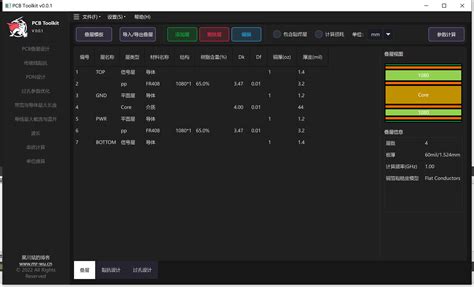
Layer stack-up planning directly impacts performance. For multi-layer boards, dedicate adjacent layers to power and ground to create low-impedance return paths. When selecting materials, consider high-speed laminates like Rogers or FR-4 hybrids, balancing thermal stability and PCB manufacturing business requirements.
Finally, adhere to design-for-manufacturability (DFM) rules. Ensure adequate spacing for vias and pads to prevent solder bridging during assembly. Partnering with experienced PCB manufacturing providers ensures your high-speed design transitions smoothly from schematic to physical board, avoiding delays and costly revisions.
PCB Material Selection for Durability
When selecting materials for durable PCB designs, you must balance performance requirements with PCB manufacturing cost and environmental factors. Start by evaluating the thermal stability of substrates like FR-4, polyimide, or ceramic-filled laminates—each offers distinct advantages for high-temperature or high-frequency applications. For harsh environments, materials with low moisture absorption (e.g., Rogers 4000 series) prevent delamination and maintain signal integrity.
Collaborating with experienced PCB manufacturing companies ensures material choices align with production capabilities. For instance, heavy copper layers (≥3 oz) enhance current-carrying capacity but require specialized fabrication processes, impacting PCB manufacturing business workflows. Always verify material certifications—UL ratings or IPC-4101 compliance—to meet reliability benchmarks.
Don’t overlook the dielectric constant (Dk) and loss tangent (Df) when designing for high-speed circuits. Lower Dk values reduce signal delay, while low Df minimizes energy loss—critical for RF and microwave boards. However, exotic materials often raise PCB manufacturing costs, so prioritize based on application needs. By optimizing material selection early, you avoid redesigns and ensure long-term durability without compromising manufacturability.
Troubleshooting PCB Layout Flaws Efficiently
When encountering unexpected performance issues in your PCB, systematic troubleshooting begins with isolating electrical and mechanical root causes. Start by running design rule checks (DRC) to identify violations like insufficient clearance or unconnected nets. Tools like thermal simulation can reveal hotspots caused by improper component placement or inadequate copper pours. If signal integrity problems persist, verify trace impedance calculations and ensure high-speed routing adheres to PCB manufacturing tolerances specified by your fabrication partner.
Collaborating early with PCB manufacturing companies helps preempt flaws that escalate PCB manufacturing cost. For instance, designs with excessively thin traces or non-standard via sizes may require specialized equipment, delaying production. Use automated optical inspection (AOI) reports from prototypes to pinpoint soldering defects or alignment errors—common issues in high-volume PCB manufacturing business environments. Additionally, cross-section analysis can expose hidden flaws like microvia cracks or layer misregistration.
Always correlate test failures with layout decisions. If a power plane shows voltage drops, reassess decoupling capacitor placement or plane thickness. For intermittent connectivity, inspect pad-to-hole ratios or soldermask alignment. By methodically linking symptoms to design choices, you streamline revisions while maintaining compliance with PCB manufacturing standards—ensuring reliability without compromising scalability.

Beginner-Friendly PCB Design Strategies
When starting with PCB manufacturing, focus on simplified layouts that prioritize functionality over complexity. Begin by defining clear routing paths for critical signals, ensuring adequate spacing between traces to minimize crosstalk. Use grid-based placement to align components systematically—this not only streamlines assembly but also reduces PCB manufacturing cost by avoiding unnecessary rework.
Partnering with experienced PCB manufacturing companies early in the design phase helps validate your schematic against production realities. For instance, adhering to standard drill sizes and avoiding overly tight tolerances ensures compatibility with most fabrication processes. Tools like auto-routing features in CAD software can accelerate prototyping, but always manually review automated outputs to catch potential shorts or impedance mismatches.
A common pitfall for beginners is overlooking design for manufacturability (DFM) principles. Double-check pad sizes, solder mask clearances, and silkscreen legibility to prevent errors flagged during fabrication. If you’re managing a PCB manufacturing business, prioritize documentation—detailed layer stack-ups and bill of materials (BOM) files minimize misunderstandings with suppliers.
Finally, test iteratively. Start with low-cost prototypes to validate functionality before scaling production. By balancing creativity with pragmatic PCB manufacturing constraints, you’ll build reliable boards while avoiding costly redesigns.
Conclusion
As we’ve explored throughout this guide, achieving good PCB design ultimately hinges on how well you align engineering decisions with PCB manufacturing realities. Every design choice—from component placement to trace routing—directly impacts yield rates, reliability, and PCB manufacturing cost. Partnering with experienced PCB manufacturing companies ensures your designs adhere to production tolerances while avoiding pitfalls like acid traps or insufficient copper balancing.
When optimizing for durability, consider how material selections (like high-Tg laminates) affect both performance and PCB manufacturing business logistics. Rigorous testing protocols, including thermal cycling and signal integrity checks, bridge the gap between theoretical layouts and real-world functionality. For high-speed designs, controlled impedance routing becomes non-negotiable—a detail that separates functional prototypes from mass-producible boards.
Remember: even minor oversights in layer stackup or solder mask clearance can escalate PCB manufacturing cost through rework or scrapped batches. By integrating feedback from fabrication partners early, you create designs that balance innovation with manufacturability. Whether you’re troubleshooting EMI issues or refining DFM checks, treating PCB manufacturing as a collaborative phase—not an afterthought—builds electronics that endure. Now, apply these strategies to transform your blueprints into robust, field-ready solutions.
FAQs
How does PCB design impact manufacturing success?
Your design choices directly affect PCB manufacturing outcomes. Proper trace spacing, component placement, and material selection minimize errors during fabrication, reducing PCB manufacturing cost by avoiding rework.
What should you look for in PCB manufacturing companies?
Prioritize firms with ISO-certified processes and experience handling designs that meet mil-spec standards. Reliable PCB manufacturing companies provide design-for-manufacturing (DFM) feedback to optimize your layout for production efficiency.
Why do some PCB designs incur higher manufacturing costs?
Complex designs with high-density interconnects or specialized materials increase PCB manufacturing cost. Simplifying layer counts and standardizing components can lower expenses without compromising reliability.
How can beginners avoid common pitfalls in PCB manufacturing?
Start with modular designs and leverage automated routing tools. Partnering with PCB manufacturing business experts early in the design phase helps identify issues like insufficient clearance or improper pad sizing before prototyping.
When should you consider advanced manufacturing techniques?
For high-speed or mission-critical boards, techniques like controlled impedance routing or blind/buried vias become essential. Discuss these requirements upfront with your PCB manufacturing partner to balance performance and cost.
Ready to Optimize Your PCB Design for Manufacturing?
Refine your design with professional guidance! For tailored solutions that align with industry standards, please click here to connect with experienced PCB manufacturing companies.