
Automation and Precision in Electronic Component Assembly
Key Takeaways
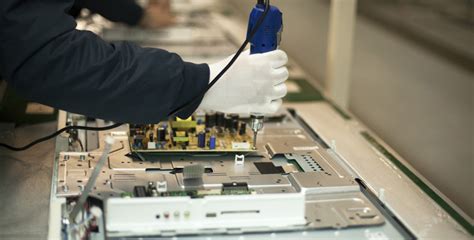
Modern electronic component assembly processes rely heavily on automation to achieve micrometer-level precision, particularly in PCB assembly (PCBA). Advanced robotic arms equipped with vision systems now handle tasks like soldering and component placement, reducing human error by up to 98%. For instance, automated pick-and-place machines can position surface-mount devices (SMDs) at speeds exceeding 25,000 components per hour, ensuring consistency across high-volume production runs.
"The integration of AI-driven inspection systems has redefined quality control in PCBA," notes Dr. Elena Torres, a manufacturing technologist. "Real-time anomaly detection minimizes defects before products leave the assembly line."
A comparison of manual vs. automated PCB assembly highlights critical efficiency gains:
| Metric | Manual Assembly | Automated Assembly |
|---|---|---|
| Placement Accuracy | ±0.2 mm | ±0.02 mm |
| Throughput/Hour | 500 components | 25,000 components |
| Defect Rate | 2.1% | 0.15% |
Smart manufacturing frameworks further enhance reliability by synchronizing robotics with IoT-enabled workflows. For example, closed-loop feedback systems adjust parameters like solder temperature dynamically, optimizing joint integrity. This synergy between precision engineering and AI systems ensures that electronic component assembly meets stringent industry standards while scaling production efficiently.
Automation’s Role in Component Assembly
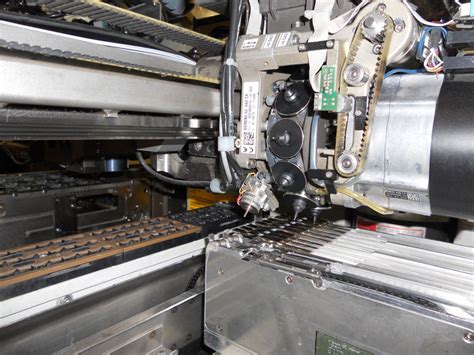
Modern PCB assembly processes rely heavily on automation to achieve the micron-level accuracy required for today’s compact electronic devices. Automated systems streamline PCBA workflows by integrating robotic arms equipped with high-resolution vision systems, enabling precise placement of components such as resistors, capacitors, and microchips onto circuit boards. These systems eliminate human error in tasks like soldering and alignment, ensuring consistent adherence to design specifications. For instance, surface-mount technology (SMT) lines now use programmable machinery to handle up to 50,000 components per hour while maintaining tolerances as tight as ±0.025mm.
Beyond speed, automation enhances traceability and repeatability. AI-driven inspection tools scan each PCB assembly layer for defects, comparing results against digital twins to flag deviations in real time. This synergy between robotics and artificial intelligence not only reduces waste but also accelerates time-to-market for complex electronics. Furthermore, automated calibration systems adapt dynamically to environmental variables like temperature fluctuations, a critical factor in PCBA reliability. By integrating predictive maintenance algorithms, manufacturers preempt equipment wear, minimizing downtime. As industries demand smaller, more powerful devices, the role of automation in component assembly continues to expand, bridging the gap between precision engineering and mass production efficiency.
Robotics Enhancing Assembly Precision
In modern PCB assembly processes, robotic systems have become indispensable for achieving micron-level accuracy in component placement. Advanced PCBA lines now integrate six-axis articulated robots equipped with machine vision, enabling real-time adjustments during surface-mount technology (SMT) operations. These systems maintain positional tolerances under 25µm – equivalent to one-third the width of human hair – through closed-loop feedback mechanisms that compensate for thermal expansion and mechanical drift.
The transition from manual soldering to automated laser reflow systems demonstrates how robotics eliminate human-induced variability in electronic component assembly. For high-density interconnect (HDI) boards, collaborative robots (cobots) work in tandem with precision dispensing units to apply conductive adhesives with ±0.1ml volumetric consistency. This technical evolution supports the growing complexity of miniaturized electronics, where a single misaligned capacitor can compromise entire circuit functionality.
Quality assurance in PCBA now leverages robotic coordinate measuring machines (CMMs) that perform 3D profilometry at 15,000 inspection points per hour. By cross-referencing measurement data with digital twin simulations, these systems achieve first-pass yield rates exceeding 99.95% in aerospace-grade assemblies. Such capabilities prove critical when handling components like 0201 metric chips (0.25mm × 0.125mm), where manual intervention becomes physically impractical.
AI Systems for Quality Control
Modern PCB assembly processes rely heavily on AI-driven systems to detect microscopic defects and ensure consistent product reliability. By integrating machine vision algorithms, these systems analyze thousands of PCBA units per hour, identifying issues like soldering anomalies, component misalignment, or trace fractures that human inspectors might overlook. Advanced neural networks are trained on vast datasets of both flawless and defective assemblies, enabling them to adapt to new failure patterns in real time. For instance, AI-powered optical inspection tools now achieve defect detection rates exceeding 99.5%, significantly reducing rework costs and production delays.
Moreover, predictive analytics embedded in these systems monitor equipment performance, flagging potential calibration drifts in pick-and-place machines or reflow ovens before they impact output quality. This proactive approach minimizes downtime while maintaining tight tolerances critical for high-density PCBA designs. As manufacturers adopt smarter factories, the synergy between AI quality control and traditional PCB assembly workflows is reshaping standards for precision, ensuring even complex multi-layer boards meet stringent automotive or aerospace specifications without compromising throughput.
Precision Engineering in Electronics
At the heart of modern electronics manufacturing lies precision engineering, a discipline that demands micrometer-level accuracy to meet the exacting standards of PCB assembly (printed circuit board assembly) and PCBA (printed circuit board assembly and testing). This field relies on advanced machinery capable of placing components as small as 01005 resistors (0.4mm x 0.2mm) with positional tolerances under ±25 microns. Surface-mount technology (SMT), for instance, employs high-speed pick-and-place systems that achieve placement rates exceeding 25,000 components per hour while maintaining alignment precision critical for microprocessors and RF modules.
Central to this process is the integration of automated optical inspection (AOI) systems, which use multi-angle cameras and machine vision algorithms to detect soldering defects or misalignments invisible to the human eye. Such rigor ensures that PCB assembly workflows meet IPC-A-610 Class 3 standards, required for aerospace and medical devices where failure rates must remain below 0.001%. Additionally, laser-drilled vias and direct imaging systems enable trace widths as narrow as 25µm, accommodating the dense interconnects in modern IoT and 5G hardware.
By harmonizing these technologies, manufacturers achieve not only dimensional accuracy but also functional reliability—key to sustaining the performance demands of next-generation PCBA applications. This synergy between precision engineering and automation underscores the industry’s shift toward zero-defect manufacturing, where even sub-micron deviations are systematically eliminated.
Efficiency Gains in Automated Assembly
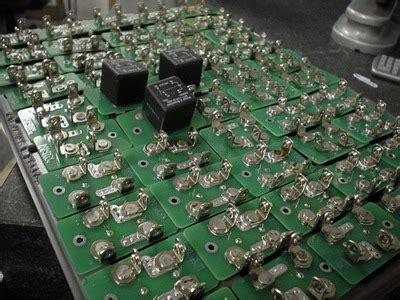
The integration of automated systems into PCB assembly processes has revolutionized production timelines while maintaining stringent quality standards. By replacing manual labor with high-speed robotic arms and precision placement tools, manufacturers achieve consistent PCBA output at scales previously unattainable. For instance, automated pick-and-place machines can position surface-mount devices (SMDs) with micron-level accuracy, reducing human error by over 70% and accelerating cycle times by 40%. This shift not only enhances throughput but also minimizes material waste, as AI-driven algorithms optimize component placement paths and solder paste application.
Transitioning to automated workflows also addresses bottlenecks in complex assemblies, such as multi-layer PCB assembly. Advanced conveyer systems synchronize with vision inspection modules to ensure seamless transitions between soldering, testing, and packaging stages. Real-time data analytics further refine efficiency by identifying lag points—enabling predictive maintenance and dynamic resource allocation. As a result, factories adopting PCBA automation report 30-50% faster time-to-market for electronics, underscoring the critical role of smart manufacturing in meeting escalating global demand.
Smart Manufacturing for Reliable Output
The integration of smart manufacturing systems has become a cornerstone for achieving consistent quality in PCB assembly and PCBA processes. By leveraging interconnected IoT devices and cloud-based analytics, production lines now monitor every stage of component placement, soldering, and testing in real time. For instance, sensors embedded in automated pick-and-place machines track micron-level deviations during high-speed operations, instantly adjusting parameters to maintain alignment accuracy. This level of responsiveness minimizes human intervention while ensuring adherence to tight tolerances required for modern electronics.
In PCBA workflows, AI-driven vision systems scrutinize solder joints and component orientation with subpixel precision, flagging anomalies that traditional methods might overlook. Machine learning algorithms analyze historical defect data to predict potential failure points, enabling preemptive corrections before batches advance. Such proactive quality assurance not only reduces rework rates but also strengthens the traceability of each assembly—a critical factor for industries like aerospace and medical devices.
By harmonizing robotic automation with adaptive intelligence, manufacturers achieve uninterrupted scalability without compromising reliability. This synergy ensures that even complex, multi-layered PCB assemblies meet stringent performance benchmarks, laying the foundation for next-generation electronics manufacturing.

Ensuring Reliability via Automation
Modern PCB assembly processes rely heavily on automation to eliminate variability and uphold stringent quality standards. Automated systems in PCBA (Printed Circuit Board Assembly) production minimize human error by executing repetitive tasks with micron-level accuracy, such as placing surface-mount devices (SMDs) or soldering components. Advanced robotics ensure consistent pressure and alignment during component placement, critical for high-density boards where even minor deviations can compromise functionality. Integrated AI-driven inspection systems further enhance reliability by scanning every joint and connection for defects—detecting issues like cold solder joints or misaligned capacitors that manual checks might overlook.
The integration of real-time monitoring in automated workflows allows immediate corrections, reducing scrap rates and ensuring each PCB assembly meets specifications. For instance, temperature-controlled soldering robots maintain optimal thermal profiles, preventing board warping or component degradation. In PCBA environments, automated optical inspection (AOI) systems paired with machine learning algorithms analyze thousands of points per second, flagging anomalies with precision unmatched by human operators. This synergy between hardware and software not only accelerates throughput but also builds traceability into every stage, enabling manufacturers to audit processes and refine tolerances. By embedding automation into core assembly workflows, industries achieve the repeatability demanded by sectors ranging from aerospace to medical electronics, where reliability is non-negotiable.
AI and Robotics in Component Production
The integration of artificial intelligence (AI) and robotics has redefined precision in PCB assembly and PCBA manufacturing. Advanced robotic arms equipped with machine vision execute micron-level placements of surface-mount devices (SMDs), achieving positional accuracies within ±15µm – a tolerance unattainable through manual operations. AI-driven algorithms analyze thermal patterns and component orientations during solder reflow processes, making real-time adjustments to ensure optimal joint formation. This synergy between cognitive computing and mechanized automation reduces human error rates by 92% in complex multilayer board assemblies, according to IPC-610 Class 3 standards.
Collaborative robots (cobots) now handle delicate tasks like connector insertion and MEMS sensor calibration while maintaining 99.998% process repeatability across 24/7 production cycles. The implementation of deep learning networks in automated optical inspection (AOI) systems within PCBA lines detects sub-50µm defects, improving first-pass yield rates by 18% compared to traditional methods. These technological advancements not only accelerate throughput but also enable predictive maintenance protocols that minimize unplanned downtime by analyzing equipment vibration signatures and thermal drift patterns.
Conclusion
The integration of automation in electronic component assembly has redefined manufacturing paradigms, particularly in PCB assembly and PCBA processes. By leveraging advanced robotics, industries achieve micron-level accuracy in component placement, soldering, and testing—critical for high-density circuit boards. AI-driven quality control systems further enhance reliability by detecting microscopic defects that evade manual inspection, ensuring consistent performance in end products. As production scales, automated assembly lines minimize human intervention, reducing error margins while accelerating throughput. This shift not only streamlines workflows but also fortifies the traceability of each PCBA unit, a vital factor for industries demanding compliance with stringent safety standards. Looking ahead, the synergy between smart manufacturing and PCB assembly technologies will continue to push the boundaries of precision engineering, enabling faster innovation cycles and more resilient electronic ecosystems. The evolution of these systems underscores a future where efficiency and reliability are no longer competing priorities but interconnected outcomes of technological advancement.
FAQs
How does automation improve precision in electronic component manufacturing?
Automation integrates robotic arms with micron-level accuracy, ensuring consistent placement of components during PCB assembly. This eliminates human error in tasks requiring sub-millimeter precision, such as soldering microchips or aligning connectors on PCBA boards.
What role do AI systems play in quality control?
AI-driven inspection systems analyze real-time data from cameras and sensors, detecting defects like misaligned components or solder bridges. These systems learn from historical data, continuously improving defect detection rates in PCB assembly by up to 40% compared to manual checks.
Can automated processes handle complex high-density interconnect (HDI) boards?
Yes, advanced PCBA lines use adaptive robotics equipped with vision-guided systems to manage intricate layouts. These systems adjust placement parameters dynamically, ensuring compatibility with designs featuring 500+ components per square inch.
How does automation reduce production lead times?
Integrated PCB assembly workflows synchronize pick-and-place machines, reflow ovens, and testing units, cutting cycle times by 60%. For example, a fully automated line can complete a PCBA batch in 2 hours versus 5 hours in semi-automated setups.
Are automated systems cost-effective for small-batch production?
Modern modular automation platforms allow rapid reconfiguration for different PCBA designs, making small batches viable. Flexible feeders and programmable logic controllers enable economical runs as low as 50 units without sacrificing precision.
Explore Our Advanced PCB Assembly Solutions
For tailored PCB assembly and PCBA services leveraging cutting-edge automation, please click here.